| Quick Answer: Best Lightweight Running Shoes in 2026. The Adidas Adizero Evo SL is our best lightweight running shoe for most runners because it combines low weight, generous cushioning and a fast feel without requiring a carbon plate. For everyday running, the Hoka Mach 7 offers a light, stable-feeling platform that works at several paces. Choose the Saucony Kinvara 16 if you prefer a flexible, lower-profile trainer, the New Balance FuelCell Rebel v5 for softer cushioning, or the Topo Athletic Cyclone 3 for more toe room. The Nike Streakfly 2 is the lightest pick here, but it is primarily a short-distance racing shoe. Click to see recommendations side by side. |
Running shoes no longer have to feel thin or harsh to be lightweight.
New foams and construction methods let manufacturers put more cushioning under your feet without automatically creating a heavy shoe. Some of today’s light running shoes have nearly as much cushioning as conventional daily trainers, while performance models can weigh close to 5 ounces. That creates a new problem: not every lightweight shoe does the same job.
Some are built for everyday miles. Others are designed for tempo runs and intervals. The lightest models tend to be racing shoes that trade comfort, durability or stability for speed.
This guide focuses on the best lightweight road running shoes for men and women in 2026, with options for daily training, speedwork and short-distance racing.
If low weight is only one part of what you need, see our Best Running Shoes hub to compare shoes by cushioning, support, surface and running style.
Best Lightweight Running Shoes Compared
Shoe | Best for | Published men’s weight | Drop | Midsole | Plate | Launch price |
|---|---|---|---|---|---|---|
Best overall | About 7.9 oz. | About 6 mm | Lightstrike Pro | No carbon plate | $150 | Check latest price | |
Daily training | About 8.4 oz. | 5 mm | Supercritical EVA | None | $145 | Check latest price | |
Flexible, natural-feeling ride | 7.3 oz. | 4 mm | PWRRUN | None | $130 | Check latest price | |
Soft, lively cushioning | 7.9 oz. | 6 mm | PEBA/EVA FuelCell blend | None | $145 | Check latest price | |
Roomy toe box | 6.9 oz. | 5 mm | Pebax Powered | None | $155 | Check latest price | |
Higher-drop speed training | 8.2 oz. | 8 mm | DNA Flash v2 | None | $140 | Check latest price | |
Mile to 10K racing | 5.1 oz. | 4 mm | ZoomX | Carbon fiber | $180 | Check latest price |
Published shoe weights are not perfectly comparable. Brands use different shoe sizes and methods when publishing weights. Your pair will also weigh more or less depending on size.
Adidas Adizero Evo SL

Best Lightweight Running Shoe Overall
The Adidas Adizero Evo SL is our best lightweight running shoe for most runners because it delivers much of the feel of a modern performance shoe without becoming a specialized racer.
It weighs about 7.9 ounces in Adidas’ men’s reference size and uses a thick layer of Lightstrike Pro foam. That is the same family of premium cushioning Adidas uses throughout its faster Adizero lineup.
Unlike a carbon-plated racing shoe, however, the Evo SL does not have a full carbon plate. That gives it a more flexible and forgiving feel for ordinary training.
The result is an unusual mix. You get plenty of cushioning underfoot, low overall weight and enough responsiveness for faster sessions. Yet you can still use it for daily runs when you do not want the rigid feel of a racing shoe.
Adidas publishes slightly different stack-height and drop figures across markets and reference sizes, so we describe the drop as approximately 6 mm rather than treating one measurement as universally exact.
The Evo SL works particularly well for runners who want one light shoe to cover daily runs, progression runs, tempo sessions and some longer efforts.
It does have a more performance-oriented fit than many traditional trainers. Runners with very wide feet may find the forefoot less accommodating than the New Balance Rebel v5 or Topo Cyclone 3.
Best for: Runners who want one light, cushioned shoe that can handle several training paces.
Skip it if: You need structured stability or a particularly roomy forefoot.
Gender-specific buy links: Men’s version | Women’s version
Hoka Mach 7

Best Lightweight Daily Trainer
The Hoka Mach 7 is the better choice if everyday running matters more than outright speed.
It keeps the basic Mach formula simple. There is no carbon plate and no extremely soft racing foam. Instead, Hoka uses a supercritical EVA midsole, which means the foam is processed to reduce weight while improving cushioning and responsiveness compared with basic EVA.
The men’s published weight is about 8.4 ounces, with a 5 mm heel-to-toe drop and approximately 37 mm of cushioning at the heel.
That combination gives the Mach 7 enough protection for regular training while keeping it noticeably lighter than many conventional daily running shoes.
The ride is not especially soft. Runners accustomed to shoes such as the Hoka Clifton or Bondi may find the Mach firmer and more connected to the road. That is part of its appeal for runners who want a shoe that feels quick without becoming harsh.
The broad platform also gives it a reasonably stable feel for a neutral shoe. That does not make it a stability shoe for overpronation, but it can feel more planted than narrow racing-style trainers.
The Mach 7 can handle easy runs, moderate daily mileage, strides and faster training, making it one of the easiest shoes on this list to use several times a week.
Best for: Daily running with occasional faster sessions.
Skip it if: You want very soft cushioning or a high heel-to-toe drop.
Gender-specific buy links: Men’s version | Women’s version
Saucony Kinvara 16

Best Lightweight Flexible Trainer
The Saucony Kinvara 16 remains one of the clearest examples of a traditional lightweight running shoe.
Saucony lists the men’s version at 7.3 ounces and the women’s model at 6.3 ounces. Both use a 4 mm heel-to-toe drop with 28 mm of cushioning at the heel and 24 mm at the forefoot.
There is no plate. Instead, the Kinvara uses PWRRUN foam and a relatively flexible platform. That gives it more ground feel and lets the foot move more freely than many tall modern running shoes. For some runners, that simplicity is exactly the attraction
The Kinvara works particularly well for shorter daily runs, treadmill training, strides and speed sessions. It also makes sense for runners who dislike stiff rocker shapes or carbon plates.
The trade-off is protection. At 28 mm under the heel, this is a much lower shoe than many current daily trainers. Bigger runners, high-mileage runners and people who want a very soft landing may prefer the Rebel v5, Mach 7 or Evo SL.
The 4 mm drop is another consideration. A lower drop places the heel closer to the height of the forefoot and can increase the demand placed on the calf and Achilles area compared with a higher-drop shoe.
If you normally run in shoes with a 10 or 12 mm drop, introduce a lower-drop shoe gradually rather than changing all your mileage at once.
Best for: Runners who want a light, flexible and relatively simple daily trainer.
Skip it if: You want maximum cushioning or a high heel-to-toe drop.
Gender-specific buy links: Men’s version | Women’s version
New Balance FuelCell Rebel v5
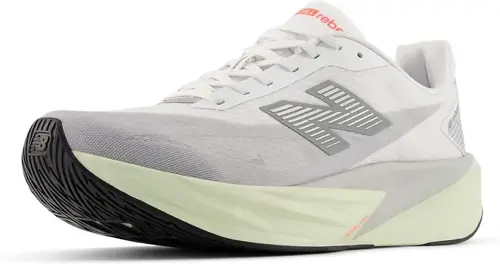
Best for Soft, Bouncy Lightweight Cushioning
The New Balance FuelCell Rebel v5 proves that a lightweight trainer does not need to feel minimal.
New Balance lists the men’s version at 7.9 ounces with a 6 mm heel-to-toe drop. Its FuelCell midsole blends PEBA and EVA foams.
PEBA is a lightweight performance material widely used in faster running shoes. EVA is a more traditional cushioning material. Combining the two helps New Balance keep the Rebel light while giving it a soft, energetic feel.
The Rebel v5 is also plateless.
That matters because the shoe remains flexible enough for normal training rather than forcing the foot through the stiffer motion of a carbon-plated racer.
This is probably the best choice on the list for runners who hear “lightweight” but do not want a thin or firm shoe.
It works for ordinary daily runs, quicker sessions and moderate long runs for runners who are comfortable in a soft, neutral platform.
New Balance also sells the Rebel v5 in a wide option in at least some markets. That makes it worth considering if narrow speed shoes tend to squeeze your forefoot.
The downside is structure. The soft foam and flexible platform will not provide the same guided sensation as a traditional stability trainer.
If you need significant control for overpronation, use our Best Stability Running Shoes guide rather than choosing a shoe based primarily on weight.
Best for: Runners who want lightweight cushioning that still feels soft and lively.
Skip it if: You want a firm platform or substantial stability features.
Gender-specific buy links: Men’s version | Women’s version
Topo Athletic Cyclone 3

Best Lightweight Running Shoe With a Roomy Toe Box
The Topo Athletic Cyclone 3 stands out because it combines very low weight with a more foot-shaped forefoot.
Topo lists the men’s shoe at only 6.9 ounces and the women’s version at 5.5 ounces. It has a 5 mm drop with 28 mm under the heel and 23 mm under the forefoot.
The midsole is made with Pebax, a lightweight performance material designed to provide high energy return without adding much mass.
Topo also uses its characteristic fit. The heel and midfoot are designed to hold the foot securely while the toe box gives the toes more room to spread.
That does not automatically make the Cyclone 3 a wide shoe. Runners with genuinely wide feet may still need a wider-size model. But people who dislike sharply tapered performance shoes may find the shape more comfortable.
The Cyclone 3 is also very light for a shoe without a carbon plate. It works especially well for tempo sessions, intervals, shorter races and everyday running for people who prefer a lower and more direct platform.
It is not the best choice for runners seeking maximum cushioning. The 28 mm heel stack is modest by current standards.
If toe-box space is more important than outright speed, compare it with our Best Wide Toe Box Shoes guide.
Best for: Runners who want a very light performance trainer with more room around the toes.
Skip it if: You want deep cushioning for long or recovery runs
Gender-specific buy links: Men’s version | Women’s version
Brooks Hyperion 3
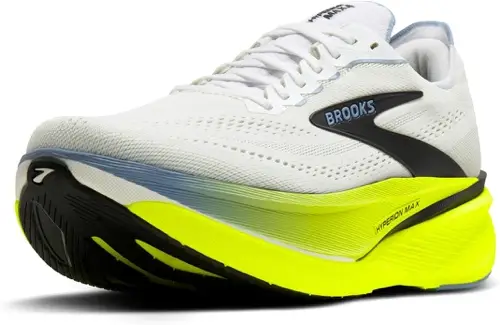
Best Lightweight Higher-Drop Running Shoe
Most of the lightest running shoes use relatively low heel-to-toe drops. The Brooks Hyperion 3 gives runners another option.
Brooks publishes a weight of about 8.2 ounces for the men’s model and a drop of 8 mm.
That extra heel height can make the transition easier for runners accustomed to more traditional running shoes.
The Hyperion 3 uses nitrogen-infused DNA Flash v2 foam. Brooks also increased the amount of cushioning compared with the previous version, making this generation less like a stripped-down racing flat and more useful for actual training.
It remains a fairly direct and responsive shoe.
The Hyperion makes the most sense for faster daily runs, intervals, tempo sessions and treadmill work. It can also handle normal mileage if you prefer firmer cushioning.
There is no carbon plate, which keeps the platform more flexible than Brooks’ dedicated racing shoes.
The biggest reason to choose it over the Kinvara, Cyclone or Streakfly is the 8 mm drop. If you prefer more heel elevation but still want a shoe around the 8-ounce range, the Hyperion occupies a useful niche.
Do not confuse the standard Hyperion with Brooks’ Hyperion Elite racing line or the thicker Hyperion Max models. They serve different purposes.
Best for: Runners who want a light, responsive trainer without dropping to a 4 or 5 mm offset.
Skip it if: You prefer soft cushioning or need a particularly roomy toe box.
Gender-specific buy links: Men’s version | Women’s version
Nike Streakfly 2
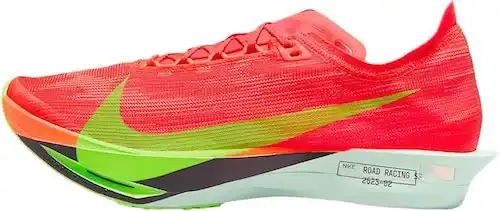
Lightest Pick for Mile to 10K Racing
At about 5.1 ounces in a men’s size 10, the Nike Streakfly 2 is dramatically lighter than the daily trainers in this guide. It is also a very different kind of shoe.
Nike built the Streakfly 2 specifically for short-distance road racing from the mile through 10K. It uses ZoomX foam and a full-length carbon-fiber Flyplate, along with a thin upper and minimal outsole construction. The drop is only 4 mm.
Nike also redesigned the second-generation Streakfly around a track-spike-inspired last. That creates a more aggressive stance than you would find in a typical daily running shoe. That combination explains both its advantage and its limitation.
If your priority is running a fast 5K or 10K, very low weight can be valuable. The Streakfly 2 also gives you the propulsion of a carbon plate without the tall platform found in many marathon super shoes.
But this is not the shoe we would recommend simply because someone searches for the “lightest running shoes.”
It has less cushioning, a narrower performance fit and less material devoted to long-term daily durability. Nike also says the model fits small and recommends going up half a size.
For general training, most runners will get far more use from the Evo SL, Mach 7 or Rebel v5.
For longer racing distances, compare it with our Best Racing Shoes guide.
Best for: Mile, 5K and 10K racing.
Skip it if: You want an everyday trainer or need a broad, stable platform.
How We Chose the Best Lightweight Running Shoes
There is no official weight at which a running shoe suddenly becomes “lightweight.”
For this guide, we focused mainly on road running shoes around 8.5 ounces or less in a men’s published reference size. That is a useful benchmark rather than a formal industry standard. More importantly, we did not simply rank shoes from lightest to heaviest.
We considered the shoe’s intended purpose, cushioning and structure, weight relative to similar shoes, fit options, current model status and manufacturer specifications.
A 5-ounce racing shoe and an 8-ounce daily trainer should not be judged as though they do the same job.
We also looked for models that solve different needs, including softer cushioning, a roomy toe box, a low-profile platform and a higher heel-to-toe drop.
Published weights deserve some caution. One manufacturer might publish a men’s weight using a size 9, while another uses a size 10. A difference of a few tenths of an ounce between brands may therefore be less meaningful than it appears.
Our recommendations focus on how useful each shoe is for its intended runner rather than declaring that the lowest number on a scale automatically wins.
Does Running Shoe Weight Really Matter?
Yes, shoe weight can affect running economy, but lighter does not automatically mean better.
Running economy describes how much energy your body needs to maintain a particular running speed.
A controlled study of 18 trained runners found that adding 100 grams to each shoe increased metabolic cost by about 1.11%. The same added mass slowed 3,000-meter time-trial performance by an average of about 0.78%.
If curious, you can read the 2016 study in Medicine & Science in Sports & Exercise.
That difference can matter, particularly when racing.
But shoe weight is only one variable. Modern running-shoe performance also depends on cushioning, foam resilience, shoe stiffness, rocker geometry, traction, fit and comfort.
A shoe that weighs an ounce less but causes discomfort or forces your muscles to work harder is not necessarily more efficient for you. This is also why today’s fastest shoes are not always the absolute lightest. Manufacturers may accept a few extra grams to add thick, high-energy-return foam or a stiffening plate.
For everyday runners, the bigger benefit of a lightweight trainer may simply be that it feels less bulky and easier to turn over when the pace increases.
Lightweight Trainer vs. Racing Shoe: What Is the Difference?
A lightweight trainer is designed to balance low weight with enough durability and cushioning for repeated training.
The Adidas Adizero Evo SL, Hoka Mach 7, Saucony Kinvara 16 and New Balance FuelCell Rebel v5 broadly fit this category.
A lightweight racing shoe goes further.
Manufacturers may use thinner uppers, less outsole rubber, aggressive geometry and carbon plates to reduce weight and increase speed. The Nike Streakfly 2 is the clearest example in this guide.
That makes racing shoes exciting, but also less practical.
If you run three or four times a week and want one pair, a lightweight trainer usually makes more sense.
If you already have an everyday shoe and want something specifically for races or fast sessions, a dedicated performance shoe may be worthwhile.
The middle ground is also growing. Shoes such as the Evo SL use premium performance foam without a full carbon plate. They can feel faster than a standard daily trainer without becoming race-day-only equipment.
If faster training is your main goal, see our Best Shoes for Tempo Runs.
How Much Should a Lightweight Running Shoe Weigh?
For men’s road shoes, roughly 8.5 ounces or less is a useful definition of lightweight in 2026.
Dedicated racers may weigh around 5 to 7 ounces.
Light daily trainers often fall between about 7 and 8.5 ounces.
Women’s published weights are normally lower because manufacturers use smaller reference sizes.
These numbers should not become hard rules. A well-cushioned 8.7-ounce shoe may feel considerably lighter on the foot than a firm 8-ounce shoe.
Weight also increases with shoe size. If a manufacturer publishes a weight using a men’s size 9 and you wear a size 13, your actual shoe will weigh more.
Use published weight to understand the general character of a shoe, not as an exact prediction of what your pair will weigh.
Should Beginners Buy Lightweight Running Shoes?
Beginners can run in lightweight shoes, but low weight should not be their first priority, but fit and comfort matter more.
A new runner often benefits from a versatile daily trainer that provides enough cushioning for a range of speeds and distances.
The Hoka Mach 7, Adidas Adizero Evo SL and New Balance Rebel v5 make more sense for this role than the Nike Streakfly 2.
A highly specialized racer can be less forgiving. It may have a narrow upper, low drop, minimal padding or stiff plate that does not suit an inexperienced runner.
Beginners should also be cautious when moving into very low-drop shoes.
You do not need the lightest shoe available to become a faster runner. Consistent training will matter far more.
Frequently Asked Questions About Lightweight Running Shoes
The Adidas Adizero Evo SL is our best overall pick because it combines low weight, premium cushioning and enough versatility for several types of training. The Hoka Mach 7 is our preferred lightweight daily trainer, while the New Balance FuelCell Rebel v5 is a better choice if you want a softer ride.
The Nike Streakfly 2 is the lightest shoe in this guide at about 5.1 ounces in Nike’s men’s reference size. It is designed mainly for mile, 5K and 10K racing rather than everyday training.
The Hoka Mach 7 is our top lightweight daily trainer. It combines a roughly 8.4-ounce published weight with enough cushioning for regular road mileage and enough responsiveness for faster sessions.
Lower shoe mass can reduce the energy required to move the shoe with each stride, and research shows that added shoe mass can reduce running economy. However, foam, fit, cushioning, stiffness and geometry also affect performance. The lightest shoe is not automatically the fastest shoe for every runner.
Some are. Shoes such as the Adidas Adizero Evo SL, Hoka Mach 7 and New Balance Rebel v5 can handle longer training for many runners. Lower-stack models such as the Topo Cyclone 3 and dedicated racers such as the Nike Streakfly 2 provide less protection for runners who prefer deep cushioning.
They can, but it depends on the design. Manufacturers sometimes reduce outsole rubber, upper material and padding to save weight. Dedicated racing shoes are generally a poorer choice for high daily mileage than lightweight trainers designed for repeated use.
Some lightweight trainers can also work for walking, but running performance should not be the main reason to choose a walking shoe. A very low drop, narrow racing fit or carbon plate may be unnecessary for walking. For walking-specific choices, see our Best Walking Shoes guide.