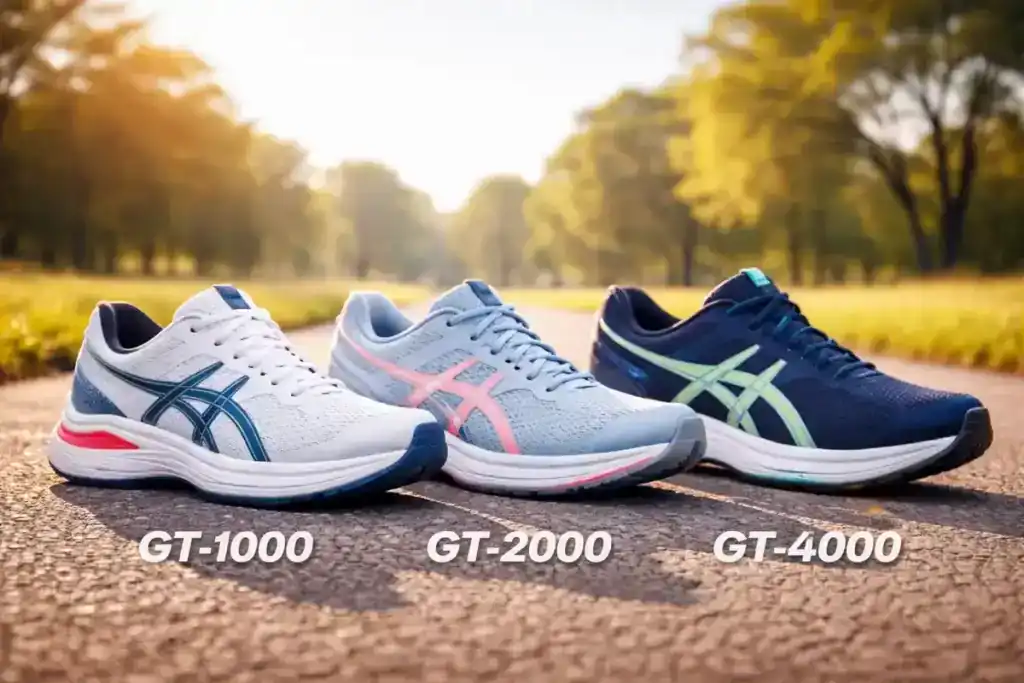
ASICS’s GT series is one of the easiest ways to shop for a stability running shoe—once you understand what each model is designed to do. All three options (GT-1000, GT-2000, and GT-4000) are made for runners and walkers who want a more guided, supportive ride, especially if they overpronate (when the foot rolls inward more than average).
The key difference is simple: GT-1000 is entry-level stability, GT-2000 is the refined “daily trainer” stability option, and GT-4000 is the most structured and supportive shoe in the GT family. This guide breaks down each shoe by runner type, shoe type, and target wearer, with a quick comparison table to make the decision easier.
What is ASICS GT line?
The GT series is ASICS’s stability-focused family of daily trainers. These shoes aim to reduce excessive inward rolling while still feeling comfortable for everyday training. Compared to neutral shoes, stability models tend to offer a more guided stride and are often preferred by runners who want extra support for longer mileage, heavier training blocks, or long days on their feet.
If you already know you like stability shoes, the GT line is mostly about choosing your “support level.”
Comparison table: GT-1000 vs. GT-2000 vs. GT-4000
Here is how to quickly understand the difference between each shoe in the ASICS GT line.
Model (click for Amazon listing) | Stability level | Cushioning feel | Best use case | Typical runner profile | Price range (click to see live USD prices) |
|---|---|---|---|---|---|
Light | Firm-to-balanced | Walking, short runs, casual daily wear | New runners, mild overpronators, budget buyers | ||
Moderate | Balanced-to-cushioned | Short runs and long runs, higher weekly mileage | Regular runners, mild-to-moderate overpronators, runners who want stability stiff feel | ||
Maximum | Cushioned (support-first) | Walking, long runs, steady training miles | Moderate-to-strong overpronators, heavier runners, those who fatigue into instability, orthotic users wanting stable base |
ASICS GT models explained by runner type, shoe type, and target wearer
Below is the clearest way to understand what each model is actually for.
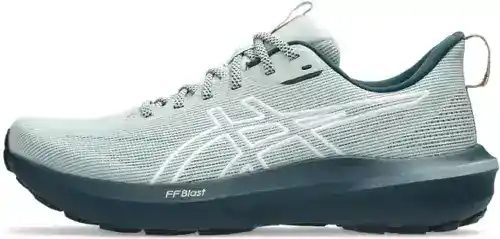
ASICS GT-1000
The GT-1000 is the entry-level stability option in the GT family. It’s designed to offer supportive guidance at a more affordable price point, with a straightforward ride that works well for many people who want stability without paying for a more premium feel.
Runner type
The GT-1000 is a strong match for:
- New runners who want a stable, predictable shoe
- Mild overpronators who do not need heavy correction
- People building a walking or run/walk habit
- Runners who prefer a firmer, more controlled feel underfoot
This is often the model that helps people feel confident early on, especially if they’re unsure whether they need stability shoes long-term.
Shoe type
- Stability daily trainer (value-focused)
- Reliable for easy runs, short mileage, and supportive walking
- Prioritizes function and durability more than “premium ride” feel
Target wearer
The GT-1000 tends to suit the following shoe buyer:
- Budget-conscious runners who still want stability features
- Walkers who want a structured shoe for long days
- Runners who do most sessions at easy pace
- People who want one shoe for errands, walking, and occasional running
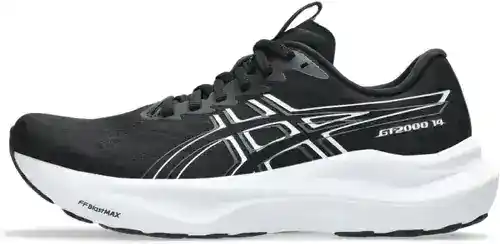
ASICS GT-2000
The GT-2000 is the model many runners land on when they want stability but don’t want the shoe to feel rigid or overbuilt. It is often viewed as the “sweet spot” stability trainer: supportive enough for regular training, refined enough to feel smoother and more modern than entry-level options.
Runner type
The GT-2000 is best for:
- Regular runners doing consistent weekly mileage
- Mild-to-moderate overpronators
- Runners who want stability without feeling like the shoe is forcing their stride
- Runners who want a stable shoe that can also handle longer runs
If you run multiple times per week and want one stability shoe that can do most of your training, this is often the best match.
Shoe type
- Stability daily trainer (mid-tier, more refined ride)
- Designed for both short runs and long runs
- Balanced cushioning and support for steady training
Target wearer
The GT-2000 tends to suit:
- Runners looking for “one shoe” to cover daily training
- Those who want stability but still prioritize comfort and smoothness
- People training for events (5K to marathon) who want stable support
- Runners who find entry-level stability shoes too firm or too basic
ASICS GT-4000
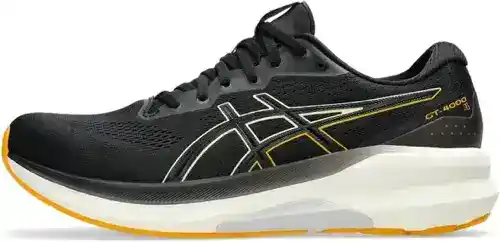
The GT-4000 is the most supportive and structured model in the GT family. It is generally chosen by people who feel they need noticeably more stability than the GT-1000 or GT-2000 provides.
This is also a common pick for walkers and runners who want a stable platform for long hours, higher body weight, or fatigue-related form breakdown.
Runner type
The GT-4000 is often the right choice for:
- Moderate-to-strong overpronators
- Runners who feel their stride collapses inward late in runs
- People who want a more guided, structured feel
- Runners who prioritize support and alignment over “lightweight speed”
Shoe type
- Maximum stability daily trainer (within the GT line)
- More structure, more support elements, and a more guided ride
- Built for steady mileage, long wear, and stable alignment
Target wearer
The GT-4000 tends to suit the following types of shoe buyer:
- Runners who have tried lighter stability shoes and still felt unstable
- Heavier runners who want a stable platform that holds up
- Walkers who need support for long days on their feet
- People who wear orthotics and want a supportive base shoe
How to choose between the GT-1000, GT-2000, and GT-4000
All three ASICS GT models are stability shoes, but the best one depends on how much support you need and what you plan to use the shoe for. If you want the simplest way to decide, think in terms of:
- How much your foot rolls inward
- Whether you want a firmer feel or a softer feel
- How many miles (or hours) you’ll put on the shoe each week
If you want the most straightforward summary: the GT-1000 is the entry-level stability trainer, the GT-2000 is the balanced daily trainer for consistent runners, and the GT-4000 is the most structured choice for stronger overpronation.
The fastest way to decide which GT shoe you should buy
If you want the fastest answer, use this guide.
Choose the GT-1000 if you want light stability at a lower price, or you’re new to running and want a reliable daily shoe for short runs and walking. It’s also a strong pick if you overpronate slightly but don’t want a heavily structured feel.
Choose the GT-2000 if you run consistently and want a smoother, more premium-feeling stability shoe that can handle both short and long runs. This is often the best choice for runners who want stability without feeling like the shoe is forcing their stride.
Choose the GT-4000 if you know you overpronate more strongly, you feel unstable when you get tired, or you want a more supportive shoe for long runs and long hours of wear. It’s also a good option if you wear orthotics and want a stable platform.
How to tell if you overpronate using simple at-home checks
A lot of runners end up shopping the ASICS GT line because they suspect overpronation but aren’t completely sure. Overpronation means your foot rolls inward more than average as it lands and pushes off. Some inward roll is normal, but too much can affect comfort and efficiency over time.
You don’t need a gait lab to get a useful clue. These simple checks can help confirm whether stability shoes like the GT-1000, GT-2000, or GT-4000 make sense for you.
Check your old shoes
Look at the outsole on a pair of shoes you’ve worn regularly for running or walking. If you overpronate, you’ll often see:
- heavier wear along the inside edge of the heel
- wear that travels from the inside heel toward the inside forefoot
- one shoe showing more inside wear than the other
If the tread is mostly worn down in the center of the heel and forefoot, you may be closer to neutral. If the outside edge is more worn, you may supinate instead.
Do the wet footprint test
This isn’t perfect, but it’s a quick indicator.
- wet the bottom of your foot
- step onto a paper bag, cardboard, or dark tile
- look at how much of your arch prints
A very full footprint can indicate flatter arches, which often correlate with overpronation. A very narrow footprint can suggest high arches, which sometimes correlate with supination.
Watch your ankles in a mirror or take a short video
Stand barefoot in front of a mirror and consider:
- do your ankles tilt inward noticeably?
- does your arch look like it collapses inward when you put weight on it?
If you can, take a short video of yourself walking or jogging away from the camera. If your heel appears to “fall inward” as you land, that’s a common overpronation sign.
Try a single-leg balance test
Overpronation often shows up as instability when your body is supported on one leg.
- stand barefoot on one foot for 20–30 seconds
- notice whether your arch collapses or your ankle wobbles
- compare your left and right side
If balancing is noticeably harder on one side, it can be a sign your foot and ankle are compensating.
Common symptoms that often point to overpronation
These symptoms can have multiple causes, but some recurring patterns show up when stability would help:
- shin splints that return despite rest
- medial (inner) knee soreness during or after runs
- arch fatigue that worsens with mileage
- plantar fascia irritation
- shoes breaking down quickly on the inner side
If symptoms are persistent or severe, a clinician or physical therapist can help rule out injury and identify strength or mobility factors.
When a running store gait analysis is worth doing
If you’re getting recurring pain, or you’re deciding between moderate support (GT-2000) and maximum support (GT-4000), a gait assessment at a reputable running store can be useful. You don’t need to treat it like a diagnosis. It’s another data point to support what your shoe wear, your video, and your symptoms suggest.
Quick takeaway: which GT model matches which pronation level?
If your checks suggest only mild inward roll, you’ll usually be comfortable in the GT-1000 or GT-2000. If you’re seeing stronger collapse, fatigue-related instability, or significant inward tilt, the GT-4000 often makes more sense.