Last Updated on September 28, 2026
| Quick Answer: The best wide shoes for men in 2026 depend on how you use them. New Balance 1080v15 is our top running pick because it comes in 2E and 4E. Brooks Ghost 18 is the best all-around option, while Hoka Bondi 9 adds maximum cushioning. Asics Gel-Kayano 33 suits men who want more stability. Skechers GO WALK 8 is an easy casual walker, New Balance 626v2 reaches widths up to 6E for work, and Merrell Moab 3 is the rugged wide-fit choice for trails. |
Wide feet need more than a roomy-looking toe box. A shoe should give the forefoot and midfoot enough space without forcing you to buy a size that is too long. That is why this guide prioritizes current men’s shoes sold in true wide or extra-wide sizes, rather than standard-width shoes that simply feel generous.
We verified the current model lineup and width availability in September 2026. If you are not sure whether you actually need a wide size, start with our guide to measuring wide feet. You can also use the Best Walking Feet Shoe Finder to narrow choices by width, cushioning and support.
Best Wide Shoes for Men at a Glance
The right pick depends on what you do most. New Balance and Brooks have the strongest overall width ranges among mainstream athletic brands. Hoka and Asics add wide versions to highly cushioned and stability-focused shoes. Skechers is useful for easy-entry casual walking, while the New Balance 626v2 is unusually accommodating for very wide feet because select versions extend to 6E. Merrell gives wide-foot hikers a dedicated wide build rather than asking them to size up. Prices below are U.S. list prices or typical list prices at publication; sale prices and color availability change.
| Shoe | Best for | Wide options | List price | Buy |
|---|---|---|---|---|
| New Balance 1080v15 | Wide-foot running | 2E, 4E | $170 | Check latest price |
| Brooks Ghost 18 | Best all-around | 2E, 4E | $150 | Check latest price |
| Hoka Bondi 9 | Maximum cushioning | Wide, X-Wide | $175 | Check latest price |
| Asics Gel-Kayano 33 | Stability | Wide, Extra Wide | $170 | Check latest price |
| Skechers GO WALK 8 | Casual walking | Extra Wide | $105 | Check latest price |
| New Balance 626v2 | Work and 6E feet | 2E, 4E, 6E | About $105 | Check latest price |
| Merrell Moab 3 | Hiking and outdoor walking | Wide | About $120 | Check latest price |
How Men’s Wide Shoe Sizes Work
For most men’s shoes in the U.S., D is the standard width, 2E is wide and 4E is extra wide. Some brands use words such as Wide, Extra Wide or X-Wide instead of the letter-and-number system. A small number of models go farther. New Balance, for example, sells select men’s shoes in 6E. The important point is that width labels are not perfectly standardized across brands. A 2E in one shoe can feel different from a 2E in another because the last, upper volume, toe shape and heel width are different.
Do not automatically buy a longer shoe just because your foot feels squeezed. Extra length can create heel slip and place the flex point of the shoe in the wrong place. Try the same length in a wider width first. The widest part of your foot should line up with the widest part of the shoe, your toes should be able to move without rubbing the sides, and the heel should stay reasonably secure.
If your feet swell during the day, measure and try shoes later in the afternoon with the socks you normally wear. Fit the larger or wider foot if your feet are different sizes. For a deeper sizing walkthrough, see Shoe Size by Foot Length in Inches and Centimeters.
Best Wide Shoes for Men in 2026
New Balance 1080v15: Best Wide Running Shoe
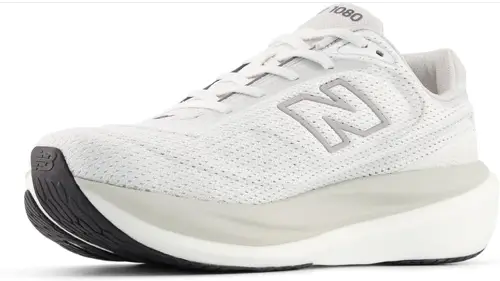
The 1080v15 is our top running pick for wide feet because New Balance sells the men’s version in standard D, wide 2E and X-Wide 4E. That gives runners a real width progression instead of forcing a wider foot into a standard upper. The current v15 also moves away from the Fresh Foam X setup used in the v14 and uses Infinion foam for a softer, more responsive everyday ride. New Balance lists a 6 mm drop and a U.S. price of $170.
It works best for neutral runners and walkers who want a high-cushion road shoe. The upper is breathable, and the wide versions add useful forefoot and midfoot room without turning the shoe into a loose-fitting platform. If you previously wore the roomier 1080v14, do not assume the same width will feel identical; the v15 fit is different enough that trying the 2E or 4E is worthwhile. Read our New Balance 1080v15 review for the full ride and fit breakdown.
Brooks Ghost 18: Best All-Around Wide Shoe
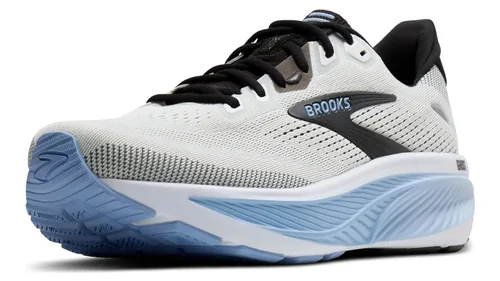
The Ghost 18 is the easiest all-around recommendation because Brooks offers the men’s shoe in wide 2E and extra-wide 4E, and the platform works for walking, easy running, treadmill use and everyday wear. DNA LOFT v3 cushioning gives it a softer feel than older Ghost models without making the shoe unusually tall or unstable. Brooks lists the Ghost 18 at $150 and specifically includes it in both road-running and walking categories.
Wide-foot buyers should like the fact that the Ghost does not rely only on a stretchy upper to create room. The dedicated width options change the fit across the shoe, which is more useful if pressure is coming from the forefoot or midfoot. Compared with the 1080v15, the Ghost feels a little more traditional and controlled underfoot. Compared with the Bondi 9, it is lighter and less bulky. That makes it a strong choice if you want one wide shoe for several activities. Read our Brooks Ghost 18 review.
Hoka Bondi 9: Best Maximum-Cushion Wide Shoe
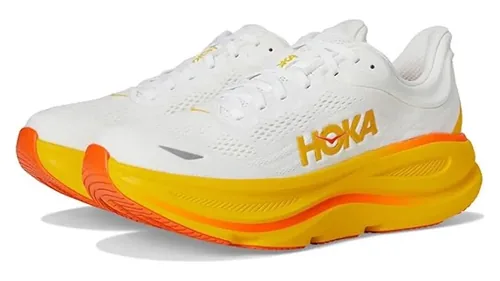
The Bondi 9 is the wide-foot pick for men who want as much cushioning as possible for pavement, concrete and long days on their feet. Hoka sells the men’s model in multiple widths, including wide and X-Wide versions on current colorways. The shoe uses a tall, broad platform and Hoka’s rocker geometry to make walking transitions smoother. Its U.S. list price is $175.
This is not the lightest option in the guide, and men who prefer a close-to-the-ground feel may find it excessive. For walkers who value impact protection, though, the Bondi’s combination of cushioning and a broad base is hard to match. The wide versions are especially useful because the standard Bondi can still feel snug through the forefoot for some feet. If you spend most of the day on hard floors, this is the model to compare with the Ghost 18 and 1080v15. Read our Hoka Bondi 9 review.
Asics Gel-Kayano 33: Best Wide Stability Shoe
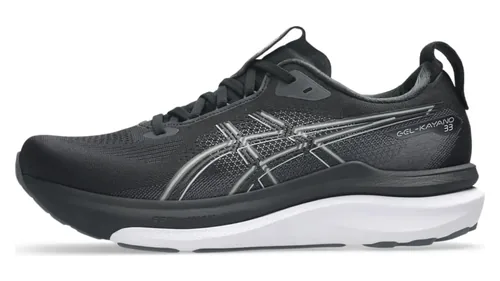
The Gel-Kayano 33 is the best choice here for men who want a more guided, stable ride and also need extra width. Asics offers the current model in standard, Wide and Extra Wide versions. The Kayano 33 uses FLUIDSUPPORT technology rather than the older style of firm medial post, combining different foam densities with broad geometry to guide the foot more gradually. Asics lists an 8 mm drop, a 10.5-ounce men’s weight and a $170 price.
That structure makes the Kayano more substantial than the Ghost 18. It is a good match for walkers and runners who feel more comfortable with added side-to-side control, but stability shoes are not automatically better for every wide foot. Fit and comfort still matter more than a label such as overpronation. The extra-wide option is the key advantage for this guide because many stability shoes stop at one wide width. See our Asics Gel-Kayano 33 review and our explainer on Asics FLUIDSUPPORT.
Skechers GO WALK 8: Best Casual Extra-Wide Walking Shoe
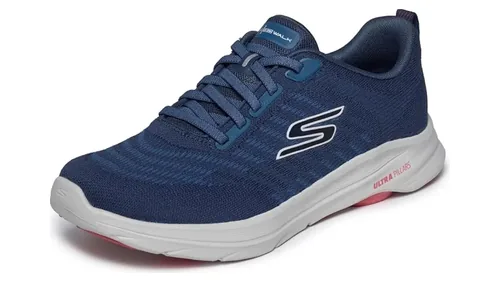
The GO WALK 8 is the relaxed option for errands, travel and neighborhood walking. Skechers sells current men’s GO WALK 8 versions in Medium and Extra Wide, with several hands-free Slip-ins styles available. The regular Slip-ins GO WALK 8 carries a U.S. list price of $105. It is much less structured than the Gel-Kayano or 626v2, but that is part of the appeal if you want a soft, light shoe that is easy to get on and off.
Choose it for comfort and convenience rather than heavy-duty support. The flexible platform works well for casual walking, but men who spend an entire shift on hard floors or need strong lateral stability should look at the 626v2, Ghost 18 or Bondi 9 instead. Skechers’ Extra Wide label is useful for broad feet, but as with every brand, the actual internal volume can vary by style. Read our Skechers GO WALK 8 review before choosing between the lace-up and Slip-ins versions.
New Balance 626v2: Best for Work and Very Wide Feet
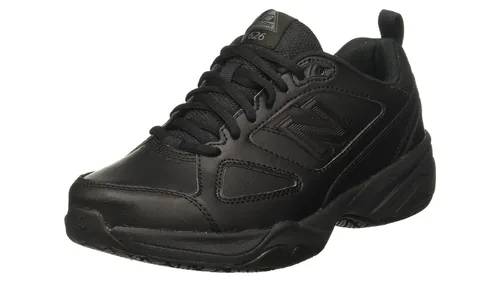
The 626v2 earns a place here because it goes wider than most mainstream work shoes. Men’s versions are sold in D, 2E, 4E and, in select inventory, 6E. That makes it one of the first shoes to check if 4E athletic shoes still feel too narrow. The 626v2 uses a leather upper, ABZORB heel cushioning, an internal shank and an oil-resistant, slip-resistant outsole. Typical list pricing is about $105, although this long-running model is often discounted.
It is designed for work rather than running. The leather upper is easier to wipe clean than open mesh, and the outsole is better suited to workplaces where traction matters. It is heavier and firmer than the 1080v15 or Bondi 9, so recreational walkers usually have better options. For healthcare, food service and other jobs where a very wide fit and work-focused outsole matter more than low weight, it is unusually practical. Read our New Balance 626v2 review for the full work-shoe assessment.
Merrell Moab 3: Best Wide Hiking Shoe
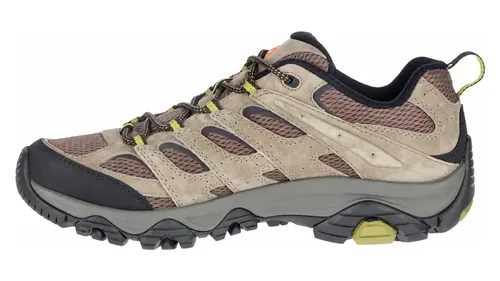
The Moab 3 is the outdoor choice for men whose wide feet need more room on trails. Merrell sells dedicated Wide Width versions of the low Moab 3 as well as wide versions of several waterproof and mid-height models. The shoe combines a supportive insole, cushioned midsole and Vibram outsole with a more protective upper than a road-running shoe. U.S. pricing is typically around $120 for the standard low shoe, with waterproof versions costing more.
Unlike a soft road shoe, the Moab is built to deal with dirt, gravel and uneven surfaces. The dedicated wide version matters because hiking feet can swell during long days, and a snug toe box becomes more noticeable on descents. The trade-off is weight and flexibility: the Moab feels more substantial than the Ghost 18 or GO WALK 8. If your walking is mostly sidewalks, choose a road shoe. If you regularly walk trails or need a durable outdoor shoe, the Moab 3 is the better fit. Read our Merrell Moab 3 review.
How to Choose Wide Shoes for Men
Start with width, but do not stop there. A shoe can be wide enough at the ball of the foot and still feel wrong if the heel is too loose, the midfoot is too low-volume or the toe box tapers sharply. The best fit holds the heel without squeezing the forefoot. Your toes should not rub the sidewall, and you should not need to curl them to keep the shoe on.
Match the shoe to the activity next. Runners need a model that stays secure as pace increases, which is why the 1080v15 and Ghost 18 lead this list. Walkers on hard surfaces may prefer the broader, more cushioned Bondi 9. Men who want guidance can move toward the Gel-Kayano 33. Work environments change the priorities again: the 626v2 uses a work-oriented outsole and reaches 6E. Hiking calls for traction and upper protection, where the Moab 3 is much stronger than a road shoe.
Finally, try shoes when your feet are at their largest, usually later in the day. Wear your normal socks and any orthotics you use. If the standard size feels too tight across the forefoot, move to the wider width before increasing length. If you want a walking-only comparison, see our Best Wide Shoes for Walking in 2026. For a broader men’s shortlist, see Best Walking Shoes for Men in 2026.
Frequently Asked Questions About Wide Shoes for Men
In many U.S. men’s shoes, D is standard, 2E is wide and 4E is extra wide. Some brands use words such as Wide, Extra Wide or X-Wide instead. Widths are not perfectly standardized, so fit can still vary by brand and model.
Usually, try a wider width in your normal length before buying a longer shoe. Going longer can create heel slip and move the shoe’s flex point away from the natural bend of your foot.
The New Balance 1080v15 is our top wide-running pick because the men’s model is available in 2E and 4E. The Brooks Ghost 18 is another strong choice if you prefer a more traditional, balanced ride.
The New Balance 626v2 is available in widths up to 6E in select men’s sizes and inventory. It is a work shoe, not a running shoe, and is especially useful for men who still feel squeezed in 4E footwear.
Several Hoka models are sold in dedicated wide widths. The Bondi 9 is our pick here because it combines wide and X-Wide options with a broad, highly cushioned platform. Width availability can vary by color and size.
Fit the larger or wider foot first. You can usually fine-tune the smaller foot with lacing, a slightly thicker sock or an insole, but a shoe that is too narrow for the larger foot will remain uncomfortable.
Your toes should be able to spread and move without rubbing the sides or front of the shoe. The forefoot should sit fully on the platform, while the heel should remain secure enough that it does not slide with every step.