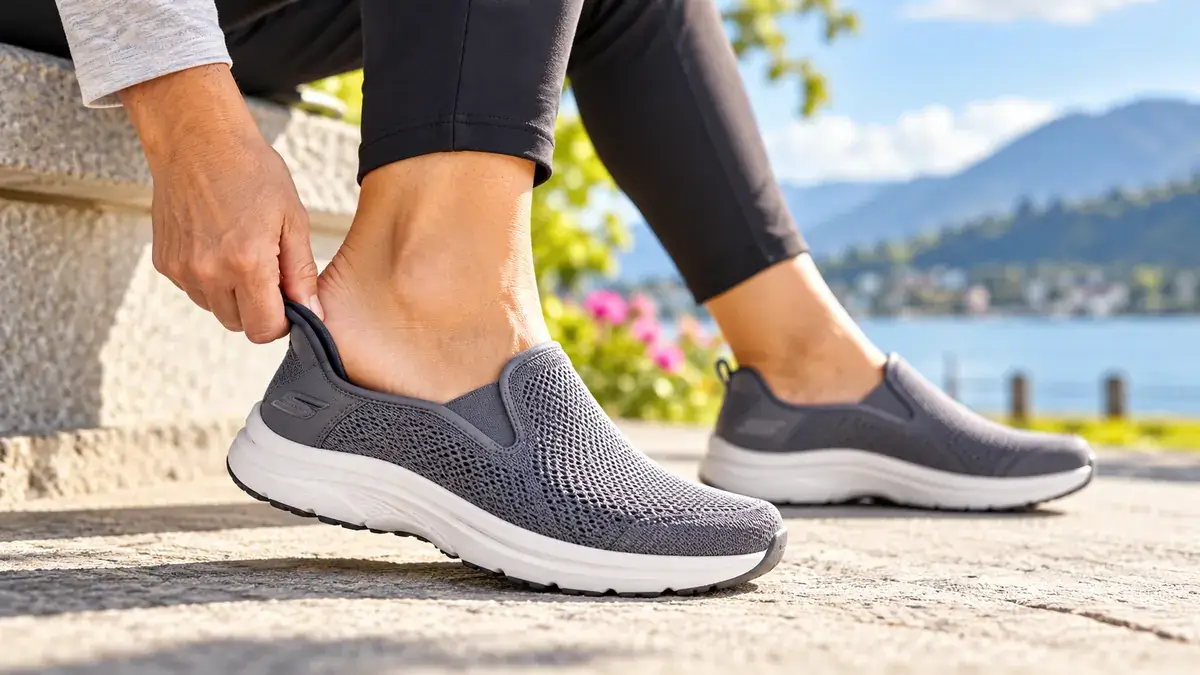
A walking shoe can feel great once it is on your foot and still be frustrating to put on. That matters if bending is difficult, your hands do not work as well as they once did, balance is unreliable, or you simply want a shoe you can step into quickly.
Easy-entry shoes have improved considerably. The better designs are no longer just loose slip-ons. Brands such as Kizik, Skechers and Orthofeet now use structured heels that compress as your foot enters and then return to shape around it. We looked for that convenience plus the things that still matter for walking: secure heel hold, useful cushioning, enough toe room, traction and a fit that does not become sloppy after a few miles.
If width is part of the problem, see our guide to shoe brands for wide feet and roomy toe boxes before choosing a hands-free model. For more on the GO WALK, Slip-ins, Arch Fit and Max Cushioning families, see our Skechers shoes guide.
Best easy-entry walking shoes compared
| Shoe | Best for | Entry system | Widths | Launch Price |
|---|---|---|---|---|
| Kizik Athens 2 | Best overall | Hands-free compressing heel | Standard, wide, extra-wide | $139.95 | Check latest price |
| Skechers GO WALK Flex Slip-ins | Best value | Hands Free Slip-ins heel | Varies by version | $85 | Check latest price |
| Orthofeet Kita Hands-Free | Best supportive women’s option | Hands-free heel | Medium, wide | $129 | Check latest price |
| Orthofeet Yari Hands-Free | Best supportive men’s option | Hands-free heel | Medium, wide | $129 | Check latest price |
| Kizik Athens 2 Knit | Best softer upper | Hands-free compressing heel | Standard, wide, extra-wide | $140 | Check latest price |
Kizik Athens 2 is the best easy-entry walking shoe for most people
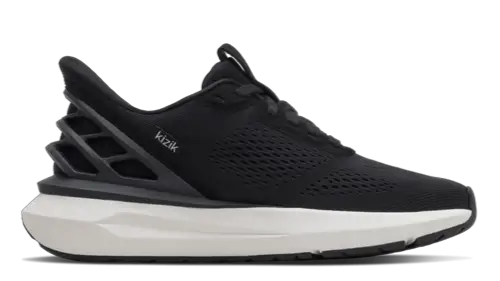
Best for: Everyday walking, travel and walkers who want a true hands-free sneaker without making easy entry the shoe’s only useful feature.
The Kizik Athens 2 gets the basic idea right. You step down, the rear structure compresses and it rebounds around your heel. That is more useful than a conventional slip-on that stays loose enough for your foot to slide in but then allows the heel to move while walking.
The Athens 2 also uses responsive cushioning and a flexible sole designed for everyday walking. For everyday walking, that combination makes more sense than choosing a shoe only because it is easy to put on. The result still feels like an athletic walking sneaker after your foot is inside it.
- Hands-free heel system
- Responsive foam cushioning
- Flexible everyday walking sole
- Engineered mesh upper
- Standard, wide and extra-wide versions
- Launch/list price: $139.95
Who should skip it: Walkers who need firm stability features or substantial extra interior depth for a bulky orthotic.
Read our full Kizik Athens 2 review
Check latest price for the Kizik Athens 2 on Amazon
Skechers Hands Free Slip-ins GO WALK Flex offers the best value
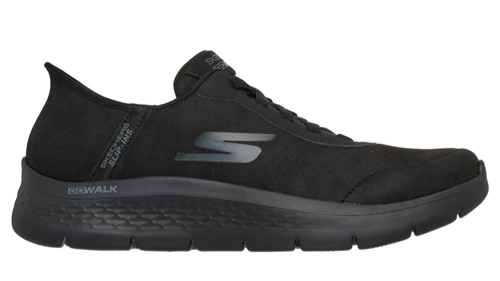
Best for: Errands, casual walking and people who want true hands-free entry without paying well over $100.
Skechers has made hands-free entry a major part of its walking line. GO WALK Flex Slip-ins models use a molded heel structure and the brand’s Heel Pillow to help guide the foot into place and hold it once you are walking. Current versions also pair the system with lightweight Ultra Go cushioning.
The ride is generally softer and more flexible than the Kizik Athens 2. That can feel good for shopping, dog walking, travel days and routine neighborhood walks. The trade-off is that walkers who prefer a firmer, more structured platform may want one of the Orthofeet options below.
- Hands Free Slip-ins heel
- Heel Pillow rear support
- Ultra Go cushioning on current models
- Air-Cooled Memory Foam on many versions
- Multiple widths on selected versions
- Launch/list price: about $85
Who should skip it: Walkers who want a firm platform or need a highly structured removable footbed.
Read our full Skechers Hands Free Slip-ins GO WALK Flex review
Check latest price for Skechers GO WALK Flex Slip-ins on Amazon
Orthofeet Kita Hands-Free gives women more room to tune the fit
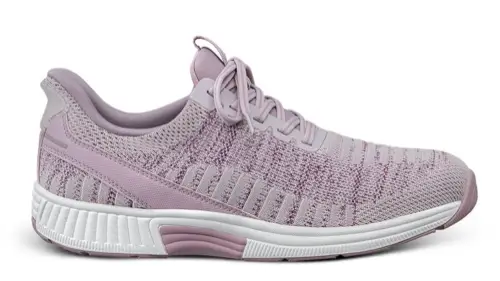
Best for: Women who want easy entry plus a stretchier upper, removable insole and more ability to adjust the fit.
The Orthofeet Kita is useful when the challenge is not just tying shoelaces. Its hands-free heel lets you step into the shoe after the laces have been adjusted, while the stretch upper can be more forgiving across the top and sides of the foot than a rigid athletic upper.
That can matter if your feet become more sensitive as the day goes on or if you wear an orthotic and need more flexibility inside the shoe. Orthofeet also builds the Kita around its Ortho-Cushion platform rather than treating it as a casual slip-on.
- Hands-free step-in construction
- Stretchable upper
- Removable footbed
- Adjustable laces
- Medium and wide widths
- Launch/list price: about $129
Who should skip it: Walkers with narrow feet who prefer a snug athletic fit, or anyone who needs very wide sizing beyond the available options.
Check latest price for the Orthofeet Kita Hands-Free on Amazon
Orthofeet Yari Hands-Free is the stronger men’s support option
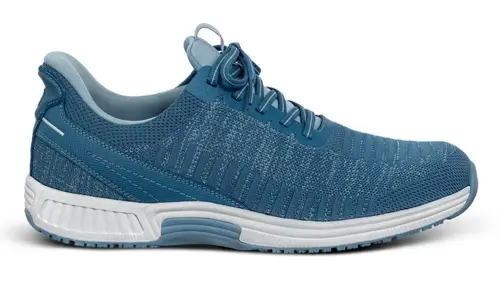
Best for: Men who have difficulty bending down or tying shoes but still want a supportive walking-shoe feel.
The Yari is the men’s counterpart we would look at first when support and easy entry are equally important. Its hands-free heel lets you step into the shoe after setting the laces to the fit you want, and the stretch upper gives the foot some room without relying on an intentionally loose fit.
This can be especially useful for someone who has been wearing conventional supportive walking shoes but finds that getting them on has become the frustrating part. Hands-free does not mean balance-proof, though. If balance is a concern, put shoes on while seated or while holding a stable support.
- Hands-free heel construction
- Stretchable upper
- Removable footbed
- Adjustable laces
- Men’s medium and wide widths
- Launch/list price: about $129
Who should skip it: Walkers who need 4E or wider sizing.
Check latest price for the Orthofeet Yari Hands-Free on Amazon
Kizik Athens 2 Knit is the better choice if stiff uppers bother you
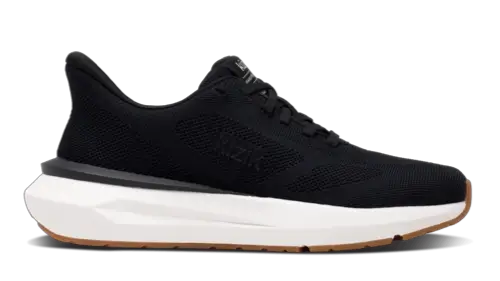
Best for: Walkers who like the Athens 2 concept but want a softer upper with more give across the foot.
The Athens 2 Knit keeps the hands-free idea but swaps in a four-way stretch knit upper. That sounds like a small change, but upper construction can make a noticeable difference for feet that dislike pressure across the top or become a little fuller later in the day.
It also uses responsive cushioning, a flexible sole and a removable insole. The price is higher than a Skechers GO WALK Flex, so convenience alone does not justify the premium. Its appeal is the combination of a structured hands-free heel with a softer upper.
- Hands-free heel system
- Four-way stretch knit upper
- Responsive foam midsole
- Removable insole
- Standard, wide and extra-wide sizing
- Launch/list price: about $140
Who should skip it: Walkers looking for the lowest-cost option or those who prefer a firmer upper that locks the foot down tightly.
Read our full Kizik Athens 2 review
Check latest price for the Kizik Athens 2 Knit on Amazon
Who should consider an easy-entry walking shoe?
Easy-entry shoes are not only for older adults. They can help whenever getting into an ordinary lace-up sneaker is harder than the actual walking. That can include someone recovering from an injury, a person with limited hip or back mobility, a traveler who repeatedly takes shoes on and off, or someone who simply wants to get out the door faster.
There is also an important distinction between a slip-on and a true hands-free shoe. A traditional slip-on removes the need to tie laces, but you may still need to pull the heel into place. A good hands-free design uses a structured rear section that gives way as the foot enters and then returns toward its normal shape.
Easy entry should not mean a loose heel
The biggest mistake is buying a larger size simply because it is easier to get into. Your walking shoe still needs to hold your heel. If the heel lifts noticeably with each step, the shoe can rub, your foot can slide forward and your toes may start gripping to keep the shoe on.
Fit the shoe for walking first and entry second. Once your foot is inside, walk around normally and pay attention to the heel, the widest part of your forefoot and the space ahead of your longest toe. If a shoe only becomes easy to enter after you size up, it is probably the wrong easy-entry design for your foot.
Not sure what kind of fit you need? Try our Free Shoe Finder, or start with our broader guide to the best walking shoes.
What to look for in an easy-entry walking shoe
- A structured heel that compresses enough to let the foot enter and then recovers.
- A secure heel once you start walking.
- Cushioning that matches the distances you actually walk, not just softness in the store.
- Enough width and height around the toes without unnecessary sizing up.
- A removable insole if you use your own orthotic.
- Wide or extra-wide options when your foot needs them.
- Reliable outsole traction, especially if limited mobility is one reason you want hands-free entry.
The easiest shoe to put on is not automatically the best shoe to walk in. Judge both parts of the job.
Frequently asked questions about easy-entry walking shoes
A slip-on eliminates tied laces, but you may still need your hands to pull the heel onto your foot. A hands-free shoe is designed so you can step into it without pulling the heel into place, while still holding the heel once you start walking.
Kizik Athens 2, Skechers Hands Free Slip-ins GO WALK Flex and Orthofeet hands-free athletic models are good places to start. The best choice still depends on foot width, cushioning preference, support needs and whether you wear an orthotic.
Many Skechers Slip-ins are built on walking-oriented platforms such as GO WALK. Look at the specific model rather than assuming every Slip-ins shoe has the same cushioning, fit or outsole.
Yes. Current Kizik hands-free models use a structured rear section designed to compress as your foot enters and rebound afterward, so you normally do not need to pull the heel onto your foot.
They can be helpful for anyone who has difficulty bending, reaching the feet or manipulating shoelaces. Fit and traction still matter. Someone with balance problems should put shoes on while seated or while using stable support.
Sometimes. Look for a removable factory insole and enough interior depth. A thicker orthotic can change how securely the hands-free heel holds your foot, so always test the complete setup.
No. They should be easy to enter without becoming loose during walking. Your toes need room, but your heel should remain reasonably secure and your foot should not slide forward with every step.