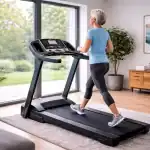
Running on a treadmill places very different demands on a machine than walking, and adding incline increases those demands even further. Impact forces rise, stride mechanics change, and the motor must maintain consistent belt speed while lifting both the runner and the deck. Not all treadmills that offer incline are built to handle this well.
This guide focuses on treadmills with incline that are actually suitable for running, whether you’re using incline for hill training, interval workouts, or low-impact intensity. For a full overview of all treadmill categories, see the main hub: Best Treadmills for Home Use: 2026 Buyer’s Guide.
What makes a treadmill good for running with incline?
Incline running adds mechanical stress to every part of the treadmill. Motors work harder, frames flex more, and belt traction becomes more important. A treadmill that performs well on flat ground may struggle once incline is introduced.
A treadmill that works well for incline running typically includes:
- A motor designed for sustained load, not just flat-speed output
- A belt long and wide enough to support uphill stride changes
- A frame that remains stable as the deck elevates
- Deck cushioning that absorbs impact without feeling unstable on incline
Running treadmill vs walking treadmill
The difference between running and walking treadmills becomes more pronounced when incline is involved.
Walking treadmills:
- Are designed for lower speeds and lighter loads
- Often struggle to maintain speed at incline
- Can feel unstable when the deck is elevated
Running treadmills:
- Maintain belt speed under uphill load
- Handle repeated foot strikes on an elevated deck
- Stay cooler during longer incline sessions
If incline running is part of your routine, choosing a treadmill designed for running is essential.
Key features runners should prioritize
Incline amplifies both strengths and weaknesses in treadmill design. These features matter most.
Motor strength
Incline places continuous strain on the motor. Smooth speed control and the ability to hold pace uphill are more important than headline horsepower numbers.
Belt length and width
Running uphill often shortens stride slightly, but you still need adequate belt length to avoid feeling cramped—especially during faster efforts.
Cushioning and deck feel
Cushioning should feel consistent whether the deck is flat or elevated. Poorly designed systems can feel unstable once incline is engaged.
Frame stability
As incline increases, so does leverage on the frame. A stable treadmill should feel solid, not flex or sway, even at higher incline levels.
Typical price range for incline treadmills
Treadmills with meaningful incline capability generally cost more due to stronger motors and lift systems.
- Entry-level incline treadmills: $1,000–$1,400
- Mid-range incline treadmills: $1,400–$2,200
- Higher-end incline treadmills: $2,200–$3,000+
Higher prices usually reflect better uphill performance rather than cosmetic features.
Best treadmills with incline on Amazon for 2026
The models below are commonly chosen by runners who want reliable incline performance at home. Amazon links use search results so availability remains stable.
Treadmill | Best for | Key strengths | Price range | Amazon link |
|---|---|---|---|---|
Horizon Fitness 7.0 AT | Interval and hill training | Responsive incline changes, strong motor | $$ | |
NordicTrack Commercial Series | Structured incline workouts | High incline range, robust build | $$–$$$ | |
ProForm Pro Series | Budget incline running | Solid uphill capability for the price | $$ | |
Sole F63 | Durability-focused runners | Stable deck, consistent incline feel | $$ | |
Sole F80 | Frequent incline training | Higher weight capacity, strong lift motor | $$$ | |
XTERRA Fitness TRX4500 | Value-focused incline running | Foldable design, good incline range | $$ |
Price legend: $ = under $1,000; $$ = $1,000–$2,000; $$$ = over $2,000.
Who should choose a treadmill with incline?
Incline treadmills are well suited for runners who want hill simulation, walkers looking to increase intensity without speed, multi-user households, and anyone aiming to progress fitness without outdoor elevation.
Common mistakes runners make when buying an incline treadmill
Incline adds complexity, and many issues come from unrealistic expectations.
- Assuming all incline systems handle running equally well
- Ignoring motor strain at higher incline levels
- Choosing short belts that feel cramped uphill
- Prioritizing maximum incline numbers over stability
Frequently asked questions about incline treadmills
Is running on incline harder than running flat?
Yes. Incline increases muscular demand and cardiovascular load, even at slower speeds.
Do incline treadmills wear out faster?
They can if the motor and frame aren’t designed for sustained uphill use.
Is incline better for joints?
Incline can reduce impact at slower speeds but increases muscular strain. Balance matters.
How much incline do you actually need?
Most runners benefit from moderate incline ranges rather than extreme settings.
Are incline treadmills good for walking?
Yes. Incline is one of the best ways to increase walking intensity without increasing speed.
Are folding incline treadmills reliable?
Some are. Stability and motor quality matter more than whether the deck folds.
If you want to compare incline treadmills with other categories, return to the hub guide: Best Treadmills for Home Use (2026 Buyer’s Guide).