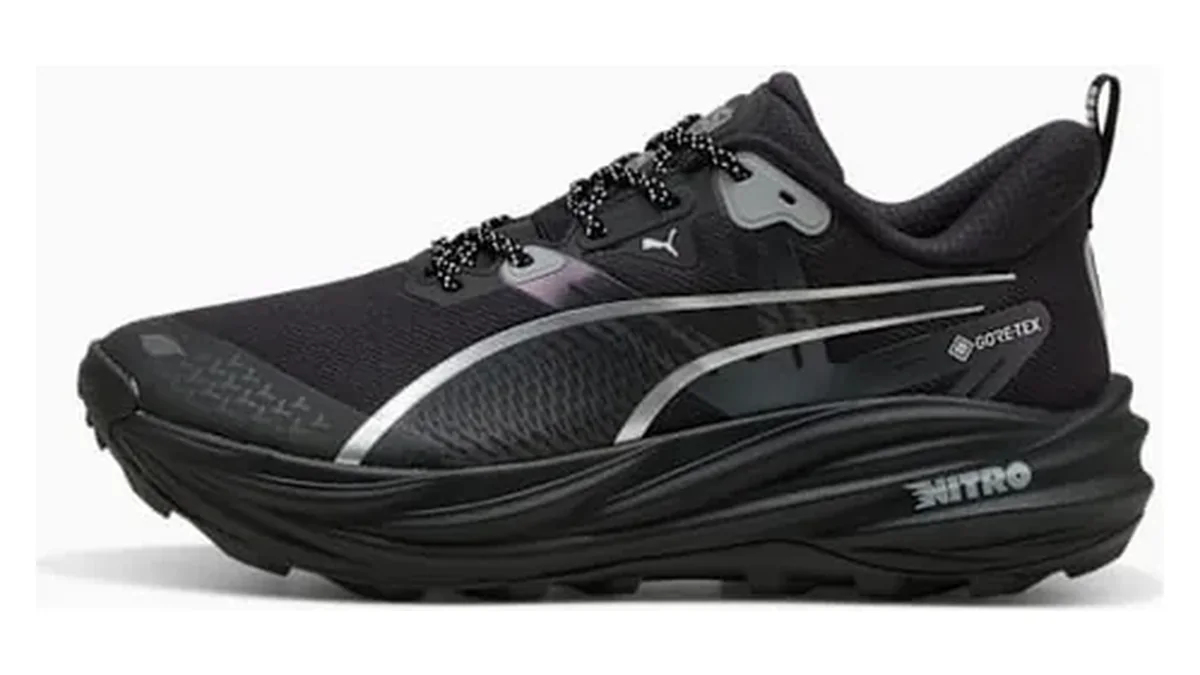
Quick Answer: The Puma Voyage NITRO 4 GTX is a waterproof trail running shoe for wet, muddy and mixed terrain. It combines NITROFOAM cushioning with a Gore-Tex Invisible Fit upper and PUMAGRIP ATR outsole. The current model uses a 38 mm heel, 32 mm forefoot and 6 mm drop. It is best for trail runners and hikers who need weather protection and grip, but it is heavier and less breathable than a non-waterproof trail shoe. Jump to the verdict.
The Voyage NITRO 4 GTX is Puma’s wet-weather trail option. The main difference from a road shoe is not just the Gore-Tex upper. The outsole, geometry and upper structure are all designed to handle uneven surfaces, dirt and changing conditions.

Puma Voyage NITRO 4 GTX Specs
| Type | Waterproof trail running shoe |
| Midsole | NITROFOAM |
| Upper | Gore-Tex Invisible Fit with PWRTAPE reinforcement |
| Outsole | PUMAGRIP ATR |
| Stack height | 38 mm heel / 32 mm forefoot |
| Drop | 6 mm |
| Support | Neutral with a stable trail geometry |
| Best for | Wet trails, hiking and mixed terrain |
| Launch price | $170 | Check latest price |
Gender-specific buy links: Men’s version | Women’s version
Pros
- Waterproof Gore-Tex upper for rain, mud and cold conditions
- PUMAGRIP ATR outsole gives stronger mixed-surface traction
- Cushioning is substantial enough for longer trail days
- Works for trail running and hiking
Cons
- Waterproof construction runs hotter than a non-GTX trail shoe
- Heavier and less breathable than a dry-weather option
- Trail outsole is unnecessary for mostly paved use
Who Should Buy the Voyage NITRO 4 GTX?
Buy it if your trail running regularly includes rain, mud, wet grass or cold conditions. The Gore-Tex upper helps keep water out, while the PUMAGRIP ATR outsole is designed for more aggressive mixed-surface traction than Puma’s road rubber.
It also makes sense for hikers who want a lighter trail shoe instead of a boot. The cushioning is substantial enough for long days, and the outsole is built to handle steeper and rougher terrain than a normal walking shoe.
Who Should Skip It?
Skip the GTX version if most of your trails are dry and warm. Waterproof membranes reduce airflow, and you may end up with a hotter shoe than you need. A non-waterproof trail model will usually feel lighter and more breathable.
It is also overkill for pavement. The outsole lugs and trail geometry make more sense on dirt, gravel and uneven terrain than on sidewalks.
Fit and Upper
The upper combines Gore-Tex Invisible Fit with PWRTAPE reinforcement. The waterproof membrane is bonded more closely to the upper than in older bootie-style constructions, which helps reduce bulk while keeping weather protection.
The fit is intended to be secure because trail shoes need to hold the foot in place when the surface tilts or changes direction. If you have very wide feet, check width carefully because Puma does not offer the broad width range you will find from some road-shoe brands.
Cushioning and Trail Feel
NITROFOAM gives the Voyage enough cushioning for longer trail days without turning it into an excessively soft shoe. The 38/32 mm stack and 6 mm drop strike a middle ground between low trail shoes and very tall max-cushion models.
That moderate geometry helps on uneven ground because the shoe still feels connected enough to place your feet confidently.
Grip and Durability
PUMAGRIP ATR is the trail-focused version of Puma’s outsole rubber. It uses a more aggressive design for dirt, loose surfaces and changing terrain. That is the main reason to choose the Voyage over a road shoe with a waterproof upper.
The Gore-Tex upper also helps in wet conditions, but no low-cut trail shoe is fully protected if water enters over the collar. In deep puddles or stream crossings, water can still get inside from above.
Is the Voyage NITRO 4 GTX Good for Hiking?
Yes. It works well for day hikes and fast hiking where you want more flexibility and less weight than a traditional boot. The waterproof upper and trail outsole make it especially useful in cool or wet conditions.
If you carry a heavy pack or need ankle support, a hiking shoe or boot may still be more appropriate.
Voyage NITRO 4 GTX Alternatives
The Hoka Speedgoat 7 offers more cushioning and a non-waterproof trail focus. The Brooks Cascadia 20 adds a more structured trail platform. The Saucony Peregrine 16 feels lower and more agile. If waterproofing is not necessary, the standard Voyage NITRO 4 will be cooler and lighter.
Compare more options in our best trail running shoes and Puma running shoe comparison.
Puma Voyage NITRO 4 GTX Verdict
The Voyage NITRO 4 GTX fills a clear role in Puma’s lineup: wet-weather trail running. The combination of Gore-Tex, NITROFOAM and PUMAGRIP ATR gives it weather protection, cushioning and real trail traction in one shoe.
It is not the shoe to buy for warm, dry pavement or casual walking. But for muddy trails, rainy hikes and mixed terrain, it is the current Puma model that makes the most sense.
Frequently Asked Questions
Yes. It uses a Gore-Tex Invisible Fit upper designed to keep water out while reducing the bulk of a traditional waterproof bootie.
The current model uses a 6 mm heel-to-toe drop.
The stack is about 38 mm at the heel and 32 mm at the forefoot.
Yes. Its waterproof upper, cushioned midsole and trail outsole make it suitable for day hikes and fast hiking in wet conditions.
It can handle short paved sections, but the trail outsole and waterproof upper make it better suited to dirt, gravel and mixed terrain.
It uses Puma’s PUMAGRIP ATR trail outsole for grip on varying terrain.
Choose the Gore-Tex version for wet, cold or muddy conditions. Choose the non-waterproof version for better breathability in dry and warm conditions.
Compare this model with the rest of the current lineup in our Puma shoes hub and Puma running shoes comparison.