| Quick Answer: For walking and hiking, start with a lighter boot or hiking shoe that flexes naturally and has enough cushioning for distance. For outdoor work, prioritize traction, durability, and any required safety toe or electrical-hazard protection. For wet conditions, waterproof construction matters only if the outsole also grips on mud, wet pavement, or slick surfaces. For cold weather, choose insulation based on how long you are outside and how active you are. There is no single boot that is best for all four jobs. |
Choosing the “best boots” requires a bit more understanding of their use. Will they be used for walking, outdoor work, wet weather, and cold weather. Those uses pull the design in different directions: lighter boots walk better, heavier work boots protect better, waterproof boots manage wet conditions, and winter boots trade flexibility for insulation.
So let’s look at some use cases.
Best Boots for Walking and Hiking
If the main job is walking, start with weight and flex. A lighter hiking boot or sturdy hiking shoe will usually feel better over distance than a heavy work boot because it allows a more natural stride and asks less from your legs. Cushioning matters too, especially on pavement and hard-packed trails, but the platform still needs enough stability that your foot does not feel sloppy on uneven ground.
For recreational walking, trails, and mixed outdoor use, the Hiking Shoes and Boots guide is the best place to compare current options. If you mostly walk on roads and sidewalks, you may not need a boot at all; a supportive walking shoe can be lighter and less tiring.
Best Boots for Outdoor Work
Outdoor work changes the priorities. Protection, durability, and the actual requirements of the job come first. Some workplaces require a safety toe, electrical-hazard protection, puncture resistance, or a specific type of outsole. A comfortable hiking boot is not a substitute for required protective footwear.
If you want less bulk without giving up work-ready construction, compare our Best Lightweight Work Boots. If toe protection is mandatory, our Best Steel Toe Shoes and Best Composite Toe Boots guides are better starting points than a general hiking boot roundup.
Best Boots for Wet Conditions
Waterproofing solves only half the problem in wet weather. A waterproof membrane can keep water out, but it does not tell you how the outsole will grip on mud, wet pavement, slush, or slick workplace floors. Tread pattern and rubber compound matter just as much as the upper.
For trails and loose ground, deeper lugs generally make more sense. For hard workplace surfaces where water, oil, or grease may be present, a purpose-built work outsole is more appropriate. In those environments, use our Best Slip-Resistant Work Boots guide rather than choosing based on waterproofing alone.
Best Boots for Cold Weather
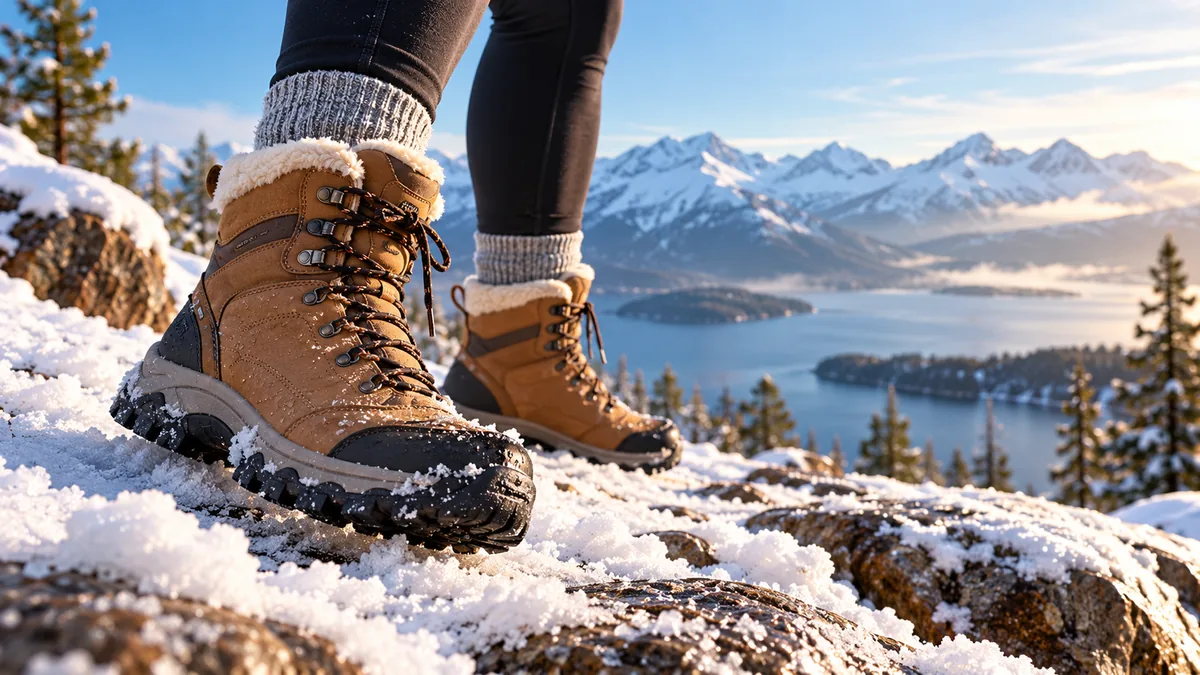
Cold-weather boots add insulation, but more insulation is not automatically better. If you are moving constantly, a heavily insulated boot can become hot and bulky. If you are standing outside for long periods, warmth may matter more than low weight or flexibility.
Fit also changes in winter because thicker socks take up more room. The boot should hold your heel securely while leaving enough toe space for warmth and circulation. For a current insulated lifestyle boot, see our Ugg Adirondack XXV review. For work-specific cold-weather options, compare our Best Winter Work Boots.
What About Road-to-Trail and Light-Duty Hybrid Boots?
Hybrid hiking shoes and light boots can work well when your day mixes pavement, packed trails, gravel, and occasional wet ground. They are usually lighter than full work boots and often more comfortable for distance. The limitation is protection. They are not substitutes for safety footwear, and their softer uppers may wear faster in industrial environments.
This is where the main use should decide the category. If most of the day is recreational walking, choose the lighter outdoor shoe. If most of the day is work, start with the Best Work Shoes and Work Boots hub and then narrow by protection, traction, weather, and fit.
Fit Changes in Cold and Wet Conditions
Boot fit needs more room for thicker socks, foot swelling, and waterproof linings. Too much extra space, however, can create heel lift and blisters. Try boots with the socks you actually plan to wear and make sure your toes still have room when walking downhill or stepping off curbs. A waterproof membrane can also make a boot warmer, so breathability becomes part of the trade-off in shoulder seasons.
Do not fix a width problem by buying a much longer boot. If the forefoot feels cramped but there is already enough length, look for a wider size or a model with a roomier toe box. Excess length can create heel movement without solving pressure across the foot.
A Single Boot Rarely Does Everything Well
If you need one pair for several uses, decide which requirement is non-negotiable. Workplace protection beats hiking comfort if your employer requires a safety toe. Warmth beats low weight if you are standing outside in freezing weather. Distance comfort beats heavy-duty protection if your main use is recreational walking. Making that priority explicit prevents you from buying a boot that is mediocre at every job.
| Main use | Prioritize | Watch for |
|---|---|---|
| Walking or hiking | Low weight, flex, cushioning, trail grip | Unnecessary boot weight |
| Outdoor work | Required protection, durability, traction | Using hiking footwear where safety footwear is required |
| Wet weather | Waterproofing plus surface-appropriate grip | Assuming waterproof means slip-resistant |
| Cold weather | Insulation, winter fit, traction | Too much insulation for active or indoor work |
Do You Need a Boot at All?
For some jobs and walks, a low-cut hiking shoe or work shoe is the better choice. Boots add coverage and protection, but they also add weight, heat, and stiffness. If ankle coverage, weather sealing, or workplace protection is not actually required, a lighter shoe can reduce fatigue over long distances. Choose a boot because the conditions demand it, not simply because outdoor use sounds like a boot category.
If you are still deciding between categories, start with the activity rather than the brand. Our Hiking Shoes and Boots guide covers recreational outdoor use, while the Best Work Shoes and Work Boots hub covers workplace footwear and the safety features that may come with it.