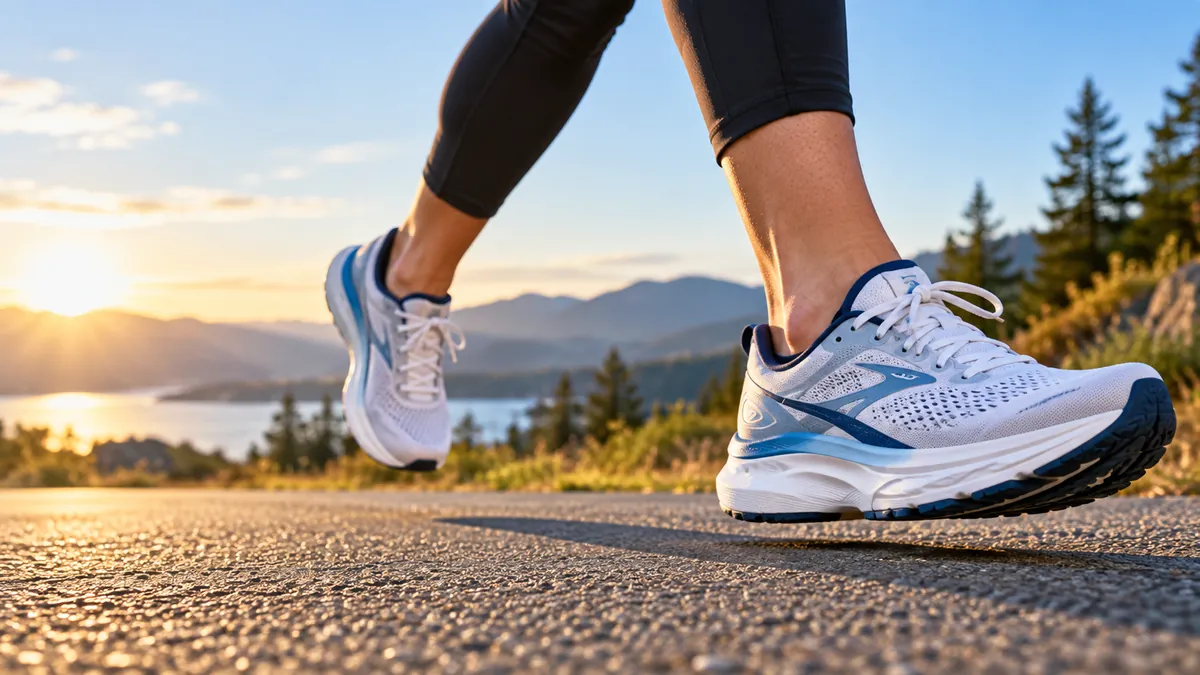
| Quick Answer: Good current options for runners who want both support and cushioning include the Brooks Adrenaline GTS 25, Saucony Guide 19, and Asics Gel-Kayano 33. Each uses modern stability features rather than a harsh corrective feel. The Adrenaline is balanced and familiar, the Guide 19 is softer and broader, and the Kayano 33 is more protective and structured. If you mainly want cushioning without extra guidance, compare neutral max-cushion shoes instead. |
Runners who need both extra support and cushioning usually do best in modern stability shoes that combine a broad platform, guidance features, and enough foam to protect the legs without feeling overly rigid.
Want to narrow these running choices further? Use our free Shoe Finder to compare current models by training goal, support, cushioning, surface and width.
Support and Cushioning Solve Different Problems
Cushioning reduces impact and can make daily miles feel easier on the feet and legs. Support is about keeping the shoe stable and guiding the foot if you overpronate or feel less controlled in neutral shoes.
The best supportive running shoes now combine both instead of forcing you to choose between a soft ride and a stable platform.
Brooks Adrenaline GTS 25
The Brooks Adrenaline GTS 25 is a strong all-around choice for runners who want a familiar daily trainer with moderate cushioning and noticeable guidance. Brooks uses GuideRails rather than a hard medial post, so the support is designed to feel less intrusive than older stability shoes.
It is a good starting point if you want one supportive shoe for regular training without moving into an especially soft or max-cushion ride.
Saucony Guide 19
The Saucony Guide 19 has a softer, broader feel and uses Saucony’s CenterPath geometry to create stability through shape rather than a traditional post. That makes it appealing if you want support but dislike a shoe that feels corrective.
It is especially worth comparing if you prefer a wide, planted platform and a smoother transition through the stride.
Asics Gel-Kayano 33
The Asics Gel-Kayano 33 is a more protective stability option with substantial cushioning and a structured feel. It suits runners who want more underfoot protection and guidance for easy miles, long runs, or higher-volume training.
It can feel like more shoe than some runners need, but that extra structure is exactly what others are looking for.
How These Supportive Shoes Compare
| Shoe | Support feel | Cushioning feel | Best for |
|---|---|---|---|
| Brooks Adrenaline GTS 25 | Balanced guidance | Moderate and comfortable | Everyday training |
| Saucony Guide 19 | Broad, geometry-based stability | Softer | Runners who dislike rigid support |
| Asics Gel-Kayano 33 | More structured | Highly protective | Easy miles and longer runs |
Do You Actually Need a Stability Shoe?
Not every runner who wants more cushioning needs extra guidance. If you feel stable and comfortable in neutral shoes, a cushioned neutral trainer may be a better choice.
Use our neutral vs stability vs motion-control guide if you are unsure which category suits you.
When a Neutral Cushioned Shoe Makes More Sense
If your main goal is impact protection rather than support, compare the options in our Best Cushioned Running Shoes guide. Many neutral max-cushion shoes have broad platforms and feel naturally stable without adding formal guidance features.
Where to Compare More Supportive Options
For the wider category, use our Best Stability Running Shoes guide. It compares current supportive models across brands and explains who each shoe suits.
You can also browse the Best Running Shoes hub or use the free Shoe Fit & Gait Calculator if you are not sure how much support you need.
You can also browse the Common Shoe Questions hub for related answers about cushioning, stability, fit, and running-shoe buying decisions.
Who Should Look Beyond the Three Main Picks?
The Adrenaline GTS 25, Guide 19, and Gel-Kayano 33 cover a useful range, but they are not the only options. Runners who want firmer guidance may prefer a more structured stability shoe, while runners who mainly need cushioning may be better in a neutral max-cushion model. Width can also change the decision if your preferred model does not hold the heel securely or gives enough room at the forefoot.
How to Choose Between the Three
- Choose the Adrenaline GTS 25 if you want familiar, balanced stability for daily training.
- Choose the Guide 19 if you prefer a broader platform and softer, less corrective feel.
- Choose the Gel-Kayano 33 if you want more cushioning and a more substantial, protective ride.
Support Should Not Create New Pressure
A supportive shoe should feel secure without pushing aggressively into the arch or crowding the forefoot. If a stability feature feels obvious and uncomfortable during a short run, it is unlikely to become a better match simply because the shoe is highly rated. Fit and comfort still outrank the support label.
Try supportive shoes at your normal training pace and compare how your legs feel, not just how soft the shoe feels when standing still.