Last Updated on September 25, 2026
Finding the right orthopedic shoe is not about comfort alone. It is about alignment, support, and reducing long-term strain on your body.
Foot pain, plantar fasciitis, flat feet, knee issues, and even lower back pain often start with poor footwear. The right shoe can correct movement patterns, absorb impact, and reduce fatigue across your entire body.
Podiatrists consistently point to the following essential features:
- Structured arch support that matches your foot type
- Cushioning that absorbs impact without collapsing
- A stable heel and midfoot for alignment
- A wide toe box that allows natural movement
In a moment we will list the top shoes you’ll want to consider, but first…
Who this Article is Not For:
This article is not for men looking for fashion-first footwear or trend-driven styles. If your priority is sleek design over structure, or you are browsing for occasional wear rather than daily support, these recommendations will likely feel too function-focused. It is also not intended for those without foot pain, mobility concerns, or biomechanical issues such as plantar fasciitis, overpronation, or joint stress. Finally, if you need highly specialized medical-grade footwear prescribed for severe conditions or post-surgical recovery, you are better served by a podiatrist or orthopedic specialist than a general buying guide like this one.
Let’s dive in to best orthopedia shoes for men:
Summary: Best Orthopedic Shoes for Men in 2026
The models we list below are selected because they consistently deliver across those areas in real-world use.
Shoe model (click to scroll to review) | Support type | Cushioning | Stability | Width options | Best use | Price |
|---|---|---|---|---|---|---|
Medical-grade orthotic | High | High | Wide / extra depth | Foot conditions | ||
Cushion-focused | Very high | Moderate | Wide available | All-day standing | ||
Motion control | Moderate | Very high | Multiple widths | Flat feet | ||
Stability & cushion | Moderate | High | Multiple widths | Walking | ||
Cushion &versatility | High | Moderate | Wide available | Daily wear | ||
Budget-friendly support | Moderate | Moderate | Standard / wide | Walking | ||
Shock absorption | High | Moderate | Standard / wide | Joint pain | ||
FitVille Extra Wide Walking Shoes | Comfort & width | Moderate | Moderate | Extra wide | Wide feet |
Orthofeet Men’s Orthopedic Shoes
Best for: Overall best choice
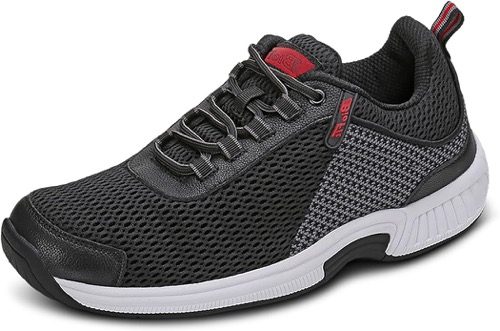
Orthofeet stands apart from most footwear brands because it is designed from a clinical, problem-solving perspective rather than a lifestyle or athletic angle. That difference becomes obvious the moment you put them on. For a closer look at this model’s stretch upper, extra depth and widths up to 6E, read our Orthofeet Edgewater Stretch review.
At the core of the design is a multi-layer orthotic system that combines arch support, cushioning, and anatomical alignment. Instead of relying on a single foam midsole, Orthofeet uses layered inserts that can be adjusted depending on your comfort needs. This is particularly valuable for people dealing with plantar fasciitis, neuropathy, arthritis, or general foot sensitivity.
The shoe’s extra-depth construction and wide toe box reduce pressure across the forefoot, which helps prevent irritation and allows natural toe movement. The interior is seam-free, making it a strong option for diabetic users or anyone prone to friction-related discomfort.
In real-world use, these shoes tend to reduce fatigue more than standard “comfort” sneakers. The support keeps your foot aligned, which reduces strain not just in your feet, but in your knees and lower back over time.
The trade-off is aesthetics. These are functional shoes first, and they look it. They are not designed to be fashionable, and that may matter if you want something versatile for casual wear.
If your priority is pain relief and long-term support, Orthofeet is one of the safest and most effective choices available without going custom.
Look for these models:
- For stretchable comfort, the Orthofeet Edgewater offers a flexible, accommodating fit designed to move naturally with your foot while providing soft cushioning and support throughout the day.
For hands-free convenience with added protection, the Orthofeet Yari delivers a water-repellent, slip-resistant design that makes it easy to step in and go while maintaining stability and comfort on a variety of surfaces.
Who the Edge and Yari Work Well For
- Plantar fasciitis (mild to severe)
- Neuropathy or diabetic foot sensitivity
- Flat feet needing customizable arch support
- Foot pain requiring pressure relief and cushioning
- Swelling, bunions, or sensitive foot conditions
- Those needing a non-binding, accommodative fit
These two models share the same core orthopedic design philosophy. The Edgewater leans more toward a casual walking shoe with a stretchable, forgiving upper, while the Yari adds a more athletic look with similar comfort features. Both prioritize pressure relief, anatomical support, and adjustability over performance or speed.
Specs – Edgewater
- Drop: ~8 mm
- Weight: ~12 oz (men)
- Support: Orthotic-friendly, customizable arch support
- Cushioning: Ortho-Cushion System
- Upper: Stretch knit (non-binding)
- Outsole: Ergonomic rubber
- Widths: Wide, Extra Wide
Specs – Yari
- Drop: ~8 mm
- Weight: ~11.5 oz (men)
- Support: Orthotic-friendly, customizable arch support
- Cushioning: Ortho-Cushion System
- Upper: Breathable mesh
- Outsole: Ergonomic rubber
- Widths: Wide, Extra Wide
Pros:
- Built-in orthotic support
- Excellent for plantar fasciitis and neuropathy
- Wide and extra-depth fit
Cons:
- Limited style options
- Can feel overly structured if you don’t need support
Hoka Bondi 9
Best for: Cushioning
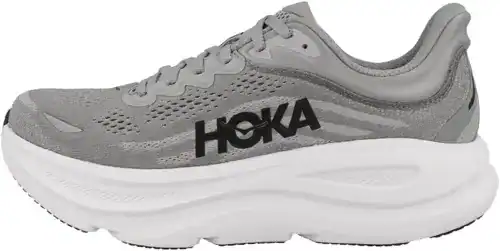
The Hoka Bondi 9 is built around one principle: maximizing cushioning to reduce impact on your body.
What makes this shoe unique is not just the thickness of the midsole, but how it works with the shoe’s rocker geometry. Instead of your foot striking flat and absorbing impact directly, the curved sole helps roll your stride forward, distributing pressure more evenly.
This matters if you walk or stand on hard surfaces like concrete. Over time, repeated impact can lead to heel pain, knee strain, and lower back issues. The Bondi reduces that cumulative stress significantly.
Underfoot, the cushioning feels soft but not unstable. Hoka uses a wide base, which helps maintain balance despite the thick sole. This combination of softness and stability is why it is frequently recommended by podiatrists for people with joint pain.
That said, it is not for everyone. The shoe is noticeably bulky, and some users find the “rocking” motion takes time to get used to. It also does not provide the same level of structured arch support as a true orthopedic shoe.
If your primary issue is impact and fatigue rather than alignment, the Bondi is one of the best options you can choose.
Who It Works Well For
- Joint pain (knees, hips, lower back) from impact
- Moderate plantar fasciitis needing cushioning
- Neutral gait or slight overpronation
- Long-distance walking or recovery days
- Heavier individuals needing shock absorption
- Those wanting maximum cushioning with a stable feel
Specs
- Drop: 4 mm
- Weight: ~10.5 oz (men)
- Support: Neutral with inherent stability (wide base)
- Cushioning: Supercritical EVA (high stack)
- Upper: Engineered mesh
- Outsole: Durabrasion rubber
- Widths: Standard and Wide
Pros:
- Maximum cushioning
- Reduces joint stress
- Excellent for long shifts
Cons:
- Bulky design
- Less structured support than stability shoes
New Balance 928
Best for: Stability
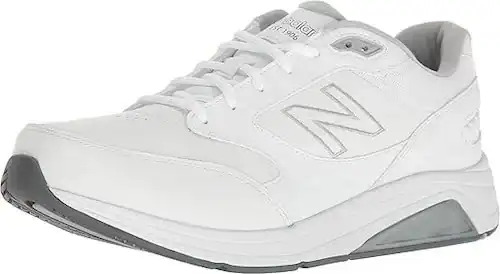
The New Balance 928 is a textbook example of a motion control shoe, and it is built for one purpose: keeping your foot aligned.
For people with flat feet or overpronation, the foot tends to roll inward with each step. Over time, this creates stress on the ankles, knees, and hips. The 928 addresses this with a firm midsole and rollbar technology, which stabilizes the foot and limits excessive movement.
This is not a soft, cushioned shoe in the traditional sense. Instead, it provides a structured and controlled feel, which many users find more effective for long-term comfort. It may feel stiff at first, but that stiffness is what provides the corrective benefit.
Another major advantage is sizing. New Balance offers multiple width options, which is critical for achieving a proper fit. Many foot problems are made worse simply because the shoe does not fit correctly.
In daily use, the 928 performs well for walking, work, and general activity. It is durable and supportive, making it a reliable long-term option. The downside is that it is heavier and less flexible than most modern sneakers. It is also not particularly stylish. If you need stability and alignment correction, this is one of the most dependable choices available.
Who It Works Well For
- Severe overpronation needing motion control
- Flat feet requiring maximum stability
- Moderate to severe plantar fasciitis
- Balance concerns or gait instability
- Long hours walking or standing on hard floors
- Those needing a Medicare-eligible walking shoe (in some cases)
Specs
- Drop: 13 mm
- Weight: ~13.5 oz (men)
- Support: Maximum motion control (ROLLBAR system)
- Cushioning: ABZORB midsole
- Upper: Leather
- Outsole: Rubber, slip-resistant
- Widths: Narrow, Standard, Wide, Extra Wide, XX-Wide
Pros:
- Strong stability and alignment
- Multiple width options
- Durable for daily use
Cons:
- Stiffer feel
- Less cushioning than Hoka
Brooks Addiction Walker 2
Best for: Walking stability
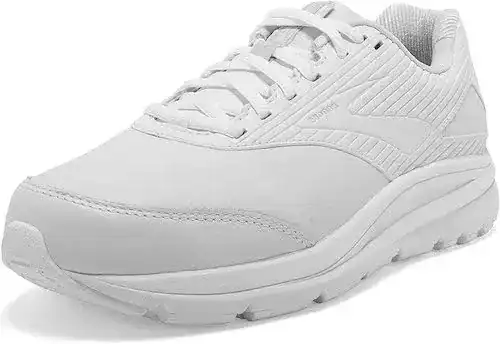
The Brooks Addiction Walker 2 is one of the most consistently recommended walking shoes because it strikes a balance between cushioning and support.
Unlike softer shoes that prioritize comfort alone, the Addiction Walker incorporates extended progressive diagonal rollbar (PDRB) technology, which helps guide your body into proper alignment. This makes it particularly useful for people who experience mild to moderate overpronation.
At the same time, it provides enough cushioning to remain comfortable during long walks. This combination makes it a strong choice for daily wear, especially if you spend a lot of time on your feet.
The outsole is designed for durability and traction, which adds to its practicality. Whether you are walking outdoors or navigating indoor surfaces, it provides a stable and reliable grip.
In terms of feel, the shoe is supportive without being overly rigid. It does not have the extreme cushioning of a Hoka, but it avoids the stiffness of more aggressive stability shoes.
The trade-offs are fairly minor. The design is basic, and it leans more toward function than style. It is also slightly heavier than some lightweight alternatives.
If you want a shoe that can handle daily walking while still supporting alignment, this is one of the safest and most versatile options.
See full review: Brooks Addiction Walker 2
Who it Works Well For:
- Overpronation needing strong control
- Flat feet requiring firm arch support
- Moderate to severe plantar fasciitis
- Knee and lower back pain linked to alignment
- Long hours standing or walking on hard surfaces
- Heavier individuals needing durable stability
Specs:
- Drop: 12 mm
- Weight: ~14.5 oz (men)
- Support: Maximum stability (Extended Progressive Diagonal Rollbar)
- Cushioning: BioMoGo DNA
- Upper: Full-grain leather
- Outsole: Slip-resistant rubber (certified for workplace use)
- Widths: Standard, Wide, Extra Wide
Pros:
- Balanced support and cushioning
- Reliable for daily walking
- Good arch support
Cons:
- Limited styling
- Slightly heavy
Hoka Clifton 10
Best for: Lightweight cushioning
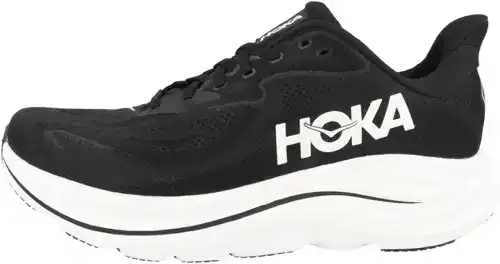
The Hoka Clifton 10 is often seen as the more practical, everyday version of the Bondi.
It retains Hoka’s signature cushioning and rocker design, but in a lighter and more streamlined package. This makes it easier to wear for extended periods without feeling weighed down. The cushioning is still substantial, providing effective shock absorption for walking and light activity. However, it is less extreme than the Bondi, which gives the Clifton a more natural feel. This balance makes it a strong choice for people who want comfort but do not need maximum cushioning. It works well for daily errands, casual wear, and moderate walking.
The shoe also offers decent stability due to its wide base, although it is not a true motion control shoe. If you need significant alignment correction, you may want something more structured.
In real-world use, the Clifton feels versatile. It transitions well between different activities and environments, which is something bulkier shoes struggle with.
The main drawback is that it does not excel in any single category. It is not the most cushioned, nor the most supportive. Instead, it sits comfortably in the middle.
If you want a lightweight orthopedic-friendly shoe for everyday use, the Clifton is one of the best options available.
Who it Works Well For:
- Those preferring a lightweight, cushioned ride
- Mild plantar fasciitis needing soft cushioning
- Joint pain (knees, hips, lower back) from impact
- Neutral gait or slight underpronation
- Long-distance walking or all-day wear
- Lighter runners or walkers wanting maximum comfort
Specs:
- Drop: 5 mm
- Weight: ~9.8 oz (men)
- Support: Neutral
- Cushioning: CMEVA midsole (high stack, soft ride)
- Upper: Engineered mesh
- Outsole: Durabrasion rubber
- Widths: Standard and Wide
Pros:
- Lightweight compared to Bondi
- Good balance of comfort and support
- Easy daily wear
Cons:
- Less cushioning than Bondi
- Moderate stability only
Saucony Integrity Walker 3
Best for: Budget-friendly orthopedic walking support
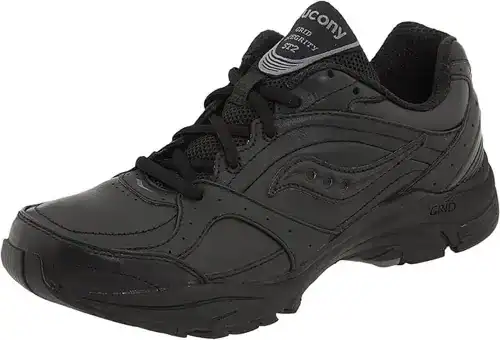
If you’re looking for a dependable orthopedic-style walking shoe without paying premium prices, the Saucony Integrity Walker 3 holds its ground as one of the most accessible options.
This is not a high-tech or modern performance shoe. Instead, it leans into a traditional orthopedic design with a stable base, moderate cushioning, and a straightforward fit that works well for everyday wear. For men dealing with mild to moderate foot pain, it offers enough structure to reduce fatigue without overcomplicating things.
Where this shoe stands out is in its balance. The cushioning is soft enough for comfort but firm enough to provide basic support, which makes it a practical choice for walking, errands, or long hours on your feet in casual settings. The durable rubber outsole also gives it reliable traction, especially on indoor surfaces or pavement.
That said, this is not the shoe you reach for if you have advanced orthopedic needs. It lacks the specialized arch systems, deep heel cups, and premium cushioning materials found in higher-end models. For conditions like severe plantar fasciitis, advanced overpronation, or diabetic foot concerns, you’ll likely need something more structured and medically focused.
Still, for the price, it fills an important role. It’s a solid entry point into orthopedic footwear, especially if you’re testing what level of support your feet actually need.
Who it Works Well For
- Mild plantar fasciitis
- General foot fatigue
- Flat feet needing light structure
- Walking and all-day casual wear
- Budget-conscious buyers testing orthopedic shoes
Specs:
- Drop: Approx. 12 mm
- Weight: ~11.5 oz (men)
- Support: Neutral to light stability
- Cushioning: EVA midsole
- Upper: Leather
- Outsole: Durable rubber
Pros:
- Affordable entry into orthopedic-style footwear
- Stable, predictable ride for walking
- Durable outsole with good traction
- Simple, no-frills design that works for daily use
Cons:
- Basic materials compared to newer models
- Limited arch support for more serious conditions
- Heavier and less breathable than modern mesh trainers
- Not ideal for long-distance walking or recovery use
Asics Gel-Nimbus
Best for: Shock absorption
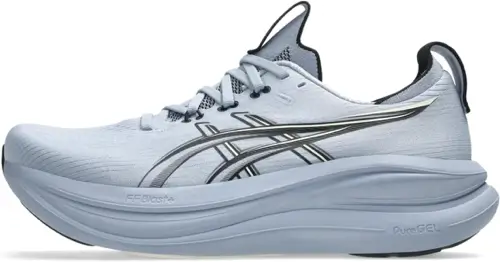
Asics Gel-Nimbus 28
Best for: Premium cushioning with light orthopedic support
The Asics Gel-Nimbus continues to lean into what the Nimbus line does best, delivering soft, protective cushioning for people who prioritize comfort over correction. While it’s technically a neutral running shoe, it has become a go-to option for walkers dealing with joint pain and mild foot conditions.
The key upgrade in recent Nimbus models has been the FF Blast Plus ECO cushioning, which provides a softer, more responsive ride compared to older GEL-heavy versions. Combined with PureGEL in the heel, it absorbs impact effectively, making it a strong choice for long walks, recovery days, or standing for extended periods.
That said, this is not a true orthopedic correction shoe. It doesn’t have the rigid structure or motion control features needed for severe overpronation or advanced alignment issues. Instead, it works best as a comfort-first solution that reduces impact stress across the body.
Who It Works Well For
- Mild plantar fasciitis needing soft cushioning
- Joint pain (knees, hips, lower back) from impact
- Neutral gait or slight underpronation
- Long-distance walking or recovery use
- Lighter to moderate-weight users wanting comfort
- Those preferring a plush, modern running shoe feel
Specs
- Drop: 8 mm
- Weight: ~10.7 oz (men)
- Support: Neutral
- Cushioning: FF Blast Plus ECO + PureGEL
- Upper: Engineered knit/mesh
- Outsole: AHAR rubber
- Widths: Standard, Wide, Extra Wide
Pros
- Exceptionally soft, impact-absorbing cushioning
- Smooth, comfortable ride for long distances
- More sustainable foam materials
- Available in wide and extra wide options
Cons
- Limited support for overpronation
- Not ideal for custom orthotics (less structured base)
- Premium price point
FitVille Extra Wide Walking Shoes

Best for: Extra wide feet (up to 6E) and hard-to-fit foot shapes
If standard wide shoes still feel tight, FitVille is one of the few brands that consistently delivers true extra wide and XX-wide fits without forcing you into medical-grade footwear pricing.
What sets FitVille apart is not advanced foam or performance tech. It’s volume. The shoes are built on a wider platform with a spacious toe box and higher instep clearance, which makes a noticeable difference for men dealing with bunions, swelling, or naturally wide feet.
Most models use a firm-to-balanced cushioning setup rather than ultra-soft foam. That’s intentional. Softer shoes often collapse under wider feet, while FitVille’s structure helps maintain stability across a broader base. For walking and all-day wear, that tradeoff tends to work in your favor.
This is not a sleek or performance-oriented shoe. It’s a practical solution for a very real problem: finding a shoe that actually fits without pressure points.
Who It Works Well For
- Extra wide or XX-wide feet (4E to 6E)
- Bunions or toe deformities needing space
- Swelling or edema in the feet
- Neuropathy or sensitive feet
- Flat feet needing a wide, stable base
- Walking and all-day comfort where fit is the priority
Specs
- Drop: ~6–8 mm
- Weight: ~12–14 oz (men)
- Support: Neutral with wide-base stability
- Cushioning: EVA or Rebound Core (firm-balanced)
- Upper: Mesh or leather (model dependent)
- Outsole: Durable rubber
- Widths: Wide, Extra Wide, XX-Wide, up to 6E
Pros
- True extra wide sizing up to 6E
- Spacious toe box reduces pressure and friction
- Stable platform for wider foot shapes
- More affordable than most orthopedic brands
Cons
- Bulkier look and feel
- Cushioning is less refined than premium brands
- Limited in-store availability
- Not designed for running or performance use
Best orthopedic shoes for plantar fasciitis
Plantar fasciitis requires a combination of heel cushioning and firm arch support. Soft shoes alone will not solve the problem. Structure matters.The strongest options are:
- Orthofeet for medical-grade relief
- Hoka Bondi for reducing heel impact
- New Balance 928 for stabilizing foot motion
Best orthopedic shoes for knee and back pain
Pain in the knees and back is often caused by repeated impact. Shoes that absorb shock effectively can reduce that strain: These models reduce force before it travels up your body. Which is for you?
Choose Hoka Bondi for maximum cushioning.
Choose Asics Gel-Nimbus for shock absorption.
Choose Hoka Clifton for lighter daily use.
Best orthopedic shoes for wide feet
If your shoes feel tight, no amount of cushioning will fix the problem. You need space first, then support:
Choose FitVille for extra-wide fit
Choose Orthofeet for depth and flexibility
Or choose New Balance 928 for width options
Proper width alone can eliminate pressure and improve comfort immediately.
Quick self-assessment
Before choosing, match your situation:
- Heel pain → Orthofeet or Hoka Bondi
- Flat feet → New Balance 928 or Brooks Addiction
- Standing all day → Hoka Bondi or Clifton
- Wide feet → FitVille or Orthofeet
- General comfort → Asics or Saucony
This step alone prevents most bad purchases.
Why people need orthopedic shoes
Most people don’t wake up one day and decide to buy orthopedic shoes. It usually starts with a small issue that gradually gets worse.
A bit of heel pain in the morning. Tired feet after a long day. Knees that ache more than they used to.
Over time, these symptoms build because the feet are no longer being properly supported. When that happens, every step places stress on joints, muscles, and connective tissue.
Orthopedic shoes are designed to correct that.
They help by:
- Supporting the natural arch of the foot
- Distributing pressure more evenly
- Absorbing impact from walking and standing
- Stabilizing movement to improve alignment
Without that support, the body compensates. And those compensations are what lead to chronic pain.
Signs you need orthopedic shoes
This is one of the most important sections for readers, because many people don’t realize their symptoms are connected to footwear.
If you notice any of the following, it’s usually time to upgrade:
- Sharp heel pain, especially in the morning
- Foot fatigue after short periods of walking
- Pain in the arches or ball of the foot
- Knees, hips, or lower back aching after standing
- Uneven wear on your shoes
- Swelling or pressure points in standard shoes
These are early warning signs. Ignoring them often leads to more serious conditions.
What happens if you ignore foot pain
This is where things get expensive and harder to fix.
Foot problems rarely stay isolated. Because your feet are your foundation, poor alignment affects everything above them.
Common progression looks like this:
- Foot pain → altered walking pattern
- Altered walking → knee strain
- Knee strain → hip and lower back pain
Over time, this can lead to:
- Chronic plantar fasciitis
- Joint degeneration
- Reduced mobility
- Increased risk of injury
The key point is simple: footwear is preventative, not just reactive. The earlier you address the problem, the easier it is to correct.
Are men’s orthopedic shoe needs different from women’s?
Yes, and it’s more than just sizing.
Men typically require different support characteristics because of how their bodies distribute weight and how they use footwear. Men tend to:
- Carry more body weight, increasing impact forces
- Put more pressure on heels and joints
- Prioritize durability over flexibility
- Delay replacing shoes until problems are noticeable
This leads to a greater need for these shoe features:
- Stronger cushioning systems
- More rigid stability and motion control
- Wider, more supportive base
Women, by comparison, are more likely to experience forefoot issues and require flexibility, especially if they’ve worn narrow or heeled shoes over time.
That’s why men’s orthopedic shoes tend to focus more on impact reduction and stability, while women’s often emphasize flexibility and pressure relief.
What age do people start wearing orthopedic shoes?
There’s no single age, but there are clear patterns. Most men begin noticing issues in their:
- Late 30s → early signs of fatigue and heel discomfort
- 40s → recurring pain after activity
- 50+ → chronic conditions like arthritis or plantar fasciitis
But age is not the real cause. Cumulative stress is. Some men need orthopedic shoes much earlier, especially if they:
- Work on their feet all day
- Are overweight
- Have flat feet or poor alignment
- Engage in high-impact activities
What changes with age is tolerance. As the body becomes less forgiving, poor footwear becomes more noticeable.
Quick self-check: do you actually need orthopedic shoes?
If you’re unsure, this quick check helps. You likely benefit from orthopedic shoes if:
- You think about your feet during the day
- You avoid certain shoes because they hurt
- You feel relief when you take your shoes off
- You notice discomfort after standing or walking
Healthy feet don’t draw attention to themselves. Pain is a signal something needs to change.
FAQ: Common questions about orthopedic shoes for men
Orthopedic shoes are designed to support foot structure, improve alignment, and reduce pressure. This includes arch support, cushioning, and stability.
No. Anyone with foot pain, poor alignment, or high-impact activity can benefit.
Yes. Proper arch support and heel cushioning reduce strain and improve recovery.
Typically 6 to 12 months with regular use, depending on wear and activity level.
Not always. Many shoes like Orthofeet already include built-in support systems for feet.
In most cases, yes. Better materials and design lead to improved comfort and better long-term outcomes.
Men typically require different support characteristics because of how their bodies distribute weight and how they use footwear. They tend to be harded on shoes given their work and they are heavier than womens, so the load on their joints is greater.
Generall over 50, but in your late 30s, you might need orthopedic shoes if there are early signs of fatigue and heel discomfort. In your 40s, recurring pain after activity will prompt the need. For those 50+, orthopedic shoes will be helpful if chronic conditions like arthritis or plantar fasciitis are present.