Last Updated on October 12, 2026
Finding the best soccer cleats for kids in 2026 is about more than just picking a popular brand or the latest design. Today’s models are lighter, more specialized, and built for specific playing styles and surfaces, which means the right cleat depends heavily on how and where your child plays. For broader sizing, fit and everyday footwear guidance, see our kids’ shoes hub.
There’s also a pattern most parents fall into. Some overbuy, going straight to premium cleats that don’t match how often their child actually plays. Others go the opposite direction and choose the cheapest option without thinking about fit or surface type. Both approaches usually lead to replacing the cleats sooner than expected.
The smarter approach is to match the cleat to your child’s foot shape, playing surface, and role on the field. This guide focuses specifically on the best soccer cleats for kids in 2026, using current models widely available on Amazon.com. Each pick is here for a reason, whether that’s comfort, speed, control, or value, so you can choose something that holds up over a full season, not just the first few games.
Youth Coach’s Perspective
My 12-year-old son plays house league soccer in our town and I have started to coach his team. Since I have been playing soccer since I was 7 and played my high school soccer team, I get a lot of questions from parents about cleats. The advice I give is simple. I recommend picking a shoe that fits properly right now, not one with extra space for growth. A poor fit changes how a child runs, plants, and turns, and that can lead to bad habits or even minor injuries over time. Comfort is always the first priority, especially for younger players.
I also look at how the cleat performs over a full practice or game. If a child is adjusting their shoes, slowing down, or complaining about their feet, the cleat is working against them. You don’t need a top-tier model for most youth players. You need something that fits well, grips the field properly, and lets them forget they’re even wearing it.
After looking at this year’s models, if you are buying new, these are the top soccer cleats to consider your son or daughter.
To get buying tips, click here to scroll to our buyer’s guide.
Top Soccer Cleats for Kids in 2026
| Cleat model (click to scroll to review) | Best For | Pros | Cons | Price |
|---|---|---|---|---|
| Nike Jr. Mercurial Vapor 15 Academy | Speed and attacking play | Lightweight, responsive feel | Narrow fit | Check current price |
| Adidas Predator Accuracy.3 Youth | Control and passing | Great ball grip, stable | Slightly heavier | Check current price |
| Puma Future Play FG/AG Kids | Comfort and flexibility | Wide-friendly, adaptable fit | Moderate durability compared to premium models | Check current price |
| New Balance Furon Dispatch Junior | Budget and speed | Affordable, lightweight | Minimal cushioning | Check current price |
| Adidas Copa Pure.3 Youth | Comfort and touch | Soft upper, great feel | Less speed-focused | Check current price |
Note: Nike models tend to run narrower, while Puma and New Balance options are often better suited for wider feet. Most of these cleats are unisex, but fit differences matter more than gender labeling.
Nike Jr. Mercurial Vapor 15 Academy

Best for: Speed-focused players and forwards
The Nike Jr. Mercurial Vapor 15 Academy is built for kids who play fast and rely on acceleration. This cleat stands out immediately for its lightweight construction, which helps reduce fatigue during games and practices. For younger players who are still developing stamina, that can make a real difference late in a match.
The upper is made from a textured synthetic material that provides a more direct feel on the ball. It’s not padded or plush, which is intentional. The design favors responsiveness over softness, allowing players to control the ball at higher speeds without feeling disconnected from it. This makes it especially appealing for attackers who need quick touches in tight spaces.
Traction is a major strength here. The stud configuration is optimized for firm ground surfaces and gives strong grip when sprinting or cutting. Players who rely on explosive movement will benefit from how stable this cleat feels under pressure.
The tradeoff is comfort for wider feet. This model runs narrow, and that can become noticeable during longer sessions. For kids with average or narrow feet, the snug fit on this Nike cleat actually works in their favor, creating a locked-in feel that enhances control.
Surface note:
FG (Firm Ground) cleats are designed for natural grass fields. They use molded studs to provide traction on dry or slightly damp surfaces.
Specs
- Surface: Firm Ground (FG)
- Upper: Synthetic textured material
- Fit: Narrow to regular
- Closure: Lace-up
- Weight: Lightweight
Pros:
- Very lightweight and fast-feeling
- Strong traction for quick movements
- Ideal for attacking players
Cons:
- Narrow fit may not suit all foot types
- Less cushioning than comfort-focused options
Adidas Predator Accuracy.3 Youth
Best for: Control, passing, and midfield play
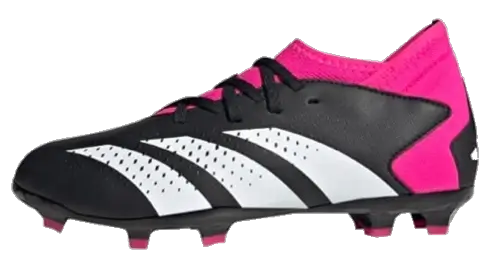
The Adidas Predator Accuracy.3 Youth is designed for players who want better control over the ball. The standout feature is the textured upper, which adds grip during passing, shooting, and first touches. While it’s subtle, it does help younger players feel more confident when handling the ball.
This Adidas cleat has a more structured build compared to speed-focused models. That added structure provides stability, which is useful for players still developing coordination and balance. It also makes this a good choice for midfielders who are constantly moving and distributing the ball.
The weight is slightly higher than lighter cleats, but that comes with a benefit. The added support helps reduce foot fatigue during longer sessions. It’s a tradeoff that often works in favor of younger or less experienced players.
This model fits most foot shapes reasonably well, though it may feel snug for wider feet. Overall, it’s a reliable, well-rounded option for players who prioritize control over speed.
Surface note:
FG/AG cleats are designed to work on both natural grass (FG) and artificial turf (AG), offering versatility for players who use different fields.
Specs
- Surface: FG/AG
- Upper: Textured synthetic
- Fit: Regular
- Closure: Lace-up
- Weight: Moderate
Pros:
- Enhances ball control
- Stable and supportive
- Versatile for multiple surfaces
Cons:
- Slightly heavier than speed cleats
- Not ideal for wide feet
Puma Future Play FG/AG Kids
Best for: Comfort and wider feet
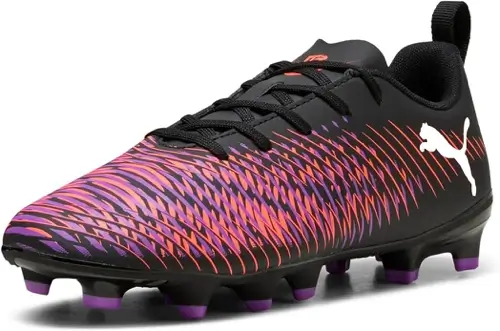
The Puma Future Play FG/AG Kids is one of the more comfortable and forgiving cleats available. If your child has struggled with tight or restrictive shoes, this Puma shoe a strong option to consider. The upper is flexible and adapts to the foot rather than forcing a rigid shape.
This cleat performs well across different positions. It doesn’t specialize heavily in speed or control, but it delivers consistent performance in both areas. That makes it especially useful for younger players who are still figuring out their role on the field.
The fit is where this model really stands out. It accommodates wider feet better than most competitors, reducing pressure points and improving overall comfort. This can make a noticeable difference in how long a child can play without discomfort.
Durability is decent, though not at the level of premium models. For most youth players, especially those in recreational leagues, it holds up well over a season.
Specs
- Surface: FG/AG
- Upper: Adaptive synthetic
- Fit: Wide-friendly
- Closure: Lace-up
- Weight: Moderate
Pros:
- Comfortable for wider feet
- Flexible and forgiving fit
- Good all-around performance
Cons:
- Average durability compared to premium models
- Less specialized performance
New Balance Furon Dispatch Junior
Best for: Budget-conscious players
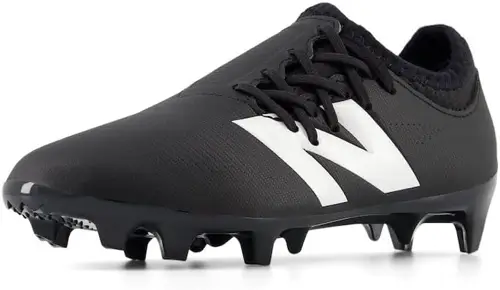
The New Balance Furon Dispatch Junior is a practical choice for parents who need a reliable cleat without a high price tag. It keeps things simple, focusing on lightweight construction and basic performance. This cleat is ideal for beginners or recreational players who don’t need advanced features. It allows kids to move freely without feeling weighed down, which is often more important than added technology at this stage.
The upper is straightforward and doesn’t provide the same level of ball feel or cushioning as higher-end models. However, for casual play, the New Balance cleat performs well and holds up reasonably over time.
If your child is growing quickly or playing in shorter seasons, this is a smart way to avoid overspending while still getting a functional cleat.
Specs
- Surface: Firm Ground
- Upper: Synthetic
- Fit: Regular to slightly wide
- Closure: Lace-up
- Weight: Lightweight
Pros:
- Affordable and accessible
- Lightweight design
- Good for beginners
Cons:
- Minimal cushioning
- Less durable than premium options
Adidas Copa Pure.3 Youth

Best for: Comfort and natural feel
The Adidas Copa Pure.3 Youth is built around comfort and touch. It has a softer upper compared to most synthetic cleats, which helps create a more natural feel when controlling the ball. For kids who prefer comfort over speed, this is an excellent option.
This Adidas cleat requires very little break-in time. It feels comfortable from the first wear, which is a big advantage for younger players who may be sensitive to stiff materials.
While it doesn’t offer the same explosive feel as speed-focused cleats, it provides consistent performance across the field. Players who value control and positioning will benefit most from this model.
Specs
- Surface: Firm Ground
- Upper: Soft synthetic leather feel
- Fit: Regular
- Closure: Lace-up
- Weight: Moderate
Pros:
- Comfortable from the start
- Soft touch on the ball
- Reliable fit
Cons:
- Not designed for speed
- Less aggressive traction
Buyer’s Guide: How to Choose the Right Soccer Cleats for Your Child
Getting the right cleat comes down to a few key decisions that are easy to overlook but make a big difference over time.
Fit comes first
Fit should always come first. The cleat should feel snug without squeezing the foot. There should be a small amount of space at the toe, but not enough for the foot to slide inside the shoe. A poor fit affects balance, running mechanics, and overall comfort.
Brand fit
Brand differences can play a bigger role than most parents expect, especially when it comes to fit and overall comfort. Nike cleats, for example, are known for a more streamlined, narrow shape. That works well for kids with slim feet or those who like a snug, locked-in feel for speed and quick movements. But for wider feet, they can feel tight across the midfoot and toe box, especially after a full practice or game.
Adidas tends to sit in the middle. Most of their youth models offer a more standard, balanced fit that works for a wide range of foot shapes. They’re often a safe starting point if you’re unsure what your child needs, particularly for beginners or players who haven’t developed strong preferences yet.
Puma and New Balance are typically more accommodating for wider feet. Their designs often include a roomier forefoot and more flexible uppers, which reduce pressure points and make them a better option for kids who have complained about tight cleats in the past. This can be especially important for younger players whose feet are still developing and may be more sensitive to restrictive fits.
If your child has struggled with comfort before, changing brands is often the fastest way to fix the issue. Instead of sizing up, which creates other problems, switching to a brand that better matches their natural foot shape usually leads to a much better experience on the field.
Surface matters
Surface type matters more than most people realize, and it’s one of the fastest ways to get into trouble if you ignore it. The wrong cleat on the wrong surface doesn’t just affect performance. It can increase fatigue, reduce traction, and in some cases raise the risk of injury.
FG (Firm Ground) cleats are the most common and are designed for natural grass fields. They use molded studs that dig into the ground just enough to provide grip without getting stuck. If your child plays on outdoor grass fields, this is usually the default choice. They perform best on dry to slightly damp surfaces. On very hard or very wet ground, though, they can lose effectiveness.
AG (Artificial Ground) cleats are specifically built for synthetic turf fields. These surfaces are firmer and less forgiving than natural grass, which is why AG cleats use shorter, more numerous studs. This design spreads pressure more evenly across the foot and reduces stress on joints like the knees and ankles. Using FG cleats on turf might feel fine at first, but over time it can lead to discomfort and quicker wear on both the cleat and the player.
Indoor shoes are a completely different category. They have flat rubber soles with no studs and are designed for gym floors or indoor courts. These prioritize grip on smooth surfaces and allow for quick, controlled movement. Wearing outdoor cleats indoors or vice versa simply doesn’t work. You lose traction where you need it most.
There’s also a growing middle ground with FG/AG hybrid cleats. These are designed to handle both natural grass and artificial turf reasonably well. They’re a practical option if your child plays on mixed surfaces, though they won’t be quite as specialized as a true AG cleat on turf.
If you’re not sure what your child’s league uses, check before buying. This one decision has a bigger impact on comfort, safety, and performance than most of the features brands advertise.
Sizing up
Sizing up to allow for growth is one of the most common mistakes parents make when buying soccer cleats. On paper, it makes sense. Kids grow quickly, and replacing cleats multiple times a year can feel wasteful. In reality, though, oversized cleats create more problems than they solve.
When a cleat is too big, the foot moves inside the shoe. That movement reduces stability when running, cutting, or stopping. It also affects how a child strikes the ball, since their foot isn’t properly aligned with the shoe. Over time, this can lead to awkward movement patterns, slower reactions, and even a drop in confidence on the field.
There’s also a comfort issue. Extra space often leads to friction, which can cause blisters or irritation, especially during longer practices or games. Kids may not always explain this clearly. You’ll just notice they’re distracted, adjusting their shoes, or not playing as freely.
A properly fitting cleat should feel snug, especially through the midfoot and heel, with just a small amount of room at the toe, about a thumb’s width or slightly less. That allows for natural movement without crowding the toes. If you can visibly see space when they stand or feel their foot sliding when they walk, the cleat is too big.
The better approach is to buy the right size now and plan for replacement when needed. For active kids playing regularly, cleats may last a season or less anyway due to wear. Getting the fit right ensures they play comfortably, move properly, and get the most out of their time on the field.
Details you shouldn’t overlook
Other factors like ease of putting them on, durability, and how often your child plays are easy to overlook, but they tend to show up quickly once the season starts.
Ease of entry matters more than you’d think, especially for younger kids. Some cleats have tighter collars or sock-style openings that can be frustrating to get on without help. If your child is getting ready for games or practices on their own, a simple lace-up design with a wider opening can save time and avoid unnecessary stress. If it’s a struggle just to get the cleats on, that friction adds up over a season.
Durability is another practical consideration. Kids don’t just wear cleats during games. They drag their toes, play on rough surfaces, and often keep them on before and after matches. Lower-cost models can wear down faster at the toe box or studs, especially with frequent use. If your child plays multiple times a week, spending a bit more on a sturdier model can actually save money by lasting longer.
How often your child plays should guide how much you invest. For a recreational player with one game a week, a budget-friendly cleat will usually hold up just fine. For a more competitive player training several times a week, it’s worth choosing a model with better materials, improved traction, and more consistent support.
These details may seem small at the time of purchase, but they directly affect convenience, longevity, and overall performance. Over the course of a full season, they often end up being just as important as fit and comfort.
Bottom line
If you focus on fit, surface, and comfort, you’ll make a better decision than chasing brand names or the latest design trend. Those three factors directly affect how your child moves, how confident they feel on the ball, and whether they enjoy playing in the first place.
A well-fitting cleat keeps the foot stable and supported, which improves balance, control, and overall movement. Matching the cleat to the correct surface ensures proper traction, reducing the risk of slipping or awkward footing. Comfort ties it all together. If a child isn’t thinking about their feet during a game, they’re free to focus on playing, learning, and improving.
It’s also worth remembering that kids’ needs change quickly. As they grow, their foot shape, position, and level of play will evolve. What works this season may not be the right choice next year, and that’s normal. Treat each purchase as a short-term performance decision, not a long-term investment.
Get the basics right, and you’ll give your child the best chance to play comfortably, build confidence, and actually enjoy being on the field. That’s what matters most.