Last Updated on September 22, 2026
| Quick Answer: Best Winter Running Shoes in 2026. The best winter running shoe depends on the surface. For wet roads and slush, a waterproof road-to-trail shoe works well. For snow and muddy trails, deeper lugs matter more. For actual ice, conventional rubber is not enough—use a studded shoe or removable traction device. Our current picks are the Nike ACG Pegasus Trail Gore-Tex, Brooks Cascadia 20 GTX, Saucony Peregrine 16 GTX, Salomon Speedcross 6 Gore-Tex, Hoka Speedgoat 6 GTX and Icebug Järv Gaiter BUGrip GTX. |
Winter running is not one problem. A cold, dry sidewalk, a slushy road, packed snow and polished ice all require different kinds of traction. That is why a shoe that works beautifully in rain can still be a poor choice on ice.
The best winter running shoes combine weather protection with an outsole suited to the surface you actually run on. Waterproof membranes can keep slush out. Deeper lugs can bite into snow and soft ground. Studded outsoles are the most reliable option when the route includes hard ice.
This guide replaces an older roundup built around models such as the Speedcross 4, Cascadia 14 and Peregrine 8. The current 2026 lineup is more useful because waterproof construction has become lighter and outsole technology has improved substantially.
Best Winter Running Shoes at a Glance
The right shoe starts with your most common winter surface. If most of your mileage is on cleared roads with puddles and slush, the Nike ACG Pegasus Trail Gore-Tex gives you road-like cushioning with more weather protection and traction. If winter turns your route into trails, the Brooks, Saucony, Salomon and Hoka options provide progressively more aggressive outsole designs. If you regularly encounter ice, the Icebug is in a different category because its steel studs are designed specifically for frozen surfaces.
Do not assume “waterproof” means “ice-safe.” Gore-Tex keeps water out; it does not create traction. Likewise, a deep trail lug can work extremely well in snow or mud while still sliding on smooth ice. Match the outsole to the surface first, then consider cushioning, fit and waterproofing.
| Shoe | Best for | Winter advantage | Price |
|---|---|---|---|
| Nike ACG Pegasus Trail Gore-Tex | Wet roads and mixed surfaces | Gore-Tex, ReactX, ATC wet-traction outsole | Check latest price |
| Brooks Cascadia 20 GTX | Technical winter trails | Gore-Tex, Vibram Megagrip, 4mm lugs | Check latest price |
| Saucony Peregrine 16 GTX | Snow, mud and fast trail running | Gore-Tex, Vibram Megagrip, low-profile trail feel | Check latest price |
| Salomon Speedcross 6 Gore-Tex | Deep snow and soft ground | 5mm Mud Contagrip lugs, Gore-Tex, secure Quicklace fit | Check latest price |
| Hoka Speedgoat 6 GTX | Cushioned winter trail miles | Gore-Tex Invisible Fit, Vibram Megagrip, 5mm lugs | Check latest price |
| Icebug Järv Gaiter BUGrip GTX | Ice and hard-packed snow | 18 dynamic steel studs, Gore-Tex, integrated gaiter | Check latest price |
Best Winter Running Shoes in 2026
These six shoes cover the major winter-running conditions rather than simply ranking six waterproof trail shoes. The Nike is the road-to-trail choice. The Brooks and Saucony are balanced trail options. The Salomon is built for soft snow and mud. The Hoka adds more cushioning for long trail miles. The Icebug is the specialist for ice.
If your winter routes vary significantly from day to day, you may need more than one traction solution. A waterproof trail shoe can handle most wet and snowy runs, while a removable traction device or studded shoe makes more sense on the days when sidewalks and roads glaze over.
Nike ACG Pegasus Trail Gore-Tex
Best for: Wet roads, slush, park paths and runners who move between pavement and trail.
Nike’s current ACG Pegasus Trail Gore-Tex is the strongest all-around winter option for runners who do not spend all of their time on technical trails. It combines a waterproof Gore-Tex upper with ReactX foam and Nike’s All-Terrain Compound outsole, giving it a smoother road feel than most aggressive winter trail shoes.
Nike lists an 8mm drop and approximately 303 grams for the men’s shoe. The redesigned forefoot is wider than the previous Pegasus Trail generation, which gives toes more room for winter socks and improves stability on uneven terrain. The outsole is built for wet ground rather than true ice, so use additional traction when the route is frozen.
Nike’s current product page lists Gore-Tex, ReactX and an updated ATC outsole as the core technologies.
Brooks Cascadia 20 GTX
Best for: Technical trails, wet rock, frozen dirt and runners who want stable trail protection.
The Cascadia 20 GTX is the weatherproof version of Brooks’ current all-terrain trail shoe. The major 2026 update is the move to a Vibram Megagrip outsole with 4mm lugs and Traction Lug geometry, a meaningful upgrade for wet rock, roots and loose winter trail surfaces.
Brooks also uses Gore-Tex Invisible Fit and its TrailAdapt system, which combines a broad platform, flexible protection and DNA FLASH v2 cushioning. This is less aggressive in soft snow than the Speedcross, but more versatile when the route includes rocky or hard-packed terrain.
Read our Brooks Cascadia 20 review for the mechanics of the standard version. The GTX model adds weather protection and the same current trail platform.
Saucony Peregrine 16 GTX
Best for: Faster winter trail runs, packed snow and muddy transitions.
The Peregrine 16 GTX is the current waterproof version of Saucony’s lighter, lower-profile trail shoe. It uses Gore-Tex Invisible Fit, increased PWRRUN cushioning and an upgraded Vibram Megagrip outsole. That makes it a strong choice when you want winter traction without the heavy, boot-like feel of some weatherproof trail shoes.
Saucony positions the 16 GTX for technical trail running in wet conditions. It is more efficient on packed trail than the deep-lug Speedcross, while still giving you significantly more bite than a road shoe. For regular dry-pavement use, however, the aggressive outsole is unnecessary.
Read our Saucony Peregrine 16 review for the underlying platform. The GTX version adds waterproof protection for winter use.
Salomon Speedcross 6 Gore-Tex
Best for: Deep snow, mud and soft winter trails.
The Speedcross 6 Gore-Tex remains current in Salomon’s 2026 lineup because its purpose is very specific. Its 5mm Mud Contagrip lugs are deeper and more widely spaced than those on most road-to-trail shoes, helping the outsole dig into soft snow and mud while shedding debris.
Salomon lists a 10mm drop, Gore-Tex membrane, Quicklace system and a current US price of $170. It is not the best choice for long stretches of bare pavement because those tall lugs feel more awkward and wear faster on hard surfaces. On sloppy trails, however, the design makes much more sense.
See our Best Salomon Shoes for 2026 guide for more on the Speedcross platform.
Hoka Speedgoat 6 GTX
Best for: Long winter trail runs when you want more cushioning.
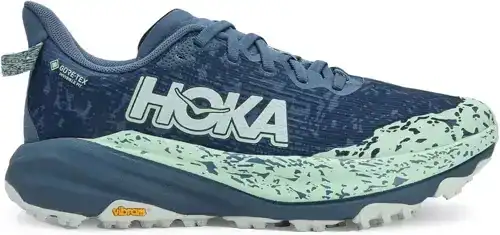
The Speedgoat 6 GTX combines Hoka’s cushioned trail platform with Gore-Tex Invisible Fit and a Vibram Megagrip outsole. The 5mm lugs are substantial enough for snow, mud and loose winter terrain, while the MetaRocker geometry makes the shoe feel smoother over longer distances than some aggressively lugged trail models.
The shoe works best when you want protection and cushioning rather than a low-to-the-ground trail feel. It is not an ice shoe, but the Vibram outsole is a strong choice for wet rock, frozen dirt and mixed snowy trails.
Icebug Järv Gaiter BUGrip GTX
Best for: Actual ice, hard-packed snow and runners who need mechanical grip.
The Järv Gaiter BUGrip GTX is the specialist shoe in this guide. Icebug builds the outsole around 18 dynamic carbide-steel studs that move independently and can bite into hard ice. A Gore-Tex Invisible Fit membrane keeps water out, while an integrated gaiter helps block snow, slush and debris from entering around the ankle.
This is the shoe to consider when your winter route genuinely includes ice rather than just wet pavement or snow. Steel studs are unnecessary and noisy on long stretches of dry indoor flooring or bare pavement, so the Järv is a conditions-specific tool rather than an all-purpose winter runner.
Icebug lists the current Järv Gaiter BUGrip GTX at $249.95 in the US.
What to Look for in Winter Running Shoes
Traction comes first. Cleared wet pavement needs a rubber compound that grips in rain and slush. Packed snow benefits from deeper lugs. Loose snow and mud need widely spaced lugs that can dig in and clear debris. Smooth ice requires studs or an external traction device. No amount of cushioning compensates for the wrong outsole.
Waterproofing is useful in slush, wet snow and puddles, but it is not always necessary in cold, dry conditions. A membrane can reduce breathability and make the shoe warmer. If your winters are mostly dry and below freezing, a tightly woven upper paired with warm socks may be more comfortable than a fully waterproof shoe.
Leave enough room for your normal winter socks without making the shoe sloppy. Thick socks can crowd the toe box and alter heel fit. Try the shoe with the sock thickness you actually plan to run in rather than automatically sizing up.
For waterproof trail shoes specifically, see our Best Waterproof Trail Running Shoes guide. If your activity is mostly walking rather than running, our Best Winter Boots in 2026 guide is a better starting point.
Winter Running Safety on Ice and Snow
Slow down when traction changes. Winter running is not the time to force normal road pace through corners, downhill sections or intersections where ice collects. Shorter strides and a slightly higher cadence can make it easier to keep your center of mass over your feet.
Pay attention to black ice, refrozen snowbanks, shaded sidewalks and bridges. These can be slippery even when the rest of the route looks clear. If conditions are consistently icy, use studs or a running-specific traction device rather than relying on ordinary trail lugs.
Visibility matters as much as grip. Winter days are shorter, so reflective clothing, a headlamp and bright outer layers are useful even when your shoes have reflective details. If conditions are severe enough that you cannot see the surface clearly, moving the run indoors is the safer choice.
Frequently Asked Questions About Winter Running Shoes
The biggest mistake is treating all winter conditions as the same surface. The shoe that feels ideal in slush may not grip on ice, while a studded ice shoe can be unnecessary on cleared roads. These answers help match the shoe to the conditions.
Not always. Waterproof shoes are most useful in slush, wet snow and puddles. In cold, dry conditions, a breathable upper with warm socks may be more comfortable.
Studded shoes such as the Icebug Järv Gaiter BUGrip GTX provide mechanical grip on ice. Ordinary trail lugs are designed mainly for snow, mud and loose ground and can still slip on smooth ice.
Often, yes. Deeper trail lugs can bite into packed or loose snow better than smooth road outsoles. For wet snow, a waterproof upper can also help keep feet dry.
Not automatically. Try them with the socks you plan to wear. You need enough toe room without allowing the heel or midfoot to slide inside the shoe.
Yes on dry, cleared pavement if traction is adequate. Once roads become slushy, snowy or icy, a weatherproof road-to-trail shoe or additional traction is usually more practical.
They often feel warmer because the waterproof membrane reduces airflow compared with open mesh. That can be useful in winter but may feel too warm in milder weather.
Winter running traction is designed for snow, mud, wet rock or ice. Slip-resistant work shoes are engineered for workplace surfaces such as wet tile or greasy floors. The terms are not interchangeable.