Last Updated on September 23, 2026
Quick Answer: What is a Vibram outsole? A Vibram outsole is the bottom of a shoe made with rubber and tread technology developed by Vibram, an Italian company specializing in footwear traction. Vibram does not make just one kind of rubber. Different compounds are designed for wet trails, rocky terrain, ice, hiking, running and work. Vibram outsoles are generally known for grip and durability, but performance depends on the specific compound and tread. Popular versions include Megagrip, Arctic Grip and Traction Lug. Check the latest Vibram shoes on Amazon.
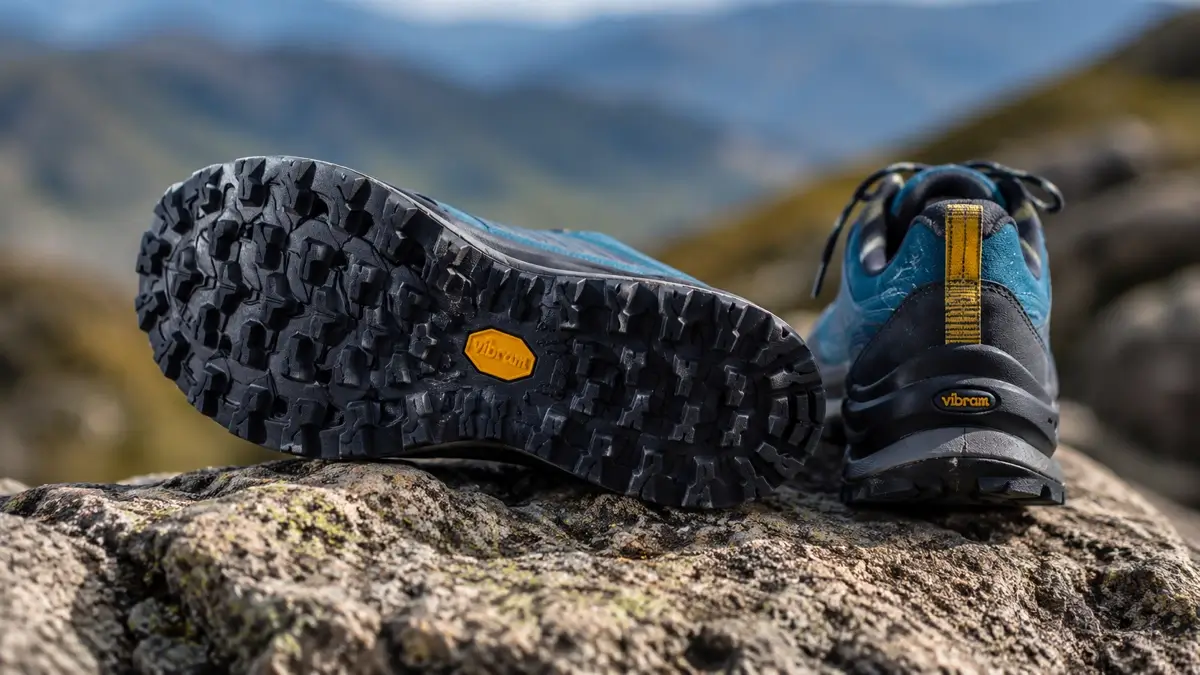
You may have noticed the small yellow Vibram logo on the bottom of hiking boots, trail-running shoes and outdoor footwear. It is often treated as a sign that a shoe has a particularly good outsole. For the broader relationship between outsole rubber, foam, drop, rocker and stability systems, see our Running Shoe Technology guide.
There is some truth to that. But Vibram is not one type of rubber.
Vibram develops different rubber compounds and tread systems for different jobs. A Vibram outsole built to grip a wet trail may be very different from one intended for icy sidewalks or industrial work.
For runners, walkers and hikers, the important question is not simply, “Does this shoe have Vibram?” It is which Vibram outsole does it use, and is that outsole right for where you plan to wear it?
Best Shoes With Vibram Outsoles
If you are shopping rather than simply researching Vibram rubber, these are some of the most useful current shoes to compare.
Shoe | Vibram outsole | Best for | Price |
|---|---|---|---|
Hoka Speedgoat 7 | Vibram Megagrip with Traction Lug | Technical trails, hiking, wet terrain | |
New Balance Fresh Foam X Hierro v9 | Vibram Megagrip with Traction Lug | Cushioned trail running and walking | |
Saucony Peregrine 16 | Full-coverage Vibram Megagrip | Technical trails and rocky terrain | |
Brooks Cascadia 20 | Vibram Megagrip with Traction Lug | Stable trail running and hiking |
These shoes illustrate an important point about Vibram. All four use Vibram technology, but they do not feel the same.
The Speedgoat 7 is a highly cushioned shoe for technical terrain. The Hierro v9 provides a softer, more relaxed trail experience. The Peregrine 16 sits closer to the trail and emphasizes grip and control. The Cascadia 20 combines Vibram traction with a broad, stable platform.
Choose the shoe first for fit, cushioning and intended use, then use the Vibram outsole as another reason to prefer one model over another.
What Is Vibram?
Vibram is an Italian company whose history dates to 1937 and mountaineer Vitale Bramani.
Bramani wanted a better alternative to the leather soles and metal nails commonly used in climbing footwear at the time. His work led to a lugged rubber mountaineering sole known as the Carrarmato.
Vibram has since expanded far beyond traditional hiking boots. Its outsole technologies now appear on running shoes, hiking shoes, work footwear, winter boots and casual shoes.
The easiest way to understand Vibram is to think about tires.
A tire company does not make one tire for every vehicle and road condition. It develops different compounds and tread patterns for highways, snow, racing and off-road driving. Vibram does something similar for your feet. It develops different rubber compounds and lug patterns depending on whether the shoe needs to grip rock, dirt, ice, wet surfaces or other terrain.
What Is a Vibram Rubber Outsole?
The outsole is the bottom layer of a shoe. It is the part that actually touches the ground.
The midsole sits above it and normally provides most of the shoe’s cushioning. If you want to understand how those cushioning materials differ, see our guide to running-shoe foams.
The outsole has a different job. It helps:
- Provide traction.
- Protect the softer midsole.
- Resist abrasion.
- Improve durability.
- Give the shoe the right amount of grip for its intended surface.
A Vibram rubber outsole uses a Vibram-developed rubber compound, tread design or combination of outsole technologies.
That does not necessarily mean the entire bottom of the shoe is covered with thick rubber.
Running-shoe companies often place outsole rubber only in high-wear areas. This can reduce weight while still protecting the softer foam underneath.
The type of rubber matters, too. Hard rubber may last longer but can feel less sticky. Softer rubber may provide excellent traction but wear more quickly. Lug depth, lug shape and the amount of rubber touching the ground also affect how well a shoe grips.
Vibram develops different combinations to balance these needs.
Is Vibram a Type of Rubber?
No. Vibram is a brand, not a generic type of rubber. This is one of the most important things to understand when you see “Vibram rubber outsole” in a shoe description. There is no single Vibram rubber compound used in every shoe.
Instead, Vibram makes multiple compounds and outsole technologies. Two shoes can both carry the yellow Vibram logo yet have different levels of traction, flexibility, weight and durability.
Some of the most common names include:
Vibram technology | What it is designed to do | Good for |
|---|---|---|
Vibram Megagrip | Grip on wet and dry terrain | Trail running and hiking |
Vibram Traction Lug | Uses specialized lug shapes to increase traction | Technical trails and hiking |
Vibram Litebase | Reduces outsole thickness and weight | Lightweight outdoor shoes |
Vibram Arctic Grip | Improves traction on wet ice | Winter footwear |
Vibram Arctic Grip All Terrain | Combines winter traction with broader outdoor versatility | Mixed winter conditions |
Vibram Megagrip Pro | Traction and durability for demanding work environments | Work and safety footwear |
So if you see Vibram on the bottom of a shoe, look a little deeper. A shoe labeled Vibram Megagrip tells you much more than one described only as having a “Vibram outsole.”
What Is Vibram Megagrip?
Vibram Megagrip is one of the company’s best-known outsole compounds and is especially common on trail-running shoes. It is designed to combine traction on wet and dry terrain with durability.
That combination matters on trails because the ground can change constantly. During one run or hike, you might move from dry dirt to wet rocks, roots, gravel and loose soil. Several current shoes use Megagrip.
Hoka Speedgoat 7
The Hoka Speedgoat 7 combines Vibram Megagrip with Traction Lug technology and 5 mm lugs. It is designed for technical trails where traction becomes a major part of shoe performance. It is a good match for runners and hikers who want substantial cushioning underfoot without giving up aggressive trail grip.
Check the latest Hoka Speedgoat 7 price on Amazon
New Balance Fresh Foam X Hierro v9
The New Balance Fresh Foam X Hierro v9 also uses Vibram Megagrip with Traction Lug technology.
Its personality is different from the Speedgoat. The Hierro combines its outsole with thick Fresh Foam X cushioning, making it particularly appealing to walkers and runners who want comfort on less aggressive trails.
It is also available in a broad range of widths, which makes it worth considering if trail shoes often feel too narrow.
Check the latest New Balance Hierro v9 price on Amazon
Saucony Peregrine 16
The Saucony Peregrine 16 uses a full-coverage Vibram Megagrip outsole. This is the more nimble option in the group. It is designed for technical trail running and places more emphasis on control and connection with the terrain than on maximum cushioning. If you frequently run over wet rocks, loose ground or uneven trails, the Peregrine’s outsole is one of its biggest selling points.
Check the latest Saucony Peregrine 16 price on Amazon
Brooks Cascadia 20
The Brooks Cascadia 20 pairs Vibram Megagrip with Traction Lug technology and 4 mm lugs. It has a broad, stable feel that makes it useful for runners and hikers who value security on uneven ground more than a particularly light or fast ride. If you want a traditional trail workhorse with strong traction and a planted platform, the Cascadia is one of the more practical choices.
Check the latest Brooks Cascadia 20 price on Amazon
What Is Vibram Traction Lug?
Vibram Traction Lug is different from the rubber compound itself.
Megagrip describes the rubber. Traction Lug describes technology used in the shape of the tread.
Instead of relying only on large blocks of rubber, Traction Lug uses additional shapes and surfaces around individual lugs. The goal is to give the outsole more contact with the ground and improve grip.
This is why you will often see the two names together:
Vibram Megagrip with Traction Lug
That means the manufacturer is using Megagrip rubber along with Vibram’s specialized lug design.
The Hoka Speedgoat 7, New Balance Hierro v9 and Brooks Cascadia 20 are current examples.
For shoppers, you do not need to obsess over the engineering. The practical takeaway is simpler.
If you spend time on wet, rocky or uneven trails, a shoe using Megagrip plus Traction Lug is worth paying attention to.
Does a Vibram Outsole Have Better Grip?
Often, but not automatically. A shoe can have a Vibram outsole and still be wrong for the surface beneath your feet.
Grip depends on several factors working together:
- Rubber compound.
- Tread pattern.
- Lug depth.
- Amount of rubber contacting the ground.
- Surface conditions.
- Shoe design.
Deep lugs can dig into dirt and loose soil but may feel awkward on pavement. A flatter rubber outsole may be excellent on roads while providing little bite in mud.
This is why simply seeing the yellow Vibram badge is not enough.
For technical trail use, look for something such as Vibram Megagrip and an aggressive lug pattern. See trail shoes with Vibram Megagrip.
For winter walking, look for a winter-specific compound such as Arctic Grip. See winter walking shoes with Arctic Grip.
For indoor work, look for a shoe that has actually been designed and tested for workplace slip resistance.
The right outsole depends on where you plan to use it.
Are Vibram Outsoles More Durable?
Durability is one of the main reasons shoe companies use rubber outsoles.
Most running-shoe midsoles use relatively soft cushioning foam. That foam would wear quickly if it repeatedly scraped against pavement, rocks and gravel without protection.
Rubber creates a tougher layer between the foam and the ground.
Vibram has built much of its reputation around combining grip with durability, particularly in hiking and trail footwear.
That does not mean Vibram soles never wear out.
Durability depends on:
- The particular Vibram compound.
- How much rubber the shoe uses.
- Your body weight.
- Your walking or running gait.
- The terrain.
- Your weekly mileage.
Trail shoes can also wear more quickly if you regularly use them on pavement. Aggressive lugs designed to dig into dirt may gradually grind down on hard concrete.
Think of Vibram as a positive sign for outsole durability, not a guarantee that the shoe will last forever.
Are Vibram Soles Slip-Resistant?
Not necessarily. This distinction is particularly important if you are buying shoes for work.
A Vibram outsole is not automatically a workplace-rated slip-resistant outsole.
A trail shoe can have outstanding traction on wet rocks and loose dirt but still be poorly suited to a restaurant kitchen, hospital or other workplace with smooth contaminated floors.
Trail lugs and workplace slip-resistant tread are solving different problems.
Vibram does make compounds specifically for work and safety footwear, including Megagrip Pro.
But do not assume that a shoe meets a workplace slip-resistance requirement simply because Vibram appears on the bottom.
Check the specifications and testing for the finished shoe.
This is especially important for nurses, restaurant employees, warehouse workers, tradespeople and anyone whose employer requires slip-resistant footwear.
Are Vibram Soles Good on Ice?
Some Vibram soles are specifically designed for ice. Many are not.
Vibram Arctic Grip was developed for improved traction on wet ice and cold winter surfaces.
Vibram also makes Arctic Grip All Terrain, which is intended to handle a broader range of winter surfaces.
That makes these technologies more relevant for someone walking through a Canadian winter than standard trail rubber.
Megagrip may perform well on wet rocks and trails, but that does not make it an ice-specific compound.
If ice is your main concern, look specifically for footwear using Arctic Grip or another outsole designed for winter traction.
No shoe outsole can eliminate the risk of slipping on ice, particularly on smooth or invisible ice. Use extra caution even with winter-specific footwear.
Vibram vs. Regular Rubber Outsoles
A Vibram outsole is not automatically better than every rubber outsole developed by a shoe manufacturer.
Major brands invest heavily in their own outsole technology.
The advantage Vibram brings is specialization.
Its business has been built around the part of the shoe that meets the ground. Vibram can develop different compounds and tread technologies for particular surfaces, then work with footwear brands to integrate them into a shoe.
That can make Vibram especially valuable in outdoor footwear, where traction can dramatically affect performance.
For a normal road-running or walking shoe, however, you may not need it.
Someone walking mostly on sidewalks may get little extra value from an aggressive Megagrip trail outsole. A good road rubber compound may be lighter, quieter and smoother.
Vibram becomes more compelling as the terrain becomes more demanding.
Is a Vibram Outsole Worth It?
For hiking, trail running and demanding outdoor use, yes, a good Vibram outsole can be worth paying for.
Traction becomes much more important when you are running downhill on loose dirt, stepping onto wet rocks or hiking over uneven ground.
That does not mean you should buy a shoe just because it says Vibram.
The order should be:
Fit first. Comfort second. Intended use third. Outsole technology after that.
A fantastic Vibram outsole cannot rescue a shoe that pinches your toes or does not provide the cushioning you need.
If you want a cushioned technical trail shoe, start with the Hoka Speedgoat 7.
For a softer trail shoe that also works well for walking, consider the New Balance Fresh Foam X Hierro v9.
For a lower, more agile technical trail shoe, look at the Saucony Peregrine 16.
For a stable, traditional trail workhorse, compare the Brooks Cascadia 20.
How to Choose the Right Vibram Outsole
Start with where you will wear the shoe.
For wet and dry trails, Vibram Megagrip is one of the most useful names to look for. See Megagrip shoes on Amazon.
For technical trails, Megagrip with Traction Lug adds a tread design intended to increase traction. See these kind of shoes on Amazon.
For winter walking and wet ice, look for Arctic Grip or Arctic Grip All Terrain. See Amazon for these shoes.
For lightweight trail footwear, Litebase can reduce outsole weight. See Amazon for Litebase shoes.
For demanding work environments, investigate Megagrip Pro and, more importantly, verify the slip-resistance specifications of the finished shoe. See Amazon for these shoes.
Then consider the rest of the shoe.
A runner may want lightweight cushioning. A walker may prefer a softer ride and broad base. A hiker may prioritize durability and protection. The outsole matters, but it is only one part of choosing the right shoe.
Frequently Asked Questions About Vibram Outsoles
Vibram means the shoe uses outsole technology developed by Vibram. This may include a particular rubber compound, tread design or combination of technologies. The familiar yellow Vibram badge is often visible on the bottom of the shoe.
Vibram is a company, not a material. Many of its best-known outsole products use specialized rubber compounds. The materials and construction vary according to the specific outsole technology.
Vibram Megagrip is a rubber compound developed for traction on wet and dry outdoor terrain while retaining good durability. It is commonly found on hiking and trail-running shoes.
No. Megagrip affects the outsole and traction. It does not make the shoe waterproof. Waterproofing depends on the materials and construction of the upper, such as a Gore-Tex membrane.
Megagrip is designed to provide traction on wet as well as dry surfaces. Actual grip still depends on the complete outsole design, tread and surface conditions. No outsole is completely slip-proof.
There is no fixed mileage. Wear depends on the compound, tread, terrain, body weight and walking or running mechanics. A Vibram outsole may be very durable, but other parts of the shoe can wear out first.
They can be, particularly if you walk on trails, gravel, uneven surfaces or in changing weather. For ordinary pavement walking, however, aggressive trail lugs may be unnecessary. Comfort, fit and cushioning should normally be higher priorities.