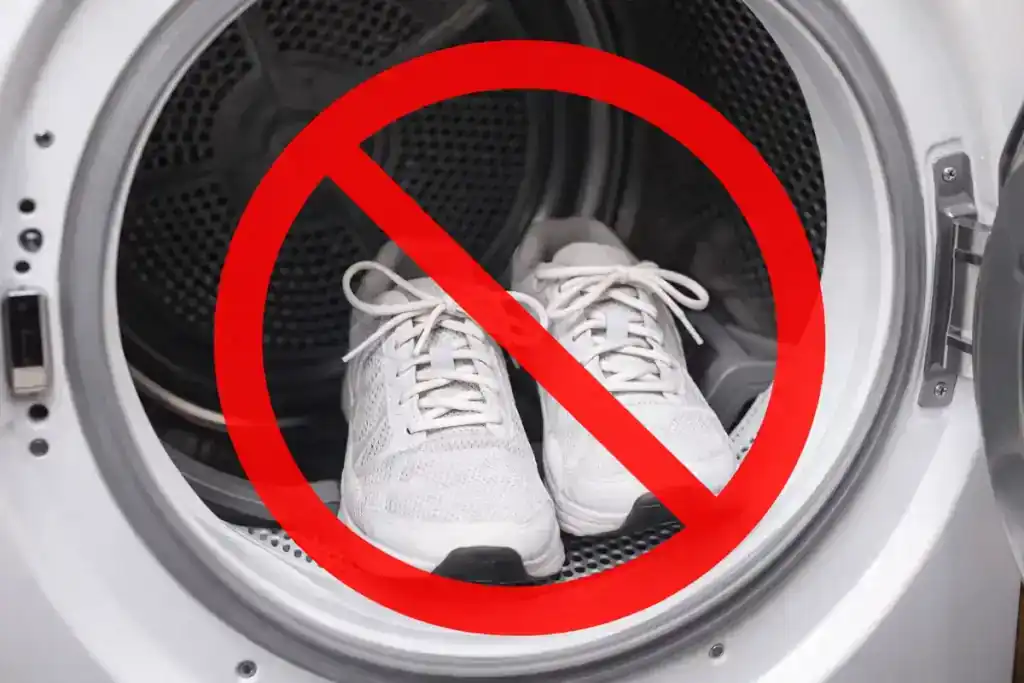
It’s one of the most common shoe-care questions people ask, usually after a run in the rain, a walk through slush, or an accidental trip through the washing machine. Many people wonder, can you put shoes in the dryer to speed things up.
For most shoes, the short answer is no. Putting shoes in the dryer can shorten shoe lifespan, damage cushioning, and compromise the support your feet rely on. Heat and tumbling affect far more than surface materials, and the most important damage can happen inside the midsole and heel counter long before you see anything on the outside.
If you’re building a simple maintenance routine around cleaning, drying, and storage, start with Shoe Care 101: How To Clean Your Footwear Like A Pro!.
Why Dryers Are Hard on Shoes
Household dryers combine three things shoes are not designed to tolerate: sustained heat, aggressive tumbling, and repeated impact against a hard drum. Clothing is built to flex and recover. Shoes are engineered to hold shape, support alignment, and protect joints.
Dryer heat softens the adhesives that bond soles to uppers and midsoles to outsoles. Tumbling stresses stitching, compresses heel padding, and can twist the shoe’s geometry out of alignment. Even one dryer cycle can change how a shoe fits and performs.
What Happens When Shoes Overheat
Heat affects different shoe components in different ways.
Foam midsoles can compress unevenly or lose rebound, reducing shock absorption. Rubber outsoles may harden, reducing traction. Synthetic uppers can warp or shrink. Leather can dry out and crack as natural oils are stripped away. Supportive elements such as stability rails, medial posts, or structured heel cups can shift.
The tricky part is that a shoe can come out of the dryer looking “fine” and still be damaged where it counts. If it suddenly feels flatter, stiffer, or less stable, trust your feet.
Types of Shoes That Should Not Go in the Dryer
If you’re unsure whether your shoes can survive the dryer, assume they can’t unless the manufacturer explicitly says they can. The categories below are the most likely to be damaged.
Running Shoes
Modern running shoes rely on foam midsoles and carefully tuned geometry to manage repetitive impact. Dryer heat can alter cushioning, and tumbling can warp the heel counter.
Examples you’ll see often include Brooks Ghost and Nike Pegasus models, along with stability designs such as ASICS Gel-Kayano. If you’re shopping, you can compare current options via Amazon running shoe search results.
If your shoes are already near end-of-life, pair this post with When Should I Replace My Shoes? and the running-specific guide How to Know When to Replace Your Running Shoes.
Tennis Shoes and Athletic Sneakers
“Tennis shoes” is often used as a generic term for athletic sneakers, and people search for it specifically: can you put tennis shoes in the dryer? In most cases, the answer is still no.
Most tennis shoes and cross-trainers contain EVA or TPU-based foam, glued overlays, and structured heel components. Heat can soften bonding and alter how the midsole feels.
Examples include court-shoe families like Adidas Barricade-style builds and Nike Court lines. To see the range of constructions you’ll run into, browse Amazon tennis shoe search results.
Walking Shoes
Walking shoes are built for repetitive, lower-impact motion, but they still rely on cushioning and support structures that do not tolerate heat well. Tumbling can deform heel counters and weaken bonded soles.
Examples include many Skechers walking models, Rockport walking shoes, and New Balance walking silhouettes. You can browse Amazon walking shoe search results.
If you need replacement ideas, start with Best Walking Shoes and (for men and women) Best Walking Shoes for Men and Best Walking Shoes for Women.
Hiking Shoes and Boots
Hiking footwear uses structured uppers, protective randing, and often waterproof membranes. Dryer heat can weaken adhesives and compromise waterproof linings.
Examples include popular hiking-shoe constructions from brands like Merrell and Salomon. For comparison shopping, see Amazon hiking shoe search results.
If you’re deciding between trail runners and hiking shoes, the differences matter for drying and durability. See Trail Running Shoes vs Hiking Shoes.
Leather, Suede, and Nubuck Shoes
Leather and suede should never go in the dryer. Leather can crack and stiffen as oils are stripped away. Suede and nubuck can discolor and lose texture.
Examples include leather walking shoes, casual leather sneakers, and dress shoes with glued soles.
Cleats and Sport-Specific Footwear
Cleats often combine TPU plates, bonded uppers, and specialized materials that dislike heat. Dryer use can warp plates or weaken bonds.
If you’re dealing with wet cleats, your safest approach is airflow, not heat. Related care questions are covered in Cleats: Questions and Answers and How to Buy Cleats.
Orthopedic and Supportive Shoes
Shoes designed for plantar fasciitis, overpronation, or joint support rely on precise alignment and stability features. Heat damage may not be obvious visually, but it can undo the design elements that make the shoes helpful.
If you depend on stability features, Overpronation Guide For Runners and Walkers is a solid starting point, along with the broader hub Best Shoes for Overpronation.
Can You Put Tennis Shoes in the Dryer?
In most cases, no. Tennis shoes (and athletic sneakers more broadly) usually contain foam midsoles and glued components that are vulnerable to heat.
If you need them dry quickly, remove insoles, loosen laces, and use airflow-based methods. If you’re stuck with damp shoes regularly, a purpose-built shoe dryer is the safer “fast” option.
Can You Put Wet Shoes in the Dryer?
It’s tempting, especially when shoes are soaked. Wet shoes are also more vulnerable to heat-related deformation because materials are already softened and the shoe is heavier. Tumbling stresses seams and adhesives even more.
If shoes are drenched, prioritize removing water first, then drying with airflow.
Can You Put Shoes in the Washer and Dryer?
This is where many shoes get ruined.
Some shoes can go in the washing machine, but that does not mean they should go in the dryer afterward. Washer-safe does not equal dryer-safe.
Here’s the safest baseline approach for washer-friendly shoes:
- Remove insoles and laces.
- Use cold water and a gentle cycle.
- Wash with towels to reduce banging.
- Air dry only.
Canvas shoes and some basic sneakers may tolerate careful washing. Structured running shoes, leather, suede, hiking footwear, and supportive orthopedic shoes are poor candidates.
If your main goal is to reduce odor or freshen shoes without a full wash, a gentle clean-and-dry routine is often safer than machine washing. The step-by-step is in Shoe Care 101: How To Clean Your Footwear Like A Pro!.
Common Midsole Materials and Heat Tolerance
Modern shoes rely heavily on foam midsoles for cushioning and stability. These materials perform best within narrow temperature ranges, and high heat can alter their structure.
Exact heat tolerance varies by formula and brand, but the practical takeaway is consistent: household dryer heat is risky for foam-based midsoles.
Midsole material | Common use | Heat sensitivity in real life | What can go wrong in a dryer |
|---|---|---|---|
EVA (ethylene-vinyl acetate) | Running and walking shoes | High | Softening, compression, loss of rebound |
TPU (thermoplastic polyurethane) | Stability and performance shoes | Moderate | Warping, uneven firmness, shape shift |
PU (polyurethane) | Walking and orthopedic shoes | Moderate | Hardening, reduced shock absorption |
Proprietary foam blends | Brand-specific athletic shoes | Varies | Structural breakdown, shortened lifespan |
If you want to go deeper on how cushioning and stability elements work, explore Shoe Terms Glossary and material-specific explainers like What Is New Balance FreshFoam?.
Dryer vs. Air Drying vs. Shoe Dryer
Drying method affects shoe lifespan and comfort. If you’re regularly drying athletic shoes, investing in a safe method often costs less than replacing shoes early.
Drying method | Drying speed | Damage risk | Best use case |
Household dryer | Fast | High | Not recommended for most shoes |
Air drying at room temperature | Slow to moderate | Low | Everyday drying for most footwear |
Fan-assisted air drying | Moderate | Very low | Wet athletic shoes overnight |
Purpose-built shoe dryer | Moderate | Low | Frequent runners, walkers, hikers |
Popular Shoe Dryers Available Online
If you regularly deal with wet shoes, the models below are among the most commonly used and well-reviewed shoe dryers available on Amazon. They are grouped to help runners, walkers, and workers quickly identify which type best fits their needs.
Popular Shoe Dryers Available on Amazon
If you regularly deal with wet shoes, the models below are among the most commonly used and well-reviewed shoe dryers available on Amazon. They are grouped to help runners, walkers, and workers quickly identify which type best fits their needs.
Product name | Best for | Key features | Price range (See legend below table) | Product page |
|---|---|---|---|---|
PEET Original Shoe Dryer | Everyday walking shoes, leather shoes | Silent convection drying, no fan, very gentle on materials | $$ | |
PEET Advantage Plus Dryer | Runners, daily trainers | Fan-assisted airflow, faster drying, compact footprint | $$ | |
PEET PowerCell Dryer | Heavy use, multiple shoes | High-output airflow, dries shoes and boots quickly | $$$ | |
JobSite Original Shoe Dryer | Work boots, hiking footwear | Heavy-duty construction, steady airflow | $$ | |
DryGuy Force Dry DX | Soaked running shoes, winter boots | Forced air with optional heat, fast drying | $$$ | |
DryGuy BootGlove Dryer | Quiet home use, athletic shoes | Low-profile design, quieter fan | $$ | |
Everlasting Comfort Shoe Dryer | Best value option | Adjustable drying tubes, quiet operation | $ | |
Housmile Shoe Dryer | Travel, small spaces | Compact, portable, built-in timer | $ | |
KOODER Electric Shoe Dryer | Budget buyers | Foldable arms, temperature control | $ | |
Manledio Shoe Dryer | Odor control, casual shoes | 360-degree airflow, deodorizing heat | $ |
Price range legend
- $ = Budget-friendly, typically under $30
- $$ = Mid-range, usually around $30–$50
- $$$ = Premium models, generally $50 and up
How to Dry Shoes in the Dryer (If You Have No Other Option)
If you’re looking specifically for how to dry shoes in dryer because you have no alternative, treat this as emergency-only guidance.
Use an air-only or no-heat setting if your dryer has one. Remove insoles and laces. If you have a dryer rack, use it so shoes are not tumbling. Stop the cycle frequently to check for heat buildup.
Even with these precautions, this is still risky for most athletic shoes.
Safer Ways to Dry Shoes Without Damaging Them
Airflow-based drying protects shoe structure and cushioning. The methods below are reliable and safe for almost all footwear.
Room-temperature air drying
Remove insoles and loosen laces to open the shoe up. Set shoes in a ventilated room at normal indoor temperatures. Avoid radiators, space heaters, and direct heat sources.
Absorbent stuffing
Stuff shoes with paper towels, newspaper, or clean cloths to pull moisture from the inside. Replace stuffing every few hours. This keeps shoes from collapsing while they dry.
Fan-assisted drying
Place shoes in front of a fan to increase airflow. This is one of the safest ways to dry running and walking shoes overnight.
Purpose-built shoe dryers
Shoe dryers are designed to use gentle warmth and airflow rather than high heat. If you frequently train in wet conditions, this is the safest “fast” option.
Wet shoes can also increase friction and skin problems. Two related resources are Running Shoes for Calluses and Corns and FAQ: Removing and Reducing Foot Calluses for Runners and Walkers.
Shoe Lifespan and Drying Methods
Most running and walking shoes are designed to last roughly 300 to 500 miles of use, depending on body weight, gait, terrain, and shoe construction. Heat exposure accelerates midsole breakdown and adhesive failure, often shortening usable life long before the outsole looks worn.
For replacement guidance and what to look for beyond tread, start with When Should I Replace My Shoes? and, for runners, How to Know When to Replace Your Running Shoes.
If you want a faster way to narrow down shoe options when you’re replacing a pair, Shoe Fit Gait Recommendation Calculator is a good tool to keep bookmarked.
Signs Your Shoes Were Damaged by Heat
Dryer damage isn’t always obvious right away. These are common warning signs:
- The midsole feels flatter, stiffer, or “dead” compared to before.
- The shoe feels less stable, especially at the heel.
- Glue lines look wavy, bubbled, or partially separated.
- The outsole curves or curls at the edges.
- The fit changes, especially in the toe box or heel cup.
Most shoes should not go in the dryer. Dryer heat can damage foam cushioning, soften adhesives, and deform supportive structures like heel counters and stability rails.
Wet shoes are more vulnerable to deformation and glue failure in a dryer because the materials are already softened and the shoes are heavier. Air dry instead using absorbent stuffing and a fan for airflow.
In most cases, no. Tennis shoes and athletic sneakers typically use foam midsoles and glued overlays that do not tolerate heat well. Removing insoles and drying with airflow is the safer approach.
Some shoes can be washed on a gentle, cold cycle, but most should not go in the dryer afterward. Washer-safe does not mean dryer-safe. Air drying remains the recommended method for nearly all athletic footwear.
Low heat is still heat. Many midsole foams and adhesives can be damaged even on gentle dryer settings, which can affect cushioning, stability, and overall comfort.
Adding towels may reduce noise, but it does not prevent heat damage or tumbling stress. The internal structure of the shoe can still be compromised.
Air-only settings are safer than heated cycles, but shoes can still be damaged if they tumble repeatedly. Air drying outside the dryer is generally safer.
Shoe dryers are often better than passive air drying when shoes are very wet or need to be ready quickly. They use controlled airflow and gentle warmth instead of high heat, reducing the risk of damage.
Lightly damp shoes often dry overnight with good airflow. Heavily soaked shoes may take 24 to 48 hours depending on materials, humidity, and ventilation.
Remove insoles and laces, open the shoe for airflow, use absorbent stuffing, and dry at room temperature with fan assistance if needed.
Yes. Purpose-specific shoe dryers are designed to dry footwear safely using controlled airflow and gentle warmth instead of the high heat used in household dryers. They direct air inside the shoe to evaporate moisture evenly, helping preserve cushioning, adhesives, and overall shoe structure while reducing odor and bacterial buildup. See best shoe dryers on Amazon.