Callus and corn treatment works best when it focuses not only on the hardened skin itself, but also on the pressure patterns that caused it. The remedies below are commonly recommended in podiatric care and sports medicine, with different approaches suited to different stages and severities of callus formation.
At-Home Mechanical Foot Callus Care and Removal
Mechanical care refers to physically reducing callus thickness in a controlled, gradual way. For runners and walkers with mild to moderate calluses, this is often the first and most effective line of treatment.
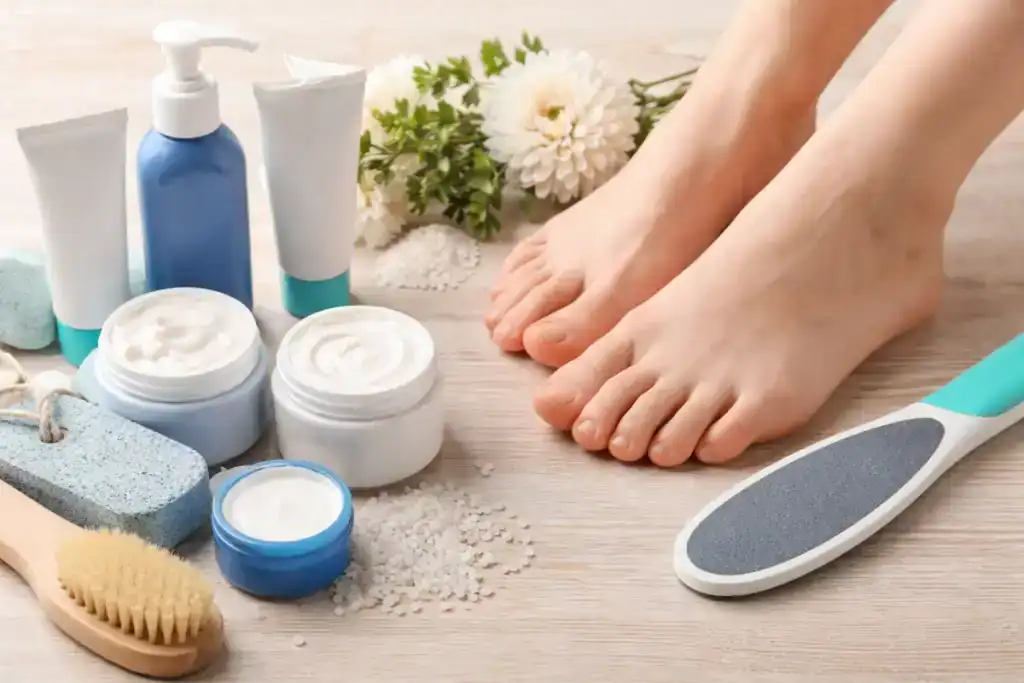
The most common methods include soaking the feet in warm water for 10–15 minutes to soften the skin, followed by gentle use of a pumice stone or foot file. The key is moderation. Removing small amounts of thickened skin over several sessions helps maintain the protective benefits of a callus while preventing excessive buildup that can cause discomfort.
Mechanical care should be done no more than a few times per week. Over-filing can strip away too much skin, increasing sensitivity and making the foot more vulnerable to blisters and cracks—especially in high-impact areas like the ball of the foot or heel.
This approach works best when calluses are superficial and not painful. It is less effective if the callus is caused by a persistent pressure point from footwear or gait mechanics, which will continue to stimulate thickening regardless of surface removal.
For active individuals, mechanical care is best viewed as maintenance rather than a cure. When combined with proper footwear and moisture management, it can significantly reduce discomfort and improve overall foot comfort during walking and running.
Type of product | What it does | Best for | Pros | Cons | Pricing |
|---|---|---|---|---|---|
Foot soak products (pre-treatment) | Softens hardened skin before mechanical care | Skin softening | Improves comfort, reduces aggressive filing, supports controlled removal | Not a removal method, adds time to routine | |
Pumice stones | Gradually abrades softened callused skin | Mild calluses | Controlled removal, low risk, inexpensive | Slow results, requires consistency | |
Foot files and callus files | Thins thicker callus layers efficiently | Moderate calluses | Effective on buildup, smooths rough skin | Easy to overuse, can cause tenderness | |
Electric callus removers (low-abrasion) | Reduces callus thickness with powered abrasion | Superficial calluses | Convenient, consistent results | Removes skin quickly, requires caution | |
Post-care smoothing tools (fine buffers) | Smooths edges after thinning | Finishing care | Reduces friction, improves comfort | Not for heavy removal | |
Hygiene and tool-care accessories | Keeps tools clean and safe to reuse | Tool maintenance | Reduces bacteria buildup, extends tool life | No direct callus reduction |
Runner vs Walker Usage Notes
While runners and walkers often develop calluses in similar areas, how mechanical care tools are used—and how often—should differ slightly based on activity patterns and impact levels.
For runners
Runners typically experience higher impact forces concentrated on the forefoot and heel. Mechanical callus care should be conservative, focusing on gradual thinning rather than frequent removal. Pumice stones and light foot filing are usually sufficient when used once or twice per week, ideally after easy or recovery runs. Overuse of aggressive tools can increase skin sensitivity and raise the risk of blisters during higher-mileage weeks. Consistent footwear rotation and post-run moisture management play a key role in preventing rapid callus buildup.
For walkers
Walkers often accumulate calluses from prolonged pressure rather than impact. Mechanical care may be needed slightly more frequently, particularly for people who walk daily or stand for long periods. Foot files and pumice stones can be effective when used gently two to three times per week, especially on the heel and outer edge of the foot. Comfort and skin integrity should guide frequency rather than mileage alone.
Topical Treatments and Moisturizing Remedies for Calluses
Topical remedies focus on softening callused skin and improving elasticity rather than physically removing it. These treatments are especially helpful for dry, cracked, or thick calluses that feel rough but are not acutely painful.
Moisturizers containing urea, lactic acid, or low concentrations of salicylic acid are commonly recommended in podiatric care. Urea-based creams are particularly effective because they both hydrate the skin and help break down excess keratin, allowing the callus to thin gradually over time. Lactic acid improves skin flexibility, reducing the risk of fissures, while mild salicylic acid helps exfoliate dead skin cells.
Consistency matters more than strength. Daily application—often at night, followed by socks to lock in moisture—produces better results than sporadic use of aggressive products. Strong chemical callus removers should be avoided unless specifically recommended by a healthcare professional, as they can damage healthy surrounding skin.
Topical treatments are most effective when paired with mechanical care and pressure reduction. On their own, they may soften calluses but will not prevent recurrence if the underlying friction or load remains unchanged.
For runners and walkers, well-hydrated skin is also more resilient, making it less prone to cracking during long distances or high-mileage weeks. So consider using a good foot moisturizer regularly.
Type of remedy | Primary ingredient | Best for | Pros | Cons | Pricing |
|---|---|---|---|---|---|
Foot moisturizers (general use) | Emollients and humectants | Preventing dryness, maintaining skin resilience | Improves overall hydration, supports skin barrier, helps reduce cracking during long walks or runs, safe for daily use | Does not actively thin thick calluses, slow visible results, recurrence likely if pressure remains | |
Urea-based creams | Urea (typically 10–40%) | Thick, dry, or rough calluses | Hydrates and softens skin, helps break down excess keratin, widely recommended in podiatric care, effective with consistent use | Requires regular application, higher concentrations may irritate sensitive skin, does not address pressure cause | |
Lactic acid–based creams | Lactic acid | Rough texture, early callus buildup, cracked-prone skin | Improves skin elasticity, gently exfoliates, helps reduce fissures, generally well tolerated | Gradual results, less effective for very thick calluses, may cause mild irritation if overused | |
Salicylic acid–based treatments | Low-strength salicylic acid | Localized or stubborn callus areas | Helps exfoliate dead skin cells, can gradually thin hardened areas, useful for targeted treatment | Can damage healthy skin if misused, not recommended for reduced sensation or diabetes, requires careful application |
Footwear Adjustments and Pressure Offloading
One of the most overlooked callus remedies is addressing how pressure is distributed across the foot. If the cause is not corrected, calluses tend to return regardless of surface treatment.
Footwear plays a major role. Shoes that are too narrow, lack adequate cushioning, or have worn midsoles concentrate pressure in specific areas, triggering callus formation. A narrow toe box can lead to calluses under the big toe or along the outer toes, while insufficient forefoot cushioning often contributes to thickened skin on the ball of the foot. See also best wide toe box shoes.
See also: Best Shoes for Calluses and Corns
Pressure offloading may include switching to shoes with better width and midsole support, rotating footwear to vary pressure patterns, or using insoles designed to redistribute load. In some cases, padding or metatarsal supports can reduce friction in problem areas.
Gait mechanics are equally important. Overpronation, supination, or uneven stride patterns often correspond to recurring calluses in the same locations. This is where internal resources on gait mechanics and pressure distribution naturally support treatment decisions.
For runners and walkers, footwear-based remedies are often the most durable solution. When pressure is reduced, the skin no longer receives the signal to thicken, allowing existing calluses to soften and diminish over time.
Professional Podiatric Treatment
When calluses are painful, recurrent, or accompanied by cracks or discoloration, professional care is often the safest and most effective remedy.
A podiatrist can safely debride thick calluses using sterile instruments, removing hardened skin without damaging healthy tissue. This provides immediate relief while minimizing infection risk, particularly important for weight-bearing areas of the foot.
Beyond removal, professional care focuses on identifying the underlying cause. This may include gait assessment, pressure mapping, footwear evaluation, or recommending custom or semi-custom orthotics. For active individuals, these interventions can significantly reduce repeat callus formation and improve comfort during movement.
Professional treatment is especially important for people with diabetes, circulation issues, or reduced sensation in the feet, as even minor skin breakdown can lead to serious complications.
For runners and walkers who experience the same callus returning despite consistent home care, podiatric evaluation often reveals biomechanical factors that cannot be corrected with surface treatments alone. Learn how to find a podiatrist in the U.S.