Last Updated on October 20, 2026
| Quick answer: What are the best wide toe box shoes? The Topo Phantom 4 is our best overall wide toe box shoe for walking and daily running. Choose the Topo Atmos 2 for maximum cushioning, the Topo Ultrafly 6 for added stability or the Altra Torin 9 for cushioning with zero drop. The Xero Prio is our minimalist fitness pick. The Hoka Clifton 11 Wide is a conventional wide-fit alternative. The best choice gives your toes room while keeping your heel secure. Toe-box shape, overall width and cushioning should be considered separately. Click to see our recommendations side by side. |
As someone in my fifties with naturally wide feet, I’ve learned that shoe comfort isn’t just about cushioning. It’s about toe space. A narrow toe box can cause rubbing, aggravate bunions and leave your feet hurting long after you take your shoes off. After years of trial and error, I’ve finally found that the best shoes let your toes splay naturally while still providing solid arch support and overall stability. Whether you’re walking, running or just on your feet all day, the right wide toe box shoes can give you comfort without sacrificing style or performance. See the buyer’s guide below for tips on finding your fit.
The recommendations below cover both cushioned shoes and minimalist options. Start with where your current pair feels tight: crowded toes call for a closer look at the forefoot shape, while pressure through the middle of the foot may mean you need a wider size. For that broader fit problem, see our best wide shoes for walking.
If a bunion is the main reason you need more toe room, use our Best Shoes for Bunions guide. It focuses specifically on pressure around the big-toe joint, soft uppers and width choices rather than toe-box shape alone.
Best wide toe box shoes at a glance
Compare the shoes by fit, cushioning and how you plan to use them. Retail prices change, so the shopping links let you check the latest Amazon listings and availability for your size and width.
| Shoe (jump to review below) | Best for | Toe box and fit | Heel drop (what’s this?) | Check price and availability |
|---|---|---|---|---|
| Topo Phantom 4 | Best overall | Anatomical toe box; standard and wide choices | 5 mm | Check latest price |
| Topo Atmos 2 | Maximum cushioning | Anatomical toe box with a taller cushioned platform | 5 mm | Check latest price |
| Topo Ultrafly 6 | Added stability | Anatomical toe box; added support through the inner side and heel | 5 mm | Check latest price |
| Altra Torin 9 | Cushioned zero drop | Foot-shaped forefoot; check the selected width | 0 mm | Check latest price |
| Xero Prio | Minimalist fitness | Foot-shaped toe box with a flexible sole | 0 mm | Check latest price |
| Hoka Clifton 11 Wide | Conventional wide-fit alternative | Wide and extra-wide options; a more conventional forefoot shape | 8 mm | Check latest price |
Find your fit first
Need roomy toes and everyday cushioning? Compare the Topo Phantom 4 with the Topo Atmos 2. Want extra stability? Start with the Topo Ultrafly 6. Prefer a zero-drop shoe? Compare the Altra Torin 9 and minimalist Xero Prio, but adjust gradually if you normally wear raised-heel shoes. Need a conventional wide size? Consider the Hoka Clifton 11 Wide. A wide size is not the same as a foot-shaped toe box. Choose the pair that gives your toes space while holding your heel securely.
How we chose these shoes
This guide combines my experience with wide feet and research into manufacturer specifications. The recommendations are editorial judgments about fit and intended use, rather than results from a wear test of every model.
We looked for room around the toes, a secure heel, clearly documented construction and a useful choice of cushioning or support. Each recommendation fills a different need. The three Topo models, for example, cover everyday cushioning, maximum cushioning and added stability.
Most selections have an anatomical or foot-shaped toe box. The Hoka Clifton 11 is included as a conventional wide-fit alternative, with that distinction made clear. A wider size can help some feet, but it does not guarantee the same toe freedom as a different forefoot shape.
We have not ranked shoes by medical marketing claims or assumed that customer reports of pain relief prove treatment benefits. The named models are the specific versions covered here; other shoes from the same brand can fit differently.
Topo Phantom 4

Best overall for walking and daily running
The Phantom 4 is our first pick for walkers and runners who want toe room, cushioning and a secure heel. Its anatomical forefoot is designed to let the toes spread, and Topo pairs that with a closer fit through the midfoot and heel.
The model has a 5 mm heel-to-toe drop, meaning the heel sits 5 mm higher than the forefoot. It uses ZipFoam cushioning, with a published stack height, or sole thickness, of 35 mm at the heel and 30 mm at the front. Topo lists walking and daily running among its intended uses. The men’s and women’s specifications describe the same core design.
Start by comparing standard and wide fits rather than automatically ordering wide. The right choice depends on whether you need extra room only around the toes or farther back through the shoe too. When trying it on, check the arch area as well as the front. Pressure through the midfoot is a reason to try another width or shape.
Why it made the list: Toe room is an explicit part of the shoe’s design.
Main limitation: Its lower drop and midfoot fit may feel different from your usual shoes. Read our full Topo Phantom 4 review.
Gender-specific buy links: Men’s Phantom | Women’s Phantom 4
Topo Atmos 2
Best for maximum cushioning
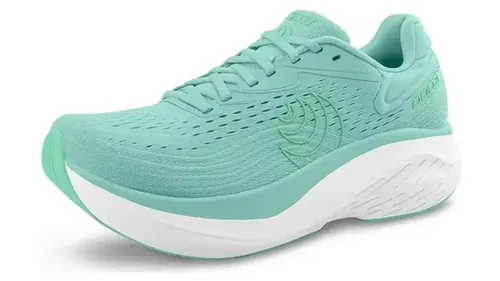
The Atmos 2 is the choice to compare with the Phantom 4 when cushioning is your first priority. Both use Topo’s anatomical forefoot design, but the Atmos 2 puts more sole beneath your feet. That makes it a useful alternative if you like the idea of the Phantom but want more cushioning.
Topo lists a 40 mm heel and 35 mm forefoot, producing a 5 mm drop. The model uses ZipFoam cushioning, an engineered mesh upper and strategically placed rubber on the outsole. Walking and daily running are listed uses. These details come from the Atmos 2 product page.
Compare the Atmos and Phantom during ordinary steps and turns. The extra sole height is useful only if you like how it feels. The taller platform should still feel steady and easy to control. Check the fit around your arch and heel as carefully as the space around your toes.
Why it made the list: Plush cushioning paired with an anatomical toe box.
Main limitation: The taller platform may feel excessive if you prefer a lower shoe. Compare it with the Phantom 4 first. Read our full Topo Atmos 2 review.
Gender-specific buy links: Men’s Atmos 2 | Women’s Atmos 2
Topo Ultrafly 6
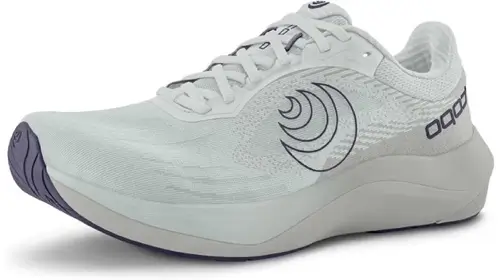
Best for added stability
The Ultrafly 6 fills a different role from the two neutral Topo models. It combines a roomy anatomical forefoot with added support through the inner side and heel. That makes it worth comparing if you prefer some guidance underfoot while retaining space for your toes.
The Ultrafly 6 specification page lists a 32 mm heel, 27 mm forefoot and 5 mm drop. Its ZipFoam midsole includes a redesigned medial post: a firmer support section that now wraps around the heel. Topo identifies it as a stability shoe for walking and daily running.
Try this model if you already prefer a supported feel. Foot width alone does not determine whether you need a stability shoe. Compare it directly with the Phantom 4 if you are unsure whether you prefer a neutral or supported feel.
Why it made the list: It offers anatomical toe space together with added stability.
Main limitation: The firmer support may feel intrusive if you prefer a neutral shoe.
Gender-specific buy links: Men’s Ultrafly 6 | Women’s Ultrafly 6
Altra Torin 9
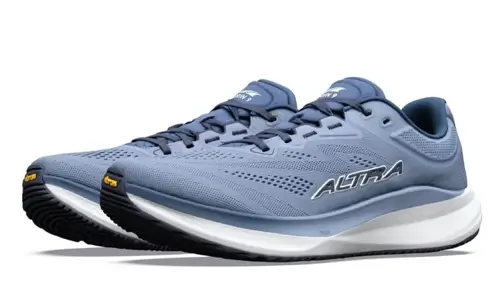
Best for cushioning with zero drop
The Altra Torin 9 is our pick if you want toe room and cushioning with your heel and forefoot at the same height. Its foot-shaped front makes toe space a central part of the design. The flat platform provides a different option from the raised heels in the Topo models.
Altra lists a 28 mm sole height and 0 mm heel-to-toe drop. The Torin 9 uses P35X dual-density cushioning and a Vibram XS DURA outsole, rather than the Torin 8’s EGO MAX foam and rubber outsole. The manufacturer’s Torin comparison identifies those differences and lists both walking and daily running among the new model’s uses.
Zero drop describes the shoe’s geometry; it does not establish a medical benefit. If your current shoes have a raised heel, introduce the change gradually. Keep your first outings short enough to assess comfort before using the pair for your normal distance.
Also check the product name carefully: Torin 9, Torin ST and Torin 9 GTX are separate options. This recommendation is for the standard Torin 9. Check the full name before ordering so you get the construction described here.
Why it made the list: A foot-shaped toe box with cushioning and a flat platform.
Main limitation: Zero drop is a meaningful change if you are used to a raised heel.
Gender-specific buy links: Men’s Torin 9 | Women’s Torin 9
Xero Prio

Best for minimalist fitness
The Xero Prio is our minimalist fitness pick for readers who want a flexible shoe and more ground feel. It combines toe space with a low, flat sole, making it a different experience from the cushioned walking and running models above.
Xero describes the Prio as having a foot-shaped toe box, zero drop and a flexible FeelTrue sole. Heel and instep straps help secure the foot while leaving the toes free to move. The Prio product page also identifies it as a running and fitness shoe.
During a fitting, check whether you can secure the midfoot without squeezing the forefoot. Try it during the movements you plan to use it for, including turns and changes of direction. Comfortable standing is only part of the fit check. If you are moving from thick cushioning to a minimalist sole, increase wear gradually rather than beginning with your usual full distance.
Why it made the list: A flexible, foot-shaped design for readers who want minimalist fitness footwear.
Main limitation: It is a poor match if your priority is a soft, thick layer of cushioning.
Gender-specific buy links: Men’s Prio | Women’s Prio
Hoka Clifton 11 Wide
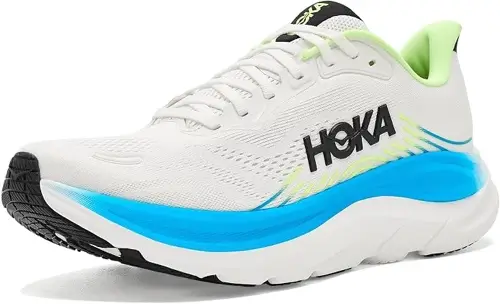
Best conventional wide-fit alternative
The Clifton 11 is the option for readers who prefer a conventional athletic shoe and need more width. Its shape differs from the anatomical designs elsewhere in this guide, so choose it based on the fit of the wide version rather than the size of the sole.
Hoka lists the Clifton 11 for walking and road running. Its features include compression-molded EVA cushioning, an engineered mesh upper and a curved MetaRocker sole designed to help the foot roll through a step. Our guide explains what a rocker does in shoes. The published heel-to-toe drop is 8 mm. The official Clifton 11 product page lists regular, wide and extra-wide choices, although stock depends on the market, size and color.
For this roundup, start with the wide version if your usual standard-width athletic shoes squeeze your forefoot. Try extra-wide if wide still feels restrictive, but check that your heel remains secure. More overall volume is useful only if your foot stays comfortably in place.
Choose the Clifton when you like its cushioning and rolling sole. If its outline still pushes your toes inward, try a different toe box shape instead of simply buying a longer size.
Why it made the list: Cushioning with multiple width choices.
Main limitation: A wider Clifton is not automatically the best anatomical fit for every forefoot. Read our full Hoka Clifton 11 review.
Gender-specific buy links: Men’s Clifton 11 Wide | Women’s Clifton 11 Wide
Buyer’s guide: How to choose wide toe box shoes
Start with the location of the tightness, then consider cushioning and activity. Buying a shoe that is wider everywhere may not solve a toe-shape problem, particularly if it leaves your heel slipping.
Understand the fit terms
These descriptions answer different questions about a shoe:
| Term | What it describes | What it does not guarantee |
|---|---|---|
| Wide toe box | Extra room around the toes | Extra width through the midfoot or heel |
| Wide or extra-wide size | A wider version of a shoe | An anatomical outline around the toes |
| Anatomical toe box | A front shaped to follow the forefoot more closely | A fit that suits every foot |
| Extra depth | More vertical room inside the shoe | More width from side to side |
| Zero drop | Equal heel and forefoot height | A thin sole or minimal cushioning |
| Minimalist or barefoot-style | Usually a flexible shoe with less underfoot structure | A comfortable transition from your current footwear |
If your problem is overall width rather than toe shape, see our best shoes for very wide feet for verified 4E, 5E and 6E options.
Check length, width and depth
Try both shoes with the socks you expect to wear. Use these practical checks during the fitting:
- Leave about 1 centimeter of space ahead of your longest toe as a starting point.
- Check that the widest part of your foot sits comfortably inside the shoe.
- Make sure the upper does not press on the tops of your toes.
- Walk around and check that your heel stays secure.
- If you use orthotics, try the shoes with those inserts in place.
- Try shoes later in the day if your feet tend to swell.
These checks follow NHS footwear guidance. Do not keep sizing up in length if the real problem is width or shape.
Match cushioning to your activity
For routine walking, compare how the sole feels on the surfaces you use most. A soft shoe may feel pleasant underfoot, but comfort also depends on whether the platform feels steady and the upper holds your foot securely.
For running, prioritize a clearly identified running model that fits well, such as the Phantom 4 or Torin 9. For lifting or workouts with side-to-side movement, assess the shoe’s suitability for that activity separately. A roomy walking shoe is not automatically a good gym shoe.
If you need help narrowing the category, try our free shoe finder. If your main problem is finding enough toe room in footwear for long shifts, see our best wide work shoes.
Changing heel drop or cushioning
Heel-to-toe drop is the difference in height between the heel and forefoot. A move to a lower drop or thinner sole changes the feel of your footwear. Introduce the new pair gradually and assess comfort before increasing wear time. Learn more about shoe drop in our guide.
Look beyond medical marketing
A wide toe box can reduce crowding, but it cannot establish that a shoe will treat a specific condition. The American Academy of Orthopaedic Surgeons includes wider toe boxes among measures used to reduce pressure associated with several problems caused or aggravated by tight shoes.
For bunions, check the side of the shoe where it meets the big-toe joint. For hammertoes, check vertical space as well as width. Persistent pain, numbness or worsening swelling deserves professional assessment rather than repeated shoe purchases based on marketing claims.
Frequently asked questions
A wide shoe adds width to a particular model. A wide toe box describes room specifically around the toes. Some people need both; others need a roomier front with a secure, relatively narrow heel.
Our starting pick is the Topo Phantom 4 because its design specifically combines an anatomical toe box with cushioning and a secure rear fit. Try it against a conventional wide shoe to see which shape suits your foot.
They can be, particularly in the appropriate wide or extra-wide size. However, the Clifton 11’s width choices do not guarantee enough space for every toe shape. Compare its fit with an anatomical alternative before choosing.
No. Toe box shape and heel-to-toe drop are independent features. The Phantom 4 has a 5 mm drop, the Torin 9 has a 0 mm drop and the Clifton 11 has an 8 mm drop. Choose toe room and heel height separately.
It is a minimalist choice in this guide, with less underfoot cushioning than the Topo and Altra models. Choose it if you want that experience. Needing more toe room does not mean you need a thin sole.
Not automatically. If length is already correct, try a wider size or a different forefoot shape first. Excess length can leave the shoe feeling loose while still failing to resolve pressure at the sides.
They may reduce shoe pressure around a bunion, but they do not reverse it. Look for a comfortable fit around the joint and avoid seams that rub. Seek advice if pain continues despite changing footwear.