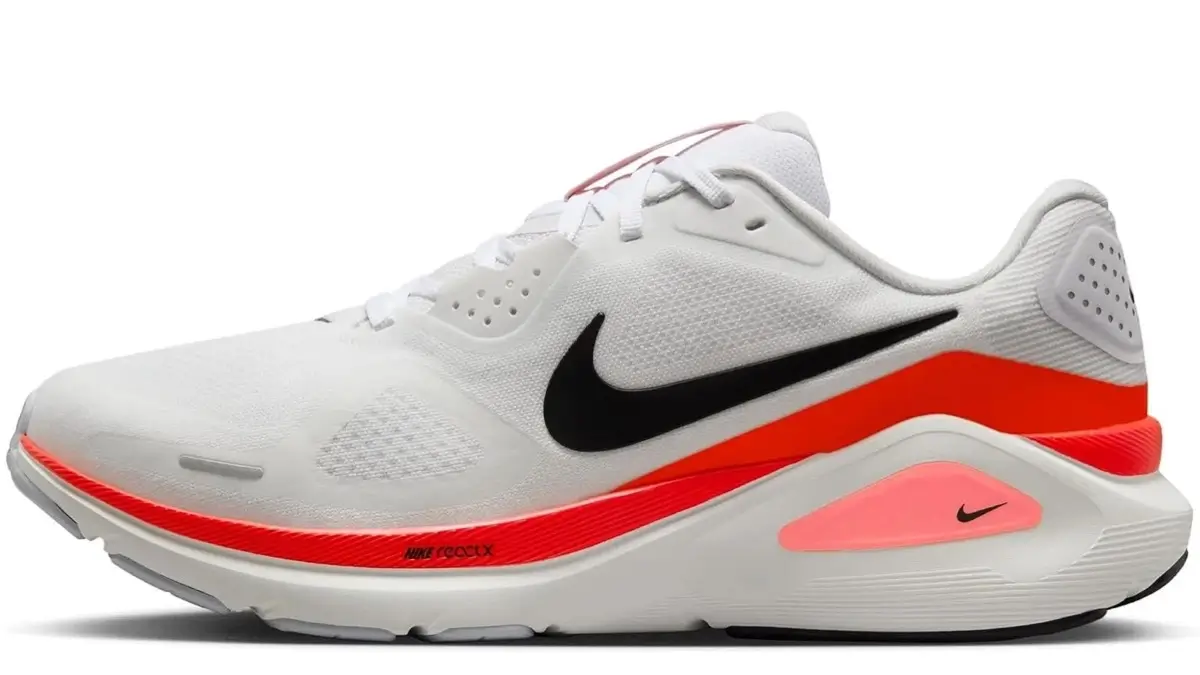
Quick Answer: Nike discontinued the Lunarglide after the Lunarglide 9, and there is no official direct successor. The closest current Nike equivalent is the Structure 26 because it is Nike’s current supportive road-running shoe for runners who want extra stability without a traditional hard medial post. The ride is different: the Lunarglide 9 used soft Lunarlon cushioning and Dynamic Support with a 10 mm drop, while the Structure 26 uses full-length ReactX foam, a modern midfoot support system and the same 10 mm drop.
Replacement confidence: Closest current equivalent. Nike does not appear to have formally renamed the Lunarglide or identified a direct successor.
Model dates: The Nike Lunarglide 9 launched in 2017 and was the final numbered version of the line. It sold for about $120, weighed roughly 9.3 to 9.9 ounces depending on size, and used a 10 mm heel-to-toe drop.
See our running shoe replacements hub for other discontinued models and the current shoes that most closely fill their roles.
Still want the old shoe? Check remaining Nike Lunarglide 9 inventory.
Keep comparing: See our Nike running-shoe guide, our Best Running Shoes hub, or use the free Shoe Finder to narrow current models by fit, cushioning and support.
What Happened to the Nike Lunarglide?
The Nike Lunarglide was one of the brand’s best-known lightweight stability shoes. Instead of relying on a large, dense medial post, it used Dynamic Support geometry and dual-density foam to create a softer, smoother kind of guidance. That made it appealing to runners who wanted some stability without the firm, corrective feel that defined many support shoes of the same era.
The Lunarglide 9 arrived in 2017 with a 10 mm drop, Lunarlon cushioning, Flywire support and a flexible outsole design. Contemporary reviews described it as light, soft and stable enough for daily training. It sat in a useful middle ground between neutral trainers and more traditional stability shoes.
After the Lunarglide 9, Nike did not release a Lunarglide 10. The line quietly disappeared as Nike shifted its running lineup toward React, ReactX and newer support systems. The current Structure family now fills the clearest stability role in Nike’s road-running range.
What Replaced the Nike Lunarglide?
There is no official one-to-one replacement, but the Nike Structure 26 is the closest current match by purpose. Nike positions it as a supportive daily road-running shoe with a midfoot support system designed to slow ankle eversion and create a stable platform through transition and toe-off.
The Structure 26 also preserves one important piece of the Lunarglide’s geometry: both use a 10 mm heel-to-toe drop. That should make the transition feel more familiar than moving into a much lower-drop stability shoe.
The cushioning is the biggest change. Lunarglide 9 used soft Lunarlon foam and Dynamic Support. Structure 26 uses a full-length ReactX midsole and a more integrated midfoot support system. Nike describes the current shoe as stable, supportive and designed for everyday road running. Check Nike Structure 26 availability.
Nike Lunarglide Replacement Timeline
- 2017: Nike releases the Lunarglide 9, the final numbered version of the line.
- After 2017: No Lunarglide 10 enters the regular Nike running lineup.
- React era: Nike moves toward React-based cushioning and newer support geometry.
- Current stability family: Structure becomes Nike’s primary supportive road-running line.
- Closest current equivalent: Nike Structure 26.
This is a functional replacement, not a direct lineage. The Structure family existed independently of the Lunarglide, so we do not describe the Structure 26 as a renamed Lunarglide 10. It simply occupies the closest current place in Nike’s lineup for runners who want daily cushioning plus extra stability.
Nike Lunarglide 9 vs. Structure 26
Feature | Nike Lunarglide 9 | Nike Structure 26 |
|---|---|---|
Status | Discontinued | Current |
Replacement relationship | Original model | Closest current Nike equivalent |
Category | Light stability trainer | Supportive daily trainer |
Heel-to-toe drop | 10 mm | 10 mm |
Men’s weight | About 9.3-9.9 oz. | About 11.3 oz. (320 g) |
Cushioning | Lunarlon | ReactX |
Support system | Dynamic Support | Midfoot support system |
Best use | Daily running, light stability | Daily road running, supportive cushioning |
The most obvious difference is weight. Structure 26 is a much more substantial shoe than the old Lunarglide 9. Former Lunarglide runners who loved the shoe mainly because it felt light may notice that immediately. On the other hand, the Structure offers much more cushioning and a more modern support system.
Who Should Try the Nike Structure 26?
Start with the Structure 26 if you wore the Lunarglide because you wanted moderate support without an aggressive medial post. The Structure is built around the same basic idea: guide the foot and create a stable platform without making the shoe feel overtly corrective.
It is especially logical if keeping a 10 mm drop matters to you. That preserves one of the Lunarglide’s most familiar geometric characteristics even though the cushioning and overall stack have changed.
If the Lunarglide’s light weight mattered more than its stability, however, you may find Structure 26 too substantial. In that case, a lighter neutral or mild-support trainer may feel closer to what you remember.
Check men’s Nike Structure 26 availability or check women’s Nike Structure 26 availability.
Three Alternatives for Former Lunarglide Runners
The Structure 26 is the closest current Nike match, but the Lunarglide blended softness, low weight and mild support in a way that today’s shoes divide across several categories.
- Nike InfinityRN: Consider the InfinityRN if cushioning and daily comfort mattered more than structured stability. It is softer and more neutral than Structure.
- New Balance Fresh Foam X 860v15: Choose the 860 if you want a more substantial stability shoe with broad sizing and a supportive daily-training role. Read our 860v15 review.
- Brooks Adrenaline GTS 25: Consider the Adrenaline if you want a familiar daily stability shoe with a more traditional heel-to-toe feel. Check the latest price.
You can also browse our best shoes for overpronation guide for stability options across brands.
Can You Still Buy the Nike Lunarglide 9?
Sometimes. Old stock and resale listings still surface, but the Lunarglide 9 dates to 2017, so even unworn pairs may now be many years old. Foam, adhesives and rubber can change during long-term storage.
For casual wear or collecting, that may not matter much. For regular running, a current shoe is generally the more practical choice because the materials are newer and replacements are easier to find.
Check remaining Nike Lunarglide 9 listings.
Frequently Asked Questions
Yes. The Lunarglide 9 was the final numbered version, and Nike did not release a Lunarglide 10 into the regular running lineup.
Nike does not identify an official direct replacement. The Structure 26 is the closest current equivalent because it is Nike’s current supportive road-running shoe for runners who want extra stability.
No. Both use a 10 mm drop and provide support, but Structure 26 is heavier, more cushioned and uses ReactX foam with a modern midfoot support system instead of Lunarlon and Dynamic Support.
The Nike Lunarglide 9 used a 10 mm heel-to-toe drop.
Yes, but it was a relatively mild and lightweight stability shoe. It used Dynamic Support rather than the firm medial posts common in many stability shoes of the same era.
It is the best current Nike starting point if you wore the Lunarglide for stability and daily training. Runners who mainly loved the Lunarglide for its light weight may find the Structure 26 more substantial.
Sometimes. Old stock and resale pairs still appear, but the model dates to 2017, so buyers should consider the age of the cushioning, rubber and adhesives before using old pairs for regular running.