Last Updated on October 3, 2026
Quick Answer: The Asics Gel-Kayano 33 is our best overall shoe for overpronation in 2026 because it combines substantial stability with soft cushioning for both running and walking. The Brooks Beast GTS 26 adds more structure for people who want maximum support, while the Hoka Gaviota 6 is the max-cushion choice. For something lighter, consider the Asics GT-2000 15 or Hoka Arahi 9. Wide-foot runners should look closely at the New Balance Fresh Foam X 860v15. Compare the full list.
If your feet tend to roll inward when you walk or run, you are not alone. I have dealt with overpronation throughout more than 25 years of running, and wearing the wrong shoes has caused problems for me from my feet all the way up through my legs.
Finding shoes that work with my gait has helped me stay active and complete more than a dozen half and full marathons. That personal experience is one reason I pay close attention to stability shoes.
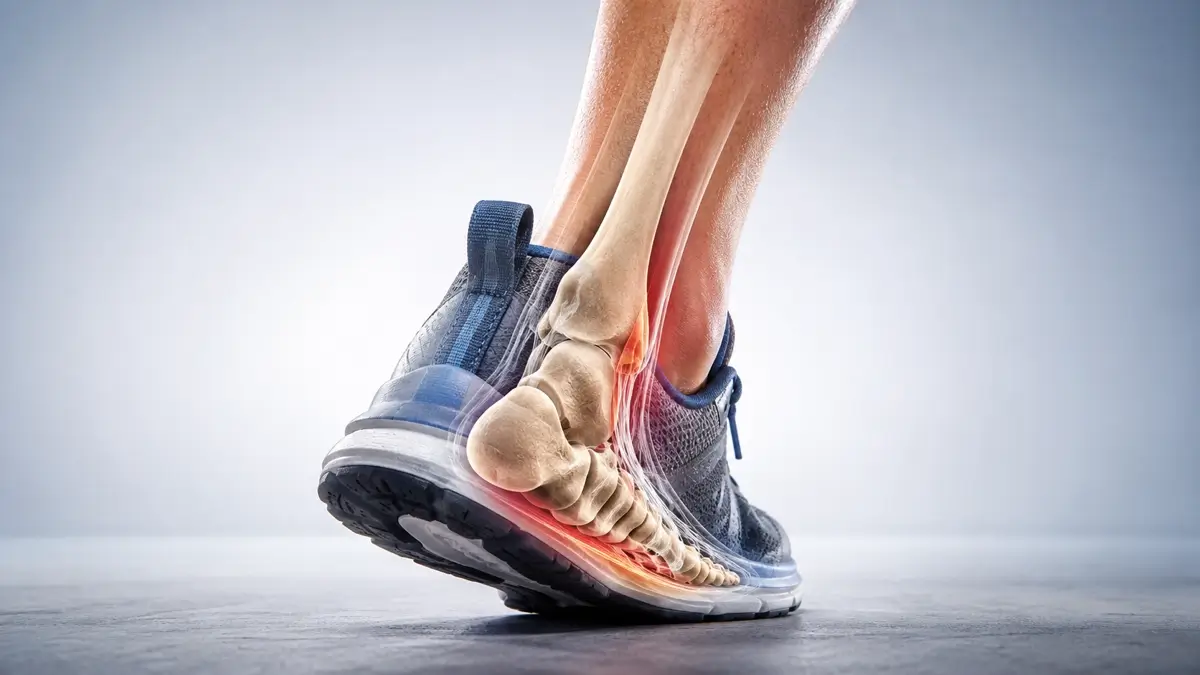
Overpronation happens when the foot rolls inward more than is ideal as you move through your stride. Some inward movement is normal. The issue is excessive movement, especially when it is connected with discomfort, instability or repeated injuries.
You may also notice heavier wear along the inside of an older pair. Our shoe wear patterns guide explains how that can relate to overpronation and when uneven wear deserves a closer look.
Today’s stability shoes also work differently from many older models. Instead of simply placing a hard piece of foam under the inside edge of the foot, manufacturers increasingly use wider platforms, sidewalls, shaped midsoles, supportive frames and adaptive guidance systems.
That can make modern stability shoes much more comfortable, even if you remember older motion-control shoes as heavy or rigid.
For more background, see our complete guide to overpronation and overpronation resource hub. If walking is your main activity, use our separate best walking shoes for overpronation guide. If you are not sure how your feet move, our at-home overpronation and supination test is another useful starting point.
Best shoes for overpronation in 2026
The shoes below are current models available in 2026. I ranked them according to the amount and style of stability they provide, cushioning, fit, versatility and the type of runner or walker they suit best.
Shoe (full review linked where available) | Best for | Main stability feature | Amazon |
|---|---|---|---|
Best overall | |||
Brooks Beast GTS 26 | Best maximum support | GuideRails + broad base | |
Best max cushioning | Enhanced H-Frame | ||
Best plush stability shoe | GuideRails | ||
Best everyday stability shoe | GuideRails | ||
Best for wide feet | Stability Plane | ||
Best streamlined stability shoe | Enhanced H-Frame | ||
Best lighter Asics stability shoe | 3D Guidance System | ||
Best responsive cushioning | Midfoot support system | ||
Best natural-feeling guidance | CenterPath |
Asics Gel-Kayano 33
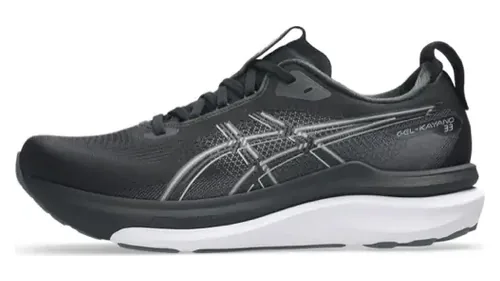
Best for: Overall stability, long runs, walking and high-mileage training
The Gel-Kayano 33 earns my best overall recommendation because Asics has substantially updated the shoe for 2026 rather than simply changing the upper or colors.
The biggest change is FLUIDSUPPORT, which replaces the 4D Guidance System used in recent Kayano generations. Asics combines the stability geometry with two layers of cushioning. FF Blast Max sits on top for softness and energy return, while FF Blast Plus underneath helps create a more stable platform.
This approach is important because it allows the shoe to provide structure without relying on the hard medial post found in many older stability shoes.
The Kayano 33 makes the most sense if you want a premium shoe that can handle easy running, long-distance training, fitness walking and extended periods of standing. It provides plenty of cushioning, but the platform does not feel uncontrolled.
People who prefer a lighter or less substantial shoe may find the Kayano more than they need. In that case, the GT-2000 15 farther down this list is worth considering.
If you have worn previous versions, see our Asics Gel-Kayano model comparison or our full Gel-Kayano 33 review.
Check the latest Gel-Kayano 33 price on Amazon
Brooks Beast GTS 26
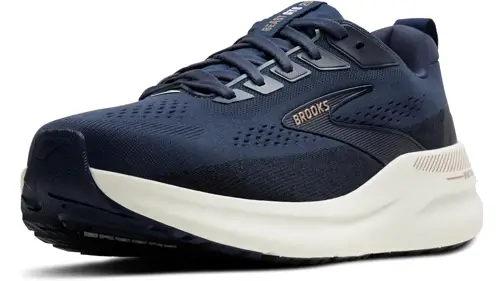
Best for: Maximum support, orthotics, walking and people who want a very stable platform
If support is your first priority, the Brooks Beast GTS 26 deserves to be near the top of your list.
Brooks specifically describes the Beast GTS 26 as being designed for runners who need maximum support. It combines the brand’s GuideRails system with a broad base and an accommodating upper. Brooks also specifically recommends it for running with orthotics, walking and everyday wear.
The Beast is more traditional than shoes such as the Arahi 9 or GT-2000 15. You are going to notice its size and structure.
That is not necessarily a negative. Someone with significant support needs may prefer a shoe that feels planted rather than light and flexible.
The men’s version weighs about 12.5 ounces and has a 12 mm drop, so speed is clearly not the priority. Comfort, control and a secure platform are.
The Beast is also available in wide and extra-wide sizes, and its roomy design can work well when you need space for an orthotic.
I would put this ahead of the Kayano if your main goal is maximum support rather than a combination of cushioning, versatility and stability.
Check the Brooks Beast GTS 26 on Amazon
Hoka Gaviota 6
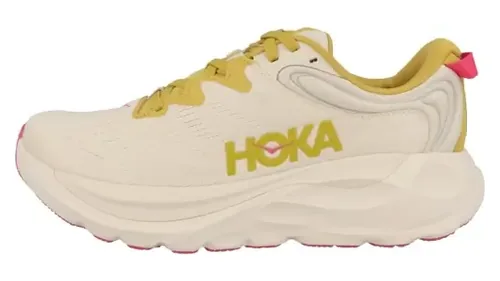
Best for: Maximum cushioning with stability, long walks and easy running
The Hoka Gaviota 6 is my top choice if you want a large amount of cushioning without giving up stability.
Hoka uses its enhanced H-Frame system to combat overpronation without inserting a rigid corrective post into the midsole. The shoe also has a broad base and Hoka’s Active Foot Frame design, which helps keep your foot sitting securely within the platform instead of perched on top of it.
That combination makes the Gaviota particularly appealing for long walks, easy running, recovery days and people who spend many hours on their feet.
The men’s version has a 6 mm drop and weighs about 10.3 ounces. That is not light, but the shoe carries less weight than you might expect from such a substantial platform.
The Gaviota is not my first choice for faster workouts. That is not what it is designed to do.
Its strength is providing a soft, protective ride while keeping the foot relatively centered. Hoka specifically identifies both road running and walking as intended uses and states that the H-Frame is designed to prevent excessive inward roll.
Read the full review of the Hoka Gaviota 6
Brooks Glycerin GTS 23
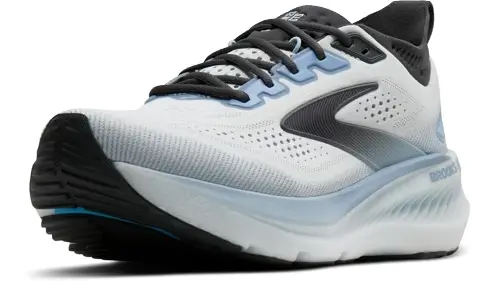
Best for: Plush cushioning with structured support
The Brooks Glycerin GTS 23 fills an important gap between a traditional stability trainer and a luxury cushioned shoe.
Brooks gives this version its GuideRails support system, but the main attraction is the plush cushioning. The company positions the GTS version specifically for runners who want both supreme softness and structured support.
It has an 8 mm drop and is designed for everyday running and long runs. The men’s version weighs about 11 ounces.
That makes the Glycerin GTS 23 a particularly good alternative to the Gel-Kayano 33 if your first priority is softness.
It is also different enough from the Brooks Adrenaline GTS 25 to justify including both shoes in this ranking. The Glycerin is the more cushioned, premium option. The Adrenaline feels more like a traditional everyday trainer.
People who walk frequently can also consider the Glycerin GTS 23. Brooks lists walking among its uses, and the structured platform translates well to slower speeds.
For more on Brooks cushioning, see our running shoe foam guide.
Read fullr eview of the Glycerin GTS 23.
Brooks Adrenaline GTS 25
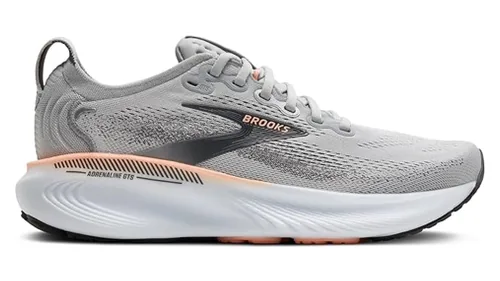
Best for: Everyday running, walking and dependable moderate support
The Brooks Adrenaline has been one of the most recognizable stability shoes for years, and the Adrenaline GTS 25 remains the current version as of August 2026.
That matters because a model does not need a 2026 release date to deserve a place in a 2026 guide. It needs to be the current generation and still competitive.
Brooks added additional DNA LOFT v3 cushioning to the Adrenaline GTS 25, including more foam in both the forefoot and heel. The change also lowered the drop from 12 mm in the previous generation to 10 mm. GuideRails continue to provide structured support by limiting excess movement.
The Adrenaline works especially well as an everyday shoe because there is nothing extreme about it. It is not as plush as the Glycerin GTS 23, as substantial as the Beast GTS 26 or as highly cushioned as the Gaviota 6.
For many people, that middle ground is exactly the appeal.
Choose the Adrenaline if you want predictable support for everyday running, treadmill workouts, walking and general use.
Read the full Brooks Adrenaline GTS 25 review.
New Balance Fresh Foam X 860v15
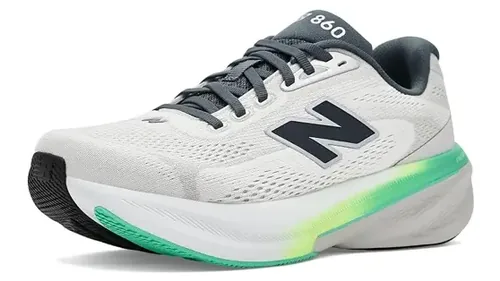
Best for: Wide feet, everyday mileage and stable Fresh Foam cushioning
The Fresh Foam X 860v15 replaces the 860v14 that appeared in the previous version of this article.
New Balance combines Fresh Foam X cushioning with Stability Plane technology. Rather than making the shoe excessively rigid, Stability Plane is designed to provide support while preserving the cushioning of the overall platform. New Balance also gives the shoe a rocker profile to help move the foot through the stride.
One of the biggest reasons to consider the 860 is fit.
New Balance offers the shoe in multiple widths, making it particularly useful for people who struggle to get enough forefoot room from brands with narrower platforms.
The 860v15 is best treated as a dependable daily trainer rather than a fast workout shoe. It works well for regular road running, walking and longer periods on your feet.
If your main priorities are a secure ride, width choices and predictable cushioning, it belongs near the top of your shortlist.
For more on its cushioning, see our guide to New Balance Fresh Foam.
Hoka Arahi 9
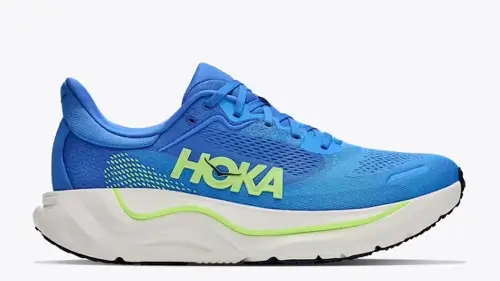
Best for: Moderate overpronation and people who want a less bulky stability shoe
The Arahi 9 is the better Hoka choice when the Gaviota feels like too much shoe.
Hoka calls it a streamlined stability shoe and uses the same general enhanced H-Frame concept found in the Gaviota. Hoka specifically says the system is designed to combat overpronation while providing a smooth transition into the gait cycle.
The Arahi also uses dual-density compression-molded EVA, a wide base and a supportive engineered mesh upper.
The men’s version has an 8 mm drop and weighs roughly 10 ounces. Hoka lists both road running and walking as intended activities.
Choose the Arahi instead of the Gaviota if you want moderate stability in a shoe that feels a little less imposing.
The Gaviota remains the better option when cushioning and a larger platform are higher priorities.
Asics GT-2000 15

Best for: Lighter stability, versatile daily training and people who find the Kayano too substantial
The GT-2000 15 is another important update for this article because the previous version featured the GT-2000 14.
Asics increased the cushioning for this generation while keeping the shoe relatively light. The GT-2000 15 uses FF Blast Max foam with 2 mm more cushioning than the previous model, combined with the 3D Guidance System for adaptive support.
The men’s version weighs about 8.9 ounces and has an 8 mm drop, making it considerably lighter than some of the more substantial stability shoes in this guide.
That gives the GT-2000 15 a clear role.
The Gel-Kayano 33 is the more premium, heavily cushioned Asics option. The GT-2000 15 is the one I would consider if you want support without carrying as much shoe.
It is a strong choice for daily runs, shorter training sessions, walking and runners who have mild to moderate support needs.
Nike Structure Plus
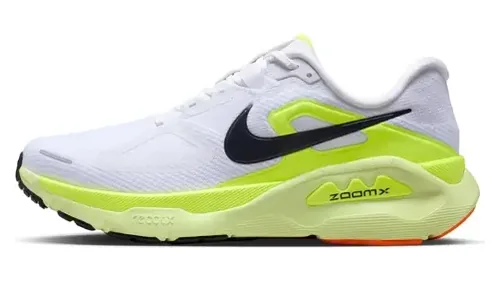
Best for: Responsive cushioning in a modern stability shoe
The Structure Plus is one of the more interesting stability shoes to emerge in 2026.
Nike takes the support concept from the Structure line and adds a more premium midsole. ZoomX foam sits above ReactX foam, combining softer, more responsive cushioning with a firmer layer underneath.
A midfoot support system wraps around the heel and arch to stabilize the foot and guide the transition from landing through toe-off.
This gives the Structure Plus a different personality from traditional stability shoes.
The men’s version has a 10 mm drop and weighs about 10.9 ounces in Nike’s reference size. It is not particularly light, but the ZoomX layer gives it a more energetic feel than many shoes built mainly around support.
I would especially consider the Structure Plus if you already like Nike’s fit but need more support than a typical neutral trainer provides.
The regular Structure 26 remains available and costs less, but the Structure Plus is the more distinctive 2026 recommendation for this guide because of its dual-foam setup.
Read the full Nike Structure Plus review.
Saucony Guide 19
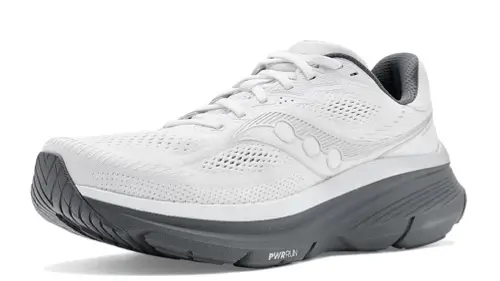
Best for: Natural-feeling guidance and mild to moderate support needs
The Guide 19 remains Saucony’s current Guide model and is explicitly positioned as a stability running shoe in the company’s 2026 lineup.
Saucony uses CenterPath technology, which relies on supportive sidewalls and platform geometry rather than a hard traditional medial post.
The result is support that can feel less obvious underneath your foot.
The Guide 19 uses PWRRUN cushioning and has a 6 mm offset. Saucony has also increased forefoot flexibility compared with previous generations, helping the shoe move more naturally through toe-off.
This is a good choice for someone who knows they prefer a stability shoe but dislikes heavy or aggressive correction.
I would look elsewhere if you need maximum support. The Beast GTS 26 is much better suited to that role, while the Kayano 33 and Gaviota 6 provide larger, more cushioned platforms.
The Guide instead earns its place by feeling relatively natural.
Why the Saucony Hurricane 26 is not one of my top picks

The Hurricane 26 (check price | read review) is one of Saucony’s newest shoes and deserves attention in 2026. It introduces the brand’s new incrediLUX cushioning and uses CenterPath geometry.
However, Saucony currently labels the Hurricane 26 as neutral support, even while describing CenterPath and a supportive frame elsewhere in its product information.
For a general running-shoe roundup, I would consider it strongly.
For an article specifically answering “What are the best shoes for overpronation?” I prefer models whose manufacturers more clearly position them as stability or structured-support shoes.
That is why the Guide 19 makes this list and the newer Hurricane 26 does not automatically replace it.
Which stability shoe should you choose?
The best stability shoe is not automatically the one with the most support. Different levels of overpronation and different preferences call for different types of shoes.
Here is a useful starting point:
If you want… | Start with… | Check prices and sizes |
|---|---|---|
Best overall balance | Asics Gel-Kayano 33 | |
Maximum support | Brooks Beast GTS 26 | |
Maximum cushioning | Hoka Gaviota 6 | |
Plush Brooks cushioning | Brooks Glycerin GTS 23 | |
Classic everyday stability | Brooks Adrenaline GTS 25 | |
More width choices | New Balance 860v15 | |
Streamlined Hoka stability | Hoka Arahi 9 | |
Lighter Asics support | Asics GT-2000 15 | |
Responsive premium foam | Nike Structure Plus | |
Natural-feeling guidance | Saucony Guide 19 |
Do not assume you need maximum correction simply because you overpronate. If you have mild inward roll and no pain, a moderate stability shoe may be more comfortable. If you have substantial inward movement, use orthotics or have been advised to use structured footwear, something like the Beast GTS 26 may make more sense.
Best shoes for severe overpronation
People with more pronounced overpronation should focus on stability first and softness second.
The Brooks Beast GTS 26 is my first shoe to consider because Brooks specifically positions it for maximum support and orthotic use.
The Asics Gel-Kayano 33 provides another option if you want more premium cushioning with adaptive support, while the Hoka Gaviota 6 combines a broad platform with its H-Frame system.
Persistent pain, repeated injuries or substantial gait problems are good reasons to speak with a podiatrist or physical therapist rather than trying to diagnose the issue only through footwear.
Amazon listing and price links:
Best shoes for mild overpronation
Mild overpronators have more flexibility because they may not need a highly structured shoe. The Asics GT-2000 15, Hoka Arahi 9 and Saucony Guide 19 are the three shoes I would consider first. All three provide guidance without giving you the heavily controlled feeling associated with older motion-control shoes. The Nike Structure Plus also belongs in the conversation if you prefer a softer and more responsive ride.
Amazon listing and price links:
Best walking shoes for overpronation
Several running shoes in this guide are excellent for walking. The Hoka Gaviota 6, Brooks Beast GTS 26, Asics Gel-Kayano 33 and Brooks Glycerin GTS 23 are particularly good crossover options because they combine cushioning with broad, stable platforms. There are also dedicated support shoes designed around walking.
The On Cloudrunner 3 also fits this crossover category well. Its mild stability, broad heel and secure upper make it especially relevant for walkers with mild overpronation who want one shoe for daily walks, standing and easy runs.
One of the most interesting is the New Balance Fresh Foam X 1540v4. It combines Fresh Foam X with New Balance’s ROLLBAR system, which is designed to control rearfoot movement. New Balance specifically lists the 1540v4 for both walking and everyday running and offers multiple width options.
Check Amazon listings for sizes, prices, and colors for these shoes:
- Hoka Gaviota 6
- Brooks Beast GTS 26
- Asics Gel-Kayano 33
- Brooks Glycerin GTS 23
- New Balance Fresh Foam X 1540v4
For a larger walking-focused comparison, see our best walking shoes for overpronation.
What to look for in shoes for overpronation
A shoe does not need a large plastic post or rigid arch to provide useful stability anymore.
Modern designs use several techniques to keep the foot moving through a controlled path.
When comparing shoes, look for these characteristics:
- A broad platform that feels planted when your foot lands.
- A heel that holds your foot securely without slipping.
- Midsole geometry, sidewalls or guidance systems that limit excessive inward movement.
- Cushioning that feels comfortable without becoming unstable.
- Enough width for your foot to sit fully on the platform instead of spilling over the edge.
The most important test still happens on your feet. A highly rated stability shoe is not a good choice if it pinches, pushes uncomfortably against your arch or feels awkward when you walk naturally.
How much stability do you actually need?
More stability is not automatically better. If you overpronate mildly, the goal may simply be to give your foot a little more guidance as you move. Shoes such as the Guide 19, Arahi 9 and GT-2000 15 are designed around that type of less intrusive support.
For greater support needs, move toward the Kayano 33, Gaviota 6, Adrenaline GTS 25 or 860v15.
If you use orthotics or have been advised to wear maximum-support footwear, the Beast GTS 26 moves to the front of the list.
The goal is to use enough stability to make movement feel secure and comfortable without adding more structure than you need.
Can stability shoes stop overpronation?
Stability shoes can influence how your foot moves while you are wearing them, but they do not permanently change your foot structure.Think of them as supportive equipment rather than a cure. Their job is to provide a stable platform and help manage excessive movement during walking or running.
Are stability shoes good for flat feet?
They can be. Flat feet and overpronation often occur together, but they are not exactly the same thing. A person can have low arches without excessive inward movement, while someone with visible arches can still overpronate while walking or running. How your foot behaves while moving is more useful than judging it only by how high your arch looks when you are sitting or standing.
Frequently asked questions about the best shoes for overpronation
The Asics Gel-Kayano 33 is my best overall recommendation for 2026. It combines Asics’ new FLUIDSUPPORT technology with two layers of cushioning and works well for running, walking and longer distances.
The Gel-Kayano 33 is the newest model as of August 2026. It was released in the U.S. on June 1, 2026.
The Hoka Gaviota 6 is my choice for people who want maximum cushioning with stability. The Arahi 9 is better if you prefer a lighter, more streamlined stability shoe. Both use Hoka’s enhanced H-Frame technology and are specifically designed to combat overpronation.
The Brooks Beast GTS 26 is Brooks’ maximum-support option for men. It is designed for running, walking, orthotics and everyday wear. The Ariel GTS 26 fills the equivalent maximum-support role in Brooks’ women’s lineup.
Yes. The Adrenaline GTS 25 remains the current Adrenaline model as of August 2026. It uses GuideRails support and DNA LOFT v3 cushioning.
The Fresh Foam X 860v15 is New Balance’s current stability-oriented 860. It combines Fresh Foam X cushioning with Stability Plane technology and is available in multiple widths.
Yes. Many modern stability running shoes also work very well for walking. Hoka explicitly lists walking as an intended use for the Arahi 9 and Gaviota 6, while Brooks lists walking for models including the Beast GTS 26 and Glycerin GTS 23.
Not necessarily. Flat feet do not automatically mean you need a stability shoe. The amount your foot rolls inward while moving, your comfort and any history of pain or injury are more useful factors.
Many stability shoes can accommodate orthotics, although fit varies. The Brooks Beast GTS 26 is specifically designed with orthotic use in mind, while the New Balance Fresh Foam X 1540v4 offers extensive sizing and width choices.
Not anymore. Modern systems such as Asics FLUIDSUPPORT, Hoka H-Frame, Brooks GuideRails, New Balance Stability Plane and Saucony CenterPath are designed to provide stability without relying only on the hard medial posts that defined many older stability shoes.