Last Updated on October 10, 2026
Strong grip and lateral hold in a shoe that runs narrow and heavy
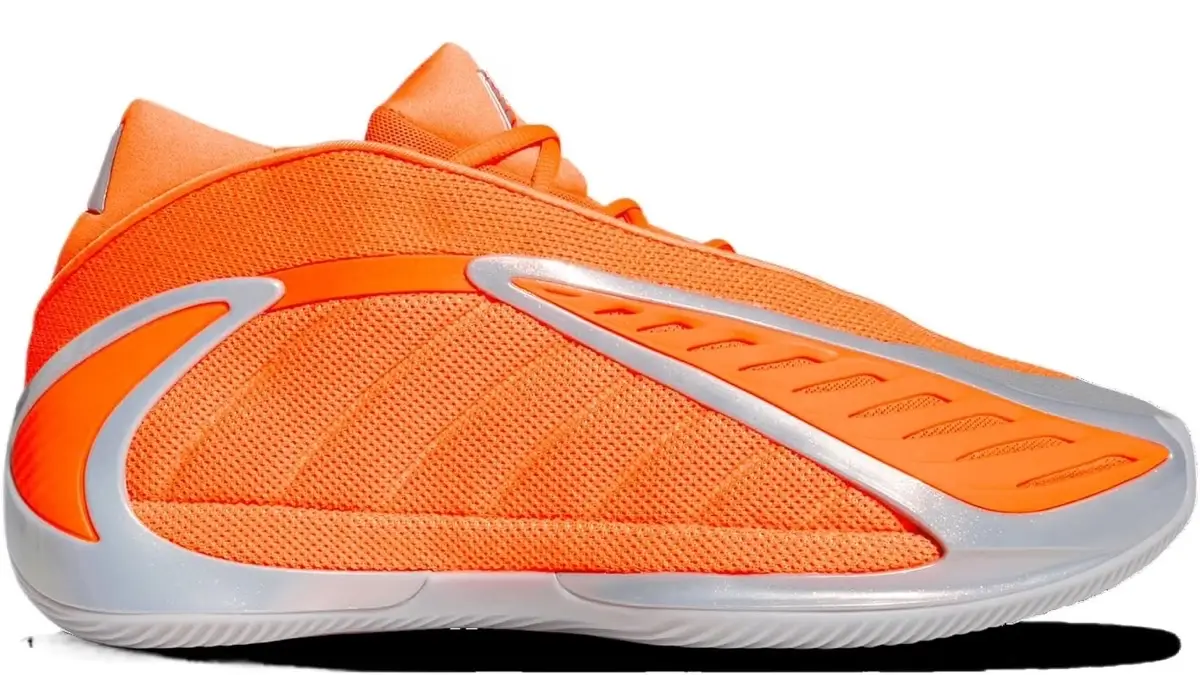
Quick Answer: Adidas AE 2 Review: The Adidas AE 2 is a low-top basketball shoe for quick, shifty guards who want to feel the floor. Full-length Lightboost foam sits lower and thinner than it did in the AE 1, and a propulsion plate through the midfoot stops the shoe twisting when you plant and turn. Traction is its best feature on a clean court. The forefoot runs narrow, it is still heavier than most guard shoes, and dust dulls the grip. Wide feet should size up. Check latest price.
The Adidas AE 2 is Anthony Edwards’ second signature shoe. Adidas unveiled it in September 2025 and released it globally that October at $130, which is $20 more than the AE 1 cost. It is a low-cut model, so the collar sits below the ankle bone and leaves the ankle free to move.
In the Adidas basketball range it is the brand’s headline guard shoe rather than a budget team model, and it reads as a direct response to complaints about the AE 1. Where that shoe was tall and heavy, the AE 2 sits lower and sheds weight, and Adidas kept the parts that worked: aggressive traction and a support system built around a propulsion plate, a stiff insert that runs through the middle of the sole to resist twisting.
It suits players who cut hard and want to know exactly where the floor is. It suits anyone who found the AE 1 too soft and top-heavy. It is a weaker match for wide feet, for players who want deep, plush cushioning, and for anyone whose regular court is dusty. One more thing to weigh: Adidas has the AE 3 arriving on September 15, 2026 at $130, so the AE 2 is about to become last season’s shoe and should start appearing at a discount.

Specs
Here are the specifications for the Adidas AE 2:
| Type | Low-top basketball shoe |
| Best for | Quick guards who want court feel, grip and torsional support |
| Midsole | Full-length Lightboost with Lightstrike, set lower and thinner than the AE 1 |
| Support features | Propulsion plate for torsional support, articulated fang overlays for lockdown |
| Upper | Textile and synthetic build with fused overlays |
| Outsole | Rubber herringbone broken into blades for flexibility |
| Fit | True to size; forefoot runs slightly narrow |
| Widths | Standard only |
| Weight | Not published by Adidas; lighter than the AE 1 but still heavy for a guard shoe (approximate) |
| Released | October 2025 |
| Price | $130 at its October 2025 US launch. Check latest price |
Pros
Here is what the AE 2 gets right:
- Traction is the standout. The bladed herringbone bites hard on a clean floor and stops you where you plant.
- The propulsion plate keeps the shoe from twisting under your foot, which makes hard changes of direction feel secure.
- It sits lower to the ground than the AE 1, so you can feel the floor and react off it.
- Real weight came off compared with the first model, and it plays lighter than it looks.
- The lockdown overlays hold the midfoot without needing to crank the laces down.
Cons
And here is where it falls short:
- The forefoot is narrow, with pressure on the outside toes for many players.
- It is still heavier than most guard shoes on the market.
- The traction pattern picks up dust, so grip drops on a floor that is not swept.
- The outsole can wear quickly on rough outdoor surfaces.
- Cushioning is thinner than the AE 1, so heavy players who want impact protection lose out.
What is new versus the Adidas AE 1
The AE 1 was a tall, heavy shoe with a lot of foam under the foot. The AE 2 keeps full-length Lightboost, which is the bouncy pellet foam Adidas uses in its basketball line, but sets it lower and slims it down. The result is a shoe that feels more connected to the hardwood and less like you are standing on a platform.
Weight came down with it. The AE 1 was one of the heftier signature shoes of its generation, and while the AE 2 is not light in absolute terms, the difference on foot is obvious in the first few minutes. Adidas also reworked the traction, breaking the herringbone into blade-like segments so the sole flexes more naturally as you push off.
The support story carries over and gets tidier. The propulsion plate and the fang-shaped overlays around the midfoot do the same job as before, holding the foot over the sole, but in a package that does not need as much material. The price went up $20 in the process, which is the one change nobody asked for.
Who should buy the Adidas AE 2
This is a shoe for players who live on the perimeter. If your game is built on stops, starts and hard cuts, the combination of bladed traction and a torsional plate gives you a platform that does not shift under you when you change direction at speed.
It also suits anyone who tried the AE 1 and found it clumsy. Everything people complained about there, the height, the weight and the disconnected feel, has been dialled back. If you like a firm setup where the shoe reacts as fast as you do, this is closer to what you wanted.
Finally, it is a good buy right now on timing alone. With the AE 3 landing in September 2026, the AE 2 moves to the back of the shelf, and last season’s signature shoe at a discount is usually the best value in basketball footwear. Just make sure the fit works before you commit.
Who should probably skip it
Wide feet are the main reason to walk away. The forefoot tapers, and players report pressure on the outside toes even at true to size. Going up half a size helps with length but does not add much width, so if you normally need a 2E or wider, this is not the shoe to gamble on.
Skip it too if you want soft, protective cushioning. The AE 2 is deliberately firmer and lower than its predecessor, which is great for court feel and less good if your joints want padding. Outdoor players should also look elsewhere, because the bladed rubber wears faster on rough surfaces than a chunkier outdoor pattern would.
If any of that describes you, start here instead:
- Jordan Luka 5: a much softer, bouncier ride for players who want impact protection over floor feel, and it costs a little more (check price).
- Under Armour Curry 13: a lighter guard shoe for anyone who found the AE 2 too much shoe on foot (check price).
- Nike G.T. Cut 4: the premium answer for court feel, with a price to match at $210 (check price).
How does the Adidas AE 2 fit?
The AE 2 fits like a typical Adidas basketball shoe, which means snug through the front and secure everywhere else. Length is straightforward, width is the question mark. Here is what to expect before you order.
Fit and sizing
Order your normal size. The last, which is the foot-shaped mould a shoe is built around, is very close to the AE 1, so if that one fit you this will too. The forefoot is where it gets tight. Many players feel the outside of the foot squeezed near the little toe, and that is a known trait of Adidas hoops shoes rather than a defect in this pair. Wide feet, or anyone who plays in thick socks, should go up half a size and try before buying if possible.
Upper and step-in comfort
Step-in is firm rather than plush. The textile upper is backed by fused overlays that give the shoe its shape, and those overlays mean less give than a soft knit would offer. Lockdown is the payoff: the fang-shaped panels either side of the midfoot pull the foot down onto the sole so you are not sliding around inside the shoe. Expect a short break-in of a session or two before the material relaxes across the toes.
How does the Adidas AE 2 perform?
On court the AE 2 behaves like a stability shoe for basketball. It is not the softest or the lightest option, but it holds its shape under load and grips well, and those two things matter more than raw comfort once the game speeds up.
Cushioning and ride
Lightboost is Adidas’s bouncy basketball foam, and here it is used as a thin full-length layer rather than a thick slab. You get a small amount of spring back on every step and a clear sense of the floor beneath you. Landings feel firmer than in a max-cushion model, so heavier players and anyone who plays long sessions on concrete-backed floors will notice the impact more.
On-court speed and transition
Because the platform is low and the sole flexes in segments, the shoe moves with your foot instead of resisting it. That makes first steps and quick direction changes feel natural. Weight is the limiting factor. It is lighter than the AE 1, but a guard coming from a genuinely light shoe will feel the extra mass late in a game.
Stability and support
This is the strongest part of the shoe. The propulsion plate stops the sole twisting when one end of your foot is planted and the other is turning, which is the exact moment ankles roll. Add the wide base and the fang overlays pulling the foot inward and you get a shoe that feels planted. It is a supportive design rather than a corrective one, and no shoe can correct how you move.
Outsole, grip and durability
The bladed herringbone is aggressive and grabs a clean hardwood floor immediately. On dust it behaves like most deep patterns and needs a wipe to keep working. Outdoors is the weak spot: the segmented blades expose more edges to abrasion, and the rubber can wear noticeably on rough asphalt. If your court is outdoors, choose a shoe with a thicker, flatter outdoor pattern instead.
Is the Adidas AE 2 good for walking?
It is fine for short, casual walking and not much more. The firm, low platform and grippy rubber make it stable on pavement, and it looks like a normal sneaker, so wearing it to and from the gym or around town is no problem.
For real walking mileage it is the wrong tool. Basketball shoes are built flat so you can move sideways safely, which means there is no rocker shape to help roll your foot forward, and the AE 2 is firmer and heavier than a walking shoe. Add the narrow forefoot, which becomes more noticeable as feet swell over a long day, and you have a shoe that will feel tight and tiring after a few miles. If you stand on hard floors all day or walk for exercise, buy a cushioned walking shoe and keep this one for the court.
Adidas AE 2 versus Adidas AE 1
Here is how Anthony Edwards’ first two signature shoes compare:
| AE 2 | AE 1 | |
| Ride height | Lower and thinner, more court feel | Taller stack, softer and more removed from the floor |
| Weight | Lighter, though still substantial | Heavy for a guard shoe |
| Traction | Herringbone split into flexible blades | Continuous herringbone |
| Support | Propulsion plate and fang overlays | Similar concept in a bulkier package |
| Launch price | $130 in October 2025| Check current price | $110 | Check price and availability |
Buy the AE 2 when you want the lower, quicker version of this shoe, when court feel matters more to you than padding, or when you found the AE 1 too tall to trust on a hard cut.
Buy the AE 1 when you can find it cheap, you are a heavier player who wants more foam between you and the floor, or you liked how cushioned that first model felt.
Adidas AE 2 Alternatives
Three shoes cover the ground the AE 2 leaves open. If your problem is the floor rather than the shoe, the New Balance TWO WXY V5 is the answer: its circular, suction-cup style tread and stickier compound keep gripping on dusty courts where bladed herringbone gives up, and it launched at $120 (check price).
Players who need more shoe around the foot, whether because of size or because they play through contact, are better served by the Nike G.T. Hustle 3. It is a taller, more heavily built model aimed at forwards rather than perimeter guards (check price | read review).
Anyone put off by the narrow forefoot should try the Puma MB.05, another mid-price signature model at $130 with a different fit shape, so it is worth a look if Adidas lasts have always pinched your toes (check price).

Price and value
At $130 in October 2025 the AE 2 asked $20 more than the shoe it replaced, which was a hard sell at the time. It reads better now. With the AE 3 arriving in September 2026, this becomes a discounted last-season signature shoe with excellent traction and one of the better support systems at any price. What you are not paying for is plush cushioning or a roomy fit, so the value depends entirely on whether the shape works for your foot.

Final verdict
Best for: quick guards with average or narrow feet who play indoors and want grip, court feel and torsional support.
Avoid if: you have wide feet, you want soft cushioning, or you play mainly outdoors.
Fit: true to size in length, narrow through the forefoot. Wide feet should go up half a size and try a pair on first.
Verdict: the AE 2 fixed the AE 1’s biggest problems and kept its best one, which was traction. It is a genuinely well-supported guard shoe let down by a narrow front end and cushioning that will feel thin to heavier players. Get the fit right and it is easy to recommend, especially at post-launch prices. Check the latest price.
Frequently Asked Questions for Adidas AE 2
Yes, in length. Order your usual size and the same size you wore in the AE 1. The forefoot is narrow, so wide feet should go up half a size.
It works, but it is not the best choice. The bladed traction pattern exposes more rubber edges to abrasion, so the outsole can wear faster on rough asphalt than a flatter outdoor tread would.
For most players, yes. It is lighter, lower and easier to move in. Heavier players who wanted the thicker cushioning of the AE 1 are the exception.
Adidas has the AE 3 arriving on September 15, 2026 at $130. If you are not in a hurry, waiting usually means the AE 2 drops in price.
No. It is sold in a standard width only, which is why players who need extra room usually size up rather than switching width.
Yes. The low cut, the flexible bladed outsole and the emphasis on torsional support all point at perimeter players who cut and change direction rather than post players.