Last Updated on October 15, 2026
| Quick answer: Best wide shoes for walking in 2026. The Brooks Ghost 18 is the best wide walking shoe for most people. It comes in wide and extra-wide sizes, has a secure heel and provides balanced cushioning for fitness walks, errands and long days on hard floors. Choose the Hoka Bondi 9 for maximum cushioning, the Hoka Gaviota 6 for stability and the Saucony Echelon 10 if you use orthotics. The New Balance 928v3 offers the widest size range, including 6E in selected men’s versions. A wide shoe should feel roomy at the forefoot without allowing the heel to slip. Also see our recommended wide walking shoes. |
The best wide shoes for walking give your toes room without letting your heel slide or your foot move inside the shoe. Our top pick is the Brooks Ghost 18 because it combines a secure fit, balanced cushioning and widths up to extra wide. The Hoka Bondi 9 is better if you want maximum cushioning, while the Hoka Gaviota 6 provides added stability. Walkers who use orthotics should consider the Saucony Echelon 10, and those who need the widest size range should start with the New Balance 928v3.
Women who need extra width along with a high arch can compare women’s high-arches and wide-feet walking shoe guide in this focused roundup.
Wide feet need more than a soft upper. A good walking shoe must be wide enough across the forefoot, deep enough over the toes and secure enough through the heel. The recommendedshoes below cover different needs, including fitness walking, all-day standing, orthotics, maximum cushioning and severe width requirements.
This guide focuses on shoes sold in labelled wide widths. If your foot is average through the heel and midfoot but your toes feel crowded, see our guide to the best wide toe box shoes instead. If you need roomier footwear specifically for long shifts, slip-resistant floors or safety-toe work, see our best wide work shoes. You can also use our free shoe finder to narrow the options by width, gait and activity.
If you need more room than most mainstream walking shoes provide, the Orthofeet Edgewater Stretch is worth a look. The men’s black version reaches 6E, and its stretch upper plus extra-depth interior make it especially useful for wide, swollen or sensitive feet.
Best Wide Walking Shoes at a Glance
Here is how our top wide walking shoes compare. Prices are U.S. launch prices for current models and current list prices for older walking models. Retail prices may change by color, size and seller.
| Shoe (click to scroll to review) | Best for | Available wide sizes | Heel drop (what is this?) | Launch price |
|---|---|---|---|---|
| Brooks Ghost 18 | Best overall | Women’s wide and extra wide; men’s wide and extra wide | 10 mm | $150 | Check latest price |
| Hoka Bondi 9 | Maximum cushioning | Women’s wide and extra wide; men’s wide and extra wide | 5 mm | $175 | Check latest price |
| New Balance 1080v15 | Long-distance walking | Women’s wide and extra wide; men’s wide and extra wide | 6 mm | $170 | Check latest price |
| Saucony Echelon 10 | Orthotics and broad feet | Women’s wide; men’s wide and extra wide | 8 mm | $155 | Check latest price |
| Asics Gel-Nimbus 28 | Plush neutral cushioning | Women’s wide; men’s wide and extra wide | 8 mm | $170 | Check latest price |
| Brooks Addiction Walker 2 | Support and work wear | Women’s wide and extra wide; men’s wide and extra wide | 12 mm | $140 | Check latest price |
| New Balance 928v3 | Extra-extra-wide feet | Women’s up to 4E; men’s up to 6E in selected colors | Not stated | $159.99 | Check latest price |
| Hoka Gaviota 6 | Stability | Women’s and men’s regular, wide and extra wide | 6 mm | $180 | Check latest price |
How We Chose the Best Wide Shoes for Walking
We compared current walking and running shoes that can handle the repeated heel-to-toe motion of walking. Running shoes are included because many provide better cushioning, lower weight and more width choices than shoes marketed only for walking.
We gave priority to the following features:
- Labelled wide and extra-wide options, not just claims of a roomy fit
- Enough toe-box width and depth to reduce pressure on the toes
- A secure heel and adjustable laces to limit sliding
- A stable base that does not feel narrow under a wide foot
- Cushioning suitable for pavement, treadmills and hard indoor floors
- Removable insoles when possible, especially for orthotic users
- Current availability from established footwear brands
Width labels are not perfectly standardized across brands. A 2E shoe from one company can fit differently from a 2E shoe from another. Treat the listed width as a starting point, then judge the actual fit while standing and walking.
Brooks Ghost 18
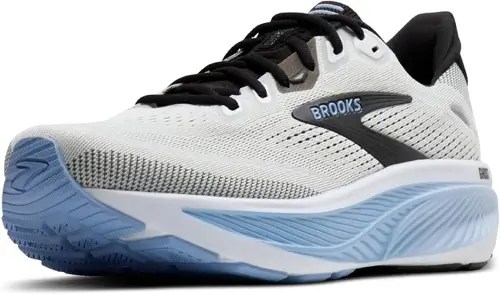
Best overall wide walking shoe
The Brooks Ghost 18 is the safest starting point for most walkers with wide feet. It is cushioned without feeling unstable, and its conventional shape works for more feet than shoes with an aggressive rocker or unusually low heel drop. Brooks lists walking among its intended uses, which is important in a roundup where several choices began as running shoes.
The updated DNA Loft v3 midsole uses nitrogen-infused foam to create soft landings and a smoother toe-off. It does not feel as tall or plush as the Hoka Bondi 9, but that can be an advantage for walkers who want to feel more connected to the ground. The 10 mm heel-to-toe drop also makes the Ghost an easier transition for people coming from traditional athletic shoes.
Fit is the strongest reason to choose it. Men’s sizes run from narrow B through extra-wide 4E, while women’s versions extend from narrow 2A through extra-wide 2E. The engineered mesh can accommodate some swelling, but the heel and midfoot remain more structured than those of a loose knit shoe. That balance helps prevent a common wide-shoe problem: gaining space at the front but losing control at the back.
The Ghost 18 works well for fitness walks, treadmill sessions, travel and long days on your feet. Walkers who overpronate significantly may prefer a stability shoe, while people who want maximum softness should consider the Bondi 9 or Gel-Nimbus 28.
Also see full review.
Specs
- Widths: Women’s 2A, B, D and 2E; men’s B, D, 2E and 4E
- Heel drop: 10 mm
- Men’s weight: 10.2 ounces
- Cushioning: DNA Loft v3
- Support: Neutral with inherent stability
- Launch price: $150
Pros
- Four width choices for men and women
- Balanced cushioning suits walking and all-day wear
- Secure heel and midfoot
- APMA Seal of Acceptance
Cons
- Not as soft as a max-cushion shoe
- Neutral support may not be enough for some overpronators
Gender specific buy links: Men’s wide version | Women’s wide version
Hoka Bondi 9
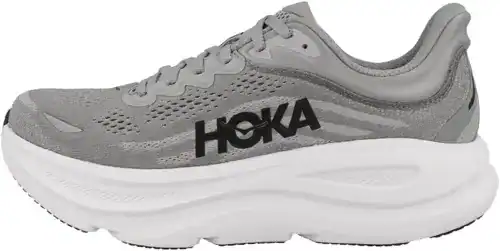
Best max-cushion wide walking shoe
The Hoka Bondi 9 is the best choice for wide-footed walkers who put cushioning first. Its thick midsole softens hard sidewalks, concrete floors and long days of standing. Hoka uses supercritical EVA foam in this version, giving the shoe a softer and more resilient feel than older Bondi models.
A Smooth MetaRocker curves the sole to help the foot roll forward. This can reduce how much the forefoot must bend during each step, although the sensation is different from a flat, flexible walking shoe. The broad sole and rearfoot-focused Active Foot Frame place the foot down inside the midsole walls rather than directly on top of the foam. That design adds guidance without turning the Bondi into a traditional stability shoe.
The Bondi 9 is available in wide and extra-wide versions for men and women, but width availability can vary by color. Do not assume that a standard Bondi will fit simply because the shoe looks broad from the outside. Select the labelled wide version and make sure the sidewalls do not press against the ball of your foot.
This shoe is heavier and bulkier than the Ghost 18 or New Balance 1080v15. It is best for relaxed and moderate-paced walking rather than fast fitness sessions. The 5 mm drop may also place more demand on the calves and Achilles tendon than a higher-drop shoe, particularly if you are making a sudden switch.
Also see full review.
Specs
- Widths: Wide and extra wide in men’s and women’s versions
- Heel drop: 5 mm
- Cushioning: Supercritical EVA
- Support: Neutral with a broad, stable platform
- Rocker: Smooth MetaRocker
- Launch price: $175
Pros
- Deep cushioning for pavement and hard floors
- Broad platform feels stable for a tall shoe
- Smooth rolling transition
- Extra-wide options for men and women
Cons
- Heavier and bulkier than many daily trainers
- Low drop may require an adjustment period
Gender specific buy links: Men’s wide version | Women’s wide version
New Balance 1080v15
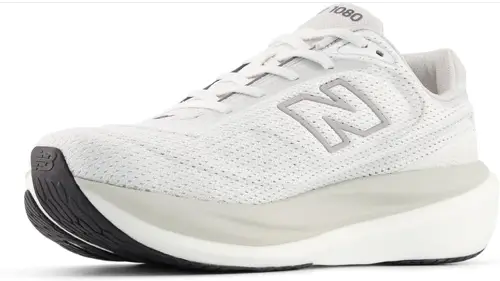
Best wide shoe for long-distance walking
The New Balance 1080v15 is a strong choice for long walks because it combines high cushioning with less weight and bulk than the Bondi 9. Despite the familiar model name, New Balance replaced the previous Fresh Foam X midsole with Infinion foam for this edition. The result is designed to maintain cushioning and energy return over repeated miles.
The 1080v15 has a soft but more energetic feel than a traditional walking shoe. Its 6 mm drop sits between the low-drop Bondi and higher-drop Ghost, giving most walkers a smooth transition without an extreme change in geometry. The perforated mesh upper also makes it better suited to warm weather and faster walking than a leather model.
New Balance offers the men’s shoe in narrow B, standard D, wide 2E and extra-wide 4E. Women’s width availability also reaches extra wide on selected versions. That range makes the 1080 more inclusive than many premium cushioned shoes. Still, width is only one part of fit. People with very high-volume feet may find the upper or tongue area less accommodating than the straighter, deeper Echelon 10.
Choose the 1080v15 for long fitness walks, travel or daily mileage when you want soft cushioning without a heavy shoe. Choose the 928v3 instead if motion control and very wide sizing matter more than low weight. If 4E is still not enough, compare our best shoes for very wide feet, including current 5E and 6E options.
Also see full review.
Specs
- Widths: Women’s narrow through extra wide; men’s narrow through extra wide
- Heel drop: 6 mm
- Men’s weight: 9.2 ounces
- Cushioning: Infinion foam
- Support: Neutral
- Launch price: $169.99
Pros
- Soft, lighter cushioning for long walks
- Wide and extra-wide options
- Breathable upper
- Smoother and less bulky than some max-cushion shoes
Cons
- Premium price
- Very high-volume feet may need a deeper shoe
Gender-specific buy links: Men’s wide version | Women’s wide version
Saucony Echelon 10
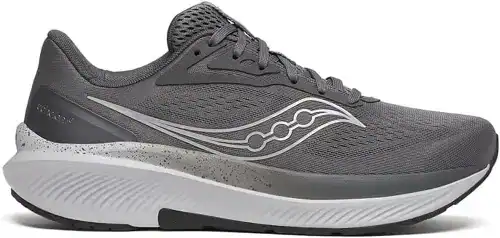
Best wide walking shoe for orthotics
The Saucony Echelon 10 is built around a straight shape, broad base and accommodating interior. Those features make it one of the best walking shoes for people who need more space throughout the shoe, not only around the toes. It is also a practical option for many prescription or over-the-counter orthotics because the factory liner can be removed.
PWRRUN cushioning runs across a wide, stable platform. It is not as soft as the Bondi 9 or Gel-Nimbus 28, but the firmer feel can provide better control for walkers who dislike sinking into thick foam. A full XT-900 carbon rubber outsole adds durability and grip, which matters if the shoe will be used for daily walks rather than occasional errands.
The men’s Echelon 10 comes in regular, wide and extra wide. The women’s range includes regular and wide versions, but not every size and color is stocked equally. Its one-piece engineered mesh upper adapts better than stiff leather, while the overall shape leaves room for an orthotic without making the platform feel narrow.
No shoe is guaranteed to work with every custom device. Bring your orthotic, remove the original liner and test both shoes. Your heel should remain seated, and the orthotic should not lift your foot high enough to rub against the collar or press the toes into the upper.
Specs
- Widths: Women’s regular and wide; men’s regular, wide and extra wide
- Heel drop: 8 mm
- Cushioning: PWRRUN with a polyurethane sockliner
- Support: Neutral, broad and stable
- Outsole: Full XT-900 carbon rubber
- Launch price: $155
Pros
- Straight shape and broad base
- Removable liner accommodates many orthotics
- Durable full-rubber outsole
- Stable without a firm medial post
Cons
- Women’s version does not offer the same extra-wide choice as men’s
- Firmer and less lively than the 1080v15
Gender specific buy links: Men’s wide version | Women’s wide version
Asics Gel-Nimbus 28

Best plush wide walking shoe
The Asics Gel-Nimbus 28 is a premium neutral shoe for walkers who want plush cushioning but prefer an 8 mm drop and a more conventional transition than the Bondi 9. Asics combines FF Blast Plus foam with PureGel under the heel to soften impact. The engineered knit upper wraps the foot without the stiff overlays that can press against a wide forefoot.
At 9.9 ounces for the cited men’s extra-wide version, the Nimbus is about 20 grams lighter than its predecessor. It still feels substantial underfoot, but the weight is reasonable for the amount of cushioning. The outsole places rubber in high-wear areas to balance traction and weight.
Men can choose wide 2E or extra-wide 4E versions. Women’s models are available in wide D, though availability varies by color and retailer. This difference matters: women who need 2E may have better luck with the Ghost 18, Bondi 9 or a selected New Balance model.
The knit upper makes the Nimbus comfortable for mild changes in foot volume through the day, but stretch does not replace the right width. If your foot hangs over the midsole or pushes the upper far beyond its intended shape, move to a wider size or a shoe with a straighter last such as the Echelon 10.
Also see full review.
Specs
- Widths: Women’s wide; men’s wide and extra wide
- Heel drop: 8 mm
- Men’s extra-wide weight: 9.9 ounces
- Cushioning: FF Blast Plus and PureGel
- Support: Neutral
- Launch price: $170
Pros
- Soft, high-stack cushioning
- Comfortable knit upper
- Men’s extra-wide option
- Lighter than the previous Nimbus
Cons
- Women’s width range is more limited
- Plush platform may feel too soft for some walkers
Gender specific buy links: Men’s wide version | Women’s wide version
Brooks Addiction Walker 2
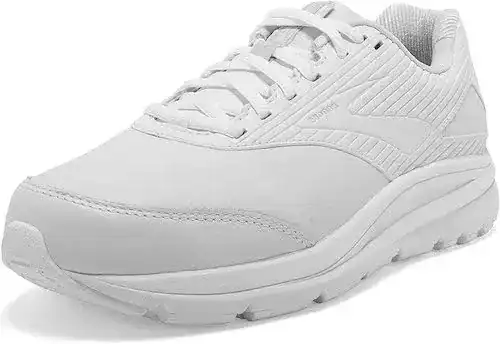
Best supportive wide shoe for work and walking
The Brooks Addiction Walker 2 is a traditional leather walking shoe with more structured support than the neutral athletic models above. Its Extended Progressive Diagonal Rollbar is designed to limit excess movement and guide the body through the walking path. This makes it worth considering for walkers who want firm support and a planted feel.
The full-grain leather upper looks more work-ready than mesh and provides some protection from light moisture, although Brooks does not market the standard version as waterproof. A certified slip-resistant outsole adds traction on many hard surfaces. Slip resistance can help at work, but it does not make any shoe slip-proof on every contaminant or floor.
Brooks sells both men’s and women’s versions in several widths, including extra wide. The upper is less forgiving than knit or mesh, so it is important to select the correct width from the start. Do not buy a tight leather shoe and expect it to stretch into the correct fit.
The Addiction Walker 2 is heavier and firmer than modern running shoes. It suits slower walking, service work and daily wear better than fast fitness sessions. Its 12 mm drop is also the highest in this guide, which may appeal to people accustomed to traditional footwear but will not suit everyone.
Also see full review.
Specs
- Widths: Women’s narrow through extra wide; men’s regular through extra wide
- Heel drop: 12 mm
- Upper: Full-grain leather
- Support: Maximum support
- Outsole: Certified slip resistant
- Launch price: About $140
Pros
- Structured support for walking and standing
- Work-friendly leather upper
- Multiple width options
- Slip-resistant outsole
Cons
- Heavier and firmer than mesh athletic shoes
- Leather upper offers less stretch and breathability
Gender specific buy links: Men’s wide version | Women’s wide version
New Balance 928v3
Best walking shoe for extra-extra-wide feet
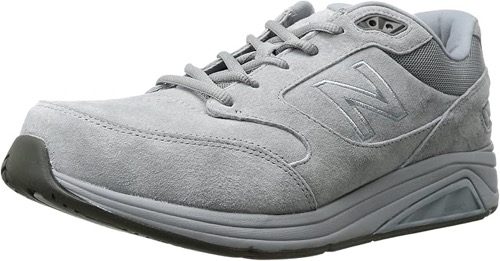
The New Balance 928v3 earns its place because few walking shoes offer as many width choices. Select men’s versions reach 6E, sometimes called extra-extra wide, while women’s versions extend to 4E. That makes the 928v3 a strong option when mainstream wide and extra-wide running shoes still feel cramped.
This is a motion-control walking shoe rather than a soft daily trainer. Rollbar technology uses posts in the rearfoot to reduce unwanted movement, while the Walking Strike Path helps guide the foot through the step. The midsole also uses Abzorb cushioning to reduce impact, but the overall ride feels firm and controlled compared with the Bondi 9 or 1080v15.
The leather upper and roomy interior can work for everyday wear, work settings and walkers who use an orthotic. A removable polyurethane footbed provides space for many inserts. The 928v3 is also available with laces or hook-and-loop straps in selected versions, which can help people who have difficulty tying shoes.
Its main drawback is age. The design looks and feels more traditional than newer walking shoes, and the weight is noticeable. Still, shoppers with very wide feet often have fewer choices. Fit and stability matter more than chasing the newest foam when other shoes squeeze the foot.
Specs
- Widths: Women’s up to 4E; men’s up to 6E in selected versions
- Heel drop: About 10 mm
- Cushioning: Abzorb
- Support: Motion control with Rollbar technology
- Insole: Removable polyurethane footbed
- Current U.S. list price: $159.99
Pros
- One of the broadest width ranges available
- Firm motion-control support
- Removable footbed
- Lace and hook-and-loop options
Cons
- Heavy, traditional design
- Firmer than modern max-cushion shoes
Gender specific buy links: Men’s wide version | Women’s wide version
Hoka Gaviota 6

Best stability walking shoe for wide feet
The Hoka Gaviota 6 is the best choice in this guide for walkers who want plush cushioning plus added stability. Unlike older stability shoes that used a hard post under the inner side of the foot, the Gaviota uses an H-Frame. This firmer frame surrounds softer foam and helps guide the foot without creating a hard ridge beneath the arch.
Hoka lists walking, everyday running and comfort among the Gaviota 6’s intended uses. Its broad platform and sidewalls make it feel more planted than many high-stack shoes. The 6 mm heel-to-toe drop is moderate for a Hoka and should feel less abrupt than moving directly from a traditional 10 mm or 12 mm shoe to a zero-drop design.
The men’s range is sold in regular, wide and extra-wide fits. Hoka also lists three width choices in the women’s range. However, every width is not offered in every color, and a retailer may stock only the standard and wide versions. Select the width before choosing a color so you do not accidentally order the standard model.
The Gaviota 6 is best for moderate-paced walking, long days on hard floors and people who feel more comfortable on a guided platform. It is heavier than the Ghost 18 and less flexible than a lightweight neutral trainer. Walkers who do not need added guidance may prefer the smoother and less structured Bondi 9.
Also see full review.
Specs
- Widths: Regular, wide and extra wide for men and women
- Heel drop: 6 mm
- Men’s weight: 10.25 ounces
- Cushioning: Plush
- Support: Stable H-Frame design
- Launch price: $180
Pros
- Extra-wide versions for men and women
- Plush cushioning on a broad platform
- H-Frame adds guidance without a traditional medial post
- Designed for walking as well as everyday running
Cons
- Heavier than the Ghost 18 and 1080v15
- Added guidance is unnecessary for some neutral walkers
Gender specific buy links: Men’s wide version | Women’s wide version
Wide Shoe Widths Explained
A wide shoe adds space across more of the shoe. A wide toe box mainly changes the shape and room at the front. You may need a full wide width if the sides of your forefoot bulge over the midsole, the laces spread far apart or the shoe presses across the midfoot. You may only need a wide toe box if your heel and arch fit well but your toes feel squeezed.
U.S. width labels also differ for men’s and women’s footwear. The following chart is a useful starting point, but it is not universal across every brand or model.
| General width | Women’s label | Men’s label |
|---|---|---|
| Narrow | 2A | B |
| Standard | B | D |
| Wide | D | 2E |
| Extra wide | 2E | 4E |
| Extra-extra wide | 4E | 6E |
Never select a larger shoe size only to gain width. That can place the flex point in the wrong location and leave excess space ahead of the toes. Start with your measured length, then change the width.
How Should Wide Walking Shoes Fit?
A wide walking shoe should feel comfortable as soon as you put it on. The National Library of Medicine advises against buying tight shoes in the hope that they will stretch. A suitable fit should include the following:
- Your toes can move without rubbing the sides or top of the shoe.
- The widest part of your foot lines up with the widest part of the shoe.
- The upper does not bulge far beyond the edge of the sole.
- Your heel stays secure without rubbing or lifting excessively.
- The laces hold your midfoot without causing pressure or numbness.
- Your longest toe has about a thumb’s width of space in front.
- Any orthotic lies flat and does not crowd the toes or lift the heel.
Measure both feet while standing and fit the larger foot. Try shoes with the socks and inserts you plan to use. If your feet swell during the day, shop or measure later in the afternoon. The National Institutes of Health also recommends having your feet measured when buying shoes because foot size can change over time.
How to Choose a Wide Walking Shoe
Width is the first filter, not the only one. Use these factors to narrow your choice.
Match the width to the whole foot
Choose a full wide or extra-wide shoe when you need space through the forefoot and midfoot. Choose a rounded toe box when your heel is narrow but your toes need room. A shoe that is too wide at the heel can slide, even when the forefoot feels comfortable.
Pick cushioning for your walking style
Soft, thick cushioning can make concrete and long walks more comfortable. It can also feel unstable to some people. The Bondi 9 and Gel-Nimbus 28 are plush. The Ghost 18 is more balanced, while the Echelon 10, Addiction Walker 2 and 928v3 feel firmer and more controlled.
Decide how much support you need
Neutral shoes allow the foot to move with less correction. Stability and motion-control shoes add structure intended to limit excess movement. More support is not automatically better. If you have recurring pain, a noticeable gait change or uncertainty about the right category, ask a podiatrist or physical therapist to assess you.
Check insole depth
If you use an orthotic, look for a removable factory insole and enough depth above it. The Echelon 10 and 928v3 are strong starting points. Always try the shoe with the actual insert rather than assuming it will fit.
Consider heel drop
Heel drop is the difference in height between the heel and forefoot. The confirmed heel drops in this guide range from 5 mm in the Bondi 9 to 12 mm in the Addiction Walker 2. Large changes can shift work to different parts of the legs and feet, so build distance gradually in a shoe with an unfamiliar drop. Learn more about shoe drop.
Common Signs Your Walking Shoes Are Too Narrow
Your shoes may be too narrow if you notice any of these problems:
- Numbness or tingling in the toes
- Red marks along the sides of the foot
- Blisters on the toes or forefoot
- Pressure over a bunion
- Toes overlapping or feeling compressed
- The upper stretching far over the edge of the sole
- Laces that must be left unusually loose
- Pain that appears during walks and eases after removing the shoes
Foot pain, numbness and swelling are not always sizing problems. Seek medical advice if symptoms are new, severe, persistent or affect the way you walk. People with diabetes or reduced sensation should check their feet and shoes carefully because rubbing may not be obvious.
Which Wide Walking Shoe Should You Buy?
Start with the Brooks Ghost 18 if you want one versatile shoe for fitness walking, errands and everyday wear. It has the broadest appeal because its cushioning, weight and 10 mm drop are not extreme. Choose the Hoka Bondi 9 when softness is the priority and the Hoka Gaviota 6 when you want a plush shoe with added guidance.
The New Balance 1080v15 is the better pick for long, faster walks when you want generous cushioning without the bulk of a traditional walking shoe. The Asics Gel-Nimbus 28 is another plush neutral option, particularly for men who need 4E.
Orthotic users should begin with the straight, roomy Saucony Echelon 10 or the deeper New Balance 928v3. The 928v3 is also the clearest choice for men who need 6E. Choose the Brooks Addiction Walker 2 when you want structured support, leather and a work-friendly appearance. Whatever model you select, confirm the actual width shown beside the size. A product photo or the word “roomy” does not prove that the shoe is a wide-width version.
Frequently Asked Questions
The Brooks Ghost 18 is the best wide walking shoe for most people because it offers a balanced ride and widths up to extra wide for men and women. The Hoka Bondi 9 is better for maximum cushioning, while the New Balance 928v3 offers more room for people who need widths beyond 4E.
New Balance offers one of the largest selections of width choices. The New Balance 928v3 reaches 6E in selected men’s versions and 4E in selected women’s versions. Brooks also offers several walking and running shoes in extra-wide sizes.
No. A wide shoe generally adds room through much of the shoe, including the forefoot and sometimes the midfoot. A wide toe box adds space mainly around the toes. A person with a narrow heel and splayed toes may prefer a wide toe box without a full wide width.
Usually, no. Increasing length to get more width can cause heel movement and place the shoe’s flex point ahead of the ball of your foot. Keep the correct length and try a wider version first. If your feet are different sizes, fit the larger foot.
A wide shoe or rounded toe box can reduce rubbing and pressure over a bunion, but it will not correct the joint change. Look for enough forefoot room, a soft upper and no seam crossing the sensitive area. See our guide to the best shoes for bunions for more targeted options.
Yes. Many running shoes work well for walking because they are cushioned, breathable and lighter than traditional walking shoes. The Ghost 18, Bondi 9, Gaviota 6, 1080v15, Echelon 10 and Gel-Nimbus 28 are running models that can also suit walking.
Aim for about a thumb’s width between your longest toe and the front of the shoe. Your toes should also move without touching the sides or top. Too much space can allow sliding, so the heel and midfoot should still feel secure.
They can provide more room, but swelling may require extra depth, an adjustable upper or a different width at different times of day. New or one-sided swelling can signal a medical problem and should be evaluated. Do not use a larger shoe to conceal unexplained swelling.
The Saucony Echelon 10 is our top pick for many orthotic users because it has a straight shape, broad base and removable liner. The New Balance 928v3 is another strong option when you need more depth, motion control or widths up to 6E in selected men’s versions. For current sizes and availability, check Saucony Echelon 10 wide sizes on Amazon.