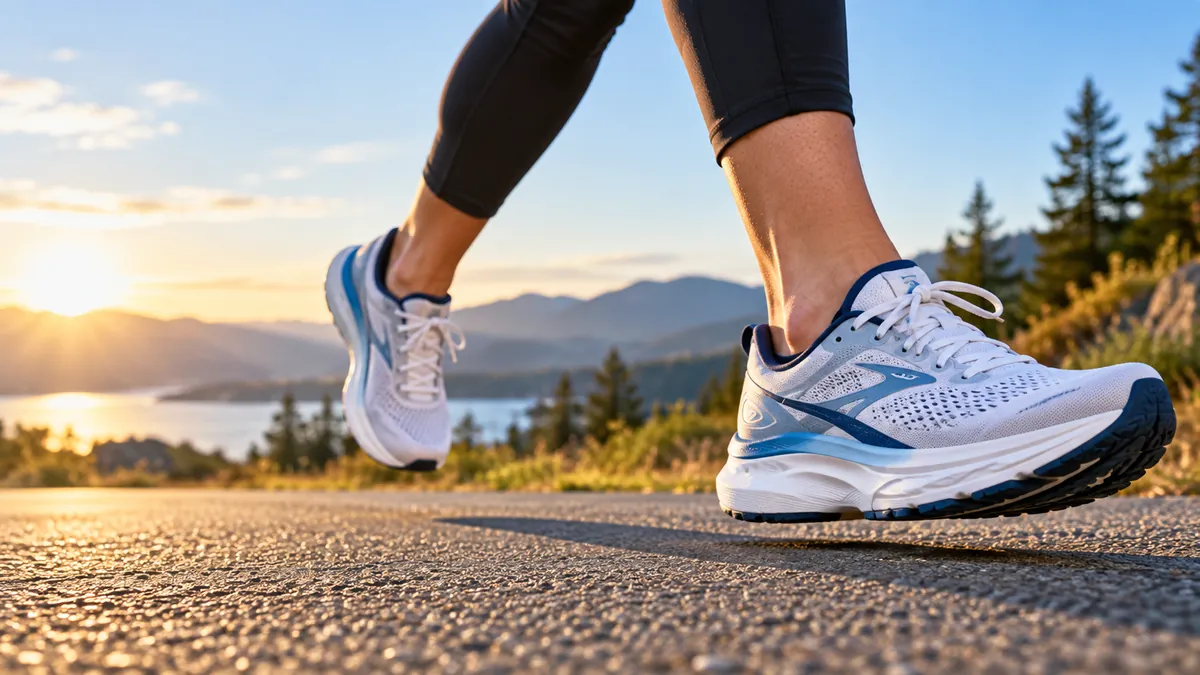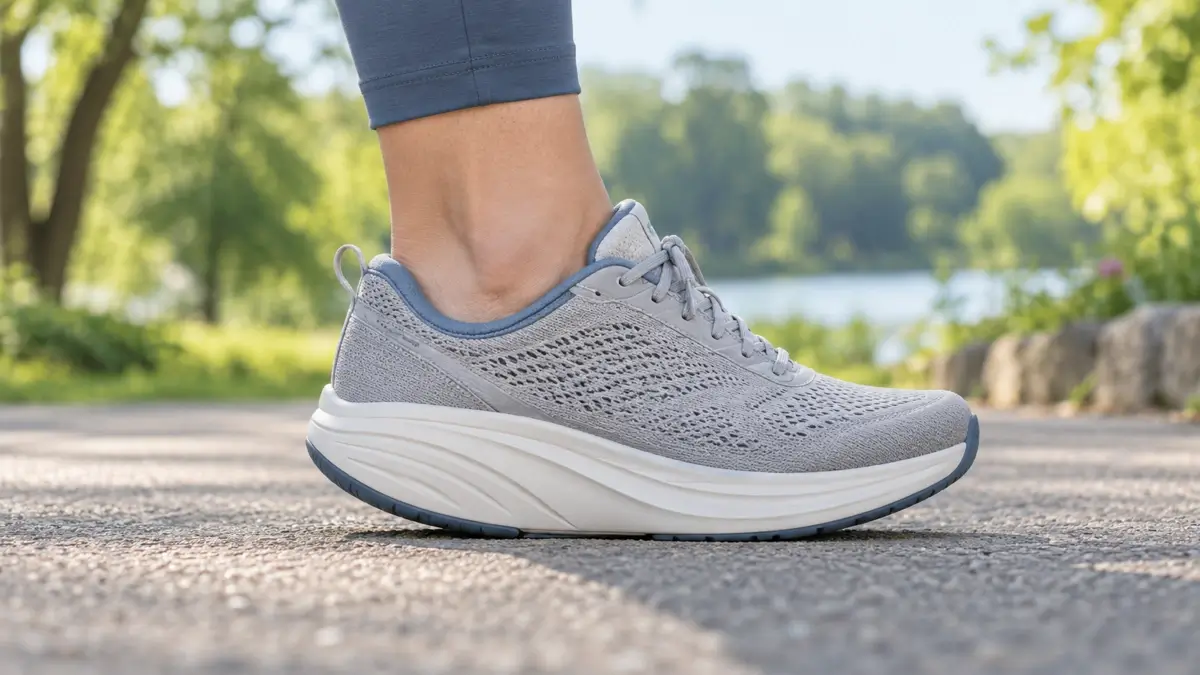
| Quick Answer: What is a rocker in shoes? A rocker is a curved shoe sole that helps your foot roll from landing to toe-off. As your weight moves forward, the curved sole tips toward the toes. This can make each step feel smoother and reduce how much the ankle or big toe must bend. Rocker soles are common in cushioned walking shoes, running shoes and some medical footwear. However, every rocker is different. The shape of the curve, stiffness of the sole and location of the rocker all affect how the shoe feels. See rocker shoe examples. |
Look at a shoe from the side. If the heel or toe curves upward like the bottom of a rocking chair, the shoe has some degree of rocker. Some rockers create a gentle rolling feeling. Others feel as if they tip you forward. Neither type is automatically better. The best design depends on your foot, walking pattern, pace and reason for wearing the shoe. If you want current examples, compare our best rocker bottom shoes. For how rocker geometry interacts with foam, drop and plates, see our Running Shoe Technology guide.
What does a rocker do in a shoe?
A rocker helps the shoe roll forward while your foot is on the ground.In a regular flexible shoe, the ankle and big toe bend as you move from landing to push-off. A rockered sole can perform part of this rolling motion for you. Once your weight moves over the main curve, the front of the shoe begins to tip toward the ground.
Depending on its shape, a rocker may:
- Create a smoother heel-to-toe transition
- Reduce how much the big-toe joint must bend
- Change pressure beneath the heel, midfoot or forefoot
- Reduce some work at the ankle and calf
- Help a thick or stiff shoe roll forward
- Create a quicker toe-off feeling
A rocker does not power your stride. It guides the way the shoe moves beneath your foot.
A 2026 review of rocker geometry found that rockers can change joint motion, muscle work and pressure under the foot. However, the effects varied among shoes, speeds and wearers. The researchers also found no standard measurement that determines when a shoe should be called a rocker shoe.
What does a rocker shoe feel like?
A mild rocker may simply feel smooth. You might not notice the curve unless you compare the shoe with a flatter model.
A stronger rocker can feel like it has a tipping point. Once your body passes over that point, the shoe seems to roll forward. Some people describe this as easy or propulsive. Others feel rushed or less stable.
A current example is the Asics GlideRide Max 2, which uses a pronounced rocker to create a smooth rolling feel for easy running and walking.
The visible curve is only part of the story. These other features change the feeling:
- Sole stiffness: A stiff shoe relies more on its curved shape because it bends less.
- Foam softness: Soft foam may make the rocker feel less direct.
- Stack height: This is the amount of material beneath the foot. A taller shoe may feel less grounded.
- Platform width: A broad base can make a rockered shoe feel more stable.
- Walking or running speed: A rocker designed for fast running may feel awkward during a slow walk.
Two shoes can look equally curved but feel very different once you put them on.
Parts of a rocker sole
Shoe designers use several terms to describe rocker geometry. You do not need to measure them, but understanding them can help you compare shoes.
| Rocker feature | Simple meaning | Why it matters |
|---|---|---|
| Rocker apex | The point where the sole begins to curve away from the ground | It affects when the shoe starts rolling forward |
| Rocker angle | The steepness of the upward curve | A steeper angle may create a stronger rolling feeling |
| Toe spring | How high the front tip sits above the ground | It can help the shoe move through toe-off |
| Heel rocker or bevel | The curve or angle at the back of the sole | It may help a heel striker land more smoothly |
| Sole stiffness | How easily the shoe bends | A stiff sole makes the rocker shape more important |
There is no industry-wide rocker rating. Terms such as MetaRocker and GlideRoll are brand names, not standard measurements. A name alone cannot tell you how strong or comfortable a rocker will feel.
Is a rocker the same as heel-to-toe drop?
No. Rocker geometry and heel-to-toe drop describe different parts of a shoe.
Heel-to-toe drop is the difference in height between the heel and forefoot inside the shoe. If the heel is 35 mm high and the forefoot is 27 mm high, the shoe has an 8 mm drop.
Rocker geometry is the lengthwise curve that helps the shoe roll over the ground.
A shoe can have a low drop and a strong rocker. It can also have a high drop and a mild rocker. You cannot determine one by looking at the other.
Is a rocker the same as toe spring?
No. Toe spring is the upward lift at the very front of a shoe. A forefoot rocker is the larger curved area under the ball of the foot and toes.
These features often work together. However, a shoe can have a lifted toe without producing a strong rolling feeling. This is especially true if the sole is flexible.
Toe-box shape is also a separate feature. A shoe can have a rocker and still offer either a wide or narrow toe box.
Common types of rocker soles
Rocker shoes do not all use the same curve. Most everyday walking and running shoes use one or both of the following designs.
Forefoot rocker
A forefoot rocker curves upward under the ball of the foot and toes. It helps the shoe roll from the middle of the step into toe-off. This design may reduce how much the big toe must bend. That is one reason rocker geometry often matters when choosing shoes for hallux rigidus. The effect depends heavily on where the curve begins and how stiff the sole is.
Heel-to-toe rocker
A heel-to-toe rocker has a curved heel and forefoot. The rear curve helps the shoe move into the landing. The front curve helps it roll toward toe-off. Many thick, highly cushioned running and walking shoes use this type of rolling profile.
Medical footwear may use more specialized designs, including double rockers that shift pressure away from a certain part of the foot. These should be selected with professional guidance when used to manage a medical condition.
Examples of Shoes With Rocker Soles
Rocker geometry shows up in very different kinds of footwear. The Hoka Bondi 9 uses a smooth MetaRocker with deep cushioning for everyday walking and easy running. The Brooks Ghost Max 4 uses a GlideRoll Rocker with a broad base that works well for walking and orthotics. The KEEN WK400 II takes the idea further with a continuous heel-to-toe curve designed specifically for exercise walking.
If you are choosing a shoe rather than learning how the geometry works, see our Best Rocker Bottom Shoes in 2026 guide. It compares eight current options for everyday walking, strong rocker feel, stability, orthotics, hard floors, work and big-toe stiffness.
Why do thick shoes often have rockers?
A thick midsole can be hard to bend. Without a rocker, a tall and stiff shoe might feel like a flat block beneath the foot. The curve allows the entire shoe to roll forward even when the sole does not flex much. This is why rocker geometry is common in max-cushion shoes and stiff racing shoes.
Hoka helped make the feature familiar through its MetaRocker designs. Hoka says its MetaRocker is designed to create a smooth transition, but the shape is tuned differently across its shoes. Brooks uses the GlideRoll name in some models. Other brands use their own terms or do not give the rocker a special name.
In a plated racing shoe, the rocker works with the stiff plate and midsole foam. The curve is only one part of the shoe’s design.
What are the possible benefits of rocker shoes?
The clearest benefits involve changing movement or pressure. A rocker is not a cure for a foot or leg condition.
It may reduce big-toe bending
The big toe normally bends upward as you push off. A stiff forefoot rocker may reduce the amount of motion required at this joint.
This can be useful for some people with hallux rigidus, which is pain and stiffness caused by arthritis in the big-toe joint. Our guide to the best shoes for hallux rigidus explains which other features can help.
In a randomized trial involving 102 people with big-toe arthritis, both foot orthotics and rocker-sole shoes were linked to improved pain after 12 weeks. The orthotics group wore its assigned treatment more often and reported fewer unwanted effects.
The study tested a specific MBT rocker shoe with a pronounced and less stable curve. Its results should not be applied to every modern walking or running shoe.
It may shift pressure under the foot
A rocker can move pressure from one area of the foot to another. It may lower pressure beneath part of the forefoot, but that pressure does not disappear. Another area may carry more of the load.
The position of the rocker’s curve is important. If the curve does not line up well with your foot, it may fail to reduce pressure where you need it.
People with diabetes, loss of feeling in the feet, ulcers or previous foot wounds should get help from a podiatrist or another qualified clinician. Reduced feeling can make it difficult to notice harmful rubbing or pressure.
It may reduce some ankle and calf work
Some rocker designs reduce ankle motion and the work performed by the calf muscles during part of the stride. This may change the load on the Achilles tendon.
That does not mean every rocker shoe prevents or treats Achilles pain. The effect depends on the whole shoe and the person wearing it. Anyone managing an injury should treat footwear as one part of a professional care plan.
It may make a stiff shoe feel smoother
People without foot pain may still enjoy a rocker. The curved shape can make a thick, cushioned shoe feel less bulky during long walks or easy runs.
What are the drawbacks of rocker shoes?
The same curve that feels smooth to one person can feel awkward to another.
Possible drawbacks include:
- Feeling less stable while standing
- Feeling pushed forward too quickly
- Having less contact with the ground
- Finding quick turns more difficult
- Moving pressure to an uncomfortable area
- Needing time to adjust to the new movement
The rocker is not the only feature that affects stability. A high, narrow shoe with soft foam may feel wobbly. A shoe with a broad base and firmer sidewalls may feel secure even with a visible curve.
Are rocker shoes good for walking?
Rocker shoes can be good for walking if the curve matches your natural stride and feels stable at your usual pace.
A mild rocker can make a cushioned walking shoe feel smooth on pavement. A strong rocker built for fast running may feel too aggressive during a casual walk.
When trying a pair, do more than walk in a straight line. Walk slowly and briskly. Turn in both directions, stop quickly and stand still. The shoe should feel controlled during every movement.
You can also use our free shoe finder to identify shoe features that may match your walking needs.
Are rocker shoes good for standing all day?
They can be, especially when a job includes plenty of walking. However, a strong rocker may feel less settled when you remain in one place.
For standing, look for a broad platform, secure heel and enough cushioning for the surface. Test the shoe while standing as well as walking. Do not assume that a comfortable walking shoe will automatically feel good during a long period of standing.
Are rocker shoes good for running?
Rocker geometry is common in daily trainers, max-cushion shoes and racing shoes. It can help a stiff shoe move through toe-off and may shift some work away from the ankle.
The design does not automatically make running easier or more efficient. Results vary with the shoe, runner and speed. A rocker that feels excellent at race pace may feel uncomfortable during an easy run.
Choose a shoe for the pace and distance you plan to run. Introduce a very different rocker gradually instead of wearing it for a long run or race on the first day.
Who should consider a rocker shoe?
A rocker shoe may be worth trying if you:
- Enjoy a smooth, rolling transition
- Want a thick shoe that does not feel stiff or blocky
- Have limited big-toe motion and have been advised to reduce bending there
- Want to change pressure or motion at the forefoot or ankle
- Prefer a guided feeling during long walks or runs
Use more caution if you have poor balance, reduced feeling in your feet or a history of ankle rolling. Ask a qualified clinician for advice if you are recovering from surgery or managing arthritis, diabetes-related foot problems or an active injury.
How to choose a rocker shoe
The right rocker should feel smooth and easy to control. Use these checks when trying on a pair:
- Timing: Does the shoe roll forward when your body naturally wants to move?
- Stability: Can you stand, turn and stop without wobbling?
- Forefoot comfort: Does the shoe reduce strain without creating new pressure?
- Fit: Do your toes have enough room, and does your heel stay secure?
- Pace: Does the rocker work at your normal walking or running speed?
- Purpose: Is the shoe made for walking, everyday running, racing or medical use?
Wear the shoes indoors first if the retailer allows returns. Test the movements you perform during a normal day.
How long does it take to adjust to rocker shoes?
Some people feel comfortable right away. Others need several short walks or runs to adjust.
Start with a short outing and alternate with your familiar shoes. Increase the time only if your feet and legs feel comfortable during the activity and the next day.
Stop wearing the shoes if they cause lasting pain, numbness, new pressure points or a feeling that you may fall. Blisters and pain are not required parts of breaking in a properly fitting shoe.
Frequently asked questions
Usually. “Rocker-bottom shoe” is common in medical discussions. Running brands often use “rocker geometry,” “rockered midsole” or a brand-specific name. These labels are not standardized, so compare the actual shoes rather than the names.
Many Hoka shoes use MetaRocker geometry, but the curve and rolling sensation differ by model. Some feel mild and stable. Others create a quicker forward transition.
A rocker may change foot and ankle loading, and some people with plantar heel pain find the smooth transition comfortable. However, rocker shoes are not a proven cure for plantar fasciitis. Fit, cushioning, support and activity level also matter. See our guide to the best walking shoes for plantar fasciitis for more help.
There is not enough evidence to show that normal use of rocker shoes weakens healthy feet. Rockers can change muscle and joint demands, but the effects vary among shoes and wearers.
Some can feel unstable, but a curved sole is only one factor. Platform width, shoe height, foam softness and heel support also affect balance.
Sometimes. The shoe needs a removable insole, enough space and a secure fit after the orthotic is added. An orthotic may also change how your foot lines up with the rocker. Ask the clinician who prescribed it to check the combination.
No. A rocker is the curve of the sole. A carbon plate is a stiff piece placed inside the midsole. A shoe can have a rocker, a plate or both.