Last Updated on October 16, 2026
Better lockdown and comfort with less spring than the shoe it replaced
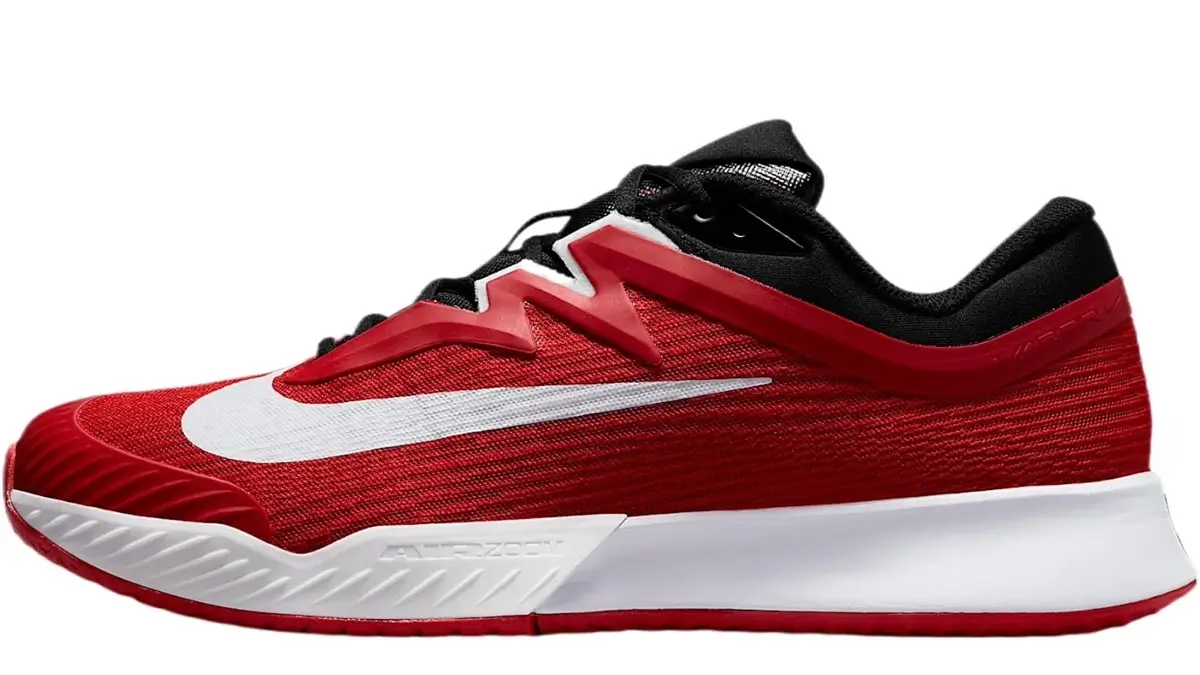
Quick Answer: Nike Vapor Pro 3 Review: The Nike Vapor Pro 3 is a hard-court tennis shoe aimed at players who move fast and want the shoe to stay out of the way. A hex-shaped Air Zoom unit sits under the ball of the foot for a springy push-off, and a new midfoot band holds you steady through wide balls. It is comfortable, secure and grips well. Nike shrank that air unit though, so it returns less energy than the Vapor Pro 2 without being any lighter. Check latest price.
The Nike Vapor Pro 3 is the third version of Nike’s speed-focused tennis shoe, and it has been on sale in the US since 2025 in men’s and women’s fits, with hard-court and clay versions plus premium colorways that appear around the majors. It is the shoe for players who want quickness rather than armour.
In Nike’s tennis line-up the Vapor Pro sits between the cheaper Vapor models and the top-tier tour shoes. The idea has always been a low, fast shoe with a burst of cushioning exactly where you push off. For this version Nike redesigned the midsole to target cushioning more precisely and added a band across the middle of the foot to improve how securely the shoe holds you.
It suits club players who cover the court quickly, anyone who found older Vapors too narrow or too raw underfoot, and players who value a comfortable, secure fit. It is a weaker match for heavy grinders who want maximum support, and for anyone hoping the third version would be a lighter, springier update, because it is not.
Specs
Here are the specifications for the Nike Vapor Pro 3:
| Type | Hard-court tennis shoe, speed build (clay version also sold) |
| Best for | Quick club players who want a comfortable, secure shoe rather than heavy support |
| Cushioning | Hex-shaped Air Zoom unit under the ball of the foot, in a redesigned midsole |
| Support features | Midfoot band for lockdown and lateral stability |
| Upper | Synthetic and mesh, bulkier than the Vapor Pro 2 |
| Outsole | Herringbone tread in Nike’s Hart rubber compound |
| Weight | 13.51 oz (383 g) in a men’s US 9, independently measured |
| Flexibility | Measured at 15.7N in lab flex testing, slightly softer than the tennis average |
| Widths | Standard only |
| Released | 2025 in the US |
| Price | Listed at about $130 around its 2025 US launch (approximate; we could not confirm an exact launch month). Check latest price |
Pros
Here is what the Vapor Pro 3 does well:
- The midfoot band is a real improvement. Your foot stays planted on the sole when you stretch wide instead of sliding toward the edge.
- Comfort is a step up on the previous version, with more material around the foot and less pressure on the first few wears.
- The forefoot Air Zoom unit sits right under the ball of the foot, so you feel a push exactly where you launch from.
- The herringbone tread grips hard courts confidently in every direction.
- It is flexible enough to move with your foot, which suits players who get up on their toes.
Cons
And here is where Nike went backwards:
- The forefoot air unit is smaller, and lab testing measured forefoot energy return dropping from about 58 percent in the Vapor Pro 2 to about 51 percent here.
- Nike promoted a lighter shoe, but at 13.51 oz in a men’s 9 it is fractionally heavier than the Vapor Pro 2.
- Outsole durability is disputed. Lab abrasion testing found no difference from the previous model, while some players report noticeable wear after only a few hours on court.
- The bulkier upper costs some of the sleek, fast feel the line is known for.
- No wide width is offered.
What is new versus the Nike Vapor Pro 2
The headline change is the Air Zoom unit under the forefoot. Nike reshaped it into a hexagon, made it smaller and thinner, and moved it directly beneath the ball of the foot. The stated reason was flexibility. The measured result is a shoe that returns less energy when you push off: forefoot springiness fell from roughly 58 percent to 51 percent between the two versions.
The second change is the midfoot band, a strap-like structure that wraps the middle of the foot and pulls it down onto the sole. This is the genuinely good update. Lateral hold on wide balls is better than it was, and the shoe feels more planted when you push off the outside edge.
Nike also rebuilt the midsole to place cushioning more deliberately and used a new rubber compound on the outsole. The claim was that the compound would make the shoe lighter. It did not: the Vapor Pro 3 comes in a touch above the Vapor Pro 2 on the scales. So you get a more comfortable, more secure shoe that gives up some pop, which is a fair trade for a club player and a disappointment for anyone chasing speed.
Who should buy the Nike Vapor Pro 3
Buy it if you want an all-rounder that leans quick. It is comfortable enough to play a long session in, secure enough to trust on a stretch volley and grippy enough that you never think about the surface. For a club player who plays a couple of times a week, that combination is more useful than a specialist shoe.
It is also the right call if you have tried heavy stability tennis shoes and hated them. Nothing here is bulky in the way a maximum-support model is, and the shoe flexes with your foot rather than bracing against it, so players who move on their toes will feel at home.
And it makes sense if comfort matters more to you than a spec sheet. The step-in feel is friendlier than the Vapor Pro 2 and there is less break-in to get through, which counts for a lot if you play in the same pair three times a week.
Who should probably skip it
Skip it if you already own the Vapor Pro 2 and like it. This is not the upgrade the numbering implies. You would be paying for a comfort and lockdown improvement while losing forefoot spring and gaining a fraction of weight, which is a strange deal for a shoe sold on speed.
It is also the wrong shoe if you grind out long baseline rallies and want the sole to hold you together, or if you have wide feet, because there is no wide width. Players who wear through outsoles quickly should note the disagreement over durability here and consider something sold with an outsole guarantee.
Two better options if that is you:
- Asics Gel-Resolution X: the maximum-support choice, with a tough AHAR+ outsole and a 2E wide in some men’s colorways (check price).
- Asics Gel-Challenger 15: the sensible budget pick for casual players who do not need tour-level materials (check price).
How does the Nike Vapor Pro 3 fit?
This is a more forgiving fit than Nike tennis shoes usually deliver. The extra material in the upper takes the edge off the tight, racing-shoe feel of earlier Vapors, and the midfoot band means the shoe can hold you without being laced painfully tight.
Fit and sizing
Order your usual Nike size. Nike tennis shoes traditionally run narrow, and while this one is fuller than the Vapor Pro 2, it is still a standard width only, so broad feet may struggle. Sizing up adds length rather than width and usually creates heel slip, so if you need a genuinely wide shoe, look at brands that publish width options. Both men’s and women’s versions are sold, and the women’s is not simply a smaller men’s shoe.
Upper and step-in comfort
Step-in comfort is one of the better parts of the shoe. There is enough padding to feel finished from the first wear, and the mesh and synthetic mix does not need long to settle. The band across the midfoot is what you notice most once you start moving: it pulls the middle of the foot down and stops the sideways shifting that makes a shoe feel sloppy. The cost is a slightly bulkier, less streamlined feel than the Vapor name suggests.
How does the Nike Vapor Pro 3 perform?
On court the Vapor Pro 3 is a well-rounded shoe that no longer plays quite as fast as its name. Comfort and security are its strengths, push-off is where it slipped, and grip is dependable throughout. Here is the detail.
Cushioning and ride
An Air Zoom unit is a sealed pocket of pressurised air with fibres inside it, and it compresses and snaps back faster than foam does. Nike put a hexagonal one directly under the ball of your foot, which is the highest-pressure point when you launch into a shot, so you feel a distinct springiness there rather than generalised softness. It works. It just works less than it used to, because the unit is smaller than the one in the Vapor Pro 2, and the difference is measurable rather than imagined.
Movement and court coverage
Despite the weight not falling, the shoe feels quick underfoot. That is down to flexibility, measured at 15.7N in lab flex testing, which is slightly softer than the tennis average and means the sole bends when your foot does instead of fighting it. Changes of direction feel natural and the shoe does not slow your first step. Over a long match the extra ounce compared with a genuinely light shoe is not something most club players will notice.
Stability and support
The midfoot band does the heavy lifting. By pulling the middle of the foot onto the sole it stops the foot rolling toward the outside edge when you stop hard on a wide ball, which is the single most common failure point in a light tennis shoe. This is a stable, neutral shoe rather than a stability shoe: it keeps your foot in place but it does not brace the ankle the way a Gel-Resolution or a Barricade does, and it will not change how you move.
Outsole, grip and durability
The herringbone tread grips hard courts reliably and lets you pivot without catching. Durability is the one area where the evidence disagrees. Lab abrasion testing on Nike’s Hart compound found the same shallow 0.5 mm wear as the previous model, so no worse. Yet some players report visible wear after only a few hours of play, particularly if they drag a toe on serve. Our read is that it is average for the category rather than a strength, and if outsole life is your main concern, choose a shoe sold with a durability guarantee.
Is the Nike Vapor Pro 3 good for walking?
It is comfortable enough for casual walking, and better at it than a heavy stability tennis shoe would be. The Air Zoom unit adds a bit of spring under the ball of the foot, the upper is padded and the flexible sole moves with your stride, so a day of errands or an afternoon at the club is fine.
Real walking is a different matter. Tennis soles are built flat and grippy so you can move sideways safely, which means there is no rocker shape to roll your foot forward the way a walking shoe does, and there is very little cushioning under the heel where a walker needs it most. The lack of a wide option also tells against it over a long day, when feet swell. Wear it for tennis, and buy a cushioned walking shoe for distance. The insole lifts out if you use orthotics.
Vapor Pro 3 versus Vapor Pro 2
Here is how the two versions compare:
| Vapor Pro 3 | Vapor Pro 2 | |
| Forefoot air unit | Smaller hex-shaped Zoom Air, directly under the ball of the foot | Larger, thicker Zoom Air unit |
| Forefoot energy return | About 51 percent in lab testing | About 58 percent in lab testing |
| Weight (men’s US 9) | 13.51 oz (383 g) | 13.4 oz (381 g) |
| Midfoot hold | New band, noticeably more secure | No band |
| Upper | Bulkier and more comfortable | Sleeker and tighter |
| Launch price: | $130 | Check latest price | Check price and availability |
Buy the Vapor Pro 3 when comfort and lateral security matter most to you, or when you found the Vapor Pro 2 too snug and unforgiving.
Buy the Vapor Pro 2 when you can still find it, you want the springier push-off, or you prefer the sleeker feel and are happy to lace it down yourself.
Nike Vapor Pro 3 Alternatives
Three shoes are worth putting next to it. If the missing spring bothers you but the fit does not, the previous Nike Vapor Pro 2 is the direct answer, since it measured a clearly springier forefoot and weighs fractionally less (check price).
Players who want more security without going up to a heavyweight should try the Adidas Barricade 14. It belongs to the stability side of the category but launched as the lightest Barricade yet at about $160, so it splits the difference between this shoe and a full support model (check price).
For an all-court option built for players who attack rather than rally, the Asics Court FF 3 is the tour-level shoe in that mould, and Asics fits differ enough from Nike’s that it is worth a try if the Vapor last has never suited your foot (check price).
Price and value
At around $130 near its 2025 launch, the Vapor Pro 3 sits below the most expensive tour shoes and above the budget end. That is fair for what it delivers: a comfortable, well-locked-down hard-court shoe with dependable grip. What you are not buying is a durability guarantee, a wide fit or a genuine performance step up over the model before it, so the value case rests on comfort rather than on the spec sheet.
Final verdict
Best for: club players who want a comfortable, secure hard-court shoe that still moves quickly.
Avoid if: you have wide feet, you already own and like the Vapor Pro 2, or you need maximum support and outsole life.
Fit: true to size, fuller than earlier Vapors but still standard width only.
Verdict: a good tennis shoe that is a strange update. The midfoot band and the friendlier fit make it the more pleasant shoe to play in, while the shrunken air unit takes away the pop that gave the line its name. If you are coming from an older or cheaper Nike, you will like it. If you are coming from the Vapor Pro 2, think twice. Check the latest price.
Frequently Asked Questions for Nike Vapor Pro 3
Yes. Nike sells hard-court and clay-court versions in both men’s and women’s fits. The clay version uses a tread designed to shed the surface so it keeps gripping when you slide.
No. It is sold in a standard width only. Nike tennis shoes tend to run narrow, so players who need extra room are usually better served by a brand that publishes width options.
No, despite the marketing. Independent measurement puts it at 13.51 oz in a men’s US 9 against 13.4 oz for the Vapor Pro 2, so it is fractionally heavier.
The Vapor Pro is the speed-oriented model built low and flexible for quick players. The standard Vapor models sit lower in the range with less specialised cushioning and support.
Yes. Pickleball asks for the same quick lateral movement and hard-court grip as tennis, and the flexible sole and midfoot band both suit it well.
The evidence is mixed. Lab abrasion testing found it no worse than the previous model, but some players report visible wear after just a few hours. Treat it as average for the category.