Last Updated on October 21, 2026
How the Nimbus Line Became One of the Softest Shoes You Can Buy
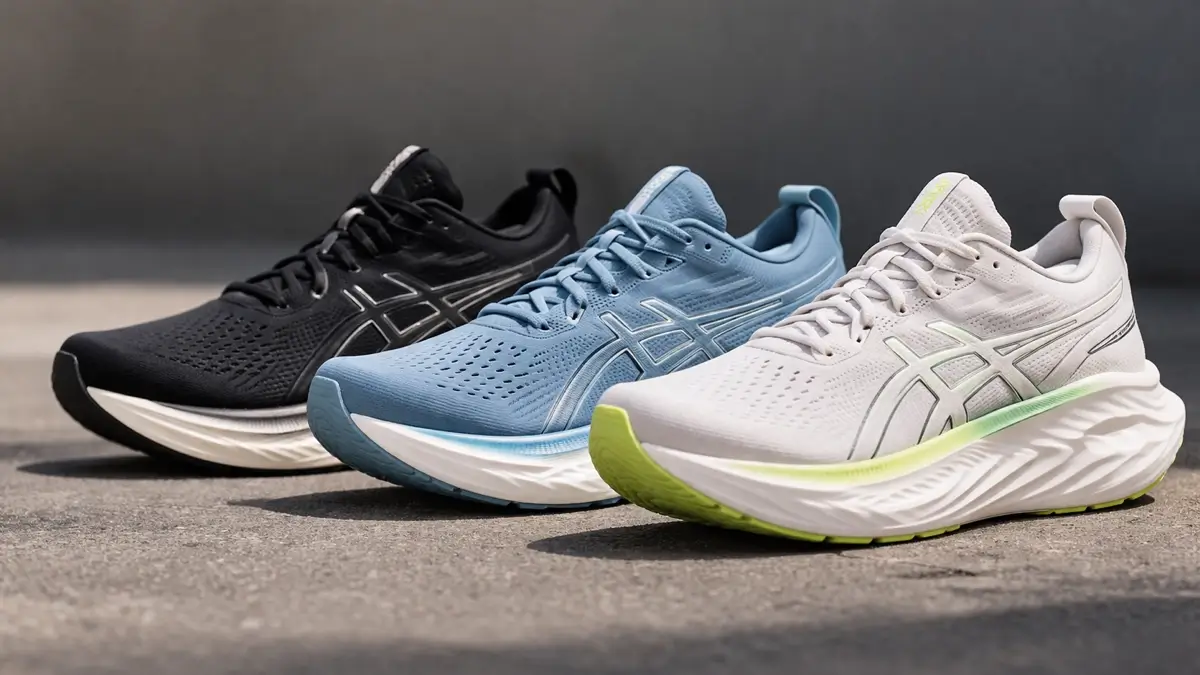
The Asics Gel-Nimbus line used to be predictable. It was cushioned, reliable, and a little conservative. Then the Gel-Nimbus 25 arrived and changed everything.
Instead of tweaking the formula, Asics rebuilt the shoe into a max-cushion trainer. From that point on, the Nimbus stopped competing with traditional daily trainers and started going head-to-head with shoes like the Bondi and Invincible.
If you are deciding between the 25, 26, and 28, you are not choosing completely different shoes. You are choosing how refined you want that soft, high-stack experience to feel. You may wonder where the 27 is in all this. The Nimbus 27 exists, but it’s what we’d call a “quiet iteration.” But almost forgettable give how similar it is to the 26.
Who This Shoe Is Really For
The Nimbus is built for comfort over speed. You feel that within the first few steps.
It suits runners and walkers who want to take stress off their joints, especially during longer sessions or all-day wear. If you are logging easy miles, recovering from harder efforts, or simply spending hours on your feet, this is where the Nimbus shines.
It also tends to appeal to heavier runners or anyone who feels beat up in firmer shoes. The cushioning absorbs a lot of impact, and that becomes noticeable over time, not just in the first mile.
Where it does not fit is faster training. If your goal is pace work or responsiveness, this line will feel too soft and a bit slow.
What Foot Issues the Nimbus Helps With
One of the reasons the Nimbus has become more popular since the 25 is that it quietly solves a lot of common discomfort issues.
The thick cushioning under the heel makes it a strong option for plantar fasciitis and general heel pain. If you have ever felt that sharp, bruised sensation when your foot hits the ground, the Nimbus tends to soften that dramatically.
It is also a good match for people dealing with knee or joint sensitivity. The high stack reduces the force traveling up the leg, which can make longer walks or runs more manageable.
For forefoot pain, like metatarsalgia, the added cushioning helps distribute pressure more evenly. And while it is not a stability shoe, the newer versions, especially the 26 and 28, are stable enough for many runners with mild flat feet.
If someone needs firm correction or motion control, though, this is not the right tool. It is comfort-first, not structure-first.
Where the Big Change Happened
The Gel-Nimbus 25 is the moment everything shifted.
Asics introduced FF BLAST+ ECO foam and pushed the stack height much higher than before. The result was a noticeably softer, more cushioned ride than anything in earlier Nimbus models.
It feels plush in a way that older Asics shoes never did. Almost sink-in soft, especially at slower paces. For some runners, that is exactly what they want. For others, it can feel a bit too relaxed and slightly unstable.
That softness is what made the 25 stand out, but it also created the need for refinement.
How the 26 (with the 27) Tightened Things Up
With the Gel-Nimbus 26, Asics didn’t try to outdo the softness. Instead, they made the shoe more usable.
The cushioning is still soft, but it feels a bit more controlled underfoot. You don’t sink in quite as much, and the platform feels more stable, especially on longer runs or uneven ground.
The upper also does a better job of holding the foot in place, and the outsole grip is more reliable. None of these changes are dramatic on their own, but together they make the 26 feel more dependable. If the 25 was all about comfort, the 26 (and 27, see below) is where comfort meets control.
What the Nimbus 27 Actually Did
The 27 sits squarely between refinement and optimization. It focused on:
- Slight weight reduction
- Minor upper improvements for comfort and breathability
- Small tuning to midsole feel (a touch more responsiveness)
- Continued focus on stability without adding structure
If the 26 made the shoe more stable, the 27 made it more comfortable and wearable. But here’s the key: Most runners would struggle to clearly distinguish the 26 from the 27 in a blind test. See full review of the Nimbus 27.
What the 28 Gets Right
By the time you get to the Gel-Nimbus 28, Asics has figured out exactly what this shoe should be. The ride feels smoother, and there is a little more energy coming back with each step. It is still firmly in the max-cushion category, but it no longer feels overly soft or sluggish. Transitions are cleaner, the weight feels better managed, and the overall experience is more balanced. It is the kind of shoe you can use more often without thinking about it, which is really the goal of a daily trainer. See full review.
The Numbers That Matter
All models sit in the same general range, but the details show how the line has evolved.
| Model | Weight (Men) | Heel Stack | Forefoot Stack | Drop |
|---|---|---|---|---|
| Nimbus 25 | ~10.9 oz | 41.5 mm | 33.5 mm | 8 mm |
| Nimbus 26 | ~10.5 oz | 42 mm | 34 mm | 8 mm |
| Nimbus 27 | ~10.3 oz | 42 | 34 | 8 mm |
| Nimbus 28 | ~10.2 oz (est.) | ~42 mm | ~34 mm | 8 mm |
The stack height stays high across all three, but the later versions feel lighter and more efficient despite similar specs.
How It Measures Up Against Competitors
The Nimbus line now sits firmly in the max-cushion category, competing with the most comfort-focused shoes on the market.
Against the Hoka Bondi 9, the Nimbus feels softer and more forgiving underfoot. The Bondi still leans toward a firmer, more stable platform, which some runners prefer for all-day wear. The Nimbus, especially from the 26 onward, offers more softness without becoming overly unstable.
Compared to the Brooks Glycerin 21 or 22, the difference comes down to ride style. The Glycerin remains more traditional and slightly more responsive, while the Nimbus leans into a deeper, more cushioned experience with a smoother rocker transition.
The Nike Invincible 3 sits on the opposite end of the spectrum. It is bouncier and more energetic thanks to ZoomX foam, but it sacrifices some stability. The Nimbus feels more controlled and predictable, particularly in the 26 and 28.
If you bring in the New Balance 1080 v13 or v14, it lands somewhere in the middle. It offers soft cushioning like the Nimbus, but with a more flexible, less rockered feel, which some runners find more natural.
Nimbus vs Bondi vs Glycerin vs Invincible: Which Should You Choose
If you strip away the branding, these shoes are all trying to solve the same problem: how to make running and walking feel easier on your body. The difference is how they go about it.
If your priority is maximum softness and impact protection, the Nimbus stands out. From the 26 onward, it delivers a deep, cushioned feel without becoming overly unstable, which makes it one of the safest choices for long, easy miles or all-day wear.
If you prefer something that feels more stable and grounded, the Hoka Bondi 9 is the better fit. It is still highly cushioned, but it does not have the same sink-in softness. That makes it a strong option for people who want consistency underfoot, especially for walking or standing.
The Brooks Glycerin, whether you land on the 21 or newer versions, sits in a more traditional middle ground. It offers cushioning, but with a bit more responsiveness and less rocker. For runners who do not want an overly soft or overly structured ride, it often feels the most familiar.
Then there is the Nike Invincible 3, which goes in a completely different direction. It is bouncy and energetic, almost playful underfoot, but that comes with less stability. Some runners love that liveliness, while others find it unpredictable over longer distances.
Most runners looking at the Nimbus are chasing comfort first, and in that lane, it is one of the most consistent options available right now.
Then there is the Nike Invincible 3, which goes in a completely different direction. It is bouncy and energetic, almost playful underfoot, but that comes with less stability. Some runners love that liveliness, while others find it unpredictable over longer distances.
What it really comes down to is feel.
The Nimbus absorbs impact. (Buy it.)
The Bondi stabilizes it. (Buy it.)
The Glycerin balances it. (Buy it.)
The Invincible amplifies it. (Buy it.)
Most runners looking at the Nimbus are chasing comfort first, and in that lane, it is one of the most consistent options available right now.
Which Nimbus Should You Choose
The decision really comes down to how you want the cushioning to feel. If you want the softest, most relaxed experience possible, the 25 still delivers that in a big way.
If you want something you can rely on day after day without feeling wobbly, the 26 (or 27) is the safer choice.
And if you want the most polished version of this idea, something that balances softness with a bit of efficiency, the 28 is where the line lands.
Most people will naturally gravitate toward the 26/27 or 28, not because the 25 is bad, but because the later versions simply feel more complete.
Get a pair at Amazon. You’ll see limited available for older models, but in some cases they are listed.