Last Updated on October 10, 2026
Pricey feather-light race-day speed
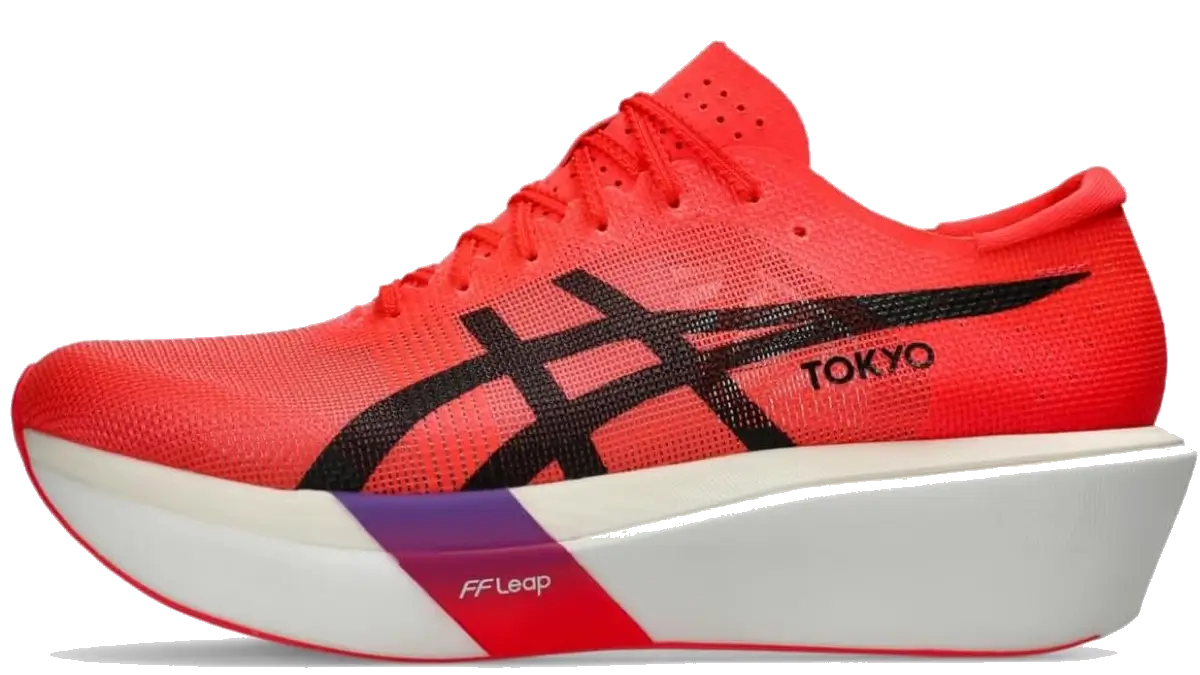
Quick Answer: Asics Metaspeed Sky Tokyo Review: The Metaspeed Sky Tokyo is Asics’ carbon-plated racing shoe for runners who lengthen their stride as they speed up. A new bouncy foam called FF Leap makes it one of the lightest super shoes on sale while keeping a full pile of cushioning underfoot. Buy it if you race 10K to marathon and want the lightest legal help you can get. Skip it if you want a shoe for training, for walking or for comfort, because it is firm, narrow and single-minded. Check latest price.
The Asics Metaspeed Sky Tokyo is the top of Asics’ racing line, and it comes in a pair. The Sky is built for what Asics calls stride runners, meaning people whose stride gets longer when they run faster. The Edge is built for cadence runners, whose legs simply turn over quicker. Both use a carbon plate, both cost the same and choosing between them is the first decision you have to make.
What makes this version notable is weight. At around 5.9 oz it is among the lightest carbon racers you can buy, and it manages that without cutting the amount of foam under your foot. That is the whole point of a shoe like this: less mass to swing forward, more spring coming back. It is worth being clear that this is a specialist purchase. If you are a weekend runner who wants one good shoe, this is not it, and we would point you at a cushioned daily trainer instead.
Specs
Here are the specifications for the Asics Metaspeed Sky Tokyo:
| Type | Carbon-plated road racing shoe, 10K to marathon |
| Gait type | Neutral, and specifically aimed at runners whose stride lengthens at speed |
| Midsole | FF Turbo+ on top and the new FF Leap underneath, with a near-straight carbon plate sandwiched between them. FF Leap is an ATPU foam that Asics states is lighter, bouncier and softer than the foam it replaces |
| Stack height | About 39.5 mm at the heel and 34.5 mm at the forefoot, which is at the legal limit for racing and means a lot of foam under a very light shoe |
| Heel-to-toe drop | 5 mm, so the heel and the toes sit close to level, which encourages a forefoot landing |
| Weight | About 5.9 oz (170 g). Asics sells it in unisex sizing, so this figure covers a men’s 9 and a women’s 10.5 |
| Upper | Very thin engineered mesh with minimal padding, built to save weight rather than to feel plush |
| Outsole | Thin patches of AsicsGRIP rubber under the highest-wear areas only |
| Widths | Standard only, in unisex sizing |
| Surface | Road and track only |
| Price | Launched at about $270 in July 2025. Check latest price |
Pros
- At about 5.9 oz it is one of the lightest carbon racers on sale, and on race day that is felt in the last few miles.
- FF Leap gives real bounce, so the shoe pushes back rather than just absorbing.
- It keeps a full legal stack of foam despite the low weight, so there is plenty of protection for a marathon.
- The forefoot is stable for a shoe this tall, which builds confidence when you are running hard and tired.
- Unisex sizing means women are not left with a scaled-down version of a men’s shoe.
Cons
- The ride is firm for a super shoe, so it rewards fast running and punishes slow running.
- At about $270 it is a serious outlay for a shoe you will use on a handful of days a year.
- The plate is stiff, which some runners find suits half marathons and shorter better than a full marathon.
- The thin outsole rubber and delicate upper mean this is not a shoe with a long life in it.
- Standard width only, and the fit is properly narrow.
What is new versus the Metaspeed Sky Paris
The big change is the foam. The Sky Paris used Asics’ FF Turbo Plus throughout, and the Tokyo keeps a layer of that on top but sits it on a new base layer called FF Leap. FF Leap is built from ATPU, a stretchy plastic that can be foamed very light, and Asics states it is around 15 percent lighter, nearly 14 percent bouncier and 30 percent softer than what came before. Those are manufacturer figures rather than independent lab numbers, but the effect is easy to feel: the shoe is lighter on the foot and it springs back more obviously off the ground.
The carbon plate has been reworked too, and it now sits almost flat between the two foam layers rather than being noticeably curved. The result is a shoe that feels less like it is tipping you forward and more like it is snapping upward. Everything else is a refinement. The upper is still minimal, the outsole rubber is still applied sparingly and the geometry that defines the Sky, a taller forefoot suited to a lengthening stride, carries over. If you raced in the Paris and liked it, the Tokyo is an improvement in the same direction rather than a different shoe.
Who should buy the Metaspeed Sky Tokyo
Buy it if you race and you want the lightest shoe with a full stack of foam. It suits runners targeting a 10K, half marathon or marathon time, and specifically those whose stride opens up when they push the pace. If you are not sure which type you are, the simple test is to think about what changes when you speed up: if your feet cover more ground per step, the Sky is your model, and if your legs just move faster, the Edge is.
It also suits people who have found other super shoes too soft and vague. Plenty of racing shoes now feel like running on a mattress, which can leave your ankles working overtime late in a race. This one is firmer and more controlled, and the forefoot in particular feels planted for a shoe with this much foam. If your fast workouts and races are where you want to spend your money, and you already own something comfortable for daily miles, this is a strong choice.
Who should probably skip it
Skip it if you want one shoe. A carbon racer is a bad daily trainer: the foam is expensive and wears out quickly, the outsole rubber is thin and the firm ride is unpleasant at easy pace. Skip it if you mostly walk, because a stiff plate and a 5 mm drop are the opposite of what walking wants. And skip it if you need support or a wider fit, because this shoe offers neither and it is unapologetically narrow.
If that is you, your money goes further here:
- Asics Superblast 2: the best of both worlds, a tall bouncy shoe with no plate that can handle daily runs, long runs and a decent turn of speed (check price | read review).
- Asics Novablast 6: bouncy, fun and affordable, and it will cover almost everything a weekend runner does (check price | read review).
- Asics Gel-Nimbus 28: the comfort choice, with deep soft cushioning for easy miles, long walks and standing around (check price | read review).
How does the Asics Metaspeed Sky Tokyo fit?
This is a race fit, which means close, low-volume and secure. The upper is barely there, so what holds your foot is the shape of the shoe rather than padding. If you have wide feet or a high instep, try before you buy.
Fit and sizing
Most people take their usual Asics size, remembering that the sizing is unisex, so a woman who normally buys a size 8 in women’s shoes will be looking for a 6.5 in this shoe’s numbering. Check the conversion chart rather than guessing. Length runs true and the toe box is snug but not painful. The midfoot is narrow by design, because a race shoe needs your foot fixed in place when you change direction or push off hard. Wide feet have no option here, and half a size up is a poor substitute for width.
Upper and step-in comfort
Step-in comfort is not the point, and the shoe is honest about it. The mesh is thin enough to see through, there is minimal padding at the collar and the tongue is little more than a strip of fabric. That saves grams and it breathes brilliantly in hot weather. The flip side is that lace pressure can be felt on the top of the foot, and there is nothing forgiving about the upper if your foot does not match its shape. It is also fragile. Treat it gently and keep it for races and hard workouts.
How does the Asics Metaspeed Sky Tokyo perform?
The Sky Tokyo is a shoe that only makes sense above a certain pace. Run hard and it feels light, snappy and controlled. Jog in it and it feels stiff and pointless. That is a compliment for a racing shoe, not a criticism.
Cushioning and ride
There is a full legal stack of foam here, but it does not feel plush. FF Leap is soft in the lab sense of compressing easily, yet the combination of a stiff plate and a thin top layer means what reaches your foot is a firm, springy sensation rather than a cushioned one. The bounce is the good part: press into the ground and the shoe returns some of that energy, which is what makes the last miles of a race feel less punishing than they would in a normal shoe. If you have run in a soft super shoe, expect this to feel considerably more direct.
Ride and running performance
At race pace this shoe is excellent. What creates the forward motion is the plate and the foam working together: the plate stiffens the whole platform so your toes do not have to bend and hold, and the foam springs back as you unload it. Because the plate is nearly flat rather than heavily curved, the feeling is upward rather than tipping, which suits a longer stride. The low weight is the other half of the story and it is most obvious after an hour of running. Some runners find the stiffness better suited to a half marathon than a full one, and that is a fair reservation to hold if your legs prefer a shoe with some give.
Stability and support
This is a neutral shoe with no support features whatsoever. What it does have is a wide, flat forefoot, and that matters. Tall racing shoes usually feel precarious because your foot sits high on soft foam, and the moment you get tired your ankle starts hunting for balance.
The Tokyo is better than most because the plate resists twisting and the forefoot is broad. The heel is narrower and less settled, so heel strikers will find it less accommodating than forefoot runners. None of that makes it suitable for anyone who needs support, and it will not influence how your foot moves.
Outsole, grip and durability
AsicsGRIP rubber is applied in patches rather than across the whole sole, which is normal for a racing shoe and is where a good chunk of the weight saving comes from. Grip on dry road is very good and on wet road it is adequate rather than reassuring, so take care on painted lines in the rain.
Durability is the honest weak point. Exposed foam wears quickly, the upper is delicate and most racing shoes of this type give perhaps 100 to 200 miles of hard use before the bounce fades.
Treat it as race-day equipment with a budget attached, not as a shoe you will own for a year of training.
Is the Asics Metaspeed Sky Tokyo good for walking?
No, and we would steer you away from the idea. Walking asks the forefoot to bend through every step, and a carbon plate is designed specifically to stop that happening, so the shoe feels stiff and awkward at walking speed. The 5 mm drop puts more work through the calf and Achilles than most walkers want, and the firm ride only makes sense when you are landing hard and fast. The narrow upper has no give for feet that swell over a long day, and the thin outsole rubber will wear through quickly on abrasive pavement.
There is also the cost. Spending $270 on a shoe and then using it for errands is the fastest way to destroy the foam that you paid for. If you want a cushioned shoe that handles walking, standing and easy running, buy a daily trainer and keep this for the days when the clock matters.
Useful resource: Read our best walking shoes roundup.
Metaspeed Sky Tokyo versus Metaspeed Sky Paris
Side by side, the changes are clear:
Metaspeed Sky Tokyo | Metaspeed Sky Paris | |
Midsole | FF Turbo+ over the new FF Leap | FF Turbo Plus throughout |
Weight | About 5.9 oz, lighter | Heavier |
Plate shape | Almost straight, so the feel is springy and upward | More curved, so the feel is more of a forward tip |
Ride | Bouncier and firmer | Flatter and slightly duller |
Best use | 10K to marathon racing for stride runners | The same, at a lower price while stock remains. Check stock on Amazon. |
Buy the new model if you race often enough for a few grams and a bit more bounce to matter, or if you are buying your first pair and want the current version. Buy the previous model if you can find the Paris discounted, because the difference is real but modest, and a cheaper super shoe you actually race in beats an expensive one you keep in the box.
Asics Metaspeed Sky Tokyo Alternatives
The Tokyo is very light, firm, bouncy and built for a lengthening stride. Each of these changes one of those things.
- Asics Metaspeed Edge Tokyo: the same technology tuned for runners whose legs turn over faster rather than reaching further, and the right pick if that describes you (check price).
- Nike Alphafly 3: a softer, more cushioned marathon racer that does more of the work for you, at the cost of a heavier shoe (check price | read review).
- Asics Magic Speed 5: much cheaper, with a carbon-infused plate rather than full carbon, and the sensible choice if you want plate assistance in workouts as well as races (check price).
- Brooks Hyperion 3: a fraction of the price and a fraction of the shoe, but genuinely good for 5K and 10K racing where a full marathon stack is unnecessary (check price | read review).
Price and value
Asics launched the Metaspeed Sky Tokyo at about $270, in line with every other carbon racer. Judging the value depends entirely on how you use it. Spread across two marathons and a handful of hard workouts, it is an expensive but defensible purchase for someone chasing a time, and the weight saving is a genuine advantage rather than marketing. Spread across occasional weekend running, it is money badly spent, because the foam degrades whether you race in it or not. Work out how many race days you actually have in a year before deciding.
Final verdict
Best for: committed racers from 10K to marathon whose stride lengthens at speed, and who want the lightest full-stack carbon shoe available.
Avoid if: you want one shoe for everything, you mostly walk, you need a wide fit or you cannot justify $270 for a handful of days a year.
Fit: narrow race fit in unisex sizing, true to length. Check the unisex conversion before ordering.
Verdict: Asics has made its best racing shoe lighter and livelier without giving up any cushioning, which is a genuinely impressive piece of engineering. The firm, stiff ride will not suit everyone and the narrow fit rules out plenty of feet, but for the runner it is designed for this is as good as race-day footwear currently gets. Just be honest with yourself about how often you race before you spend the money. Check the latest price.
Frequently Asked Questions for Asics Metaspeed Sky Tokyo
Pick the Sky if your stride gets longer when you speed up and the Edge if your legs simply turn over faster. If you cannot tell, have someone film you running easy and then fast, and compare how far your feet travel per step.
Asics sells this shoe in one size run rather than separate men’s and women’s versions. A women’s US size is typically one and a half sizes higher than the equivalent unisex number, so a women’s 8 is around a 6.5 here. Check the brand’s own chart, since it is easy to get wrong.
Carbon racers of this type generally hold their bounce for around 100 to 200 miles of fast running, and the exposed foam and thin rubber wear faster than a normal shoe. That is a broad guideline rather than a promise, and it depends on your weight and the surfaces you race on.
Yes. Its stack height sits within the 40 mm limit that World Athletics applies to road racing shoes, and it carries a single plate, which is also permitted. Rules can change, so check the current wording if you are racing at a level where it is checked.
You do not need to break the foam in, but you should run in it before race day. A stiff plate changes how your calves and feet load, and a few short fast sessions let your legs get used to it. Racing 26 miles in a shoe you have never worn is a bad idea.
They can, but it is not the shoe’s strong suit. The 5 mm drop and the narrower heel favor landing nearer the middle or front of the foot. If you land firmly on your heel, a racer with a higher drop and a wider heel will feel more settled.