Last Updated on October 12, 2026
Bouncy race-day propulsion with corrected stability
Quick Answer: Hoka Cielo X1 3.0 Review: The Cielo X1 3.0 is Hoka’s carbon-plated racing shoe, and it is the lightest and best version so far. A full-length PEBA foam midsole and a strongly curved sole make it feel like the shoe is rolling you forward, and the medial cutout that made the last one feel unsteady is gone. Buy it if you race 10K to marathon and want maximum bounce. Skip it if you want a versatile shoe, because this one only makes sense at speed. Check latest price.
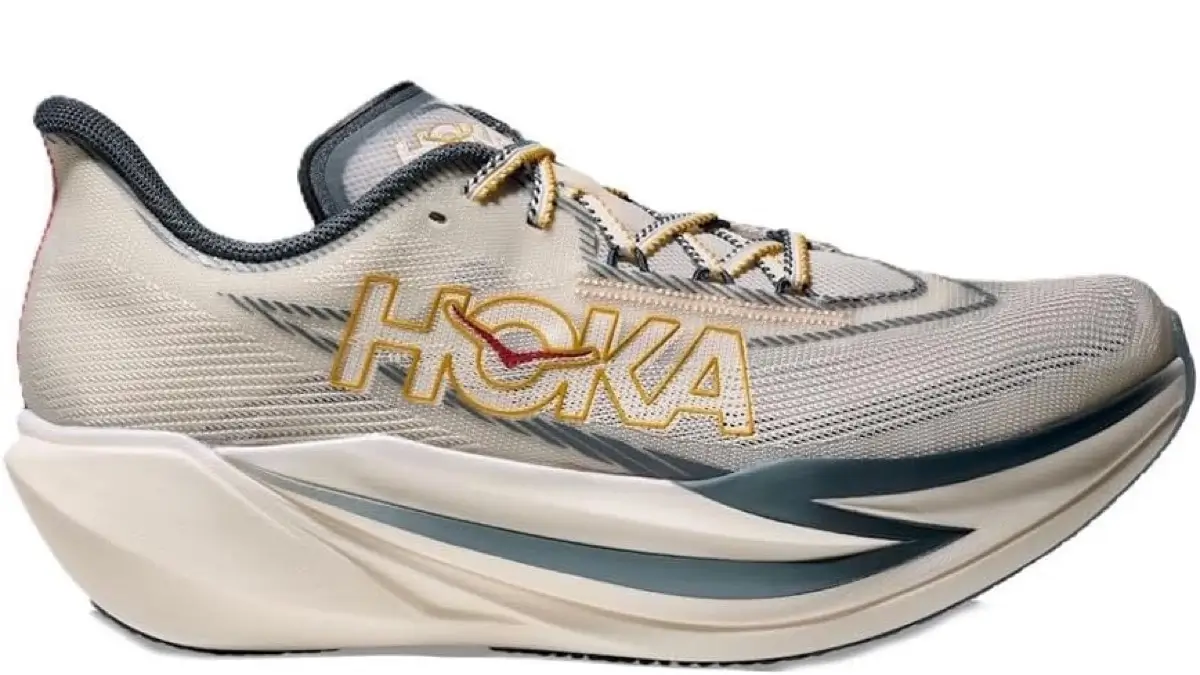
The Hoka Cielo X1 3.0 is the top of Hoka’s racing range and the shoe the brand’s sponsored marathoners wear. Below it sit the lighter, simpler Cielo Road models and the plated Mach X trainer. Above it, there is nothing. This is Hoka’s answer to the Nike Alphafly and the Asics Metaspeed, and after two versions that impressed without quite convincing, the 3.0 is the one that finally lands.
Hoka’s approach with this shoe has always been different from its rivals. Instead of relying on a stiff plate to do the work, it leans on a heavily curved sole shape that tips you forward through each step, which is what Hoka has done since the brand started. In the 3.0 that rocker is paired with softer, springier foam and a lighter build, and the combination is genuinely exciting to run in. It is also a specialist tool. If you want one shoe for your running week, look elsewhere.
Specs
Here are the specifications for the Hoka Cielo X1 3.0:
| Type | Carbon-plated road racing shoe, 10K to marathon |
| Gait type | Neutral |
| Midsole | Full-length PEBA foam, softer than before and no longer split into two densities. PEBA is the light, springy plastic foam used in almost every modern racing shoe |
| Plate | Updated carbon fiber plate, with the medial cutout from the previous version removed to improve stability |
| Stack height | Hoka lists roughly 37 mm at the heel and 30 mm at the forefoot. Independent measurements of the heel come out considerably higher, closer to 48 mm, so treat the official figures as disputed. Either way there is a great deal of foam underfoot |
| Heel-to-toe drop | 7 mm as listed, meaning your heel sits moderately higher than your toes |
| Weight | About 7.5 oz (213 g) in a men’s size 10 and 6.2 oz (175 g) in a women’s size 8, which Hoka states makes it the lightest shoe it has built |
| Upper | Redesigned leno-weave mesh, a very light open weave, with asymmetrical lacing for a more secure hold |
| Outsole | Rubber applied in high-wear zones only |
| Widths | Standard only |
| Surface | Road and track only |
| Price | Launched at $274.95 in January 2026. Check latest price |
Pros
- Enormously bouncy. This is one of the most energetic-feeling racing shoes on sale, and the sensation is addictive.
- Hoka has cut real weight, and at about 7.5 oz it is now competitive with the lightest racers.
- Removing the medial cutout fixes the biggest complaint about the previous version, which felt unsteady under the arch.
- The rocker shape does a lot of the work, so tired legs get help late in a race.
- The new upper holds the foot better without adding padding or grams.
Cons
- The ride is aggressive. The combination of soft foam and a strong rocker will feel like too much shoe for some runners.
- At a. launch price of $274.95 it is one of the most expensive shoes you can put on your feet.
- The heel is still the least settled part of the platform, so committed heel strikers may struggle.
- Sparse outsole rubber and exposed foam mean a short usable life.
- Standard width only, with a close race fit.
What is new versus the Cielo X1 2.0
Hoka gave itself four jobs with this update: lose weight, add cushioning, soften the ride and improve the upper. It managed all four, which is unusual. The most important change is the midsole. The 2.0 used two different densities of PEBA stacked together, and the 3.0 replaces that with a single softer PEBA layer running the full length of the shoe. That takes out the slightly disconnected feeling the old shoe had and makes the bounce more consistent from heel to toe.
The second big change is the removal of the medial cutout. On the 2.0 there was a scooped-out section on the inner side of the midsole, which saved weight but left the shoe feeling like it could roll inward under load. Filling that in makes the platform behave much better when you are tired and your form starts to slip. The carbon plate has been reworked as well, the shoe is slightly taller and it is lighter despite carrying more foam. Finally, the upper moves to a leno-weave mesh with asymmetrical lacing, which pulls across the foot at an angle and holds the midfoot more securely than the old straight lacing did.
Who should buy the Cielo X1 3.0
Buy it if you race and you like a shoe that feels alive. It suits runners targeting a half marathon or marathon time who land on the middle or front of the foot, and it particularly suits anyone who has enjoyed Hoka’s rockered shoes and wants the racing version. If you have run in a firmer racer and found it dull, this is the opposite experience: soft, springy and obviously doing something.
It is also a good pick for people who tried the Cielo X1 2.0 and gave up on it. The shoe you rejected had a genuine stability problem and this one does not, so it is worth another look. Beyond that, it makes sense for the runner who already owns a comfortable daily trainer and wants one dedicated fast shoe. What it is not is a first pair of running shoes or a do-everything purchase.
Who should probably skip it
Skip it if you want a shoe you can wear most days. The foam is expensive, it degrades with mileage whether you run fast or slow and the outsole rubber is too thin to survive daily use. Skip it if you land heavily on your heel, because the heel is the narrowest and least settled part of this platform. And skip it if a rolling, tipping sensation bothers you. Some people find Hoka’s rocker shape unnatural, and this shoe has the most pronounced version of it.
If any of that applies, these are better buys:
- Hoka Mach 7: light, quick and unplated, and the shoe to buy if you want something that can do workouts, races and normal runs (check price | read review).
- Hoka Clifton 11: the everyday Hoka, with a gentler rocker and enough cushioning for daily miles and walking (check price | read review).
- Hoka Bondi 9: the softest, most protective shoe in the range, and the right answer if comfort on hard surfaces is what you actually want (check price | read review).
How does the Hoka Cielo X1 3.0 fit?
The fit is closer than a normal Hoka but more forgiving than most racing shoes. The new lacing setup is the reason: it pulls the upper across the foot at an angle and holds the midfoot without needing to be cranked tight. Most people can order their usual size.
Fit and sizing
True to size. Length runs as you would expect from Hoka and the toe box has just enough room to let your toes splay when you push off. The midfoot is snug, which is what you want in a shoe you are going to race in, and the asymmetrical lacing spreads pressure better than the previous version managed. Heel hold is decent though not exceptional. There is no wide option, so genuinely broad feet will find this a squeeze, and it is the sort of shoe worth trying in a store rather than buying blind.
Upper and step-in comfort
Leno weave is an open, gauze-like mesh that is extremely light and extremely breathable, and it is the right material for a hot race. Step in and the shoe feels minimal rather than comfortable, with a thin tongue and only token padding at the collar. That is normal at this level. The improvement over the 2.0 is real security: your foot stays put through corners and on cambered roads. It is a delicate upper, so keep it away from gym bags and rough treatment.
How does the Hoka Cielo X1 3.0 perform?
This shoe has a personality, which is rarer than it sounds. It is soft, springy and keen to roll forward, and once you are running at pace it feels like it is helping. It is also demanding, and it asks you to commit to that forward motion rather than plodding along on top of it.
Cushioning and ride
The full-length PEBA midsole is the star. It is soft on landing and then pushes back hard, and because there is only one density of foam now, that sensation is the same whether you land on your heel, your midfoot or your forefoot. Compared with the firmer racers from Asics and Adidas, this feels cushioned and bouncy rather than snappy and direct. On a marathon that is a real advantage in the second half, when a firm shoe starts to feel like a hammer.
Ride and running performance
What creates the forward motion here is the sole shape more than the plate. The bottom of the shoe curves up sharply at the front, so once your weight passes over the middle of the foot it tips onward, and the plate simply keeps the platform stiff enough for that to work. The practical effect is a rolling, almost mechanical stride that saves your calves some effort. Run at race pace and it is superb. Jog in it and the rocker feels like it is pushing you along faster than you want to go, which is why this is a poor training shoe.
Stability and support
This is a neutral shoe with no support features. The stability story is about geometry, and it is much better than it was. On the 2.0 the scooped-out section on the inner side of the midsole meant there was nothing under the arch to resist the foot rolling inward, and the shoe felt like it wanted to fold at exactly the wrong moment. Filling that in gives the platform a continuous base and it now feels planted through the midfoot and forefoot. The heel is still the weak point: it is relatively narrow and sits on soft foam, so heel strikers get less to work with. As with any neutral shoe, it will not change or correct how your foot moves.
Outsole, grip and durability
Rubber is applied only where a fast runner’s shoe actually contacts the road, which keeps the weight down and leaves plenty of foam exposed. Grip on dry road is good, and on wet road it is acceptable if you are sensible about painted lines and manhole covers. Durability is where you pay the real price. Racing shoes of this type usually hold their bounce for something like 100 to 200 miles of fast running, and exposed PEBA scuffs quickly on abrasive surfaces. That is a broad guideline rather than a promise, and it depends on your weight, your stride and the roads you use.
Is the Hoka Cielo X1 3.0 good for walking?
No. It is worth saying plainly, because Hoka’s reputation with walkers means people do ask. The carbon plate is there to stop the shoe bending, and walking depends on the forefoot bending through every step, so the shoe feels stiff and unhelpful at walking pace. The strong rocker makes it worse: it tips you forward before you are ready, which is disconcerting on a slow stroll and awkward on stairs.
There is also the money. Walking on exposed PEBA foam wears it down fast, and $275 is a lot to spend on something you will scuff to pieces on the way to the shops. If you want the Hoka feeling for walking and standing, the Bondi and the Clifton are built for exactly that and cost a third as much. Keep the Cielo for the days you are chasing a number.
More info: Read our Best Walking Shoes Guide
Cielo X1 3.0 versus Cielo X1 2.0
Side by side, this is a clear step forward:
Cielo X1 3.0 | Cielo X1 2.0 | |
Midsole | One softer full-length PEBA layer | Two densities of PEBA stacked together |
Inner-side cutout | Removed, so the base is continuous | Present, which left the arch feeling unsupported |
Weight | About 7.5 oz, Hoka’s lightest | Heavier |
Upper | Leno-weave mesh with asymmetrical lacing | Less secure hold over the midfoot |
Ride | Softer, bouncier and steadier | Firmer, with a tendency to feel tippy |
Price |
Buy the new model in almost every case. It is better in each of the ways that matter and it fixes a genuine flaw rather than chasing marginal gains. Buy the previous model only if you find the 2.0 heavily discounted, you have narrow feet and stability was never a problem for you, since the basic character of the shoe is similar and $275 is a lot of money.
Hoka Cielo X1 3.0 Alternatives
The Cielo X1 3.0 is soft, bouncy, heavily rockered and expensive. Each of these takes a different route to race day.
- Nike Alphafly 3: the closest thing to a rival in feel, with a similarly cushioned marathon ride and air units instead of a rocker doing the work (check price | read review).
- Asics Metaspeed Sky Tokyo: lighter and much firmer, and the better pick if you dislike feeling like you are bouncing rather than running (check price).
- Hoka Skyward X 2: a plated shoe with the same rolling character built for training rather than racing, so you can enjoy the ride without burning through a $275 pair (check price | read review).
- Hoka Cielo X1 2.0: worth a look purely on price if you can find it reduced, provided you know about the stability compromise (check price).
Price and value
Hoka launched the Cielo X1 3.0 at $274.95, which is at the top end even by super-shoe standards. For that you get the lightest shoe Hoka has made, a full-length PEBA midsole and a genuine fix for the previous version’s flaw. Judged as race-day equipment for someone running two or three goal races a year, it is defensible, and the performance is there. Judged as a shoe purchase in the ordinary sense, it is poor value, because the usable life is short and it cannot cover any other job in your rotation. Be clear which of those two buyers you are.
Final verdict
Best for: racers from 10K to marathon who land on the middle or front of the foot and want the bounciest, most propulsive shoe they can buy.
Avoid if: you want a shoe for daily training or walking, you land firmly on your heel, you dislike a rocker sensation or you need a wide fit.
Fit: true to size with a snug race fit and a secure midfoot thanks to the angled lacing. Standard width only.
Verdict: this is the Cielo Hoka has been trying to build. Lighter, softer, bouncier and finally steady under the arch, it belongs in the same conversation as the best racing shoes from Nike and Asics rather than a step behind them. The aggressive rolling ride will divide opinion and the price is punishing, but if you race and you like a shoe with real character, put this on your shortlist. Check the latest price.
Frequently Asked Questions for Hoka Cielo X1 3.0
Yes. Order your usual size. The toe box has room to splay, the midfoot is snug and the angled lacing holds the foot without needing to be over-tightened. There is no wide option, so broad feet should try it on first.
PEBA is a light, flexible plastic that can be foamed into a midsole with far more spring than the EVA used in ordinary shoes. It returns more of the energy you put into each step, which is why almost every racing shoe now uses it. It is also expensive and wears out faster.
Hoka publishes a figure measured its own way and independent reviewers measure the shoe themselves, and on this model the two disagree by a wide margin. What is not in doubt is that there is a lot of foam under the heel. If you are racing where stack rules are enforced, check the official figure with the organizer.
Expect roughly 100 to 200 miles of fast running before the bounce noticeably fades, which is normal for this type of shoe. The thin outsole rubber and exposed foam are the limiting factors. Your weight and the surfaces you run on will move that figure either way.
It works for both, and the soft, bouncy foam is a real help in the closing miles of a marathon where firmer racers start to feel harsh. The strong rocker suits a steady rhythm, so it is arguably better over the longer distance than in a sharp, changeable half.
Do a few fast sessions in it, yes. A stiff plate and a strong rocker change how your calves and feet load, and it is better to discover that in a workout than at mile 18 of a marathon. Keep those sessions short so you are not spending the shoe’s life on training.