Last Updated on October 10, 2026
Lighter, smoother support with less foam than max-cushion rivals
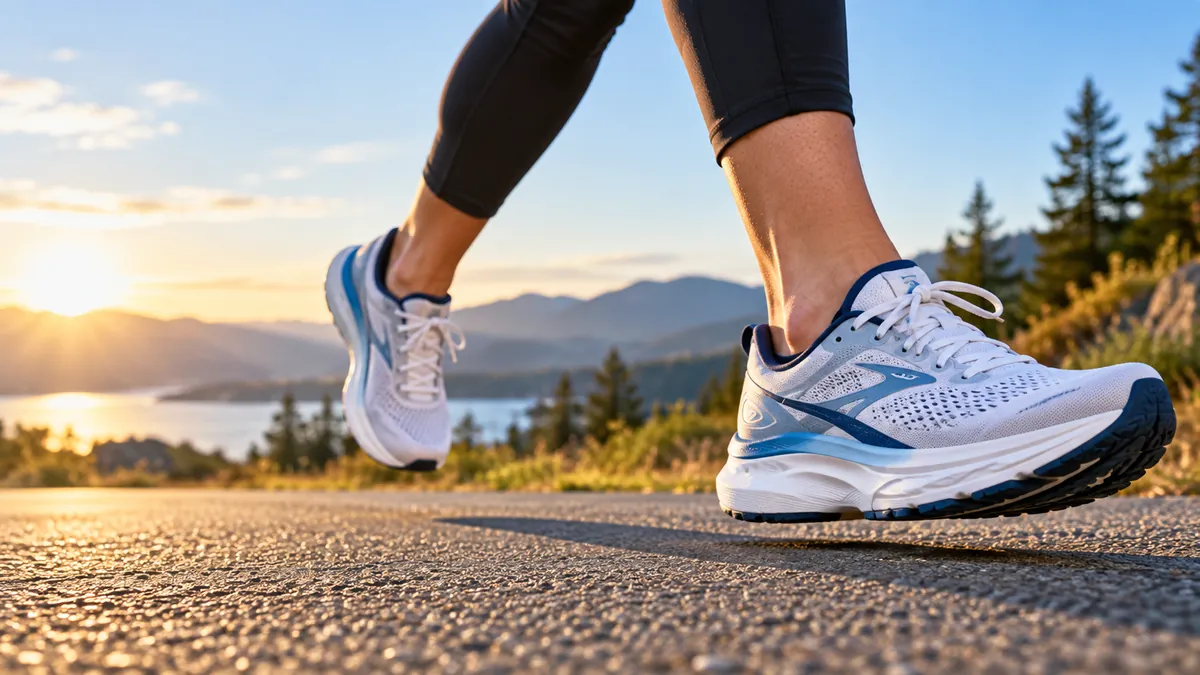
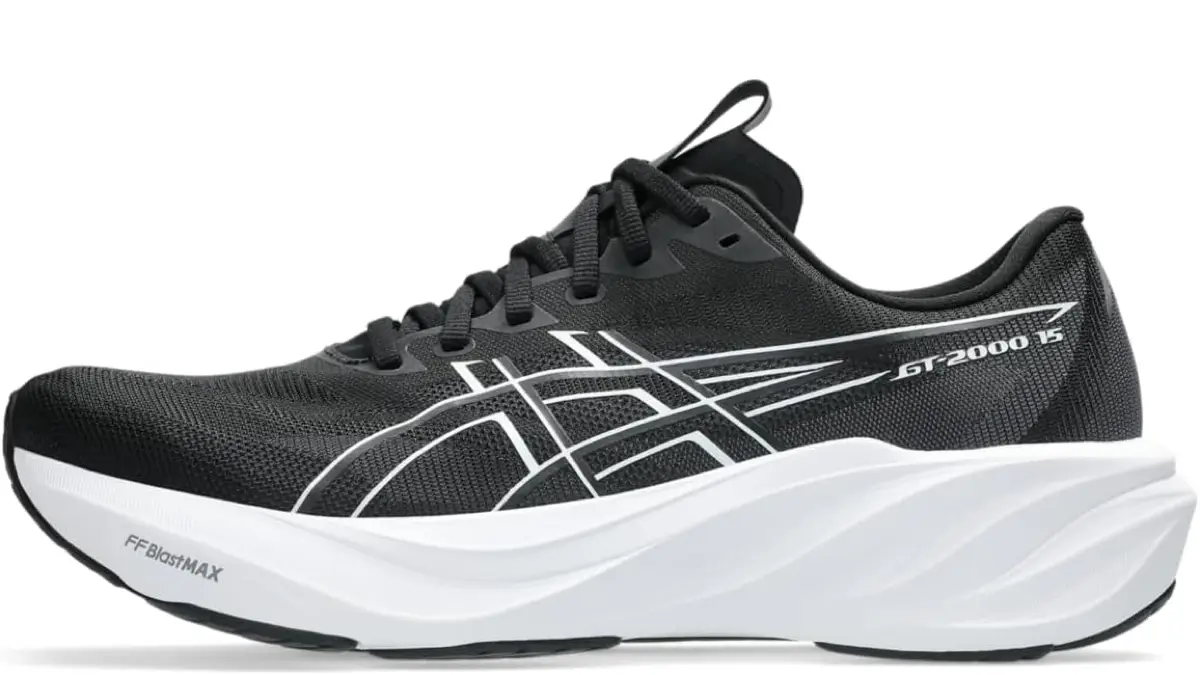
Quick Answer: Asics GT-2000 15 Review: The GT-2000 15 is Asics’ everyday support shoe, and this version is both lighter and softer than the last. A reworked FF Blast Max midsole takes the harshness out of the ride while a wide, guided platform keeps the foot from rolling too far inward. It works for daily runs, long walks and time on your feet. Buy it if you want gentle support that does not feel clunky. Skip it if you want the deepest cushioning available. Check latest price.
The Asics GT-2000 15 is the sensible middle of Asics’ support range. The Gel-Kayano sits above it with more cushioning and a higher price, and the GT-1000 sits below it as the budget option. The GT-2000 has always been the one that most people with mildly inward-rolling feet actually need, and it has built a following among runners and walkers who want help staying steady without buying a heavy, corrective-feeling shoe.
Version 15 pushes it further in the direction it has been heading for a few years now. There is a little more foam, the foam itself is softer and the shoe has lost weight rather than gained it. In practice that makes it feel much more like an ordinary cushioned trainer that quietly keeps your foot in line. If you are a weekend runner who has been told you need support and you did not enjoy the stiff support shoes of a decade ago, this is the sort of shoe that changed that reputation.
Specs
Here are the specifications for the Asics GT-2000 15:
| Type | Stability road daily trainer |
| Gait type | Mild to moderate overpronation, meaning feet that roll inward more than is ideal |
| Midsole | Reformulated FF Blast Max, a lightweight foam tuned softer than the version in the GT-2000 14 |
| Stability | A firmer section of midsole on the inner side plus raised sidewalls that cup the heel, working together to slow inward roll |
| Stack height | About 38 mm at the heel and 30 mm at the forefoot for men, and about 37 mm and 29 mm for women. That is a solid, moderate amount of cushioning |
| Heel-to-toe drop | 8 mm, so your heel sits a little higher than your toes |
| Weight | About 8.8 oz in a men’s size 9 and 7.8 oz in a women’s size 8, which is light for a support shoe |
| Upper | Engineered mesh with a padded heel collar |
| Outsole | Rubber across the heel and forefoot, with Asics’ harder-wearing compound at the outer heel |
| Widths | The GT-2000 line normally offers standard, wide and extra wide in the US. Confirm the widths in stock for the 15 before ordering |
| Surface | Road, sidewalk, treadmill and packed paths |
| Price | Launched at $149.95 in August 2026. Check latest price |
Pros
- It gained cushioning and lost weight, which almost never happens in the same update.
- The support is subtle. You feel steadier rather than corrected, so the shoe never feels like it is fighting your stride.
- At about 8.8 oz it is one of the lighter support shoes you can buy, so it does not feel like a chore on easy runs.
- The wide base and cupped heel make it genuinely steady for walking on uneven pavement.
- The GT-2000 line usually comes in extra wide, which matters for a lot of people who need support.
Cons
- With about 38 mm under the heel it has noticeably less foam than the max-cushion trainers people compare it with.
- The support is gentle, so anyone who rolls inward heavily may need more than this offers.
- At $149.95 it now costs close to what plusher shoes did a couple of years ago.
- The ride is efficient rather than fun, and there is no spring to it.
What is new versus the GT-2000 14
Two changes drive everything else. The first is roughly 2 mm of extra foam, which sounds trivial and is not, because the GT-2000 has historically been the support shoe people described as firm. That small addition, spread across the heel and forefoot, is enough to take the sting out of hard pavement. The second is the foam itself. Asics has reformulated FF Blast Max so it compresses more easily, so the shoe now gives way under your foot instead of pushing back.
Alongside that, the shoe is lighter than the 14 despite carrying more material. Asics did that by trimming the upper and thinning out the outsole rubber where wear is not a problem. The support setup itself is broadly unchanged in principle: a firmer strip of midsole on the inner side of the shoe plus sidewalls that come up around the heel. What has changed is how it feels, which is smoother and less noticeable than before. If you liked the 14 but always wished it were softer, this is exactly the update you wanted.
Who should buy the GT-2000 15
Buy it if a running store has told you your feet roll inward a bit and you want a shoe that helps without dominating the ride. It suits the runner covering 15 to 30 miles a week, the person training for a first 10K or half marathon, and anyone whose knees or shins complain when they run in fully neutral shoes. Because it is light and steady in equal measure, it also handles the mixed reality of most people’s weeks: a run, a long walk, a day of standing around.
It is also the sensible buy for people who have been sold too much shoe. Plenty of walkers and runners end up in a heavy motion-control model when what they needed was gentle guidance. The GT-2000 15 is the middle option, and the fact that the line usually stretches to an extra wide fitting makes it one of the few support shoes that works for broad feet. If you have a mild orthotic, this is a good host shoe for it too.
Who should probably skip it
Skip it if your feet do not roll inward. Support features are not a general upgrade, and a neutral runner in a stability shoe usually just ends up with a firmer inner edge for no benefit. Skip it if you want the softest possible shoe, because 38 mm of moderate foam is not the same experience as a max-cushion trainer. And skip it if you have a strong, well-documented need for control, because this shoe guides rather than restrains.
In those cases, look at these instead:
- Asics Gel-Cumulus 28: the neutral version of the same idea, with similar cushioning and no support features to get in the way (check price | read review).
- Asics Gel-Kayano 33: more foam and a more assertive guidance setup, which is what you want if the GT-2000 is not enough shoe (check price | read review).
- Hoka Bondi 9: the pick if soft landings matter more than steering, especially for standing and walking on hard floors (check price | read review).
How does the Asics GT-2000 15 fit?
This is a traditional, well-mannered running shoe fit. The heel is locked down, the midfoot is secure and the toe box has enough room to spread out without feeling sloppy. Most people can buy their usual size with confidence.
Fit and sizing
True to size. Asics lengths run predictably and there is nothing unusual here. The toe box is moderate: not the roomiest on the market, but wide enough that your toes are not pushed together. The strongest part of the fit is the heel, where the padded collar and cupped sidewalls hold the ankle steady. Because the GT-2000 line normally offers wide and extra wide, this is one of the easier shoes to fit if you have struggled with standard-width trainers, though it is worth checking what is genuinely in stock rather than assuming.
Upper and step-in comfort
Step-in comfort is good in an unshowy way. The mesh is soft, the tongue has enough padding to spread lace pressure and the collar is generously filled without being bulky. The mesh has been trimmed back to save weight, which makes it more breathable than earlier GT-2000 uppers, so it copes better with warm weather. There is enough structure over the midfoot to keep your foot centered on the platform, which matters more on a stability shoe than a neutral one.
How does the Asics GT-2000 15 perform?
This shoe is about doing ordinary miles without drama. It is light on the foot, softer than the GT-2000 has been in years and steady enough that you stop thinking about your feet. It is not exciting, and that is rather the point.
Cushioning and ride
The softer FF Blast Max is the biggest quality-of-life change here. Landings on concrete no longer feel abrupt, and the extra couple of millimeters in the forefoot means the ball of your foot is better protected on longer efforts. It is a balanced cushioning feel: soft enough to be comfortable, firm enough that the shoe does not sink. Compared with a max-cushion trainer it will still feel closer to the ground, so set your expectations by the category rather than by the current fashion for tall shoes.
Ride and running performance
Transitions are the shoe’s real strength. The 8 mm drop and a mild rocker shape at the toe, which simply means the front of the sole curves upward, help the foot roll off the ground without effort. That makes easy runs feel smooth and takes the clunkiness out of a support shoe. It has enough life to handle a steady stretch or a short faster segment, though it has no plate and no springy foam, so it will not help you race. Long runs are within its range as long as you accept a firmer feel than a plush shoe would give.
Stability and support
We would classify the GT-2000 15 as a genuine stability shoe with a light touch. The mechanism is straightforward. The inner side of the midsole is made from firmer material than the outer side, so when your foot starts to roll inward it meets more resistance on that side and slows down. The heel sidewalls add to the effect by cupping the heel and keeping it upright at the moment of landing. That is guidance, not correction: the shoe reduces excess movement, it does not fix or change how you walk or run, and no shoe does. If you have persistent or worsening pain, get it assessed by a physical therapist or podiatrist rather than treating footwear as the answer.
Outsole, grip and durability
Rubber covers the heel and forefoot with the harder-wearing compound placed at the outer heel, which is where most people scuff first. Grip is dependable on dry and damp pavement and fine on packed gravel, though it is not designed for mud. Asics has thinned the rubber in low-wear areas to save weight, and that is a reasonable trade unless you are hard on shoes. The usual 300 to 500 mile guideline applies as a rough expectation for a daily trainer, and it varies with your weight, stride and the surfaces you use.
Is the Asics GT-2000 15 good for walking?
It is one of the better running shoes for walking, and for a lot of our readers walking will be its main job. The wide base and the cupped heel make it feel planted on uneven sidewalks and curbs, which is exactly where an unstable shoe becomes a nuisance. The gentle inward-side support helps if your feet tend to flatten out over a long day, and the mild toe rocker helps the shoe roll through each step rather than fighting it.
For standing all day it is decent, though a softer max-cushion shoe is more forgiving when you are not moving. It is a strong travel shoe: light to pack, steady on unfamiliar streets and comfortable for hours. Orthotics fit well once the sockliner is out, and the availability of wide fittings means a bulky insert does not have to mean a cramped shoe. If you spend all day on concrete floors at work, try it against a plusher option before deciding.
GT-2000 15 versus GT-2000 14
Here is the short version of what changed:
GT-2000 15 | GT-2000 14 | |
Midsole | Reformulated, softer FF Blast Max | Firmer FF Blast Max |
Stack height | About 2 mm taller | Lower and firmer underfoot |
Weight | About 8.8 oz, lighter despite more foam | Heavier |
Feel | Softer landings, smoother roll | More direct and firmer |
Best use | Daily runs, long walks, longer efforts | Daily runs for people who like a firm shoe |
Buy the new model if you want softer landings and a lighter shoe, or if the 14 ever left your legs feeling beaten up on pavement. Buy the previous model if you specifically prefer a firm, connected support shoe and can find the 14 discounted, because the support principle is the same and the price will be lower.
Asics GT-2000 15 Alternatives
The GT-2000 15 is a light, moderately cushioned support shoe with gentle guidance. These four move in different directions from there.
- Brooks Adrenaline GTS 24: uses raised foam walls on both sides of the heel rather than a firmer inner wedge, which some people find less noticeable underfoot, and it comes in up to four widths (check price | read review).
- Saucony Guide 19: the lightest-feeling of the mainstream support shoes, worth a look if you want as little shoe as you can get away with (check price | read review).
- New Balance Fresh Foam X 860v15: softer than the GT-2000 with a broad, planted base, and a better fit for heavier runners who want support and cushioning together (check price | read review).
- Asics GT-1000 15: the cheaper shoe in the same family, firmer and less refined, but the sensible option if you mostly walk and run short distances (check price | read review).
Price and value
Asics launched the GT-2000 15 at $149.95, which puts it in the middle of the support market. For that you get a lighter shoe than most of its rivals, a genuinely improved midsole and the width options that make support shoes usable for broad feet. It is not cheap, and $150 is now the going rate rather than a bargain. What justifies it is longevity of purpose: this is a shoe most people can use for running, walking and standing rather than one that only makes sense for one of those.
Final verdict
Best for: runners and walkers with mildly inward-rolling feet who want light, gentle support and a smooth ride for daily miles and long days on hard surfaces.
Avoid if: your feet are neutral, you want the deepest cushioning on the market or you have been advised you need strong motion control.
Fit: true to size, secure heel, moderate toe box. Wide and extra wide fittings are usually part of this line, so check stock.
Verdict: the GT-2000 has spent a decade slowly shedding the awkwardness people associate with support shoes, and the 15 is the most convincing version yet. Softer, lighter and smoother, with support you notice only as steadiness. It gives up ground to max-cushion trainers on pure comfort and it is not a shoe for heavy correction, but for most people who need a little help staying steady, this is the one to try first. Check the latest price.
Frequently Asked Questions for Asics GT-2000 15
Yes. Buy your usual size. The length is predictable and the toe box is moderate rather than tight or roomy. If you have wide feet, look for the wide or extra wide fitting rather than sizing up.
Both are support shoes. The Kayano has more cushioning, a more assertive guidance setup and a higher price. The GT-2000 is lighter, firmer and gentler. Most people with mild inward roll need the GT-2000, not the Kayano.
Yes. The sockliner lifts out and leaves room for a custom or over-the-counter insert. Because the shoe already guides the foot, mention it to whoever prescribed the orthotic so the two are not working against each other.
It is. There is enough cushioning to get through 13.1 miles comfortably and it is light enough not to feel like a burden. If you want to run a fast half, a lighter unsupported shoe or a plated shoe will do more for you.
The usual signs are shoes wearing down heavily on the inner edge, ankles that visibly angle inward when someone films you walking or recurring shin and knee aches in neutral shoes. A gait check at a running store or a session with a physical therapist will tell you more than guessing.
Yes. It is light, quiet and the outsole has no aggressive lugs. The steady platform is also useful on a belt, where a very soft shoe can feel vague.