Last Updated on September 22, 2026
| Quick Answer: Best Work Boots in 2026. The best work boot is the one that matches the hazards on your jobsite, not simply the boot with the most features. Our current picks are the Timberland PRO Boondock 6 Composite Toe Waterproof, Red Wing Traction Tred Lite 2447, KEEN Utility Cincinnati 6 Waterproof Carbon Toe, Wolverine I-90 DuraShocks Moc-Toe CarbonMAX, Thorogood American Heritage 6 Safety Toe Moc Toe and CAT Invader Max 6 Waterproof Composite Toe. Before buying, check your employer’s required toe protection, electrical-hazard, puncture and slip-resistance standards. |
Work boots have to do two jobs at once: protect you from the hazards of the job and remain comfortable enough to wear for a full shift. Those goals do not always point to the same boot. A heavy-duty waterproof composite-toe boot may make sense on a construction site, while a wedge-sole steel-toe boot can be more comfortable for long hours on concrete.
Safety requirements come first. OSHA requires protective footwear when workers face hazards from falling or rolling objects, sole punctures or electrical hazards. Your employer may also require specific ASTM ratings, a defined heel shape, puncture resistance or other features. A boot that is comfortable but does not meet the job requirement is the wrong boot.
Best Work Boots at a Glance
The six boots below solve different problems. Timberland’s Boondock is the heavy-duty waterproof option. Red Wing’s Traction Tred Lite is the premium lightweight safety boot. KEEN’s Cincinnati combines a wedge sole with waterproof carbon-toe protection. Wolverine’s I-90 focuses on cushioning and energy return. Thorogood’s American Heritage is the classic steel-toe wedge boot. CAT’s Invader Max provides a more affordable waterproof composite-toe option.
Do not assume steel toe is always better than composite or carbon. The right safety toe is the one that meets the required standard and works for your environment. Non-metallic toes can reduce weight and are useful in cold conditions, while steel remains common, durable and widely accepted.
Work boot | Best for | Key safety features | Price |
|---|---|---|---|
Heavy-duty waterproof work | Composite toe, EH, slip/oil-resistant outsole | ||
Premium all-day safety | Safety toe, waterproofing, EH, slip resistance | ||
Concrete and wedge-sole comfort | Carbon toe, KEEN.DRY, oil/slip-resistant outsole | ||
Cushioning and long shifts | Composite toe, EH, waterproof membrane | ||
Steel-toe wedge boot | Steel toe, EH, slip/oil-resistant wedge | ||
Value waterproof safety boot | Composite toe, waterproofing, jobsite outsole |
Best Work Boots for Comfort and Safety in 2026
We selected current work boots that balance real safety features with underfoot comfort. This is not a ranking of which boot is “safest” because safety depends on the hazard. Instead, each model is matched to the type of work it suits best.
Fit matters more in safety footwear than in ordinary shoes. A steel or composite toe cap does not stretch, so the toes need enough room from the start. Try boots late in the day with your normal work socks, and check that your heel stays secure while your toes can still move. If you wear an orthotic, bring it when fitting the boot.
Timberland PRO Boondock 6 Composite Toe Waterproof
Best for: Heavy-duty outdoor and industrial jobs that combine water, impact and slippery surfaces.
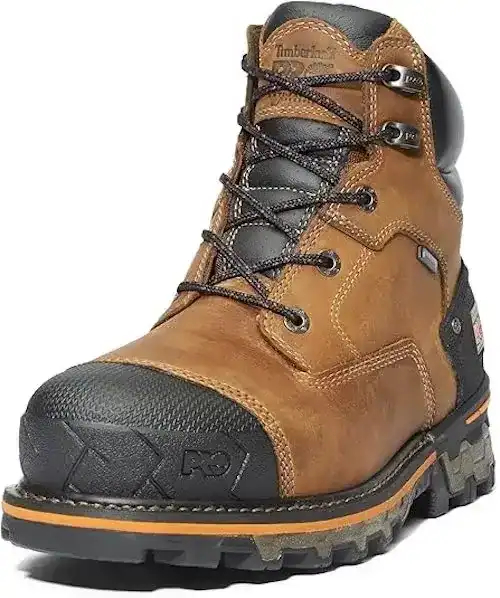
The Boondock 6 remains one of Timberland PRO’s core heavy-duty work boots. It uses an asymmetrical composite safety toe, waterproof leather and membrane, electrical-hazard protection and an all-weather TPU outsole designed to resist heat, oil, slips and abrasion.
Comfort comes from Timberland PRO’s Anti-Fatigue polyurethane footbed, while a rigid external heel cup and fiberglass shank add structure. The standard waterproof composite-toe version currently lists around $230 in the US. It is substantial and heavy, but that weight comes with more protection than a lightweight wedge boot.
Red Wing Traction Tred Lite 2447
Best for: Workers who want premium protection without the bulk of a traditional heavy-duty boot.
Red Wing’s Traction Tred Lite line is built around a lighter version of the brand’s flat-bottom work sole. Style 2447 is a 6-inch waterproof safety-toe boot with electrical-hazard protection and slip-resistant construction. Red Wing also sells related Traction Tred Lite models with non-metallic toe and puncture-resistant options, so confirm the exact style your job requires.
The 2447 is currently listed at $284.99 in the US. It costs more than most boots in this guide, but the combination of lighter construction, waterproofing and jobsite-rated protection makes it a strong option for workers who spend most of the day moving.
KEEN Utility Cincinnati 6 Waterproof Carbon Toe
Best for: Concrete floors, trades and workers who prefer a cushioned wedge sole.
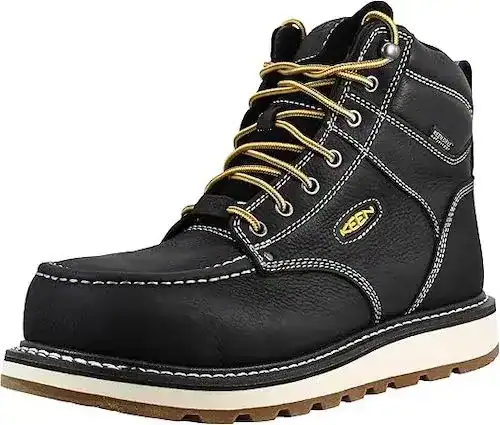
The Cincinnati uses KEEN’s asymmetrical carbon-fiber safety toes, a KEEN.DRY waterproof membrane and a wedge-style outsole. Carbon toes reduce weight compared with steel while still being designed to meet protective-footwear standards.
The air-infused Luftcell midsole and removable PolyAer footbed make the Cincinnati one of the more cushioned traditional leather work boots. It is a strong choice for long hours on concrete, but workers who spend significant time on ladders may prefer a defined 90-degree heel version.
Wolverine I-90 DuraShocks Moc-Toe CarbonMAX 6
Best for: Long shifts when shock absorption and underfoot cushioning are priorities.
The I-90 DuraShocks combines a waterproof full-grain leather upper, breathable waterproof membrane and CarbonMAX composite safety toe. Wolverine lists the model as ASTM F2413 M/I/C EH rated, which covers impact, compression and electrical-hazard performance for the specified model.
DuraShocks cushioning is the main comfort feature. The removable dual-density polyurethane footbed sits over a PU midsole, while high-abrasion TPU pads protect the outsole. The current US list price is $189.95.
Thorogood American Heritage 6 Safety Toe Moc Toe
Best for: Workers who want a classic steel-toe wedge boot with a replaceable welted construction.
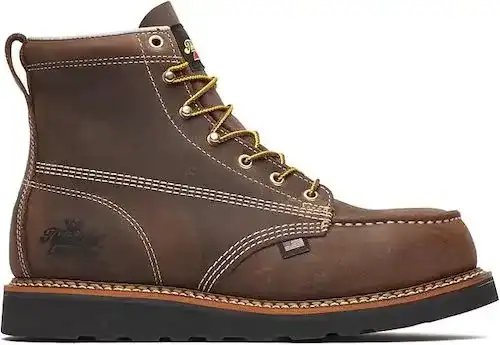
Thorogood’s American Heritage safety-toe moc-toe models combine full-grain leather, steel toe protection, a composite shank and the MAXWear Wedge outsole. The removable Ultimate Shock Absorption footbed and Poron comfort layer soften the ride during long standing shifts.
The Goodyear storm welt is a durability advantage because the boot is built in a traditional repairable style. The trade-off is weather protection: the standard American Heritage safety-toe wedge models are not waterproof. Choose a Thorogood 1957 waterproof model instead if wet conditions are routine.
CAT Invader Max 6 Waterproof Composite Toe
Best for: A lower-cost waterproof composite-toe boot.
CAT’s Invader Max is a more affordable way into a current waterproof composite-toe work boot. The six-inch model combines waterproof construction with a non-metallic safety toe and a heavily protected upper built for construction and industrial environments.
CAT lists the regular price at $179.95, though the model is frequently discounted. It is more athletic-looking than a traditional moc-toe work boot and works well for people who want substantial protection without moving into the premium $250-plus range.
How to Choose Work Boots
Start with the hazard assessment, not comfort features. OSHA requires protective footwear when workers are exposed to impact, compression, puncture or electrical hazards. Your employer determines what protection is required for your job. Look at the label inside the boot and confirm the exact rating rather than assuming every model in a product family has the same certification.
Then choose the toe type. Steel, composite and carbon safety toes can all provide compliant protection when the model is properly rated. Composite and carbon toes are usually lighter and conduct less cold, while steel is widely available and often less expensive. Toe shape matters as much as material: the cap should not press on the toes during walking, kneeling or climbing.
Finally, match the outsole to the work. Wedge soles distribute pressure well on concrete and provide a large contact patch. Defined heels are often preferred for ladders and uneven outdoor work. Slip-resistant ratings matter on wet or oily floors, while puncture-resistant plates may be required where nails or sharp debris are present.
Work Boot Safety Ratings Explained
ASTM F2413 markings describe protective footwear performance. The exact symbols on a boot can identify impact and compression protection, electrical-hazard protection and other features. Do not rely on an Amazon title or a retailer’s generic “safety boot” label—check the manufacturer specification and the label inside the footwear.
Slip resistance is another separate characteristic. A safety toe does not automatically mean the outsole is suitable for wet or oily floors. Some manufacturers publish ASTM F3445 slip-resistance performance for specific models. If slipping is a major workplace hazard, choose a model whose manufacturer specifically identifies it as slip resistant for that use.
For cold-weather jobs, waterproofing and insulation become additional variables. If winter is the main concern, see our Best Winter Work Boots guide. For lower-weight options, see our Best Lightweight Work Boots guide.
Frequently Asked Questions About Work Boots
For long hours on hard floors, a cushioned wedge sole can be comfortable because it spreads pressure across a larger area. The best choice still depends on the safety and heel requirements of your job.
They can be when the exact boot meets the required protective-footwear standard. Toe material alone does not determine compliance; check the ASTM rating of the specific model.
They can be. A wedge sole provides a broad contact area and often feels comfortable during long standing shifts. Some jobs, however, require a defined heel for ladders or uneven terrain.
Only if your work regularly exposes you to rain, standing water, wet concrete or similar conditions. Waterproof membranes add protection but can also make boots warmer and less breathable.
Your heel should stay secure while your toes have enough room that they do not contact the rigid safety cap. Fit the boots with your normal work socks and any orthotics you use.
Replace them when protective components are damaged, the outsole loses traction, waterproofing fails, the boot deforms or cushioning is no longer supportive. Work conditions can wear boots out much faster than casual footwear.
OSHA requires appropriate protective footwear when specified foot hazards are present. It does not require steel specifically in every situation; compliant protective footwear can use different safety-toe materials when the required standard is met.