Last Updated on September 23, 2026
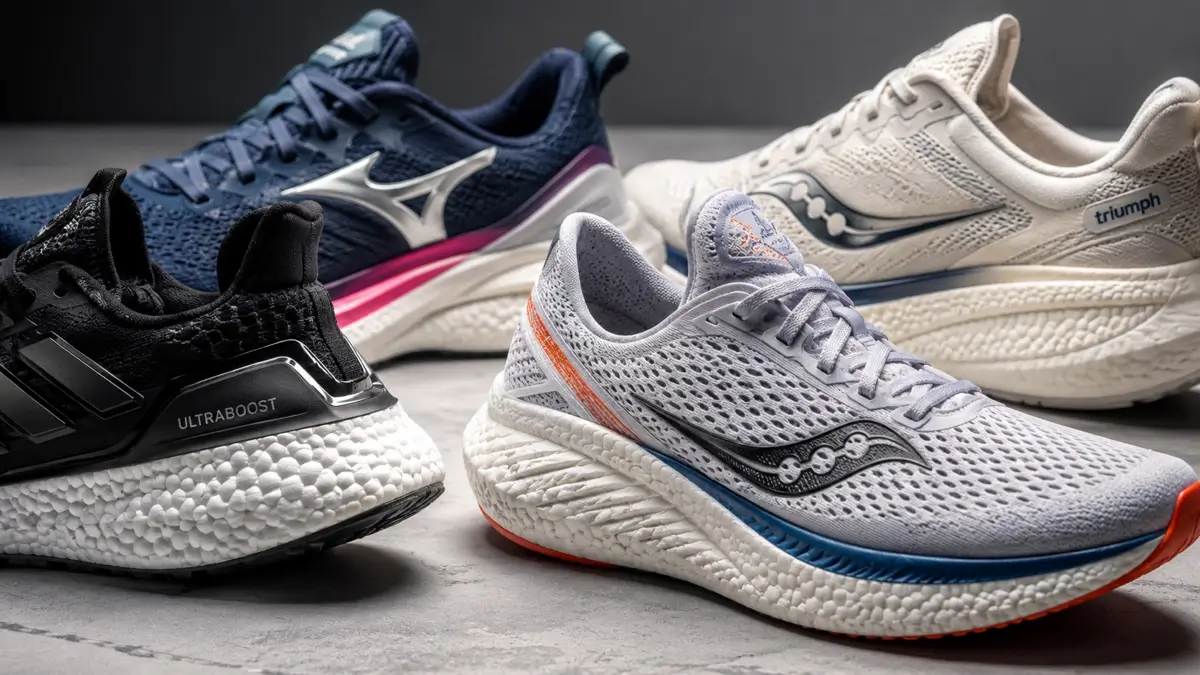
| Quick Answer: What is TPU Foam? TPU shoe foam is cushioning made from thermoplastic polyurethane, a resilient material that can be expanded into lightweight foam for running and walking shoe midsoles. TPU is known for durability, rebound and resistance to compression, meaning it can maintain its cushioning characteristics through repeated use. Common TPU-based shoe foams include Saucony PWRRUN+, Saucony incrediLUX, Adidas Boost and some versions of Mizuno Enerzy NXT. New supercritical TPU foams can also be considerably lighter and softer than traditional TPU. See a list of TPU running and walking shoes. |
Running shoe companies use dozens of names for their cushioning technologies, but those names do not always tell you what is actually inside the midsole.
Saucony has PWRRUN+, incrediLUX, PWRRUN PB and IncrediRUN. Adidas has Boost and Light Boost. Mizuno uses the Enerzy NXT name across several types of cushioning.
Some of these foams are TPU. Others are made from completely different materials.
Understanding the difference can help you compare running and walking shoes based on how their cushioning is likely to perform rather than relying solely on brand terminology.
This guide explains what TPU shoe foam is, why brands use it, how technologies such as incrediLUX and Boost work, which current shoes use TPU, and how TPU compares with EVA, PEBA and TPEE.
For a broader look at cushioning materials, see our complete running shoe foam guide.
What Is TPU Shoe Foam?
TPU stands for thermoplastic polyurethane. In footwear, TPU can be processed into foam and used to create part or all of a shoe’s midsole. The midsole is the cushioning layer between your foot and the harder outsole that contacts the ground.
TPU belongs to a family of materials known as thermoplastic elastomers. It combines some characteristics of plastic with rubber-like flexibility. That combination is useful in footwear.
When you step down, the foam compresses to help absorb the force generated by your foot hitting the ground. When you lift your foot, the material attempts to return toward its previous shape. This ability to repeatedly compress and rebound is called resilience. TPU is particularly good at it.
That does not mean all TPU shoes feel the same. Manufacturers can alter the density, thickness, cell structure and chemical formulation of TPU dramatically. They can also change the shape and width of the midsole. TPU describes the underlying material family. It does not describe exactly how a shoe will feel.
TPU Shoe Foam at a Glance
TPU has several characteristics that make it particularly useful for athletic footwear.
| Characteristic | TPU foam |
|---|---|
| Full name | Thermoplastic polyurethane |
| Common use | Running and walking shoe midsoles |
| Cushioning | Moderate to very soft depending on formulation |
| Rebound | Generally high |
| Durability | Excellent |
| Compression resistance | Excellent |
| Temperature consistency | Generally very good |
| Weight | Traditionally moderate to heavy, but newer TPU can be much lighter |
| Common examples | incrediLUX, PWRRUN+, Boost, some Enerzy NXT |
| Best suited to | Walking, daily running, long runs, high-mileage shoes |
One of TPU’s biggest advantages is that it can retain useful cushioning characteristics after thousands of compression cycles. That can make it particularly appealing in shoes designed for walking, daily running and extended wear.
Why Do Shoe Companies Use TPU Foam?
Running and walking shoes need cushioning that can repeatedly compress without becoming permanently flattened. Traditional EVA foam has performed that job for decades. TPU gives designers another option with particularly strong resilience and durability.
Its main advantages include cushioning consistency, energy return, resistance to compression and relatively stable performance across different temperatures. Those characteristics become important when a shoe is worn frequently.
A runner may put hundreds of miles on a daily trainer. A walker can accumulate thousands of steps every day. Someone working on their feet may compress the same midsole for eight or more hours.
TPU’s ability to recover between those loads is one reason it remains an important shoe material even as newer superfoams have appeared.
What Does TPU Foam Feel Like?
There is no single TPU feel. Older expanded TPU foams often have a slightly dense, springy sensation. Adidas Boost is probably the best-known example. Modern TPU can feel very different.
Manufacturing techniques such as supercritical foaming can reduce density and create softer, lighter cushioning. Saucony’s incrediLUX is an example of this newer generation.
A TPU midsole can therefore be plush, firm, bouncy, stable or somewhere between those extremes.
The amount of foam matters as well. A thick TPU midsole under a wide platform may feel soft and stable, while a thinner layer of the same general material can feel considerably firmer and more responsive.
This is why foam chemistry should be considered alongside the entire shoe design.
What Are the Main Types of TPU Shoe Foam?
TPU can be turned into shoe cushioning in several ways. The manufacturing process affects weight, softness, rebound and how the material feels underfoot.
TPU type | How it works | Typical characteristics | Example |
|---|---|---|---|
Expanded TPU, or eTPU | Small TPU particles are expanded and bonded together | Resilient, durable, springy | Adidas Boost |
Fused TPU bead foam | TPU particles are expanded and fused | Soft, durable, responsive | Saucony PWRRUN+ |
Supercritical TPU | Gas expands the material during manufacturing | Lower density, softer, lighter | Modern TPU superfoams |
A-TPU | Aliphatic thermoplastic polyurethane | Highly tunable, durable and lightweight when supercritically foamed | Saucony incrediLUX |
Nitrogen-infused TPU | Nitrogen creates a cellular foam structure | Lightweight, cushioned and responsive | Some Mizuno Enerzy NXT |
These categories can overlap. For example, a foam may be both A-TPU and supercritical TPU. What matters is that modern TPU is no longer limited to the relatively dense bead foam many runners associate with early Boost shoes.
What Is Saucony incrediLUX Foam?
Saucony incrediLUX is a modern supercritical A-TPU cushioning technology.
Saucony describes incrediLUX as supercritical aliphatic TPU designed to be lightweight, highly effective at absorbing impact and capable of maintaining cushioning consistency over time. Current Saucony models using incrediLUX include the Triumph 24 and Hurricane 26.
That makes incrediLUX particularly interesting because it represents how TPU technology has evolved.
Traditional TPU sometimes carried a weight penalty compared with EVA and performance superfoams. Supercritical processing allows considerably more air to be incorporated into the material, reducing density.
The result can be a large volume of cushioning without automatically producing an excessively heavy shoe.
The Triumph 24 (see review) uses incrediLUX in a highly cushioned neutral daily trainer, while the Hurricane 26 combines it with a broader, more supportive platform.
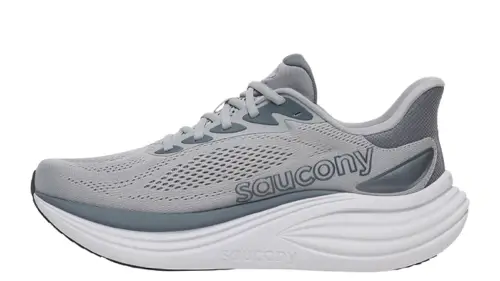
For walkers, that creates two distinct uses of the same basic cushioning technology.
The Triumph emphasizes neutral cushioning and comfort. The Hurricane offers more inherent stability. Check Saucony Triumph 24 prices on Amazon
IncrediLUX vs. PWRRUN+: What Is the Difference?
Saucony now has more than one important TPU cushioning technology.
PWRRUN+ is a TPU foam made from particles that are fused together with steam. Saucony describes it as an exceptionally durable material intended for everyday running and high mileage. The current Ride 19 (see review) uses a reformulated version of PWRRUN+. More on PWRRUN+ here.
IncrediLUX takes a different approach. It is a supercritical A-TPU foam designed around lower density, impact absorption and plush cushioning.
A simple way to think about the difference is this: PWRRUN+ is Saucony’s established TPU workhorse while incrediLUX is a newer generation of lightweight, highly cushioned TPU. Both are TPU, but their manufacturing processes and intended ride characteristics differ.
PWRRUN PB Is Not TPU
Saucony’s naming system can create confusion because PWRRUN+ and PWRRUN PB sound closely related.
Chemically, they are not.
PWRRUN+ is TPU.
PWRRUN PB uses PEBA foam beads. Saucony identifies PWRRUN PB as a PEBA-based performance foam intended to provide high energy return at low weight. Read more:What is PWRRUN PB?.
PEBA has become particularly common in racing shoes and lightweight performance trainers.
So if you are researching TPU running shoes, a shoe containing PWRRUN PB should not automatically be included.
IncrediRUN is Not TPU Either
Saucony’s IncrediRUN name creates another potential source of confusion.
incrediLUX is A-TPU.
IncrediRUN is TPEE.
TPEE stands for thermoplastic polyester elastomer. It belongs to the broader thermoplastic elastomer family, but it is chemically different from TPU.
Saucony currently uses IncrediRUN in performance shoes such as the Endorphin Elite 2. The company specifically identifies it as a TPEE blend.

The similarity of the incrediLUX and IncrediRUN names is a good example of why branded foam names should not be treated as material descriptions.
Adidas Boost Is TPU Foam
Adidas helped make TPU cushioning mainstream when it introduced Boost in 2013.
Boost is made from TPU particles that are expanded into small closed-cell structures containing air and then fused together into a midsole.
The resulting material is known as expanded thermoplastic polyurethane, or eTPU. Adidas specifically identifies Boost as expanded TPU.
The distinctive bead-like appearance of traditional Boost midsoles comes directly from this manufacturing method.
Boost became popular because it offered a combination of softness, durability and noticeable rebound that was unusual when conventional EVA dominated running footwear.
Another TPU advantage was temperature consistency. The material could retain more predictable cushioning characteristics through changing weather conditions.
What Is Adidas Light Boost?
Light Boost is a newer, lighter evolution of Adidas Boost technology.
The original Boost platform provided substantial cushioning and resilience but was relatively heavy compared with many later performance foams.
Light Boost was developed to reduce that weight while preserving the responsive characteristics associated with Boost.
The current Adidas Ultraboost 5X uses a Light Boost midsole, and Adidas lists the shoe for running, walking and everyday use.
The Ultraboost 5X is therefore one of the most recognizable current examples of a TPU-based shoe that crosses easily between running, walking and casual wear.
Check Adidas Ultraboost 5X prices on Amazon
Mizuno Enerzy NXT Can Be TPU
Mizuno illustrates another complication with branded shoe foam names.
Enerzy NXT does not always refer to one identical material.
Mizuno has used nitrogen-infused TPU versions of Enerzy NXT in several performance shoes. The Neo Zen, for example, uses what Mizuno describes specifically as a nitrogen-infused TPU Enerzy NXT midsole.
The Neo Vista 2 also uses nitrogen-infused Enerzy NXT cushioning, while Mizuno has expanded supercritical Enerzy NXT technology into additional shoes including the Wave Rider 29.
The important lesson is not to assume that every shoe carrying an Enerzy NXT label necessarily uses exactly the same foam formulation. Be sure to check the specifications of the individual model and generation.
Current Shoes That Use TPU Foam
There are now TPU options ranging from highly cushioned daily trainers to walking-friendly performance shoes.
Here are some notable current examples.
Shoe | TPU technology | Type | Best suited to | Check price |
|---|---|---|---|---|
Saucony Triumph 24 | incrediLUX | Supercritical A-TPU | Cushioned daily running, long walks, long runs | |
Saucony Hurricane 26 | incrediLUX | Supercritical A-TPU | Max cushioning with added stability | |
Saucony Ride 19 | PWRRUN+ | TPU | Everyday running and walking | |
Adidas Ultraboost 5X | Light Boost | TPU-based Boost | Walking, everyday wear and running | |
Mizuno Neo Zen | Enerzy NXT | Nitrogen-infused TPU | Cushioned daily running | |
Mizuno Neo Vista 2 | Enerzy NXT | Nitrogen-infused foam platform | Long runs and uptempo training | |
Mizuno Wave Rider 29 | Enerzy NXT | Supercritical nitrogen-infused foam | Daily running and walking |
Foam should not be the only reason to choose one shoe over another.
Fit, stability, shoe width, heel-to-toe drop, midsole geometry and outsole construction can all have just as much influence on comfort.
TPU vs. EVA Shoe Foam
EVA stands for ethylene-vinyl acetate.
It has been the traditional workhorse of running shoe cushioning for decades because it is relatively lightweight, inexpensive and easy to manufacture.
TPU provides a different balance of characteristics.
Characteristic | TPU | EVA |
|---|---|---|
Durability | Generally excellent | Good to very good |
Compression resistance | Excellent | Moderate to very good |
Energy return | Good to very good | Moderate to very good |
Traditional weight | Heavier | Lighter |
Temperature consistency | Generally excellent | More formulation dependent |
Manufacturing cost | Usually higher | Usually lower |
Supercritical versions available | Yes | Yes |
Typical use | Premium daily trainers and durable cushioning | Nearly every type of athletic shoe |
There is no simple winner.
Modern EVA can be very good, and modern supercritical EVA is significantly more sophisticated than the basic EVA used in older running shoes.
TPU remains especially attractive when long-term resilience and compression resistance are priorities.
TPU vs. PEBA Shoe Foam
PEBA stands for polyether block amide.
It has become one of the most important materials in high-performance racing footwear because manufacturers can create PEBA foams with extremely low weight and high energy return.
Nike ZoomX and Saucony PWRRUN PB are well-known examples of PEBA-based cushioning.
TPU generally occupies a different part of the performance spectrum.
Characteristic | TPU | PEBA |
|---|---|---|
Energy return | High | Very high in premium formulations |
Weight | Moderate to light | Very light |
Durability | Excellent | Good to excellent |
Compression resistance | Excellent | Excellent |
Common use | Daily trainers, walking shoes, high-mileage shoes | Racing shoes, super trainers |
Cost | Moderate to high | Generally high |
PEBA tends to get more attention because of its role in elite racing shoes.
That does not automatically make it a better material for walking or everyday running.
A walker may benefit more from predictable cushioning, durability and stability than from maximizing energy return at racing speeds.
TPU vs. TPEE Shoe Foam
TPU and TPEE are both thermoplastic elastomers, but they are different materials.
TPEE stands for thermoplastic polyester elastomer.
Modern footwear companies are experimenting with both materials because they can be engineered to deliver high resilience while remaining relatively lightweight.
Saucony provides an easy example:
incrediLUX is A-TPU.
PWRRUN+ is TPU.
IncrediRUN is TPEE.
PWRRUN PB is PEBA.
Four Saucony foam names therefore represent three different material families.
This is why understanding the underlying foam chemistry is increasingly useful when comparing running shoes.
Is TPU Foam Good for Walking?
TPU can be an excellent material for walking shoes. Its primary advantages for walkers are durability, resilience and resistance to compression.
Walking involves lower forces than running, but walkers can accumulate enormous numbers of repetitive loading cycles.
Someone who takes 10,000 steps per day produces about 3.65 million steps in a year. That makes the ability of a midsole to repeatedly compress and recover particularly relevant.
TPU can also be useful for people who spend much of the day standing because the foam tends to resist permanent compression well.
The overall shoe still matters. A soft TPU foam in a narrow or unstable shoe may not be suitable for someone who needs more support. Conversely, a broad TPU platform such as the one used in the Saucony Hurricane 26 (read review) can combine substantial cushioning with greater inherent stability.
Is TPU Foam Good for Running?
TPU works particularly well for daily running, longer runs and shoes expected to handle substantial mileage. Its resilience allows the foam to compress repeatedly without quickly becoming flat or lifeless.
Traditional TPU could be relatively heavy, which limited its use in racing shoes. That disadvantage has become less significant as manufacturing has improved.
Supercritical TPU and nitrogen-infused TPU can reduce density considerably while preserving many of the properties that made TPU attractive in the first place. That is why newer technologies such as incrediLUX look different from the TPU midsoles runners first experienced more than a decade ago.
Does TPU Foam Last Longer Than EVA?
TPU generally has excellent resistance to compression fatigue.
Compression fatigue occurs when foam repeatedly compresses until it no longer returns completely to its original shape.
That gradual change is one reason older running shoes can begin feeling flatter even when the outsole still looks acceptable.
TPU’s resistance to permanent compression is one of its strongest qualities.
However, it would be inaccurate to say that every TPU shoe lasts longer than every EVA shoe.
Modern EVA formulations vary dramatically, and shoe lifespan also depends on the outsole, upper, runner weight, gait, terrain and how the shoe is used.
The material gives TPU an advantage in resilience, but the entire shoe determines real-world durability.
Are TPU Shoes Heavy?
Traditional TPU could be relatively heavy. That reputation is becoming outdated.
Expanded TPU improved weight considerably compared with solid polyurethane materials, and newer supercritical manufacturing methods can reduce density even further.
Modern TPU technologies such as incrediLUX demonstrate how much the material has changed.
Instead of asking whether TPU is heavy, compare the actual weights of the shoes you are considering.
A shoe’s total weight includes far more than the foam. Upper materials, rubber coverage, plates, support components and overall dimensions all matter.
Is TPU Foam Soft or Firm?
TPU can be either. The underlying chemistry does not determine the complete feel of the shoe.
Manufacturers can change foam density, cell size, thickness and geometry to create very different sensations.
Saucony PWRRUN+, Saucony incrediLUX and Adidas Boost are all TPU technologies, yet they do not feel identical.
A shoe can also use a large volume of soft TPU but remain relatively stable if the platform is sufficiently wide.
This is why terms such as TPU, EVA and PEBA are useful starting points rather than complete descriptions of ride quality.
What Are the Advantages of TPU Shoe Foam?
TPU has remained relevant through several generations of footwear technology because it offers a useful combination of characteristics.
Its main advantages include:
- Excellent resistance to repeated compression
- Strong durability
- Good to very good energy return
- Consistent cushioning through repeated use
- Good performance across temperature changes
- Ability to be tuned for soft, stable or responsive rides
- Compatibility with newer lightweight foaming techniques
Modern supercritical processing has also addressed one of TPU’s traditional weaknesses by making it possible to create much lighter versions of the material.
What Are the Disadvantages of TPU Shoe Foam?
TPU is not ideal for every shoe. Traditional formulations can be heavier than EVA or PEBA. TPU can also cost more to manufacture than basic EVA, and some TPU midsoles can feel denser than runners who prefer extremely soft cushioning want.
Advanced foaming techniques reduce several of these drawbacks, but they also make TPU more expensive and technically complex to manufacture.
For racing, manufacturers may still prefer PEBA when extremely low weight and maximum rebound are higher priorities than long-term durability.
Which TPU Shoe Should You Choose?
The best TPU shoe depends more on how you plan to use it than on the TPU label itself.
For plush neutral cushioning, the Saucony Triumph 24 (review | check price) and its incrediLUX midsole are worth considering.
For cushioning combined with a broader and more supportive platform, look at the Saucony Hurricane 26.
The Saucony Ride 19 (review | check price) uses PWRRUN+ and is a more conventional daily trainer that can transition easily between running and walking.
The Adidas Ultraboost 5X (check price) remains a strong crossover option for walking, casual use and running, while Mizuno’s newer nitrogen-infused Enerzy NXT shoes offer a distinctly modern take on TPU-based cushioning.
Shop TPU cushioned shoes on Amazon
Is TPU the Best Shoe Foam?
There is no single best shoe foam. TPU is particularly good when durability, cushioning consistency and rebound matter.
EVA remains highly versatile and can be extremely lightweight.
PEBA has become a favorite for high-performance racing because of its combination of low weight and high energy return.
TPEE gives shoe manufacturers another highly resilient thermoplastic option.
The best approach is to understand what each material contributes and then evaluate how the manufacturer has used it in the complete shoe.
For a comparison of these materials and the branded technologies built from them, see our running shoe foam guide.
TPU Shoe Foam FAQs
TPU stands for thermoplastic polyurethane. It is a flexible thermoplastic material that can be expanded into foam and used as cushioning in running, walking and casual shoe midsoles.
Yes. TPU is particularly useful in shoes because it combines cushioning, rebound, durability and resistance to repeated compression.
Not always. TPU typically offers excellent resilience and compression resistance, while EVA can be lighter and less expensive. Modern versions of both materials can deliver very good cushioning.
TPU usually emphasizes durability and consistent cushioning. PEBA is especially useful when very low weight and high energy return are priorities, which is why it appears frequently in racing shoes.
Yes. Adidas Boost is made from expanded thermoplastic polyurethane, commonly abbreviated as eTPU. The foam consists of expanded TPU particles fused together to form the midsole.
Light Boost is an evolution of Adidas Boost designed to reduce weight while retaining the responsive properties associated with Boost. It is used in shoes such as the Ultraboost 5X.
Yes. Saucony identifies PWRRUN+ as a TPU-based foam. The current Saucony Ride 19 uses reformulated PWRRUN+ cushioning.
No. PWRRUN PB is made with PEBA foam beads rather than TPU.
Saucony incrediLUX is a supercritical A-TPU foam. A-TPU means aliphatic thermoplastic polyurethane. Current models using incrediLUX include the Triumph 24 and Hurricane 26.
No. IncrediRUN is made from a TPEE blend. TPEE is thermoplastic polyester elastomer and is chemically different from TPU.
Some versions are. Mizuno has specifically identified the Enerzy NXT cushioning in shoes such as the Neo Zen as nitrogen-infused TPU. Because Mizuno uses the Enerzy NXT name across multiple products and formulations, check the specifications for the individual shoe.
Supercritical TPU is TPU that has been expanded using a supercritical foaming process. The process creates numerous small cells inside the material, allowing manufacturers to reduce density while retaining cushioning and resilience.
All shoe foams eventually change with use, but TPU is known for strong resistance to compression fatigue. That helps it maintain cushioning characteristics through repeated loading.
It can be. TPU’s compression resistance and durability make it a useful cushioning material for walkers who place greater loads on a midsole. Overall shoe stability, fit and cushioning volume remain equally important. See also shoes for heavy runners and walkers.
TPU can work particularly well for shoes worn for extended periods because it resists repeated compression. A supportive platform and proper fit are still necessary for all-day comfort.
TPU itself has good resistance to water, but a TPU midsole does not make a shoe waterproof. Waterproofing depends largely on the upper, seams, tongue construction and membranes used in the complete shoe.
No. TPU is a thermoplastic polyurethane elastomer. It has rubber-like flexibility and elasticity but can be processed using thermoplastic manufacturing methods.
TPU is a thermoplastic, which means it can theoretically be melted and reprocessed. In finished footwear, recycling is much more complicated because shoes combine TPU with rubber, textiles, adhesives and other materials that are difficult to separate.
Current examples in 2026 include the Saucony Triumph 24 and Hurricane 26 with incrediLUX, the Saucony Ride 19 with PWRRUN+, Adidas Ultraboost 5X with Light Boost and several Mizuno shoes using nitrogen-infused Enerzy NXT.
Among the best-known TPU cushioning technologies are Adidas Boost and Light Boost, Saucony PWRRUN+, Saucony incrediLUX and nitrogen-infused TPU versions of Mizuno Enerzy NXT.