Last Updated on September 23, 2026
| Quick Answer: What Is Brooks DNA LOFT? Brooks DNA LOFT is a family of midsole cushioning foams used in Brooks running and walking shoes. DNA LOFT v2 is a lightweight EVA-based cushioning system with a balanced feel, while DNA LOFT v3 uses nitrogen infusion to make the foam softer, lighter and more responsive. Brooks still uses both versions in 2026. Current DNA LOFT v3 shoes include the Ghost 18, Ghost Max 4, Adrenaline GTS 25, Beast GTS 26, Ariel GTS 26 and Cascadia 19. DNA LOFT v2 remains in shoes including the Revel 9 and Revel Max. Brooks also uses newer DNA Tuned cushioning in its Glycerin family. Click for full Brooks shoe rundown. |
What Is Brooks DNA LOFT?
Brooks DNA LOFT is the name Brooks Running uses for a family of soft midsole cushioning technologies found in many of its running and walking shoes.
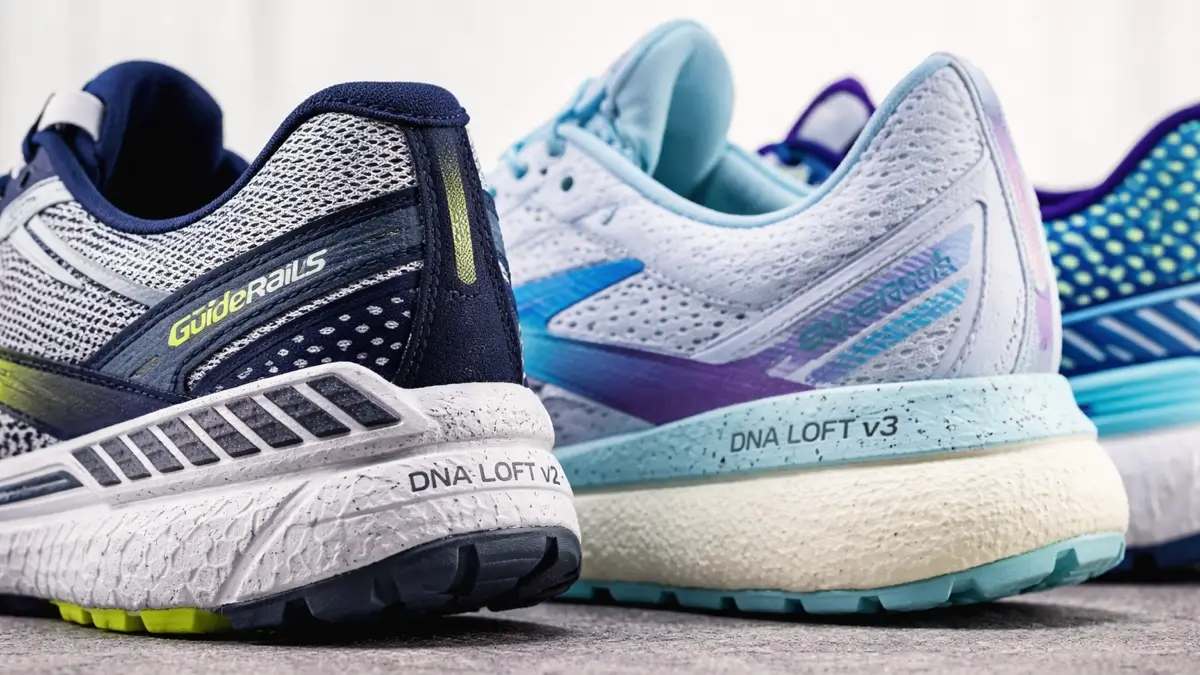
The original DNA LOFT combined EVA foam, rubber and air. Brooks subsequently changed the foam formula and manufacturing process to create the lighter DNA LOFT v2. DNA LOFT v3 represented a larger technological change because Brooks began nitrogen-infusing the foam through a supercritical foaming process.
That evolution looks like this:
DNA LOFT → DNA LOFT v2 → DNA LOFT v3
Brooks has since introduced DNA Tuned, another nitrogen-infused cushioning technology. However, DNA Tuned has not simply replaced DNA LOFT. Brooks continues to use DNA LOFT v2 and DNA LOFT v3 in current shoes because different models are designed to produce different underfoot experiences.
That distinction is important when shopping for Brooks shoes. A higher version number does not necessarily mean that a shoe is better for your feet. The foam works together with the shoe’s stack height, geometry, outsole, upper and stability system to determine how the finished shoe feels.
Note: You can see how DNA Loft foam stacks up against foam technologies in other brands in our shoe foam guide.
What Is Brooks DNA LOFT v2?
Brooks DNA LOFT v2 is the second generation of DNA LOFT cushioning. Brooks developed it by changing both the foam formulation and production process used for the original DNA LOFT, resulting in a lighter cushioning material. It generally produces a balanced, predictable feel rather than the more noticeably plush sensation associated with some nitrogen-infused Brooks foams.
One of the best-known shoes to use DNA LOFT v2 is the Ghost 15. Brooks later replaced v2 with DNA LOFT v3 when it introduced the Ghost 16.
DNA LOFT v2 is not obsolete, however. The current Brooks Revel 9 uses DNA LOFT v2, which Brooks describes as soft cushioning with inherent stability. The current Revel Max also uses lightweight DNA LOFT v2 cushioning, paired with a rocker-shaped sole for assisted transitions. That makes DNA LOFT v2 particularly relevant to walkers and runners who prefer cushioning that feels comfortable without being extremely soft.
Summary: Brooks shoes with DNA Loft 2
What Is Brooks DNA LOFT v3?
Brooks DNA LOFT v3 is a nitrogen-infused midsole foam designed to be softer, lighter and more responsive than earlier DNA LOFT cushioning.
Brooks creates the foam using a supercritical foaming process. Nitrogen is incorporated into the cushioning compound, allowing Brooks to change the cellular structure of the foam. The company says its large-cell foaming process increases softness and energy return while reducing weight without sacrificing durability.
For the person wearing the shoe, the result is relatively simple: DNA LOFT v3 generally feels softer and more forgiving than DNA LOFT v2. It has also become one of the most important cushioning materials in Brooks’ current lineup.
The latest Ghost 18 (review | Amazon listing) uses DNA LOFT v3, as does the Ghost Max 4 (Amazon listing). Brooks also uses DNA LOFT v3 in support-focused shoes such as the Adrenaline GTS 25 (Amazon listing), Beast GTS 26 (Amazon listing) and Ariel GTS 26 (Amazon listing), as well as the trail-oriented Cascadia 19.
Summary: Brooks shoes with DNA Loft 3
Brooks DNA LOFT v2 vs. v3
DNA LOFT v2 and DNA LOFT v3 are both designed to provide comfortable cushioning, but the two technologies are constructed differently and generally produce different ride characteristics.
Here is the simplest Brooks DNA LOFT v2 vs. v3 comparison:
Feature | DNA LOFT v2 | DNA LOFT v3 |
|---|---|---|
Foam generation | Second-generation DNA LOFT | Third-generation DNA LOFT |
Construction | Updated EVA-based DNA LOFT formulation | Nitrogen-infused foam |
General feel | Balanced and moderately soft | Softer and more forgiving |
Responsiveness | Moderate | More responsive |
Weight | Lighter than original DNA LOFT | Designed to deliver more cushioning at relatively low weight |
Ride character | Predictable and controlled | Soft and dynamic |
Current examples | Revel 9, Revel Max | Ghost 18, Ghost Max 4, Adrenaline GTS 25 |
Best suited to | People who prefer balanced cushioning | People who prefer softer modern cushioning |
Brooks describes DNA LOFT v3 as softer, lighter and more responsive than its original DNA LOFT cushioning. The move from DNA LOFT v2 in the Ghost 15 to DNA LOFT v3 in the Ghost 16 also provides a direct example of how Brooks has migrated major shoe lines toward nitrogen-infused cushioning.
Which Current Brooks Shoes Use DNA LOFT?
Brooks continues to use DNA LOFT across a surprisingly broad range of shoes in 2026. This table focuses on current or recent models shoppers are most likely to encounter and the shoe name sare linked to their Amazon listing for current pricing info.
Brooks shoe (links to Amazon price) | Cushioning | Primary use |
|---|---|---|
DNA LOFT v2 | Running, workouts, everyday wear | |
DNA LOFT v2 | Running, walking, everyday wear | |
DNA LOFT v3 | Running and walking | |
DNA LOFT v3 | Running and walking in wet conditions | |
DNA LOFT v3 | Maximum-cushion running and walking | |
DNA LOFT v3 | Stability running and walking | |
DNA LOFT v3 | Maximum-support running and walking | |
DNA LOFT v3 | Maximum-support running and walking | |
DNA LOFT v3 | Trail running and hiking |
The Ghost 18 is particularly important when discussing Brooks DNA LOFT because it is the latest version of one of Brooks’ core shoe franchises. Brooks describes its DNA LOFT v3 cushioning as soft and dynamic, with the foam optimized for soft landings and responsive toe-offs.
Brooks has also expanded DNA LOFT v3 beyond conventional road shoes. The Cascadia 19 integrates the foam with Brooks’ Trail Adapt System, while the Beast GTS 26 and Ariel GTS 26 combine DNA LOFT v3 with substantial support features.
Brooks Ghost and DNA LOFT
The Ghost provides one of the clearest examples of how Brooks DNA LOFT has evolved.
The Ghost 15 used DNA LOFT v2. Brooks switched the Ghost 16 to nitrogen-infused DNA LOFT v3, making it the first Ghost generation to use that foam. The Ghost 17 retained DNA LOFT v3 while adding more cushioning beneath the heel and forefoot.
The current Ghost 18 continues with DNA LOFT v3. Rather than replacing the midsole technology again, Brooks refined the rest of the shoe while retaining the nitrogen-infused cushioning that defined the previous two generations. Brooks positions the Ghost 18 for road running, daily runs and walking, with balanced support and DNA LOFT v3 cushioning.
This matters if you are upgrading from an older Ghost. Someone moving from a Ghost 15 to a Ghost 18 is not simply buying a newer upper and outsole. They are also moving from DNA LOFT v2 to nitrogen-infused DNA LOFT v3.
Brooks Ghost Max and DNA LOFT
The Ghost Max takes a different approach to Brooks DNA LOFT v3. Instead of using the foam in a conventional daily trainer, Brooks places a much larger amount of cushioning beneath the foot to create a more protective, high-stack platform.
The current Ghost Max 4 uses an ultra-stacked application of DNA LOFT v3. Brooks pairs that cushioning with its GlideRoll Rocker geometry to help move the foot through the stride. The important point is that the Ghost 18 and Ghost Max 4 can both use DNA LOFT v3 and still feel substantially different.
Foam type alone does not determine ride. The amount of foam, shape of the midsole, width of the platform and rocker geometry can substantially change how a shoe behaves beneath the foot. This is one reason shoppers should use Brooks DNA LOFT technology as one factor in choosing a shoe rather than as the only factor.
Brooks Adrenaline GTS and DNA LOFT
The Adrenaline GTS also shows why DNA LOFT should not be confused with stability technology.
Earlier Adrenaline generations used older Brooks cushioning, but the current Adrenaline GTS 25 uses nitrogen-infused DNA LOFT v3. It combines that cushioning with Brooks’ GuideRails support system.
GuideRails and DNA LOFT perform different jobs.
DNA LOFT v3 primarily provides cushioning beneath the foot. GuideRails are intended to help keep excess movement in check while allowing the body to move through its natural motion path.
That means DNA LOFT v3 is not simply a “neutral” foam.
Brooks uses the same basic cushioning family in neutral shoes such as the Ghost and support shoes such as the Adrenaline GTS.
If you are deciding between the Glycerin and Adrenaline families, see our complete Brooks Glycerin vs. Adrenaline comparison.
Is DNA LOFT v2 More Stable Than DNA LOFT v3?
No. DNA LOFT v2 should not automatically be considered more stable than DNA LOFT v3.
The confusion comes partly from older Brooks models that combined DNA LOFT v2 with support systems. However, Brooks now uses DNA LOFT v3 in some of its most support-focused shoes.
The Adrenaline GTS 25 combines DNA LOFT v3 with GuideRails. The Beast GTS 26 and Ariel GTS 26 also use nitrogen-infused DNA LOFT v3 while targeting runners and walkers who want substantial structured support.
The better question is therefore not, “Which DNA LOFT version is more stable?” Inteaad, ask, “How is the entire shoe designed?”
Midsole width, heel construction, outsole geometry, GuideRails and other design choices can influence stability independently of whether a shoe uses DNA LOFT v2 or v3.
Is Brooks DNA LOFT v3 Better Than v2?
DNA LOFT v3 is the more technologically advanced cushioning system, but “better” depends on the ride you prefer.
Brooks says DNA LOFT v3 is softer, lighter and more responsive than its earlier DNA LOFT technology. Nitrogen infusion is the major technical change responsible for those characteristics. That gives DNA LOFT v3 an advantage for people who want a softer, more modern cushioning experience. But not everyone wants that.
Some walkers and runners prefer a more grounded, moderately cushioned shoe. Brooks’ continued use of DNA LOFT v2 in the Revel 9 and Revel Max illustrates that the older technology still has a place in the company’s lineup.
If you like relatively soft cushioning with more compression beneath the foot, start with DNA LOFT v3. If you prefer a more balanced and traditional feel, a DNA LOFT v2 shoe may still be worth considering.
Is Brooks DNA LOFT Good for Walking?
Yes. Brooks uses DNA LOFT in several shoes it specifically lists for walking, including the Ghost 18, Ghost Max family, Adrenaline GTS 25, Beast GTS 26 and Ariel GTS 26.
For walking, the more important decision is how much cushioning and support you want.
DNA LOFT v2 can work well for walkers who prefer a lower-key, balanced cushioning sensation.
DNA LOFT v3 is likely to appeal more to walkers who want softer impact absorption and a more cushioned sensation beneath the heel and forefoot.
A shoe such as the Ghost 18 uses DNA LOFT v3 in a relatively conventional daily shoe. The Ghost Max 4 uses considerably more cushioning for people who prefer a high-stack feel. The Adrenaline GTS 25 combines DNA LOFT v3 with GuideRails for people looking for additional structured support.
If you are unsure how your feet move, our guide explains how to determine your running or walking gait.
What Is Brooks DNA Tuned?
DNA Tuned is a newer Brooks cushioning technology, but it should not be described simply as DNA LOFT v4.
The technologies are related through Brooks’ use of nitrogen-infused foam, but DNA Tuned takes a different approach to controlling how various parts of the midsole behave.
Brooks uses dual-cell construction in DNA Tuned. Larger cells are intended to create softer landings, while smaller cells provide a more responsive sensation during toe-off.
The current Glycerin 23 uses dual-cell DNA Tuned cushioning rather than DNA LOFT v3. The Glycerin GTS 23 combines DNA Tuned with support features, while the current Glycerin Max 2 also uses DNA Tuned cushioning.
This is important because older articles may still associate the Glycerin name with DNA LOFT v3. That was accurate for earlier generations such as the Glycerin 20 and 21, but it is no longer accurate for the current Glycerin lineup.
See our Brooks Glycerin 22 review for a closer look at the generation that helped move the Glycerin family into DNA Tuned cushioning.
Brooks DNA LOFT v3 vs. DNA Tuned
DNA LOFT v3 and DNA Tuned are both nitrogen-infused Brooks cushioning technologies, but they are not the same foam system.
Here is the practical difference:
Feature | DNA LOFT v3 | DNA Tuned |
|---|---|---|
Technology | Nitrogen-infused cushioning | Dual-cell nitrogen-infused cushioning |
Main objective | Softness, low weight and responsiveness | Different cushioning characteristics across the midsole |
Landing feel | Soft and cushioned | Tuned for softer landings |
Forefoot | Responsive | Smaller cells designed for stronger toe-off response |
Current examples | Ghost 18, Ghost Max 4, Adrenaline GTS 25 | Glycerin 23, Glycerin GTS 23, Glycerin Max 2 |
DNA Tuned does not mean that DNA LOFT v3 has been discontinued. Instead, Brooks currently uses both technologies in different shoe families. The Ghost and Adrenaline families remain important DNA LOFT v3 platforms, while the premium Glycerin family has moved toward DNA Tuned.
Which Brooks Foam Should You Choose?
Choosing between Brooks DNA LOFT v2, DNA LOFT v3 and DNA Tuned should start with the type of underfoot experience you prefer.
DNA LOFT v2 makes sense if you want a balanced ride without an especially plush or highly compressible feel. Current options include the Revel 9 and Revel Max.
DNA LOFT v3 is the broadest choice. Brooks uses it in conventional daily trainers, maximum-cushion shoes, stability shoes and trail shoes. Depending on the model, you can find it in the Ghost 18, Ghost Max 4, Adrenaline GTS 25, Beast GTS 26, Ariel GTS 26 and Cascadia 19.
DNA Tuned is worth considering if you want Brooks’ newer dual-cell cushioning technology. Current examples include the Glycerin 23, Glycerin GTS 23 and Glycerin Max 2.
Do not choose by foam alone. Fit, support, stack height, shoe geometry and what you plan to do in the shoe can matter just as much.
Brooks DNA LOFT FAQs
Here are frequently asked questions about Brooks DNA Loft foam technology.
DNA LOFT is Brooks’ name for a family of soft midsole cushioning technologies used in running and walking shoes. Brooks has developed several versions, including DNA LOFT v2 and nitrogen-infused DNA LOFT v3.
DNA LOFT v2 is a lighter evolution of the original DNA LOFT foam. DNA LOFT v3 adds nitrogen infusion and is designed to be softer, lighter and more responsive.
Yes. Brooks produces DNA LOFT v3 using a supercritical foaming process that infuses the cushioning material with nitrogen.
Yes. The current Revel 9 and Revel Max use DNA LOFT v2 cushioning.
Current examples include the Ghost 18, Ghost Max 4, Adrenaline GTS 25, Beast GTS 26, Ariel GTS 26 and Cascadia 19.
Yes. The Brooks Ghost 18 uses nitrogen-infused DNA LOFT v3 cushioning.
Yes. The Adrenaline GTS 25 uses nitrogen-infused DNA LOFT v3 cushioning together with Brooks GuideRails support.
The current Glycerin 23 does not use DNA LOFT v3. It uses Brooks’ newer dual-cell DNA Tuned cushioning. Earlier Glycerin generations, including the Glycerin 20 and 21, used DNA LOFT v3.
No. Both involve nitrogen-infused cushioning, but DNA Tuned uses different cell structures within the midsole to create softer landings and more responsive toe-offs.
No. Brooks continues to sell current shoes using DNA LOFT v2 and DNA LOFT v3 while also using DNA Tuned in other shoe families.
Yes. Brooks specifically positions several DNA LOFT shoes for walking, including the Ghost 18, Adrenaline GTS 25, Beast GTS 26 and Ariel GTS 26.
DNA LOFT v3 is designed to be softer than earlier DNA LOFT cushioning. The amount of foam and construction of the individual shoe also affect how soft it feels underfoot.