

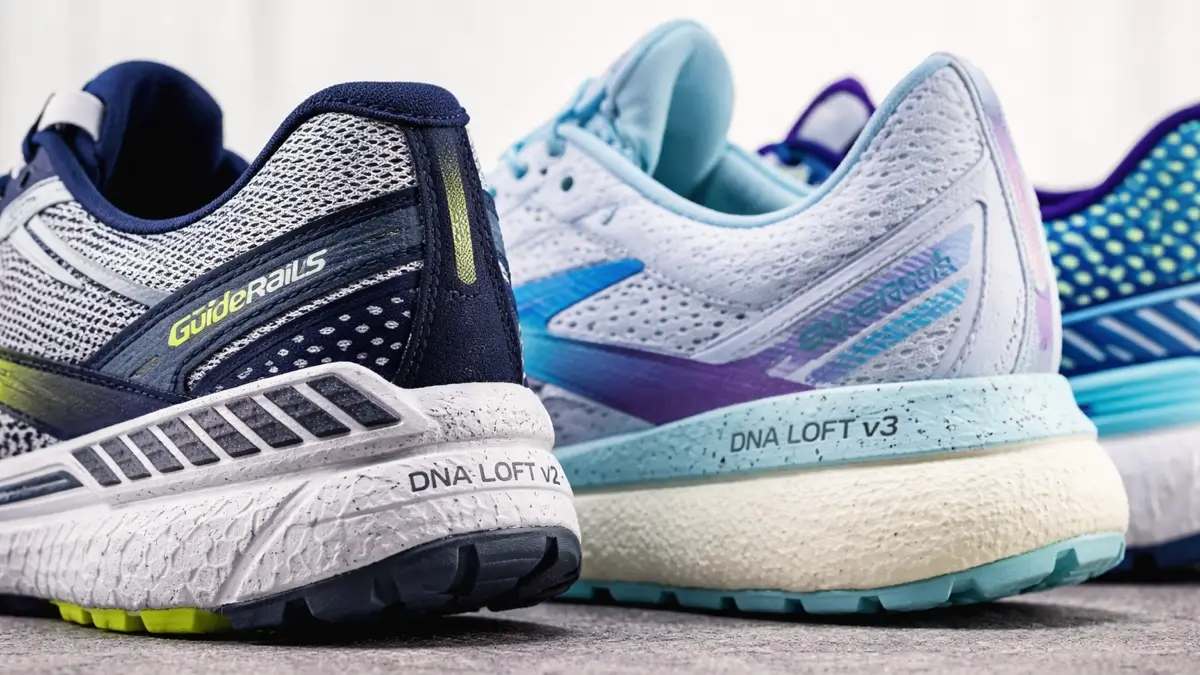
When people search for Brooks foam technology, they’re usually trying to answer a practical question: which Brooks shoe is actually going to feel better on their feet after a full day of walking or running.
The answer comes down to two core cushioning systems that Brooks uses today. DNA LOFT v2 and DNA LOFT v3 may sound like small upgrades on paper, but they deliver very different experiences underfoot and are built for completely different needs.
Understanding that difference is what separates a smart purchase from an expensive mistake. Here is what yo need to know.
Role of DNA LOFT in Brooks Foam Technology
Brooks introduced DNA LOFT to solve a long-standing problem in running shoes. Softer cushioning often meant less stability, while firmer shoes offered support but felt harsh over time. The foam technology was designed to bridge that gap by combining softness with structure. As the technology evolved, it split into two distinct directions.
DNA LOFT v2 focuses on control and stability, while DNA LOFT v3 pushes further into softness and modern cushioning. Both are still actively used because they serve different types of runners and walkers.
DNA LOFT v2: Stability and Control in the Adrenaline GTS Line
DNA LOFT v2 remains a core part of Brooks foam technology because it delivers consistency and control.
You’ll find it in the Brooks Adrenaline GTS 24 and Brooks Adrenaline GTS 25, two of the most popular stability shoes on the market. This version of the foam uses a blend of EVA, rubber, and air to create a ride that feels balanced and slightly firm rather than soft.
On foot, DNA LOFT v2 feels grounded. It absorbs impact, but it does not compress excessively or feel unstable. That’s important for people whose feet roll inward, as it works alongside Brooks’ GuideRails system to help keep the body aligned, especially at the knees.
This is why Brooks has not replaced it with v3 in the Adrenaline line. The current setup is intentional and effective for stability.
DNA LOFT v3: Softness and Comfort in the Glycerin Line
DNA LOFT v3 represents the more modern, comfort-focused side of Brooks foam technology. It’s used in the Brooks Glycerin 20, Glycerin 21, and Glycerin 22 (see review), and introduces nitrogen infusion into the midsole. That change makes the foam lighter, softer, and more responsive than previous versions.
The difference is easy to feel. Landings are noticeably softer, transitions are smoother, and the overall experience is less fatiguing during long walks or runs. Despite the softer feel, the foam still maintains enough structure to avoid feeling unstable.
The Glycerin 22 (see it on Amazon) continues this approach with subtle refinements. It feels slightly smoother and more natural than earlier versions, but the core cushioning system remains DNA LOFT v3. This is an evolution focused on comfort rather than a complete redesign.
DNA LOFT v2 vs DNA LOFT v3 Comparison
To make the differences easier to evaluate at a glance, here’s how the two main Brooks foam technology systems compare:
Feature | DNA LOFT v2 | DNA LOFT v3 |
|---|---|---|
Used In | Adrenaline GTS 24, GTS 25 | Glycerin 20, 21, 22 |
Foam Type | EVA + rubber + air blend | Nitrogen-infused foam |
Cushioning Feel | Balanced, slightly firm | Soft, plush, more forgiving |
Primary Purpose | Stability and control | Comfort and impact protection |
Ride Experience | Grounded, controlled | Smooth, cushioned, flowing |
Weight | Slightly heavier | Lighter for its stack height |
Responsiveness | Moderate | Slightly higher, smoother transitions |
Best For | Overpronation, flat feet, knee alignment | Neutral gait, long walks, joint relief |
Stability Level | High (with GuideRails support) | Neutral (no added support system) |
Durability | Very durable for daily use | Durable with softer feel over time |
Price |
Why Brooks Uses Both Versions
A common misconception is that DNA LOFT v3 replaces DNA LOFT v2. It doesn’t.
Brooks keeps both because they solve different problems. DNA LOFT v3 is designed to reduce impact and maximize comfort, while DNA LOFT v2 is designed to guide motion and maintain alignment. If Brooks switched the Adrenaline line to v3, it would risk losing the structured support that stability users depend on. Keeping both systems allows them to target different foot mechanics more effectively.
Which Brooks Foam Technology Should You Choose?
The simplest way to decide is to focus on how your feet move and what kind of support you actually need.
If your stride is neutral (see neutral gait) and your priority is comfort, DNA LOFT v3 is the better choice. It reduces impact, feels softer underfoot, and helps limit fatigue over long periods of walking or standing. This makes the Glycerin line a strong option for people dealing with plantar fasciitis, heel pain, or general joint discomfort.
If your feet roll inward or you need more structure, DNA LOFT v2 is the more reliable option. It keeps your movement controlled and works with your body to prevent excess strain. The Adrenaline GTS line is built for this purpose and remains one of the most trusted stability options available.
This is where many buyers go wrong. They assume softer is always better, when in reality the right level of support matters more than cushioning alone.
Where the Current Models Stand
Brooks has settled into a clear and deliberate structure with its lineup:
The Glycerin 20 through 22 represent the continued refinement of DNA LOFT v3, focusing on comfort, smoother transitions, and reduced fatigue.
The Adrenaline GTS 24 and 25 continue to rely on DNA LOFT v2, with only incremental updates to fit and ride. That consistency is part of the appeal for runners and walkers who rely on stability.
Bottom Line for Buyers
At its core, Brooks foam technology is not about chasing the newest material. It’s about matching the right cushioning system to your needs.
DNA LOFT v3 is built for softness, comfort, and long-term impact protection, while DNA LOFT v2 is built for control, alignment, and stability.
Once you understand that distinction, choosing between the Glycerin and Adrenaline lines becomes straightforward. You’re no longer guessing based on marketing. You’re choosing based on what your body actually needs.
See more about Brooks Glycerin vs Adrenaline running shoes