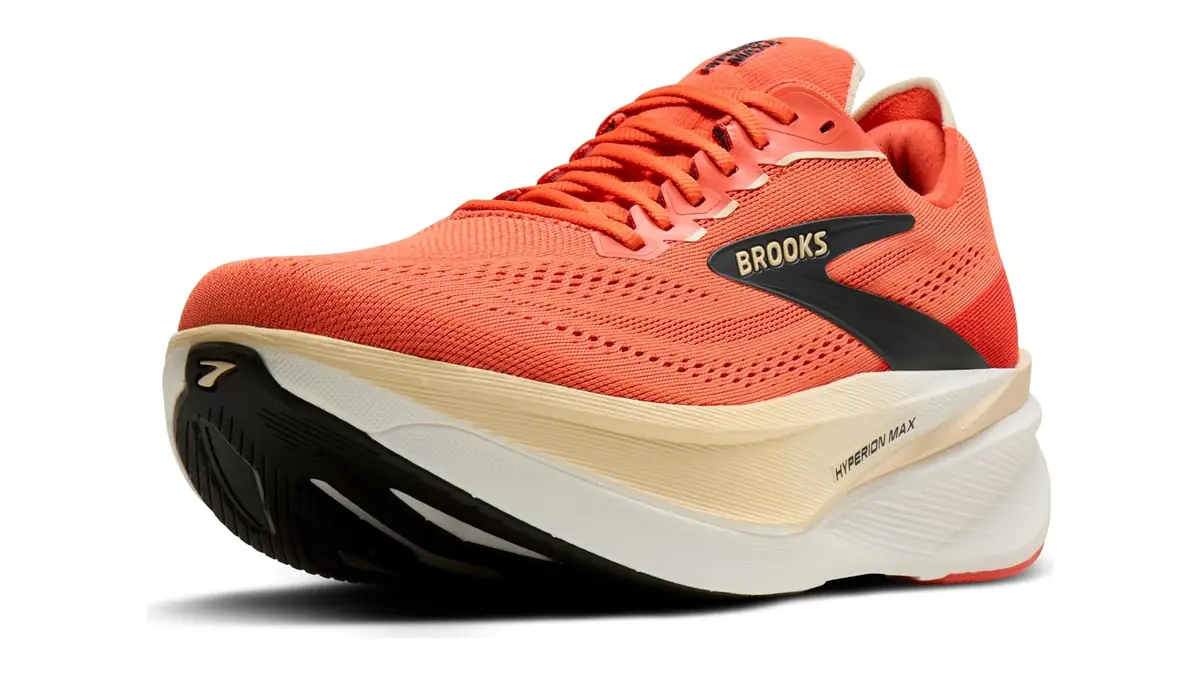
Quick Answer: Brooks Hyperion Max 4. This is for runners who want long runs and faster training to feel easier without stepping all the way into a race shoe. It has a lot of cushioning, a curved sole that helps you roll forward and a flexible plate that adds structure. The result feels protective and efficient rather than soft and squishy. It makes the most sense if you run regularly and include longer or quicker sessions. Casual walkers or easy joggers can get more comfort for less money elsewhere. See what the Hyperion Max 4 feels like in everyday use.
The easiest way to understand the Hyperion Max 4 is to think of it as a training shoe for the days when you want to do more than simply jog. If your week includes a longer run, some faster miles or race training, this is the Brooks model designed to make those sessions feel smoother and less punishing.
The plate inside the shoe sounds technical, but its job is simple: it helps the tall cushioning stay organized and nudges your foot forward as you move. You do not need to run fast to feel the benefit, but you do need to run enough to justify the price and the extra structure.
What the Brooks Hyperion Max 4 feels like in real life
| Best for | Long runs, faster training and runners preparing for a half marathon or marathon. |
| Overall feel | Protective and efficient rather than soft. It feels like the shoe is helping you keep moving forward. |
| Cushioning | There is a lot underfoot, which helps on longer runs. The foam is responsive rather than plush, so it feels more controlled than a comfort-first shoe. |
| The plate | A flexible nylon plate helps the tall shoe feel organized and assists the transition from landing to push-off. Think guidance and efficiency, not a stiff race-day springboard. |
| Heel-to-toe drop | 6 mm by Brooks’ specification. Your heel sits only moderately higher than your toes, giving the shoe a more modern, slightly flatter feel than traditional 10–12 mm trainers. |
| Height underfoot | About 45 mm at the heel. That gives you plenty of protection from pavement, but you also feel higher off the ground than in a normal daily trainer. |
| Fit | Secure and performance-oriented. The toe area is not especially roomy, so broad feet should be cautious. |
| Weight | 10.1 oz. men’s / 8.8 oz. women’s. That is heavier than many speed-focused trainers, but still reasonable for the amount of cushioning. |
| Launch price | $200 | Check latest price |
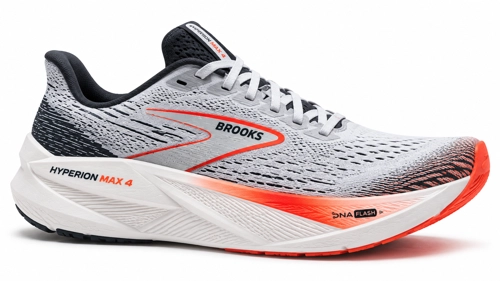
What you may like
These are the reasons to put it on your list:
- A genuinely excellent upper that holds the foot still without squeezing it, which matters once you are tired
- Plenty of rubber underfoot, so it will not shred the way thin-soled plated shoes often do
- Deep cushioning that stays comfortable well past the two-hour mark
- Stable for a shoe this tall, thanks to a broad base rather than a narrow racing platform
- One shoe that can cover long runs, tempo work and the odd race without feeling out of place
What to keep in mind
And these are the reasons you might not:
- Heavy for a plated trainer, and you notice it when the pace drops below about 7 minutes a mile
- The toe box is narrow and low, which is a problem for broad or high-volume feet
- Firm and stiff through the transition rather than soft and rolling
- $200 buys lighter shoes elsewhere
- Brooks and the lab do not agree on the heel-to-toe drop, which is an odd thing to be unsure about at this price
What is new compared with the Hyperion Max 3
The Max 3 already made the big leap, moving the line to a PEBA-based DNA Gold foam and adding stack height. The Max 4 refines rather than reinvents. The headline changes are a reworked upper with better midfoot hold, a tweak to how the SpeedVault plate sits between the foam layers and an outsole laid out for longer life.
What has not changed is the character. This is still a firm, planted shoe that gets its forward drive from the plate and the rocker shape rather than from soft, bouncy foam. If you tried the Max 3 and found it too stiff, the Max 4 will not change your mind. If you liked it but wanted the foot to feel more locked down, this is a real improvement. The weight has also crept up rather than down, which is the update’s least popular detail and the reason a lot of runners will stay with what they have.
Pros
- Tall cushioning and plate work well for long runs and faster finishes
- Durable outsole coverage makes it more practical than many plated trainers
- Wide platform stays stable under heavier runners
- Can cover workouts and long runs in one shoe
Cons
- Toe box is narrow and shallow with no wide version
- Plate and rocker feel less useful at slow easy pace
- Heavier than several competing super trainers
- Not the best choice if you want a soft, relaxed everyday shoe
Who this shoe is likely to suit: Brooks Hyperion Max 4
This is a shoe for people who run long. If your week has a two-hour effort in it, or you are training for a half marathon or marathon, the Max 4 is in its element. The tall stack keeps your legs fresher over distance and the plate keeps the shoe from feeling mushy as the foam warms up. It is comfortable enough that you can start a long run at an easy pace and finish it fast without changing shoes.
It also suits runners who have been put off super trainers by how quickly they wear out. Many plated shoes use a thin skin of rubber and lose their grip after a few hundred miles. This one has enough coverage to behave like a normal trainer, which changes the value calculation. If you want one pair to do both your workouts and your long runs, and you want it to survive a training block, that is exactly the gap the Max 4 fills.
Finally, it suits heavier runners better than most shoes in the category. The base is wide and the foam does not collapse under load, so it stays stable where lighter racing-derived shoes get tippy.
You may want something else if…
Anyone with a wide forefoot should be careful here. The toe box is both narrow and shallow, and there is no wide version to fall back on. Slower runners get less out of it too, because the plate and rocker need some speed before they do anything useful. At an easy jog it just feels like a heavy shoe. And if you are buying on weight, several rivals at the same price are an ounce or more lighter.
If that describes you, look at these instead:
- Hoka Mach 7: a much lighter, plateless trainer that feels quick at everyday paces and costs considerably less, which is the better buy if you are not running long (check price | read review)
- Altra Torin 9: a roomy, foot-shaped trainer for anyone whose toes need space, with none of the squeeze this shoe has up front (check price | read review)
- Brooks Ghost Max 4: the same brand’s soft, wide, easy-going option, which is the one to buy if you want comfort and cushioning without any of the stiffness (check price | read review)
Gender-specific buy links: Men’s version | Women’s version
Not sure this is the right match? Find the ideal shoe for you with our free Shoe Finder.
How the Hyperion Max 4 feels on your foot
The Max 4 fits like a performance shoe, which is to say snug everywhere and snuggest at the front. Brooks has tuned it to keep the foot still on a tall platform, and that priority shapes every fit decision. Most people will find the length honest and the width tight.
How the fit works
Order your usual size. The heel and midfoot are locked down well, with enough padding at the collar to stop the shoe rubbing on longer efforts, and the laces bite without needing to be cranked. The toe box is the problem area. It is narrow across the ball of the foot and low over the toes, so anyone who normally reaches for a wide fitting will struggle. There is no wide option, and sizing up half a size to buy width usually just gives you a shoe that slips at the heel.
Comfort when you first put it on
The upper is the best part of the shoe. It is a smooth engineered mesh with just enough structure in the midfoot to hold you in place, and it manages that without the plasticky, over-taped feel that some race-adjacent shoes have. Step-in comfort is good, if firm. You feel the platform under you straight away rather than sinking into softness, and there are no seams or hot spots in obvious places. It breathes reasonably well, though it is warmer than a thin racing upper.
How the Hyperion Max 4 feels when you run
The Max 4 is a shoe that rewards effort. It does its best work when you are running with purpose, and it feels like a lot of shoe when you are not. Everything below follows from that one trait.
What the cushioning feels like
Stack height is the amount of foam between your foot and the road, and at 45 mm under the heel this is about as much as the rules of road racing allow. The top layer is DNA Gold, a PEBA-based foam, which is the light, springy material most modern race shoes use. Underneath it sits firmer DNA Flash v2. The combination gives you protection without wallow: deep enough that your legs are not getting beaten up on hour two, firm enough that it does not feel like walking on a mattress. What it is not is soft. If plush is what you are after, this is the wrong shoe.
What it feels like once you get moving
The SpeedVault plate is a stiff panel buried between the foam layers, and it does two jobs. It stops the tall midsole folding in half, and it works with the curved sole shape to tip you onto your toes. In practice the shoe feels smooth and slightly insistent once you are moving at a decent clip, and stiff and clumsy when you slow down. The transition from heel to toe is more of a firm roll than a springy pop, so it is less exciting than some rivals but easier to control over a long distance. Over a marathon that even-handedness is worth a lot.
Will it feel steady?
This is a neutral shoe with no support features, but it is one of the steadier tall trainers on sale. The base is wide, the sidewalls come up slightly around the heel and the firmness of the lower foam layer means the platform does not lean when you land off-center. That makes it usable for runners who normally find plated shoes too wobbly. It still will not do the work of a stability shoe, so if you need guidance for a foot that rolls inward, this is not the answer.
Grip and everyday wear
Brooks has been generous with rubber, which in this category counts as a feature. Grip on dry roads is confident and it is acceptable in light rain, though the smoother sections give up on wet paint and metal. Durability is the real story: this holds up far better than most shoes with a plate in them, which is what lets it work as a trainer rather than a race-day special. The common guideline of 300 to 500 miles is only a rough rule of thumb, but the Max 4 has a better chance of reaching the top of it than its rivals do.
Is the Brooks Hyperion Max 4 good for walking?
Not really, and it is worth saying so plainly. The Max 4 depends on speed to feel right. Walking never generates enough force to bend the plate or use the rocker shape, so you are left carrying 10 ounces of stiff shoe around, and the tall heel makes the platform feel unsteady at a stroll.
There are two situations where it is fine. Walking as part of a run, on a recovery break or through a water station, is comfortable enough. So is a short walk to and from the track. But for a fitness walk, a day of sightseeing or standing on hard floors, the narrow toe box and the stiffness both work against you. If a shoe that runs long and walks well is what you want, the Brooks Ghost Max 4 does that job far better for less money.
Brooks Hyperion Max 4 vs Hyperion Max 3
Here is how the two generations compare:
Feature | Hyperion Max 4 | Hyperion Max 3 |
Midsole | DNA Gold over DNA Flash v2 | DNA Gold over DNA Flash v2 |
Plate | SpeedVault, repositioned | SpeedVault |
Weight, men’s 9 | 10.1 oz (286 g) | Lighter than the Max 4 |
Upper | Reworked, more secure midfoot | Looser through the middle |
Outsole | More coverage, longer life | Less coverage |
Launch | $200, July 2026 | July 2025, launch price not confirmed |
Buy the Max 4 when you want the better upper and the longer-lasting outsole, and when the foot-holding matters more to you than the scale. Buy the Max 3 when you can still find it discounted and you would rather have the lighter shoe, because the foam and the plate underneath are close enough that the ride will feel familiar.
Brooks Hyperion Max 4 alternatives
Shoe (links go to full reviews) | Choose it instead when… | Check price |
|---|---|---|
You want a lighter high-cushion trainer without a plate and with a more relaxed feel. | ||
You want a lighter, more flexible plated trainer for faster workouts. | ||
You mostly run easy miles or walk and do not need the plate or premium price. |
Is it good value?
At $200 on launch in July 2026, the Max 4 is priced like every other super trainer and is heavier than most of them. What the money buys is longevity. A plated shoe that survives a full training block is worth more per mile than a lighter one you retire early, and the upper is a genuine step up on anything Brooks was making two years ago. If you value the shoe lasting over the shoe feeling fast, it is fair value. If you are choosing on the scale, it is not.
Our take for everyday runners
Best for: half marathon and marathon training, runners who want one shoe for long runs and workouts, and heavier runners who find most plated shoes unstable.
Avoid if: you have wide feet, run mostly at easy paces, or are shopping for the lightest shoe at this price.
Fit: true to size, secure heel and midfoot, narrow and low toe box. Standard width only.
Verdict: The Hyperion Max 4 is the most useful shoe in the Hyperion training line, and the least exciting. It gives you a fast-feeling ride at real training paces, holds your foot properly when you tire and refuses to fall apart. We would take an ounce off it and half an inch of width across the front, and then it would be very hard to beat.
Frequently Asked Questions About the Brooks Hyperion Max 4
Not really. It is designed mainly for fast workouts, training runs and long runs. The nylon plate helps efficiency, but the shoe is heavier and more training-focused than Brooks’ Hyperion Elite race shoe.
Brooks lists a 6 mm heel-to-toe drop.
Brooks lists 10.1 ounces for men and 8.8 ounces for women.
Yes. Long runs are one of its strongest uses because the high stack helps soften repeated impact and the plate keeps the ride from feeling sloppy.
It can be comfortable for walking, but it is more shoe than most walkers need. A simpler daily trainer will usually feel more natural and cost less.
Brooks currently lists Medium width, so people with broad feet should be cautious about the fit.
The U.S. launch price was $200. Current pricing may be lower depending on size and color. Check latest price and available colors.