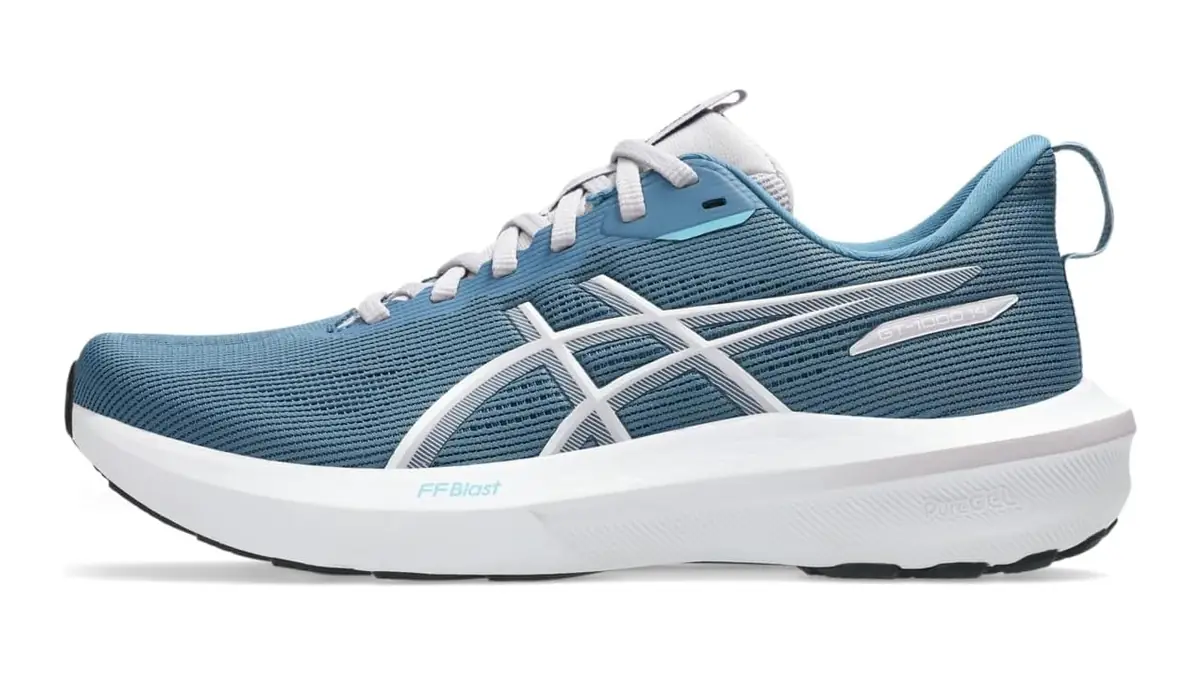
Quick Answer: Asics GT-1000 14. The GT-1000 14 is the previous generation of Asics’ affordable stability shoe, and it is still worth considering if you find it at a good discount. It feels steady and fairly firm rather than plush, which works well for daily walks, shorter runs and people who prefer a little guidance underfoot. The current GT-1000 15 is now available, so the 14 makes the most sense as a value buy rather than the model to pay full price for. See what the GT-1000 14 feels like in everyday use.
The Asics GT-1000 14 is the most affordable shoe in Asics’s support lineup, sitting below the GT-2000 and well below the pricey Gel-Kayano. It is the shoe most people meet first when a running store tells them they need a little support, and its job is simple: steady the foot and cushion the step without costing a fortune. It has done that job well for fourteen versions now.
A quick word on what “support” means here. When some people walk or run, the foot rolls inward more than it should as it lands, which over time can lead to aches. A support shoe gently limits that inward roll. Older support shoes did it with a hard wedge under the arch that many people could actually feel pushing back at them. Asics now builds that steadiness into the shape and firmness of the sole instead, so you get the benefit without anything digging into your arch.
The cushioning comes from Asics’s lighter everyday foam, with a soft gel pad tucked into the heel to take the sting out of each landing. There is a moderate amount of foam underfoot, more than a bare-bones budget shoe but noticeably less than a plush, max-cushion trainer. That is the shoe’s whole character: steady and dependable rather than soft and luxurious.
What the Asics GT-1000 14 feels like in real life
| Best for | Daily walking, short-to-moderate runs, newer runners and people who like a little extra steadiness underfoot. |
| Overall feel | Firm, predictable and supportive rather than soft or bouncy. |
| Cushioning | Moderate. There is enough protection for everyday use, but less softness than Asics’ more expensive GT-2000 or Gel-Kayano models. |
| What the support feels like | The shoe uses Asics’ 3D GUIDANCE SYSTEM rather than an old-fashioned hard arch wedge. In practice, the base and sidewalls help keep each step feeling centered without obvious pressure under the arch. |
| Heel-to-toe drop | 8 mm by Asics’ specification. Your heel sits moderately higher than your toes, so it feels familiar if you are used to traditional running shoes. |
| Fit | Secure through the middle with multiple width options available. The removable insole also makes it easier to use with some orthotics. |
| Weight | About 9.3 oz. men’s by Asics’ published figure. It is not especially light, but the weight is reasonable for a support shoe at this price. |
| Launch price | $110 | Check latest price |
Current-model note: Asics has moved on to the GT-1000 15. If the two versions are close in price, buy the newer shoe. The GT-1000 14 becomes especially attractive when retailers discount it below its original $110 price.
What you may like
- Gives you steadiness without a hard wedge pressing into your arch, so it feels guided rather than corrective
- The cheapest way into Asics support, and far less than the top-end models
- The foam is lighter and livelier than the stiff stuff budget shoes used to use
- A soft gel pad in the heel takes the edge off each landing
- Wider fittings and a waterproof version mean it fits and suits more people
- Tough, hard-wearing outsole rubber that lasts a long time
What to keep in mind
- A modest amount of foam, so it feels firmer than most current trainers
- Less forgiving than the pricier GT-2000 or Kayano on long runs
- A little heavy for how much cushioning you actually get
- The support is gentle, so anyone who needs firm control will want more shoe
- Fit and finish are a step below Asics’s premium support models
What is new versus the GT-1000 13
The biggest change in recent GT-1000s has been how the support works. Asics dropped the old hard wedge under the arch and now builds the steadiness into the shape and firmness of the sole itself. If you tried an Asics support shoe years ago and found it pushed back against your arch, this generation feels much more natural.
The 14 also uses Asics’s lighter, livelier everyday foam and the soft heel gel pad, both of which trickled down from more expensive models. They make the shoe feel a good bit nicer underfoot than the firm, cheap-feeling budget trainers of the past.
Beyond that, the update is small: a tidied-up upper, a refreshed sole pattern and the same basic feel. Anyone happy in the 13 will find the 14 familiar, and anyone who wrote off the GT-1000 years ago as firm and cheap should give this one another look.
Gender-specific buy links: Men’s version | Women’s version
Pros
- Affordable entry point into a stability shoe
- Guided platform feels steady without being overly complicated
- Durable outsole works well for walking and regular daily use
- Available in wider fittings
Cons
- Moderate cushioning can feel firm on runs beyond an hour
- Less plush than premium stability and neutral trainers
- Unnecessary if you do not actually benefit from added support
- Not the best option for runners who need very strong motion control
Who this shoe is likely to suit: Asics GT-1000 14
Buy the GT-1000 14 if you have been told you need a support shoe and you do not want to spend a lot to find out whether that is really true. It is the sensible starting point: enough steadiness to feel the difference, enough cushioning for regular use, and a price that does not sting if you later land on something else.
It suits new runners and people getting back into it especially well. At that stage you are not covering big distances, so the moderate cushioning is rarely a problem, and the steady, guided feel is reassuring while you are finding your stride.
Walkers and people on their feet at work are a great match too. The heel-friendly shape suits a walking stride, the tough outsole shrugs off sidewalk miles, and the wider fittings make it easier to get a proper fit than most support shoes at this price.
You may want something else if…
Skip it if you run long or simply love a soft, plush ride. There is a modest amount of foam here, so on runs beyond an hour the firmness starts to catch up with you. And if it turns out you do not actually need support at all, which is true of plenty of people who get steered toward these shoes, you will be happier in a softer, roomier everyday shoe. Note that if you need strong, firm control for feet that roll in a lot, the picks in the Alternatives section below are the better place to look. For everyone else, here are three comfortable, better-cushioned shoes that suit more feet:
- Brooks Ghost 18: soft, easygoing everyday cushioning in a shoe that comes in wide fits (check price | read review).
- Hoka Bondi 9: deep, plush maximum cushioning for long days and long miles, with wide sizes available (check price | read review).
- Asics Gel-Nimbus 28: Asics’s plush, softly cushioned daily shoe, also offered in wide fits (check price | read review).
Not sure which shoe fits your needs? Find the ideal shoe for you with our free Shoe Finder.
How the GT-1000 14 feels on your foot
The GT-1000 14 is an easy shoe to fit, which is a big part of its appeal. It runs true to size, holds the heel securely and comes in wider options that most support shoes at this price do not offer. Here is how it feels on the foot.
How the fit works
It fits true to size, with a snug midfoot and a toe box that is roomy enough without being generous, which is the usual Asics shape. The heel is held firmly, and that matters in a support shoe: if your heel slides around, it undoes the steadiness the sole is trying to give you.
Wider fittings are available on many colors, which is one of the real reasons to buy support from Asics. The insole lifts out if you want to drop in your own insert, though the moderate amount of foam means a bulky insert will tighten the fit noticeably.
Comfort when you first put it on
Step-in comfort is good rather than plush. The mesh is soft enough, the collar is padded and there is no breaking-in period, but the materials are a clear step below the top models and you can feel the difference.
It breathes reasonably well, and there is a waterproof version for wet-weather use, which is unusual at this price. The firm heel does its job without pressing on the back of your ankle.
How the GT-1000 14 feels when you walk and run
This is a steady, do-the-job shoe rather than an exciting one, and that is exactly what most of its buyers want. It shines at easy, everyday efforts and shows its limits when you ask for distance or speed. Here is how it holds up.
What the cushioning feels like
Underfoot the GT-1000 feels medium-firm: well protected on shorter runs and noticeably less forgiving as the miles add up. The soft gel pad in the heel does one thing well, softening the moment your heel lands, which is why the back of the shoe feels kinder than the modest amount of foam would suggest.
The ride itself is smooth and predictable. The shoe carries you from heel to toe without drama and holds its shape even when your form gets sloppy at the end of a run. What it does not do is feel fast: there is no bouncy spring here, and the weight works against you if you try to pick up the pace. Treat it as a shoe for steady, comfortable miles and it will not let you down.
Will it feel steady?
This is a moderate support shoe. The sole is firmer on the inner edge and shaped to steady the foot as it lands, and the firm heel keeps the back of your foot centered. That may suit runners and walkers whose feet roll inward a little to moderately, though no shoe corrects the way you move, and none should be described as doing so.
The big improvement over older designs is that nothing digs into your arch. The catch is that the steadiness is gentle: a foot that rolls in a lot will still move through it. If you know you need firmer control, compare this against the GT-2000 or Kayano before deciding, and see a professional if you have ongoing pain.
Grip and everyday wear
The outsole uses one of the tougher rubbers in running, laid down across the areas that wear fastest. Grip on dry and damp pavement is dependable, with the usual care needed on wet paint and metal covers.
Durability is a genuine strength and a big reason the GT-1000 is good value. The outsole resists wear well and the firmer foam holds its shape rather than flattening quickly. The usual 300-to-500-mile guideline is broad, and this shoe generally reaches the upper end of it.
Is the GT-1000 14 good for walking?
Yes, and honestly it makes more sense for walking than for long running. The things that hold it back on a two-hour run barely matter at walking pace. What you notice instead is a steady, predictable platform, a firm heel that keeps your ankle settled at slower speeds and a heel-friendly shape that matches how most people walk. The tough outsole is well suited to sidewalk miles, where softer rubber wears through fast.
The wider fittings are the other big plus, because a shoe that actually fits does more for walking comfort than any fancy cushioning. The one caution is depth: if you stand on concrete all day, you will want more foam than this shoe has, and a plush max-cushion walker would treat your feet better. For a few miles a day, the GT-1000 is a sensible and affordable choice.
For more walking-first options, see our Best Walking Shoes guide.
GT-1000 14 vs. GT-2000
These are the two Asics support shoes most buyers weigh against each other:
Feature | GT-1000 14 | GT-2000 |
Cushioning | Moderate and firmer | Deeper and softer |
Feel underfoot | Everyday foam | Nicer, higher-grade foam |
Support approach | Steadiness built into the sole | Steadiness built into the sole |
Long-run comfort | Firmer as distance grows | More forgiving |
Price | Lower | Higher |
Buy the GT-1000 if your runs are short to moderate and you want support without spending much. Buy the GT-2000 if you run longer, since the extra cushioning is where the money goes and it is the difference you will feel most.
Asics GT-1000 14 alternatives
Shoe (links go to full reviews) | Choose it instead when… | Check price |
|---|---|---|
You want a softer, more polished everyday stability shoe and do not mind paying more. | ||
You want much more cushioning and a premium stability feel for longer runs or walks. | ||
You want a broad, deeply cushioned platform for long days on hard surfaces. |
Is it good value?
Asics sells the GT-1000 as the affordable way into its support range, below the GT-2000 and well below the Gel-Kayano. That low price is the shoe’s whole argument, and it is a strong one for anyone who has just been told their feet roll inward and is not yet sure how much they will run. You get genuine support, a hard-wearing outsole and multiple width fittings, which is more than most budget shoes offer. What you give up is cushioning depth and a little polish, so if you already know you will train seriously, it is worth spending more once rather than twice.
Our take for everyday walkers and runners
Best for: new runners, easy daily miles, walking and anyone whose feet roll inward a little to moderately who wants support without a premium price.
Avoid if: you run long, you need firm control, or you want the lightest, plushest shoe for the money.
Fit: true to size, snug midfoot, roomy-enough toe box, with wider fittings available on many colors.
Verdict: the GT-1000 14 is the right first support shoe for most people, and building the steadiness into the sole makes it far more pleasant than the budget support shoes of a decade ago. It is firm and modestly cushioned, so step up a model if your runs get long, but for everyday miles and walking it is hard to beat at the price.
Frequently Asked Questions About the Asics GT-1000 14
Yes, if it is discounted. The GT-1000 15 is now current, so the 14 makes the most sense when it costs meaningfully less than the newer model.
Yes. It uses Asics’ 3D GUIDANCE SYSTEM to add gentle stability through the shape and behavior of the platform rather than a hard arch wedge.
Yes. Its steady platform, firm heel and durable outsole work well for daily walking, especially if you prefer a supportive feel over very soft cushioning.
Yes. Adult versions were sold in multiple widths, including wide and extra-wide options in some men’s styles.
Asics lists an 8 mm drop. That means the heel sits moderately higher than the toes, giving the shoe a familiar traditional running-shoe feel.
Choose the GT-1000 14 for value and shorter everyday use. Choose the GT-2000 if you want deeper cushioning and a more refined feel for longer runs.
The U.S. launch price was $110. Because it is now a previous-generation model, current pricing may be lower. Check latest price and available colors.