Last Updated on October 20, 2026
| Quick Answer: Best Shoes for Standing All Day: The best shoes for standing all day should combine cushioning, arch support, heel stability, a roomy toe box, and enough outsole grip for your work environment. For most people, a supportive walking shoe, running shoe, work sneaker, or clog will feel better than a flat casual sneaker. If you stand on concrete, tile, hospital floors, retail floors, or kitchen floors, look for stable cushioning that does not collapse under your weight. If you work around wet or oily surfaces, prioritize slip-resistant soles. If you have flat feet, high arches, bunions, heel pain, or wide feet, choose shoes that match your foot type rather than simply buying the softest pair available. Good starting points include the Hoka Bondi 9, Brooks Ghost 18, New Balance Fresh Foam X More v6, Asics Gel-Kayano 33, Skechers Arch Fit, Dansko Professional, and Topo Phantom 4, depending on your job, support needs, and fit preferences. |
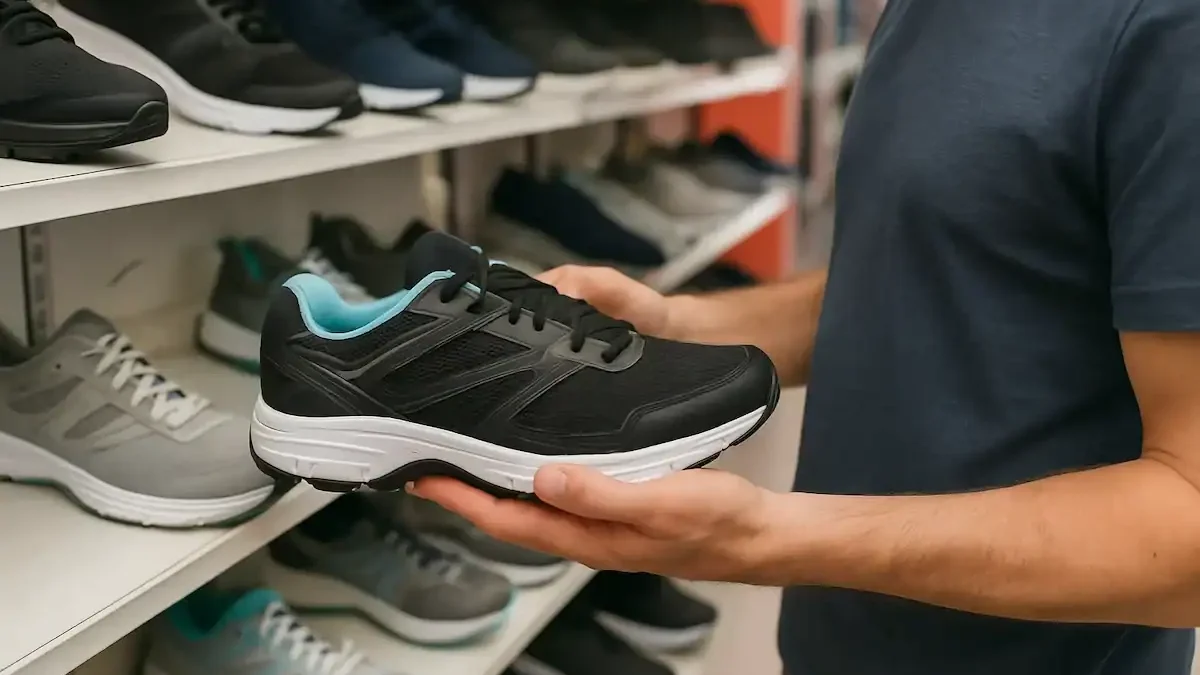
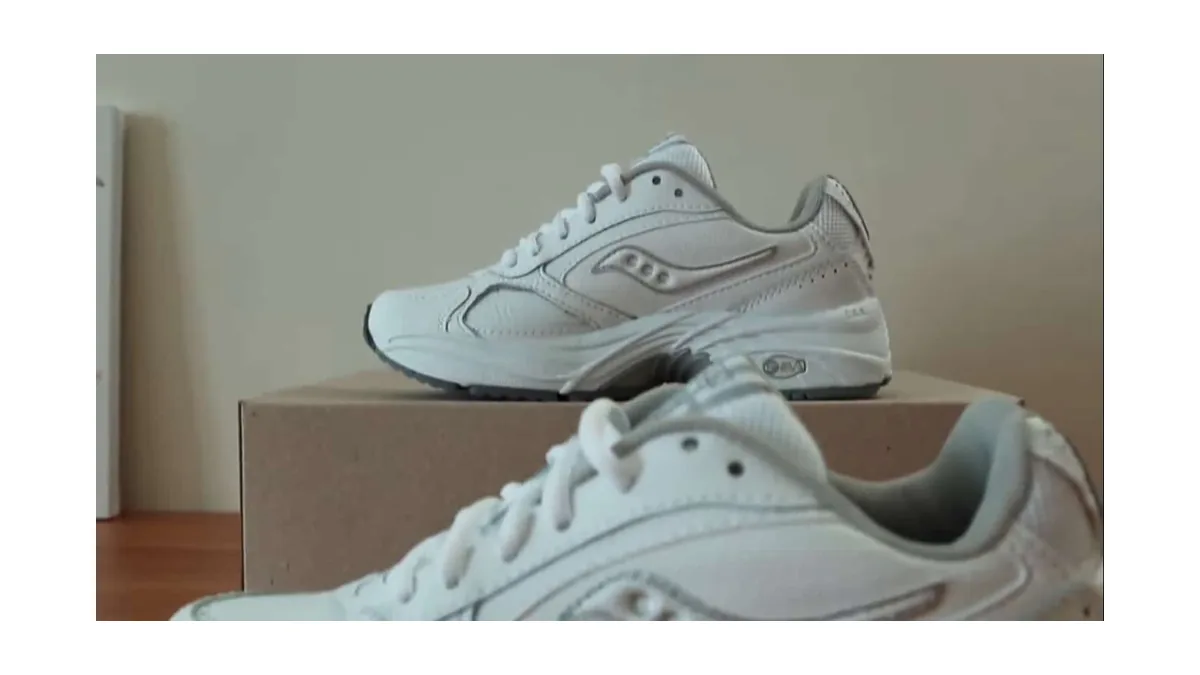
Standing all day is hard on your feet in a different way than walking or running. When you stand for long shifts, pressure builds under your heels, arches, and forefeet. Over time, the wrong shoes can leave your feet tired, sore, hot, unstable, or aching by the end of the day.
The best shoes for standing all day are not always the softest shoes. They need cushioning, but they also need support, stability, enough room for your toes, and an outsole that matches your work environment.
This guide breaks down the best shoes for standing all day by job, surface, foot type, and common comfort needs. If simply staying on your feet for long periods is difficult, see our guide to comfortable shoes for people who have trouble walking or standing for long periods. If your long-standing hours are specifically at work, compare our best work shoes for women and best work shoes for men guides.
Best Shoes for Standing All Day: Quick Picks
| Shoe (jump to review below) | Best For | Why It Works | Watch Out For | Price |
|---|---|---|---|---|
| Hoka Bondi 9 | Maximum cushioning | Thick cushioning, supportive base, good for long hours on hard surfaces | Bulky feel, higher price | Check latest price |
| Brooks Ghost 18 | Best overall comfort | Balanced cushioning, smooth ride, comfortable fit | Toe box may feel narrow for some | Check latest price |
| New Balance Fresh Foam X More v6 | Plush comfort | Soft max-cushion feel with a wide platform | May feel too soft for people who need firmer support | Check latest price |
| Asics Gel-Kayano 33 | Stability support | Supportive design for people who overpronate or need extra structure | Heavier and more expensive than basic walking shoes | Check latest price |
| Skechers Arch Fit | Budget arch support | Accessible price, supportive insole design, easy daily comfort | Durability varies by model | Check latest price |
| Dansko Professional | Work clog | Popular for healthcare, restaurant, and long standing shifts | Firm feel and break-in period | Check latest price |
| Topo Phantom 4 | Wide toe box | Roomier forefoot, cushioned platform, natural toe splay | Less common in stores | Check latest price |
| Crocs On The Clock Work Slip-On | Wet or messy work areas | Easy to clean, work-focused design, slip-resistant outsole | Not ideal if you need strong arch support | Check latest price |
| Brooks Glycerin 23 | Soft neutral comfort | Plush cushioning with a smoother everyday feel | Less structured than a stability shoe | Check latest price |
| Hoka Clifton 11 | Lightweight cushioning | Cushioned but lighter than the Bondi | Not as protective as max-cushion shoes | Check latest price |
Hoka Bondi 9

Hoka Bondi 9 (Image: Amazon)
Best for: Maximum cushioning for dry, hard floors.
The Bondi 9 puts a substantial layer of cushioning underfoot. That makes it worth considering for retail, teaching or other shifts where the floor barely gives. Its broad stance may feel more planted than a narrow, soft shoe, but cushioning alone does not guarantee comfort for every arch or body weight.
Compared with the Clifton 11, the Bondi is the option to investigate when underfoot cushioning matters more than a light feel. If your work involves frequent quick turns, test whether the thick sole feels cumbersome.
Who should skip it: Check toe room and heel hold late in the day, when feet may be slightly swollen. Skip this model if your employer requires a certified slip-resistant outsole or a protective safety toe; a standard road-running shoe does not meet those requirements by default.
Specifications and listed price: Hoka Bondi 9 — Hoka lists a US$175 MSRP for the Bondi 9. Its cushioned construction includes an upgraded foam midsole, structured knit upper, 3D-molded collar and Durabrasion rubber in high-wear areas. Price is a published MSRP, not a live Amazon offer.
Read our full Hoka Bondi 9 review Check latest price and sizes for Hoka Bondi 9
Brooks Ghost 18

Brooks Ghost 18 (Image: Amazon)
Best for: Balanced comfort for standing mixed with walking.
The Ghost 18 is the all-round neutral running-shoe option here, rather than the softest or most supportive specialist choice. Its role is a shift that combines periods at a counter with plenty of walking. A balanced shoe can be easier to adapt to than a very thick, soft platform.
Choose it over the More v6 if you prefer less of a plush, max-cushion sensation. Compare it with the Glycerin 23 if you prioritize softness, and with the Gel-Kayano 33 if you have a clear preference for stability-oriented footwear.
Who should skip it: Fit is decisive: leave room ahead of your toes without letting the heel slip. Skip it for wet restaurant floors, required safety-toe protection or situations where your workplace specifies certified work shoes.
Specifications and listed US price: Brooks Ghost 18 — 10 mm heel-to-toe drop, men’s weight 10.2 oz (289 g), DNA LOFT v3 cushioning and breathable air-mesh upper. Brooks lists the men’s Ghost 18 at US$150. This is a listed price, not independently verified historical launch MSRP.
New Balance Fresh Foam X More v6

New Balance Fresh Foam X More v6 (Image: Amazon)
Best for: Plush cushioning for long periods on firm surfaces.
The More v6 is the plush option for someone who likes substantial cushioning between the foot and the floor. That can be appealing on concrete or hard indoor tile, especially during long stretches without much movement. However, the softest sensation is not always the most stable one.
Compared with the Ghost 18, it favors a more maximal feel. Compare it with the Bondi 9 as another high-cushion option, but choose based on the actual fit, the stability you feel when turning, and whether the shoe remains comfortable near the end of a shift.
Who should skip it: Pay attention to heel security and any side-to-side movement on the platform. Skip it if soft foam makes you feel unsteady or if your job requires an explicitly certified slip-resistant or protective outsole.
Specifications and listed price: New Balance Fresh Foam X More v6 — New Balance lists a 4 mm heel-to-toe drop, Fresh Foam X cushioning, gusseted tongue and a men’s reference weight of 10.8 oz (306 g). The US site lists US$159.99; this is a listed price, not an independently established launch price.
Asics Gel-Kayano 33

Asics Gel-Kayano 33 (Image: Amazon)
Best for: Stability-oriented support for long shifts.
The Gel-Kayano 33 serves a different reader from the neutral Ghost or Glycerin models. It is the option to investigate if you prefer guided, stability-focused footwear and feel less secure in very soft neutral shoes. Stability should still feel natural rather than forcing your gait.
For standing work, support and fit matter as much as foam softness. Check that the midfoot feels secure, the heel does not move excessively and the shoe remains comfortable during a short walk and a longer standing test.
Who should skip it: Skip it if you prefer an unstructured neutral shoe, find guided shoes intrusive or need special workplace certification. Check that the retailer lists the exact Kayano 33 generation, because older Kayano versions may also appear in search results.
Specifications and listed price: Asics Gel-Kayano 33 — Asics describes adaptive FLUIDSUPPORT technology, an engineered mesh upper and a midsole combining FF BLAST PLUS and FF BLAST MAX foams. The Canadian manufacturer listing starts at CA$220; this is a Canadian listed price, not a verified US launch MSRP.
Skechers Arch Fit
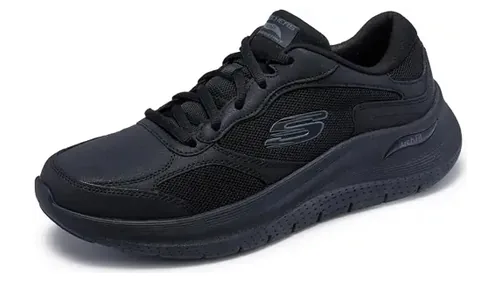
Best for: Arch-support focused everyday options.
Skechers Arch Fit is a collection of styles, not a single shoe with identical construction. The appeal is an arch-support-focused insole approach with options that may suit everyday standing. However, cushioning, widths, materials and outsole grip differ from one Arch Fit shoe to another.
For a cashier or office worker on a dry floor, try the particular style to judge whether the arch contour feels supportive or pushes uncomfortably into your foot. Compare its fit with a more traditional neutral running shoe such as the Ghost 18.
Who should skip it: Do not assume an Arch Fit label means the outsole is approved for wet kitchens or that every model suits wide feet. Skip any style whose arch feels intrusive, whose toe area crowds your foot or whose traction does not meet the job’s rules.
Specifications and listed price: Skechers Work Arch Fit 2.0 — The pictured Work Arch Fit 2.0 Slip Resistant is a particular shoe within the larger Arch Fit family. Skechers lists the men’s version at US$100, with slip-resistant construction and Arch Fit support. This price applies to that model, not every Arch Fit shoe.
Dansko Professional

Dansko Professional (Image: Amazon)
Best for: Structured clog for healthcare and service work.
The Dansko Professional is a markedly different option from the running shoes in this roundup. Its clog construction and more structured underfoot feel can suit people who favor a firmer platform during long shifts. The trade-off is a different walking feel and a fit that may take more care to get right.
A clog should stay secure without pinching. Try it with the socks you wear at work, check heel movement against the maker’s fit guidance and walk on a safe surface before committing to a long shift. Someone accustomed to flexible sneakers may prefer another option.
Who should skip it: Choose it when a work-appropriate clog suits the floor and workplace requirements. Skip it if you need a particularly flexible trainer, cannot obtain a secure fit or need a specific safety certification this version does not provide.
Specifications and listed price: Dansko Professional — Dansko specifies a reinforced roomy toe box, contoured supportive footbed, padded instep collar, heel counter and rocker-bottom sole. The Professional Black Oiled and Black Patent clogs are listed at US$145; materials and prices can vary with the version.
Topo Phantom 4

Topo Phantom 4 (Image: Amazon)
Best for: Roomier forefoot without an excessively loose heel.
The Phantom 4 deserves a place here because toe space is often overlooked in all-day comfort. Feet can expand during a shift, and a cramped forefoot can become uncomfortable even when cushioning feels good. Topo’s roomier toe shape is useful to consider for that problem.
Unlike simply buying a larger size, a toe-shaped forefoot aims to leave room where toes spread while still letting the rest of the shoe fit securely. Compare it with the Ghost 18 if you want a more conventional shape, and test both with your usual work socks.
Who should skip it: A roomy toe box is not the same as a universally wide fit. Skip it if the heel slips, the midfoot feels restrictive, or your employer requires specialist protective footwear. It is a running shoe, not a certified non-slip work shoe by default.
Specifications: Topo Phantom 4 is a neutral road-running shoe with a roomy anatomical toe box, ZipFoam cushioning and a 5 mm heel-to-toe drop. The exact US launch price has not been independently confirmed, so no MSRP is stated here.
Crocs On The Clock Work Slip-On

Best for: Easy-clean footwear for appropriate service jobs.
The Crocs On The Clock Work Slip-On is aimed more directly at work settings where a shoe must be practical to clean and where outsole grip matters. That makes it a different proposition from a cushioned road-running shoe. It may suit some hospitality or healthcare roles better than a mesh trainer.
Assess the exact workplace surface, especially water, oil and frequent spills. Work-oriented slip resistance is relevant, but it is not a guarantee against every slip. A secure fit matters when you repeatedly turn or walk between stations.
Who should skip it: Compared with the Dansko Professional, this is an option to consider if wipe-clean practicality comes first. Skip it if you need a specific safety-toe or electrical-hazard rating, stronger arch support than the fit provides, or a workplace-approved shoe list that excludes it.
Specifications and listed US price: Crocs On The Clock Work Slip-On (style 205073) — enclosed toe and heel, Crocs Lock slip-resistant tread, enhanced arch support and Dual Crocs Comfort cushioning. Crocs lists this model at US$49.99. This is a listed price, not independently verified historical launch MSRP. Do not confuse it with the LiteRide version.
Brooks Glycerin 23

Brooks Glycerin 23 (Image: Amazon)
Best for: Soft neutral cushioning for standing and walking.
The Glycerin 23 is a neutral comfort option for people who want a cushioned running-shoe feel throughout a shift. Its value is not a specialized safety feature; it is an everyday-shoe alternative for dry, nonhazardous settings that involve both standing and walking.
Compare it with the Ghost 18 if you are deciding between a balanced everyday feel and a softer ride. It may also be worth trying beside the More v6 to judge how much cushioning you enjoy without feeling disconnected from the floor.
Who should skip it: Make sure the heel feels secure and the shoe stays stable during side steps. Skip it where a certified slip-resistant outsole, protective toe or other job-specific standard is mandatory, or if its fit puts pressure on your toes by the end of the day.
Specifications and listed price: Brooks Glycerin 23 — Brooks lists an 8 mm heel-to-toe drop, men’s reference weight of 10.6 oz (300.5 g), DNA TUNED cushioning and engineered-knit upper. Its Canadian listing is CA$210; this is a Canadian listed price, not a verified US launch MSRP.
Hoka Clifton 11

Hoka Clifton 11 (Image: Amazon)
Best for: Lighter cushioning when a shift includes more walking.
The Clifton 11 makes sense for the worker who does not want the bulk of the Bondi 9 but still appreciates cushioning during a busy day. Teachers moving between classrooms or retail staff regularly walking the floor may find a lighter-feeling shoe easier to live with.
The key decision is whether you value a less bulky underfoot feel more than the Bondi’s maximum-cushion emphasis. If you stand nearly motionless for hours, compare both rather than assuming the lighter model will provide enough comfort.
Who should skip it: Check toe room, midfoot hold and comfort while standing, not just on a brief walk. Skip it if you need industrial safety protection, certified wet-floor slip resistance or more substantial support than the fit provides.
Specifications and launch price: Hoka Clifton 11 has an 8 mm heel-to-toe drop, engineered knit upper, cushioned midsole and Meta-Rocker design. Hoka’s launch announcement lists a men’s reference weight of 282 g; the US launch price was reported as US$155 in July 2026. Weight varies by shoe size and version.
What Makes a Good Shoe for Standing All Day?
A good standing shoe needs to reduce pressure without making your foot work harder. That means the shoe should feel cushioned, but also stable. Here are the main features to look for.
Cushioning
Cushioning helps reduce impact and pressure under the foot. If you stand on concrete or tile, this matters. But too much soft foam can become unstable if the shoe does not also have a supportive platform.
Arch support
Arch support helps distribute pressure across the foot. This is especially important if your feet feel tired, flat, strained, or sore by the end of the day.
Heel stability
A stable heel helps keep your foot from shifting around inside the shoe. This can reduce fatigue because your foot does not have to work as hard to stay balanced.
Roomy toe box
Your toes need space, especially during long shifts. Feet often swell slightly throughout the day. A narrow toe box can make bunions, blisters, toe pain, and forefoot pressure worse.
Slip resistance
If you work in healthcare, restaurants, kitchens, salons, warehouses, or retail, outsole grip matters. A comfortable shoe is not enough if the sole is not appropriate for your work surface.
Durability
Shoes used for long shifts wear out faster than shoes worn casually. Look for durable outsoles, secure uppers, and midsoles that do not flatten too quickly.
Breathability
If your feet get hot or sweaty, mesh uppers or moisture-friendly materials can help. For wet work environments, however, you may need water resistance or easy-clean materials instead.
Standing All Day vs. Walking All Day
Standing all day and walking all day are related, but they are not the same.
Walking creates repeated movement and impact. A walking shoe needs cushioning, flexibility, and a smooth heel-to-toe transition.
Standing creates sustained pressure. Your feet stay loaded for long periods, especially under the heel, arch, and forefoot. A good shoe for standing all day needs cushioning, but it also needs enough structure to keep your foot from sinking, rolling, or fatiguing.
This is why very soft shoes are not always the answer. If the foam compresses too much, your feet may feel unstable. For long shifts, stable cushioning usually works better than soft cushioning alone.
Best Shoes for Standing All Day by Job
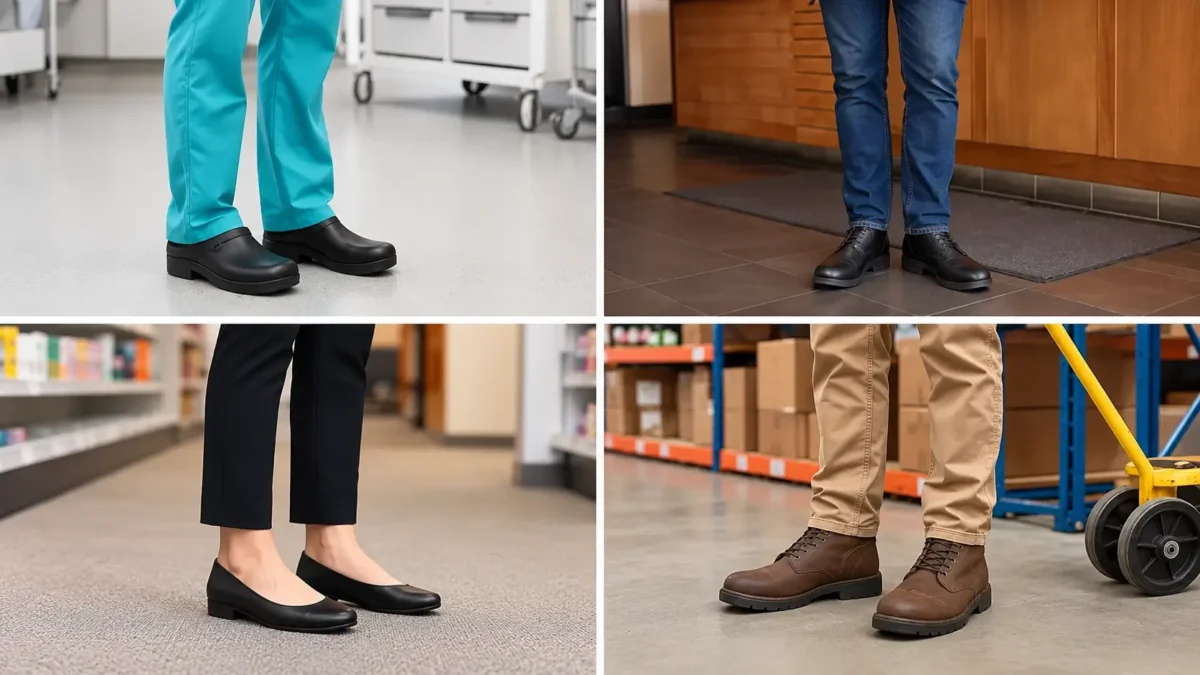
Different jobs place different demands on your feet. A nurse standing on hospital floors may need something different from a restaurant worker on wet tile or a warehouse worker on concrete.
Best Shoes for Nurses and Healthcare Workers
Healthcare workers often need cushioning, stability, and slip resistance. Long shifts, hard floors, and constant movement can make flimsy shoes uncomfortable quickly.
Good options include:
- Cushioning: Hoka Bondi 9
- Comfort: Brooks Ghost 18
- Stability: Asics Gel-Kayano 33
- Slip resistant: Dansko Professional
- Easy cleaning: Crocs On-The-Clock
- Affordable: Skechers Arch Fit
Choose the Hoka Bondi 9 (review) if you want maximum cushioning. Choose the Asics Gel-Kayano 33 (review) if you need more stability. Choose Dansko (review) or Crocs work models if your workplace requires easy-clean or slip-resistant footwear.
Best Shoes for Teachers
Teachers often stand, walk, bend, and move between classrooms throughout the day. A good teacher shoe should be comfortable, supportive, and professional enough for the setting.
Good options include:
- Comfort: Brooks Ghost 18
- Balanced Comfort and Cushioning: Hoka Clifton 11
- Cushioning: New Balance Fresh Foam X More v6
- Affordable: Skechers Arch Fit
- Great option: Brooks Glycerin 23
The Brooks Ghost 18 (review | Amazon) is a strong all-around choice because it balances cushioning and support without feeling too bulky. The Hoka Clifton 11 (review | Amazon) is a good option if you want a lighter cushioned shoe.
Best Shoes for Retail Workers
Retail workers usually need cushioning, durability, and comfort for long hours on hard indoor floors. Since retail shifts may involve both standing and walking, look for a shoe that feels stable but not stiff.
Good options include:
If your feet swell during the day, consider a wider size or a shoe with a roomier toe box.
Best Shoes for Restaurant and Hospitality Workers
Restaurant workers need comfort, but slip resistance is often just as important. Wet floors, kitchen spills, and fast movement can make standard running shoes a poor choice.
Good options include:
- Crocs On-The-Clock
- Dansko Professional
- Skechers work shoes with slip-resistant soles
- Hoka Bondi SR
- Other slip-resistant work sneakers
For restaurant work, do not buy only for cushioning. Make sure the outsole is designed for the floor conditions where you work. A regular road-running outsole should not be described as slip-resistant without model-specific evidence. For kitchen and hospitality shifts, compare shoes specifically made for slippery work floors in our slip-resistant work shoe guide. Dansko Professional is a good choice (Amazon).
Best Shoes for Warehouse Workers
Warehouse workers often stand and walk on concrete for long hours. This can be hard on the heels, knees, and lower back, especially if the shoe has thin cushioning.
Good options include:
- Hoka Bondi 9
- Asics Gel-Kayano 33
- New Balance Fresh Foam X More v6
- Brooks Ghost 18
- Work shoes with safety features like certified safety toes and slip-resistant outsoles, if required (a good selection here)
If your job requires a safety toe, electrical hazard protection, or workplace-approved footwear, choose a proper work shoe rather than a running shoe. A cushioned running shoe is not a substitute for a certified safety shoe. Check the rules at your workplace, including the required safety-toe rating, slip-resistant outsole and any electrical-hazard protection. Our warehouse footwear guide compares work-ready options for long shifts on concrete.
Best Shoes for Hair Stylists and Barbers
Hair stylists and barbers stand for long periods, often on hard salon floors. Comfort matters, but style and easy-clean materials may also matter.
Good options include:
If you stand in one place for long stretches, consider adding an anti-fatigue mat in addition to supportive shoes. Hoka Clifton is our go to for this (review | Amazon).
Best Shoes for Cashiers
Cashiers often stand in one spot for long periods. This can create pressure under the heels and forefeet.
Good options include:
Look for cushioning with enough stability. If the shoe feels squishy but unstable, it may not be ideal for standing in one spot.
Best Shoes for Standing All Day by Surface
The floor under your feet matters. Shoes that feel fine on carpet may feel harsh on concrete or slippery on tile.
Best Shoes for Standing on Concrete
Concrete is one of the hardest surfaces to stand on all day. Look for thicker cushioning, stable midsoles, and durable outsoles.
Best options:
If you stand on concrete daily, avoid thin casual sneakers, minimalist shoes, and old worn-out running shoes.
Best Shoes for Standing on Tile
Tile can be hard and slippery. If the tile is wet or polished, outsole grip becomes especially important.
Best options:
- Crocs On-The-Clock
- Dansko Professional
- Skechers slip-resistant work shoes
- Brooks Ghost 18
- Asics Gel-Kayano 33
For kitchens, clinics, and service jobs, prioritize slip resistance over looks.
Best Shoes for Hospital Floors
Hospital floors are usually hard and smooth. Healthcare workers may need comfort, stability, and easy-clean materials.
Best options:
If bodily fluids, cleaning products, or spills are common, check your workplace footwear requirements before choosing a mesh running shoe.
Best Shoes for Kitchen Floors
Kitchen floors often require slip-resistant shoes. Standard running shoes may be comfortable, but they may not provide enough traction.
Best options:
- Crocs On-The-Clock
- Dansko Professional
- Skechers slip-resistant work shoes
- Hoka Bondi SR
- Other certified slip-resistant work shoes
Choose easy-clean materials when possible.
Best Shoes for Standing All Day by Foot Type
The right shoe depends on your feet. The best shoe for one person may feel wrong for someone else.
Best Shoes for Flat Feet
People with flat feet often need more arch support and stability. A shoe that is too soft or too flexible may allow the foot to collapse inward.
Good options:
Look for a stable base, supportive midsole, and enough structure through the arch and heel.
Best Shoes for High Arches
High arches often benefit from cushioning because pressure may concentrate under the heel and forefoot.
Good options:
Avoid shoes that feel too firm under the forefoot unless you are adding an insole that works for your arch shape.
Best Shoes for Wide Feet
If your toes feel squeezed, your feet may fatigue faster. Wide feet need space through the forefoot and midfoot.
Good options:
- Topo Phantom 4
- New Balance Fresh Foam X More v6 in wide sizes
- Brooks Ghost 18 in wide or extra wide
- Asics Gel-Kayano 33 in wide sizes
- Skechers Arch Fit wide models
Look for actual wide sizing, not just stretchy uppers. Try shoes late in the day if your feet swell during long shifts, and check for space at the toes without heel slip. A wider toe box and a true wide-width fitting are not always the same thing. Compare additional options in our wide work shoe roundup.
Best Shoes for Bunions
Bunions usually need a roomy toe box and soft upper materials that do not rub against the joint.
Good options:
- Topo Phantom 4
- New Balance wide-width shoes
- Brooks Ghost 18 wide
- Skechers Arch Fit wide
- Hoka models in wide, depending on fit
Avoid narrow toe boxes, stiff overlays near the big toe joint, and shoes that pinch when your feet swell.
Best Shoes for Heel Pain
Heel pain can come from several causes, so shoe choice depends on what is driving the pain. In general, people with sore heels often look for cushioning, heel stability, and support.
Good options:
If heel pain is sharp, persistent, or worsening, speak with a healthcare professional. Shoe cushioning and support can help with comfort, but footwear alone cannot diagnose or treat the cause of persistent heel pain. For a more focused comparison, see our walking shoes for plantar fasciitis guide.
Best Shoes for Plantar Fasciitis
Plantar fasciitis often feels like heel or arch pain, especially after rest or at the start of the day. Supportive shoes may help reduce strain, but they should not replace medical care when pain is ongoing.
Good options:
Look for arch support, heel cushioning, and a stable platform.
Best Shoes for Heavy Walkers or Bigger Bodies
People who put more force through their shoes may need more durable cushioning and a wider, more stable platform.
Good options:
Avoid shoes that feel unstable or overly soft. A wider base can make a big difference.
Best Shoes for Sweaty Feet
If your feet get hot during long shifts, look for breathable uppers and moisture-friendly socks. In some workplaces, however, breathability may need to be balanced with easy-clean or water-resistant materials.
Good options:
- Brooks Ghost 18
- Hoka Clifton 11
- Topo Phantom 4
- New Balance Fresh Foam X More v6
- Skechers breathable work models
Moisture-wicking socks can matter as much as the shoe.
Common Mistakes When Buying Shoes for Standing All Day
Choosing the wrong shoes can make long shifts harder than they need to be. Avoid these common mistakes.
Buying shoes that are too soft
Softness feels good at first, but if the shoe collapses under your foot, it can create fatigue. Look for stable cushioning, not just plush foam.
Ignoring width
A shoe that is too narrow can cause rubbing, pressure, toe pain, and forefoot discomfort. If your feet swell during the day, consider wide sizing.
Wearing old running shoes
Running shoes lose cushioning and support over time. Even if the upper still looks fine, the midsole may be compressed.
Choosing fashion sneakers
Many casual sneakers look good but have limited support. They may be fine for errands, but not for eight-hour shifts.
Forgetting slip resistance
If you work around wet, oily, or polished floors, traction matters. A comfortable shoe with the wrong outsole can still be unsafe.
Assuming more cushion is always better
More cushion can help, but only if the shoe is stable. Some people do better with moderate cushioning and stronger support.
Not matching the shoe to the job
A nurse, teacher, cashier, warehouse worker, and restaurant server may all need different shoes. Start with your work environment, then choose the shoe.
When Should You Replace Shoes You Stand in All Day?
Shoes used for long shifts wear out faster than casual shoes. If you stand or walk in the same pair every workday, the cushioning and support may break down before the shoe looks completely worn out.
Signs it may be time to replace your shoes include:
- Your feet hurt more than they used to
- The midsole feels flat or compressed
- The outsole is worn unevenly
- The heel feels unstable
- The upper no longer holds your foot securely
- You feel new knee, hip, or back discomfort after shifts
If possible, rotate between two pairs of work shoes. This can give the foam more time to recover between wears and may help extend the life of each pair.
Are Running Shoes Good for Standing All Day?
Running shoes can be good for standing all day if they have stable cushioning, enough support, and a comfortable fit. Many running shoes are designed to absorb impact and support repeated movement, which can also help during long work shifts.
However, not every running shoe is a good standing shoe. Lightweight racing shoes, minimalist shoes, unstable high-stack shoes, and narrow performance shoes may not be ideal for standing all day.
For many people, daily trainers such as the Brooks Ghost 18, Hoka Bondi 9, Hoka Clifton 11, Asics Gel-Kayano 33, and New Balance Fresh Foam X More v6 are better choices than speed-focused running shoes.
Are Hoka Shoes Good for Standing All Day?
Hoka shoes can be good for standing all day because many models use thick cushioning and a supportive platform. The Hoka Bondi 9 is one of the strongest choices if you want maximum cushioning for long shifts. The Hoka Clifton 11 is a lighter option for people who want cushioning without as much bulk.
The trade-off is that some Hoka shoes feel tall or bulky. If you prefer a lower-to-the-ground feel, Brooks, New Balance, Asics, or Skechers may feel more natural.
Are Brooks Shoes Good for Standing All Day?
Brooks shoes can work well for standing all day, especially if you want a balanced shoe that does not feel too soft or too bulky. The Brooks Ghost 18 is a strong all-around choice for walking, standing, teaching, retail work, and general daily comfort.
The Brooks Glycerin 23 is a softer option. If you need stability, you may want to look at Brooks support models or compare with Asics Gel-Kayano 33.
Are Memory Foam Shoes Good for Standing All Day?
Memory foam shoes can feel comfortable at first, but they are not always the best choice for standing all day. Some memory foam compresses quickly and may not provide enough structure for long shifts.
If you like memory foam, look for a shoe that also has arch support, heel stability, and a durable outsole. Comfort should come from the whole shoe, not just the insole.
Do Insoles Help If You Stand All Day?
Insoles can help if your shoes have enough room and a removable footbed. They may improve arch support, cushioning, or pressure distribution.
However, insoles cannot fix every shoe. If the shoe is too narrow, unstable, worn out, or poorly matched to your job, an insole may not be enough. See insoles on Amazon.
FAQ: Best Shoes for Standing All Day
The best shoes for standing all day are supportive, cushioned, stable, and roomy enough for your feet. Top options include the Hoka Bondi 9, Brooks Ghost 18, New Balance Fresh Foam X More v6., Asics Gel-Kayano 33, Skechers Arch Fit, Dansko Professional, and Topo Phantom 4.
For concrete, look for thicker cushioning and a stable base. Good options include the Hoka Bondi 9, New Balance Fresh Foam X More v6, Asics Gel-Kayano 33, Brooks Ghost 18, and Glycerin 23.
They should be cushioned but not unstable. Very soft shoes can feel good at first but may collapse under your feet during long shifts. Stable cushioning is usually better than softness alone.
Nurses often need cushioning, support, and sometimes easy-clean or slip-resistant materials. Good options include the Hoka Bondi 9, Brooks Ghost 18, Asics Gel-Kayano 33, Dansko Professional, Crocs On-The-Clock, and Skechers Arch Fit.
Teachers often do well with comfortable walking or running shoes that provide cushioning without too much bulk. Good options include the Brooks Ghost 18, Hoka Clifton 11, Skechers Arch Fit, Brooks Glycerin 23, and New Balance Fresh Foam X More v6.
Flat shoes are not always bad, but many flat casual shoes lack cushioning, arch support, and shock absorption. If your feet hurt after long shifts, a more supportive shoe may help.
Feet can hurt after standing all day because of pressure, fatigue, poor cushioning, lack of arch support, hard flooring, tight shoes, or worn-out midsoles. If pain is persistent or severe, consider speaking with a healthcare professional.
Supportive shoes may help reduce fatigue and improve comfort, but back pain can have many causes. Shoes are one part of the picture. If back pain continues, get professional advice.
Shoes used for long daily shifts may need replacement sooner than casual shoes. Replace them when the cushioning feels flat, the outsole wears unevenly, the heel becomes unstable, or your feet start hurting more than usual after work.
Clogs can be good for some people, especially in healthcare, restaurant, and salon settings. Dansko Professional is a popular example. However, clogs can feel firm and may require a break-in period.
If you work behind a register or spend long shifts on a sales floor, see our best shoes for retail workers and cashiers guide for job-specific recommendations and footwear requirements.