Last Updated on October 10, 2026
Leaner, Smarter Super Trainer Built for the Long Haul
Quick Answer: Hoka Skyward X 2 Review: The Hoka Skyward X 2 is a max-cushion, carbon-plated super trainer that comes in leaner, lighter and more stable than the original. It is outstanding for easy days and long runs, deeply cushioned, smooth and protective, but a narrow pace range keeps it from being a true do-it-all trainer. It is best for higher-mileage and middle-to-back-of-the-pack runners who want long-run comfort over speed. One caveat: it runs small, so size up half a size. Check the latest price on Amazon.
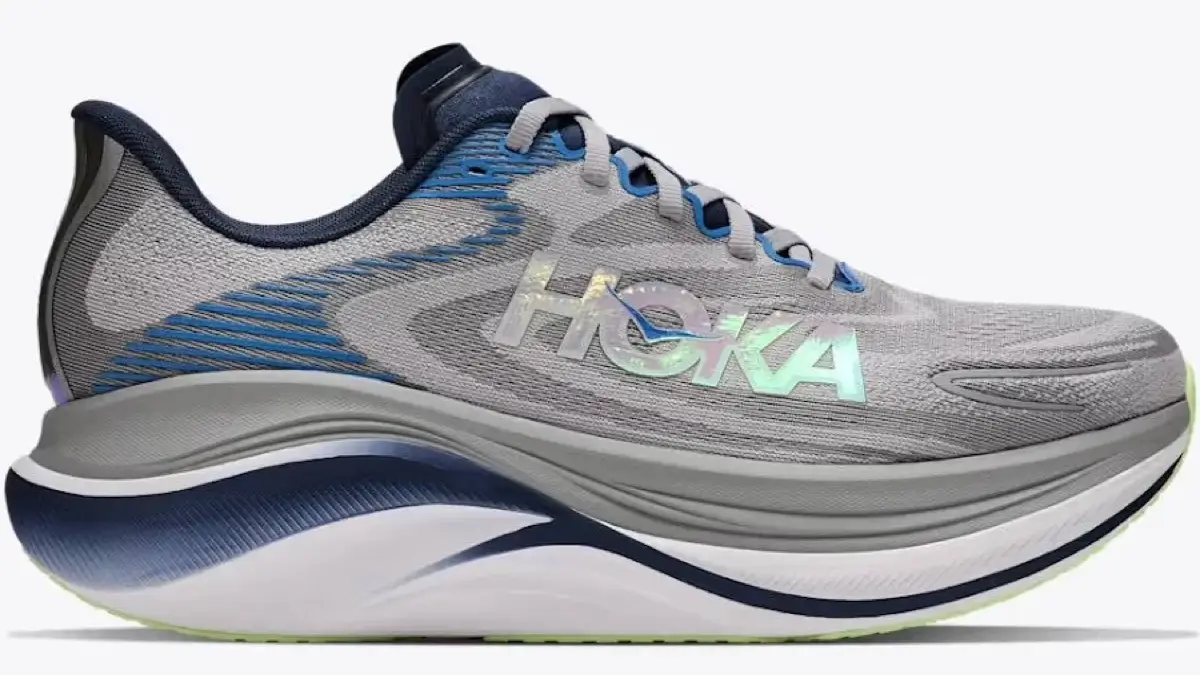
The Hoka Skyward X 2 is Hoka’s max-cushion, carbon-plated super trainer, and for 2026 the brand rebuilt it by taking material away rather than adding it. The second edition drops a few millimeters of stack, sheds roughly 20 grams, adopts a redesigned carbon-fiber plate and swaps the old flat-knit upper for a cleaner engineered mesh. A carbon plate is a stiff layer inside the sole, and here it is tuned to guide the foot through a smooth roll rather than snap it forward. The result is a shoe that feels noticeably more composed and more usable than its predecessor, as long as you are clear-eyed about what it is and what it is not.
It also sits at the top of the daily-trainer price ladder, which is the tension running through this review. As a cushioned long-run and easy-day cruiser it is very good. As an all-rounder expected to handle fast work too it is more limited, because its useful pace range is narrow. Knowing which of those two shoes you want decides whether the price makes sense.

Specs
Here are the specifications for the Hoka Skyward X 2:
| Category | Max-cushion, carbon-plated super trainer |
| Weight | ~10 oz / 283 g (men’s US 9); ~8.6 oz / 244 g (women’s US 8) |
| Stack height | 44 mm heel / 39 mm forefoot (Hoka’s listed figures; some labs measured higher) |
| Heel-to-toe drop | 5 mm listed (independent labs have measured higher) |
| Midsole | PEBA over supercritical EVA, with a carbon-fiber plate |
| Upper | Premium jacquard engineered mesh, zonal padded tongue |
| Best for | Easy days, recovery runs and long runs |
| Price | Launched at about $225 in early 2026. Check latest price |
Best for
Higher-mileage and middle-to-back-of-the-pack runners who want a cushioned, protected long-run and easy-day shoe, plus walkers after maximum cushioning.
Pros
- Deep, forgiving cushioning that keeps legs fresh over long distances
- Lighter and more stable than the original Skyward X
- Smooth, rockered ride with an engaged, efficient transition
- Premium jacquard mesh upper with a comfortable, well-padded tongue
- Firmer EVA base adds stability and durability under a very tall stack
Cons
- Expensive, at about $225 at its early-2026 launch, with rivals offering more value
- Narrow useful pace range, not built for real speed work
- Runs small, so most people should size up half a size
- Tighter forefoot than the original may not suit wide feet
- Listed 5 mm drop measures higher in independent lab testing
What’s new in the Hoka Skyward X 2
The headline of this update is subtraction. Where most sequels chase a bigger, softer ride, Hoka went the other way and made the Skyward X 2 smaller in almost every dimension that matters. Stack height comes down slightly, the platform is a touch narrower, the outsole rubber is thinner with larger cutouts, and the upper is simplified. Add it all up and the shoe loses around 20 grams versus the original, a meaningful haircut for a shoe in this max-cushion class. Crucially, the weight came off without gutting the cushioning that defines the line. The Skyward X 2 keeps its ultramarathon-grade stack and protective feel, but pairs it with a more stable, balanced and responsive ride. The carbon plate was also reshaped to place runners in a more engaged stance, and the upper jumps upmarket with a premium jacquard mesh. These are not cosmetic tweaks; they change how the shoe behaves underfoot.
Who should buy the Hoka Skyward X 2
Buy the Skyward X 2 if most of your running is cushioned, steady mileage. Higher-mileage runners, heavier runners and those toward the middle and back of the pack gain the most, because the deep cushioning and rolling geometry make time on feet feel easier. It is a natural fit as the dedicated long-run and recovery shoe in a rotation that already has something faster for workout days. Anyone whose legs simply appreciate a soft, stable ride at the end of a long week will get on with it too. If you value comfort and protection over speed, and you want a shoe that flatters honest, patient miles, this is squarely aimed at you.
Who should avoid it
Skip it if you want one shoe for every session. It is not light or propulsive enough for genuine speed work, so runners chasing tempo runs and intervals will feel its ceiling quickly. Budget-focused buyers will find far more value elsewhere, since this is a premium price for a shoe that specializes rather than does everything. Wide-footed runners who cannot size around the snug forefoot should also be cautious, and anyone who wants a firm, low, connected ride will find the tall, soft platform to be too much shoe. Runners who need built-in support for overpronation should look at a stability model, as this is a neutral trainer.
How does the Hoka Skyward X 2 fit?
Here is how the Hoka Skyward X2 fits.
Fit and sizing
The Skyward X 2 runs small, in length, in width and in toe-box volume, so most people should go up a half size from their usual Hoka. It is also narrower up front than the original, because Hoka repositioned an overlay at the outer forefoot so that it now sits over the fifth toe joint rather than behind it. That change sharpens the hold but tightens the forefoot. Wide-footed runners in particular should try before they buy, or order the half size up.
Upper and step-in comfort
The upper is where the Skyward X 2 most obviously looks and feels like a premium shoe. The jacquard engineered mesh is a clear step up from the old flat-knit: it is thinner, wraps the midfoot more cleanly and has a softer interior. A zonal padded tongue adds a plush touch over the instep and stays put through the miles rather than sliding to one side. Step-in comfort is genuinely premium.
How does the Hoka Skyward X 2 perform?
Here is how the Hoka Skyward X2 performs and what the ride feels like.
Midsole and cushioning
The heart of the Skyward X 2 is a dual-foam midsole. A generous layer of lightweight PEBA sits up top for bounce and energy return, while a firmer supercritical EVA compound underneath adds structure, stability and long-term durability. The carbon plate sits between them. It is a smart division of labor: the PEBA keeps the ride lively and forgiving, and the EVA keeps a very tall shoe from feeling tippy or vague. The payoff is a ride that is soft without being mushy, cushioned enough to keep legs fresh deep into long efforts.
Ride and running performance
At easy and long-run paces the Skyward X 2 is smooth and protective. The plate’s convex shape works with the midsole geometry to guide the foot through a rockered roll from heel to toe, which feels efficient when you are holding a steady effort. What it does not do is snap. This is a plate tuned for smooth rolling rather than aggressive toe-off, so runners hoping for the propulsive pop of a carbon racer will not find it here. At roughly 10 ounces in a men’s 9, with a tall stack, it feels like a lot of shoe when you try to run fast. It can reach a moderate tempo, but its comfortable operating window is real and narrow.
Stability and support
This is a neutral shoe, which means it adds no medial post or guidance and it will not correct a gait. Its steadiness comes from geometry instead: the firmer EVA base and the platform shape keep a very tall stack feeling more planted than its height suggests. Runners who need real motion control for overpronation should look at a dedicated stability model.
Outsole, grip and durability
Hoka thinned the rubber and enlarged the outsole cutouts to save weight, which exposes more midsole foam than on the original. The Skyward line has held up well historically, and the firmer supercritical EVA base does double duty here, protecting the softer PEBA and helping the platform resist packing out over high mileage. Plan on the usual 300 to 500 miles of useful life as a broad guideline, with grip suited to dry and damp roads rather than technical terrain.
Is the Hoka Skyward X 2 good for walking?
Yes, for cushioned comfort the Skyward X 2 is a strong walking shoe, with the same caveats as its running fit. The deep PEBA-over-EVA midsole and rolling geometry make it comfortable for long walks and time on hard floors, and the plush tongue and secure midfoot help on all-day wear. The rocker rolls you along at walking speed rather than feeling clunky, which helps over a full day. Because it runs small, size up half a size for walking too, and wide feet should test the snug forefoot first. The tall, soft stack is forgiving, though its height makes it a little less steady on uneven ground than a lower walking shoe. For paved walking, travel and standing, it is a comfortable, protective choice.
Hoka Skyward X 2 vs the original Skyward X
| Feature | Skyward X 2 | Original Skyward X |
| Weight | Lighter, about 20 g less | Heavier |
| Stack height | Slightly lower | Higher |
| Upper | Jacquard engineered mesh | Flat-knit |
| Forefoot fit | Narrower | Roomier |
| Ride | More stable and balanced | Softer and taller, less settled |
| Launch price USD | $225, check current price | $225, but check price now that this is an older model |
The X 2 is the better shoe for most runners, thanks to the lighter, more stable ride and the upgraded upper. The original Skyward X is worth a look only if you find it heavily discounted and you prefer a roomier forefoot and the tallest possible stack.
Hoka Skyward X 2 alternatives
The closest rival is the Saucony Endorphin Azura (check price | read review). It is a plateless super trainer that costs a good deal less, weighs less and covers a wider range of paces, so runners who want more versatility for their money should start there. The Skyward earns its place only if you specifically want the plate and the taller, more protected long-run feel.
For similar protection without the plate, and for less, the Hoka Bondi 9 (check price | read review) delivers a plush, maximal cushioned ride that suits runners who care about comfort more than the engaged, rolling toe-off.
Runners drawn to a tall, do-everything foam but after a firmer, snappier feel should compare the Asics Superblast 2 (check price | read review), a high-stack plateless shoe that holds faster paces with more authority. Which one wins comes down to what you value: versatility and price from the Azura, plush comfort from the Bondi, or a firmer high-stack ride from the Superblast.

Price and value
The Skyward X 2 launched at about $225 in early 2026, a top-of-the-range price, and what that buys is premium cushioning, a carbon plate and a genuinely upscale upper. It is fair value if you will use it as a dedicated long-run and easy-day shoe and you prize comfort over versatility. It is harder to justify if you want one shoe to cover every pace, because rivals offer more flexibility or nearly as much comfort for less. For current pricing, use the button below.

Final verdict
Best for: higher-mileage and middle-to-back-of-the-pack runners who want a cushioned, protected long-run and easy-day shoe, plus walkers after maximum cushioning.
Avoid if: you want a single do-it-all trainer for fast work too, you are on a tight budget, or you have wide forefeet that fight the snug fit.
Fit: runs small in length and width, so size up half a size; the forefoot is narrower than the original.
Verdict: the Hoka Skyward X 2 is the best version of Hoka’s max-cushion super trainer to date, and an excellent long-run cruiser. It is held back only by a premium price and a narrow pace range, so buy it for what it is rather than as an all-rounder.
Frequently asked questions
Yes. A carbon-fiber plate sits between the PEBA and EVA foams, tuned to guide the foot through a smooth roll rather than deliver an aggressive, propulsive pop.
No, it runs small in length, width and toe-box volume. Most people should size up half a size, and wide-footed runners should note the narrower forefoot.
Yes. Its deep PEBA-over-EVA cushioning and rolling geometry are built for easy and long efforts, and they keep the legs fresh over distance.
Not really. The plate is tuned for a smooth roll rather than snap, and the shoe is heavy for racing, so it works better as a cushioned long-run trainer than a racer.
The X 2 is lighter and slightly lower, with a new jacquard mesh upper, a reshaped plate, a narrower forefoot and a more stable, balanced ride.
Yes. Its deep cushioning and rolling shape make it comfortable for long walks, travel and standing, though the tall stack is less steady on uneven ground and it runs small.