Quick Answer: A good pair of kids’ shoes has about 10 to 15 mm of space ahead of the longest toe, a toe box that does not squeeze, and a heel that stays in place. Measure both feet while your child stands in the socks they will wear, then use the larger foot and the brand’s size chart. Ask your child to walk and turn in the shoes. They should feel comfortable right away, without pinching or slipping. Recheck fit as feet grow, especially for toddlers. This guide explains the checks parents can make at home before buying.
The number on a shoe box is only a starting point. Two shoes labeled the same size may fit differently in the toes, heel or middle of the foot. For parents, the best test is straightforward: measure, check room, watch your child move and listen when something feels wrong.
This guide focuses on how to check the fit of a pair you are buying or already own. For size conversions and foot-length estimates, use our Kids Shoe Size Calculator. For a full directory of kids’ reviews, sports shoes and support guides, start at our Kids’ Shoes hub.
How Much Growing Room Should Kids’ Shoes Have?
The American Podiatric Medical Association (APMA) recommends about 10 to 15 mm (roughly three-eighths to five-eighths of an inch) of space in front of a child’s longest toe. The Canadian Paediatric Society gives parents a similar starting point of about 1.25 cm. This space helps with foot movement and growth, but it is not a reason to buy a shoe that slides around.
Check the actual longest toe, which is not always the big toe. If you can, remove the insole and have your child stand on it: look at the room in front and along both sides of the foot. This can be a helpful extra check, but the insole does not tell you whether the top of the shoe is too low or whether the heel moves when walking. The shoe must fit in three directions: length, width and depth.
Avoid pointed toe boxes that push the toes together. Your child should be able to move their toes naturally. At the other end, a shoe that is much too long can make it harder to run and turn because the foot moves inside it. If the right toe room comes with a sloppy heel, try a different model or width instead of sizing up again.
How to Measure Both Feet at Home
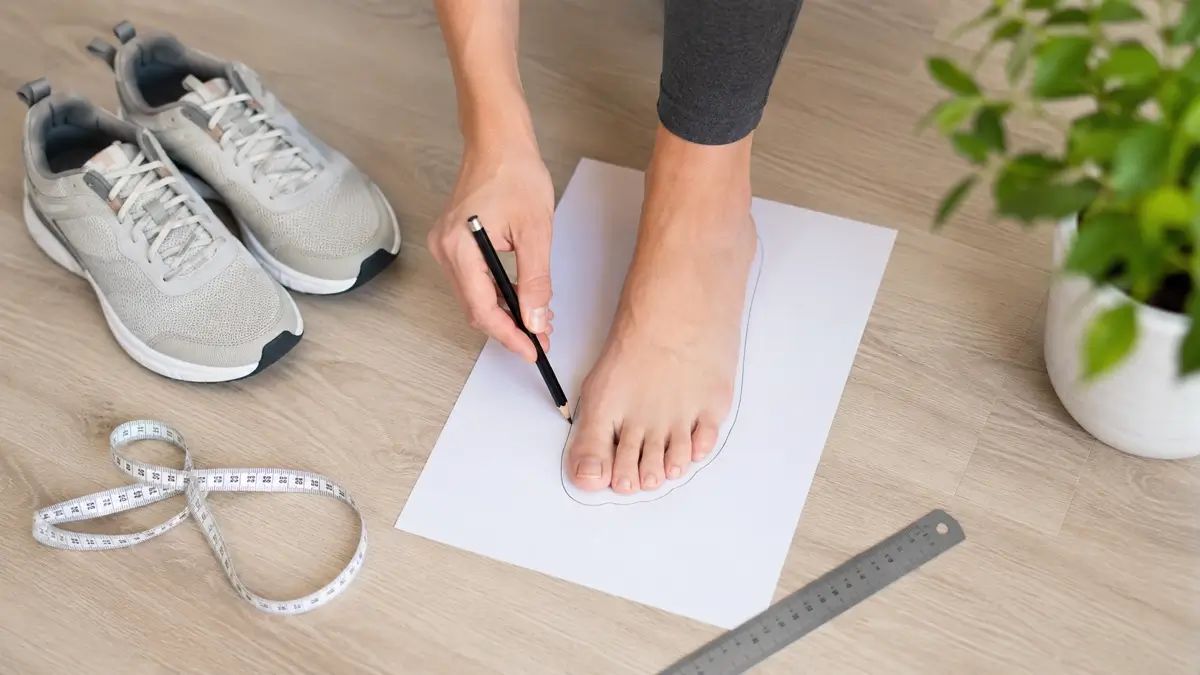
Measure your child’s feet while they stand with weight on both feet, rather than sitting down or curling their toes. Use the socks they usually wear with that type of shoe. Put a sheet of paper on the floor against a wall, have the heel touch the wall gently and mark the end of the longest toe. Repeat on the other foot. The larger measurement is the starting point for choosing a size.
A foot-size measurement is not the same as the inside length of every brand’s shoe. Look up the current chart for the exact model or brand, and pay attention to whether it asks for foot length or insole length. If your child is between sizes, compare the fit of both rather than assuming the larger one will be better. Width and heel hold still matter.
Our measurement-based kids’ shoe size calculator helps turn that length into a starting size. Use the international kids’ size converter when moving among U.S., U.K. and EU sizes. Our shoe sizes by age guide provides rough context, but a child’s age alone cannot determine a reliable size.
How to Check the Fit When Your Child Tries on Shoes
A shoe can look right on the shelf but feel wrong when your child moves. Have them try on both shoes and fasten them as they would for school or play. Ask them to stand, walk and turn. For running or sports shoes, a few gentle steps or direction changes will reveal problems that standing still can hide.
- Toes: Look for space ahead of the longest toe and enough width for the toes to spread. The upper should not press down on the toes.
- Heel: The heel should stay securely in place without rubbing. If the heel rises noticeably with every step, check the size, heel shape and closure.
- Middle of the foot: Laces or hook-and-loop straps should hold the shoe without creating pressure. The foot should not slide forward when your child stops or turns.
- Comfort: Ask whether either foot feels pinched, hot, tight or uneven. Try another size or model if discomfort starts right away.
- Movement: The shoe should bend where the toes bend and let your child walk naturally. Fit matters more than a feature advertised as special support.
The APMA advises choosing shoes that are comfortable immediately rather than expecting a painful break-in period. Children may not always describe a poor fit clearly, so also watch how they walk and whether they are eager to remove the shoes. A fit test takes a few minutes and can save repeated returns.
Which Shoe Features Matter for School, Sports and Outdoor Play?
For school and everyday play, look for a light shoe with room for toes, grip for typical surfaces and a closure that your child can use or that an adult can secure consistently. A hook-and-loop strap may make mornings easier for a younger child; laces may provide a more adjustable fit when your child can tie them. Choose based on the child, not a promise that one feature will improve foot development.
For running and active play, pay attention to heel hold and whether the foot moves inside the shoe when turning. Our Nike Cosmic Runner review and New Balance Rave Run v2 review describe everyday children’s sneakers, while the kids’ soccer cleats guide covers a different kind of fit for the playing surface. Don’t use soccer cleats as all-day school footwear.
For winter and wet weather, check fit with the thicker socks your child will actually wear. Choose traction and appropriate weather protection without squeezing the toes under extra layers. Start with our kids’ winter boots guide. For new walkers, the American Academy of Pediatrics recommends flexible, comfortable shoes with nonskid soles for outdoor walking; see our first-shoes guide for more.
Signs Your Child’s Shoes No Longer Fit
Don’t wait for a child to say a shoe is too small. Kids may adapt to uncomfortable shoes or simply stop wearing them. Look at feet and footwear together, particularly after a growth spurt or a change in activity.
- Red marks, rubbing or blisters around the heel, toes or sides of the foot.
- Toes pressing into the end or sides of the shoe, or an upper that bulges over the toes.
- Frequent shoe removal, complaints about pressure, or reluctance to wear a pair that used to be comfortable.
- Noticeable heel slipping or a foot that slides forward inside the shoe.
- New tripping or limping that may relate to footwear or another cause and deserves attention.
The APMA recommends checking children’s sizing every four to six months because feet change and brands differ. HealthyChildren.org suggests checking a toddler’s fit around once a month during the fastest-growing early walking period. Either is a reminder, not a guarantee that the fit will stay right between checks.
If your child has ongoing foot pain, persistent limping or changes in the way they walk, consult a pediatrician or qualified foot specialist instead of trying to solve the issue with a different shoe alone.
Do Kids Need Extra Arch Support or Corrective Shoes?
Not every child with flat-looking feet needs a supportive or corrective shoe. The Canadian Paediatric Society notes that many young children have flat feet as their arches develop, and most do not need special footwear when there is no pain. Likewise, feet turning inward while walking can be a normal stage of development. Shoe shopping should not become an attempt to diagnose or correct every difference in walking style.
Start with enough toe room, comfortable materials, a stable-feeling fit and the right closure. If your child has persistent discomfort, limits on activity or a clinician’s recommendation for a more structured shoe, follow that individual advice. Our kids’ shoes for flat feet guide and kids’ overpronation guide help parents compare practical options without claiming that shoes will reshape a child’s feet.
Kids’ Shoe Fit FAQs
APMA guidance recommends about 10 to 15 mm of room in front of the longest toe, with a toe box at least as wide as the widest part of the foot. The shoe should still hold the heel securely and should not slide excessively.
Children’s feet can grow quickly. APMA recommends checking sizing about every four to six months, while the American Academy of Pediatrics advises checking toddler shoe fit about monthly during the earliest walking period.
Not indoors in most cases. The American Academy of Pediatrics says babies generally do not need shoes until they begin walking outside, when flexible, comfortable shoes with nonskid soles help protect the feet.
Healthy children generally do not need aggressive arch support simply to shape the foot. Fit, flexibility and protection are more important. A clinician may recommend different footwear when a child has a specific diagnosed condition.
It is better to avoid heavily worn hand-me-down footwear. Shoes mold to the previous wearer’s gait and foot shape, and APMA also notes that shared footwear can spread fungal infections.
The best shoe depends on whether the child has symptoms and on guidance from a pediatrician, podiatrist or other clinician. BWF’s kids flat-feet guide focuses on secure fit, stable platforms and appropriate width rather than treating flat feet as a problem that every child needs corrected.
Measure both feet while the child is standing, use the larger foot, and compare the measurement with the brand’s current size chart. BWF’s Kids Shoe Size Calculator can convert foot length into a starting size, but the final fit should still be checked in the actual shoe.