Tight shoes are one of the most common footwear problems, especially with leather dress shoes, boots, and structured sneakers. Whether shoes pinch at the toes, rub the sides of your feet, or feel snug across the instep, stretching them properly can improve comfort without ruining their shape.
This guide explains how to stretch shoes safely by material, how much stretching is realistic, which tools actually work, and when stretching is not recommended.
We have also included a section on stretching boots which uses similar techniques and tools.
Before You Start Stretching Shoes
A few checks upfront help avoid permanent damage or wasted effort.
- Identify where the shoe feels tight (toe box, width, instep, heel).
- Confirm the material, since leather stretches more easily than synthetics.
- Make sure the shoe is close to the correct size—stretching usually adds width, not length.
- Avoid stretching shoes that already cause numbness or sharp pain when worn.
How Much Can Shoes Be Stretched
Most shoes can be stretched about a quarter to half a size in width, depending on material and construction.
According to guidance from professional cobblers and footwear manufacturers, natural materials such as leather and suede respond best to stretching, while synthetic materials offer limited flexibility. Stretching length is rarely effective and can compromise sole integrity. This aligns with common featured snippet searches such as “can shoes be stretched a size bigger” and “how much can shoes be stretched.”
How to Stretch Leather Shoes
Leather is the easiest and safest material to stretch when done gradually. Effective methods for stretching leather shoes include:
- Wear thick socks and walk in the shoes for short intervals indoors.
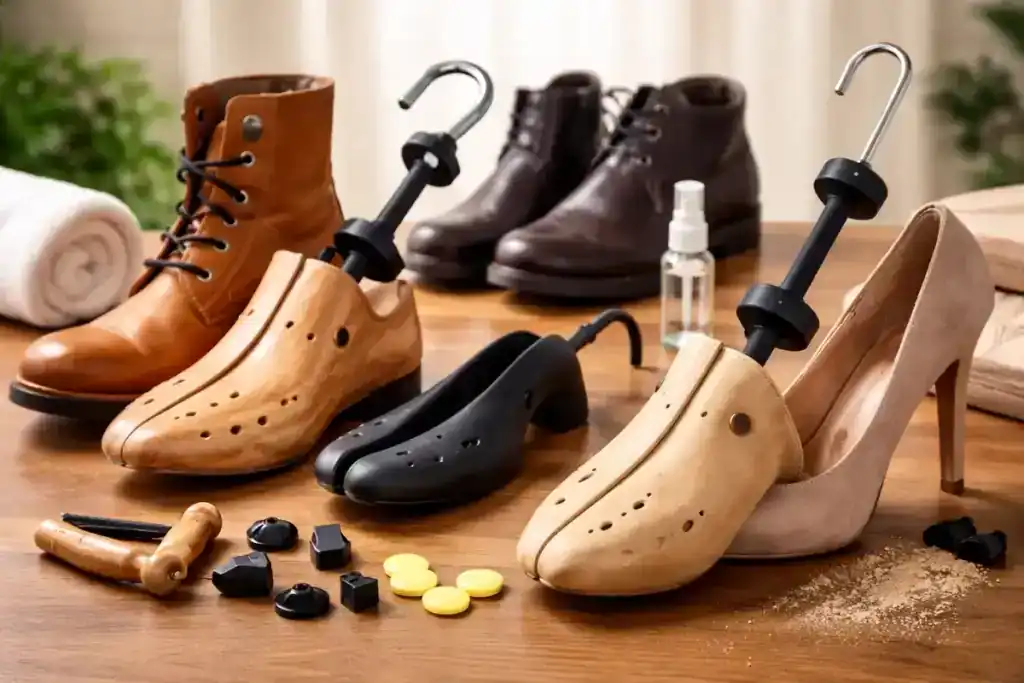
- Use a shoe stretcher adjusted to the tight area.
- Apply a leather-safe stretching spray before stretching.
- Stretch incrementally over 24–48 hours.
Most footwear brands advise avoiding excessive heat, which can dry out leather and cause cracking.
How to Stretch Suede Shoes
Suede stretches similarly to leather but requires extra care to protect the nap.
Here are some recommended steps on stretching sude shoes:
- Use a shoe stretcher designed for suede.
- Apply a suede-safe stretching spray only.
- Stretch slowly and avoid over-tightening.
- Brush the suede afterward to restore texture.
Never use water directly on suede, as it can stain and stiffen the material.
How to Stretch Synthetic and Knit Shoes
Synthetic shoes and knit uppers have limited stretch capacity. To stretch these materials:
- Wear thick socks to encourage gentle expansion.
- Use adjustable stretchers with minimal pressure.
- Focus on width rather than length.
- Stop immediately if the material shows stress lines.
Many athletic brands advise against aggressive stretching of synthetic shoes because it can weaken seams and adhesives.
How to Stretch Shoes at Home
Several at-home shoe stretching methods work when used carefully.
- Thick socks and controlled wear-in sessions.
- Shoe stretchers left in place overnight.
- Stretching sprays paired with mechanical stretchers.
- Professional cobbler stretching for expensive shoes.
Avoid internet “hacks” involving boiling water, hair dryers, or freezing water-filled bags, which often damage shoes beyond repair.
How to Stretch Boots at Home
Boots often feel tighter than shoes because of their structured uppers, thicker leather, and narrower shafts. Stretching boots at home is possible, but it requires patience and the right approach to avoid damaging seams, zippers, or ankle support.
For best results, focus on the specific problem area—such as the toe box, width, instep, or calf—rather than trying to stretch the entire boot at once.
Effective at-home methods include:
- Use a two-way shoe or boot stretcher designed for boots, leaving it in place for 24–48 hours.
- Apply a leather-safe stretching spray to tight areas before inserting the stretcher.
- Wear thick socks and walk indoors for short periods to gently encourage expansion.
- For ankle or instep tightness, use targeted bunion plugs or spot stretchers rather than over-tightening the whole boot.
Leather boots respond best to stretching, especially when conditioned afterward. Suede boots can also be stretched but should only be treated with suede-safe sprays. Synthetic and waterproof boots have limited stretch potential and should be stretched conservatively.
Avoid using heat sources, freezing methods, or excessive force, as boots rely on structural integrity for support. When boots feel painfully tight or restrict circulation, professional stretching by a cobbler is often the safest option.
Stretching Shoes vs Breaking in Shoes
These two terms are often used interchangeably, but they describe different processes with different outcomes.
Stretching shoes involves mechanically or chemically expanding tight areas of the shoe, usually in width. This is done using tools like shoe stretchers, stretching sprays, or professional cobbler equipment. Stretching is targeted and intentional, making it useful when shoes pinch specific areas such as the toe box, bunion area, or instep.
Breaking in shoes, by contrast, relies on gradual wear. As you walk, natural flex points soften and the materials adapt slightly to your foot shape. Breaking in works best for shoes that feel stiff but not painfully tight. It does not significantly increase width or length.
In practical terms, stretching is the better option when a shoe is uncomfortably tight from the start, while breaking in is sufficient for shoes that feel snug but wearable. Attempting to “break in” shoes that are too small often leads to blisters, nerve irritation, and long-term discomfort.
Recommended Amazon Products for Stretching Shoes
The following tools are commonly used for safe shoe stretching and are suitable for most leather and fabric shoes. See our full reviews of these shoe and boot stretching products.
Product Name | Type (linked to Amazon category) | Features | Price |
|---|---|---|---|
FootFitter Professional Shoe Stretcher | Adjustable width stretching with bunion plugs | ||
Eachway Shoe Stretch Spray | Softens leather fibers for easier stretching | ||
Dasco Two-Way Shoe Stretcher | Expands shoe width gradually | ||
FootMatters Professional Boot Stretcher | Designed for boots and high insteps | ||
Angelus Shoe Stretch Liquid | Safe for leather and suede shoes |
What to Avoid When Stretching Shoes
Some stretching shortcuts cause irreversible damage.
- Heat sources such as hair dryers or ovens.
- Freezing water inside shoes.
- Over-tightening stretchers.
- Stretching patent leather or plastic-coated materials.
How to Keep Shoes Comfortable After Stretching
Maintaining fit helps prevent tightness from returning.
- Use shoe trees when not wearing shoes.
- Rotate footwear to reduce material fatigue.
- Condition leather regularly to maintain flexibility.
- Avoid long-term storage in hot or dry environments.
Frequently Asked Questions About Stretching Shoes
These questions reflect the most common concerns about shoe stretching.
In most cases, no. Shoes typically stretch up to half a size in width, but length changes are minimal and unreliable.
Cobblers use professional machines and tools that allow targeted stretching with less risk, making them a better option for expensive or delicate shoes.
Stretching should never cause pain. If discomfort persists after stretching, the shoe is likely the wrong size or shape.
Some leather or canvas sneakers can be stretched slightly, but most modern athletic shoes use synthetic materials that resist stretching.
Properly stretched leather shoes usually retain their shape, especially when maintained with shoe trees and conditioning.