Last Updated on October 22, 2026
Uniquely bouncy ride in a narrow, heavy shoe
Quick Answer: Nike Pegasus Premium Review: The Nike Pegasus Premium is a deeply cushioned, high-tech running shoe for neutral runners who want a soft, springy ride on long, easy miles. Instead of the stiff plate most rivals use, Nike built a full-length air pocket into the sole, which gives it a bouncy, trampoline-like feel and superb protection from the pounding of the road. The catches are real: it is heavy for its type, it runs genuinely narrow with no wide option, and it costs a lot. If the springy ride appeals and your feet are on the slim side, it delivers. Check latest price.
The Pegasus name has been on Nike’s dependable everyday running shoe for decades, but the Pegasus Premium shares little with it beyond the badge. This is a “super trainer,” which is just a friendly way of saying an everyday shoe built with technology borrowed from racing shoes. It sits at the top of a three-shoe Pegasus family, above the standard Pegasus and the lighter Pegasus Plus.
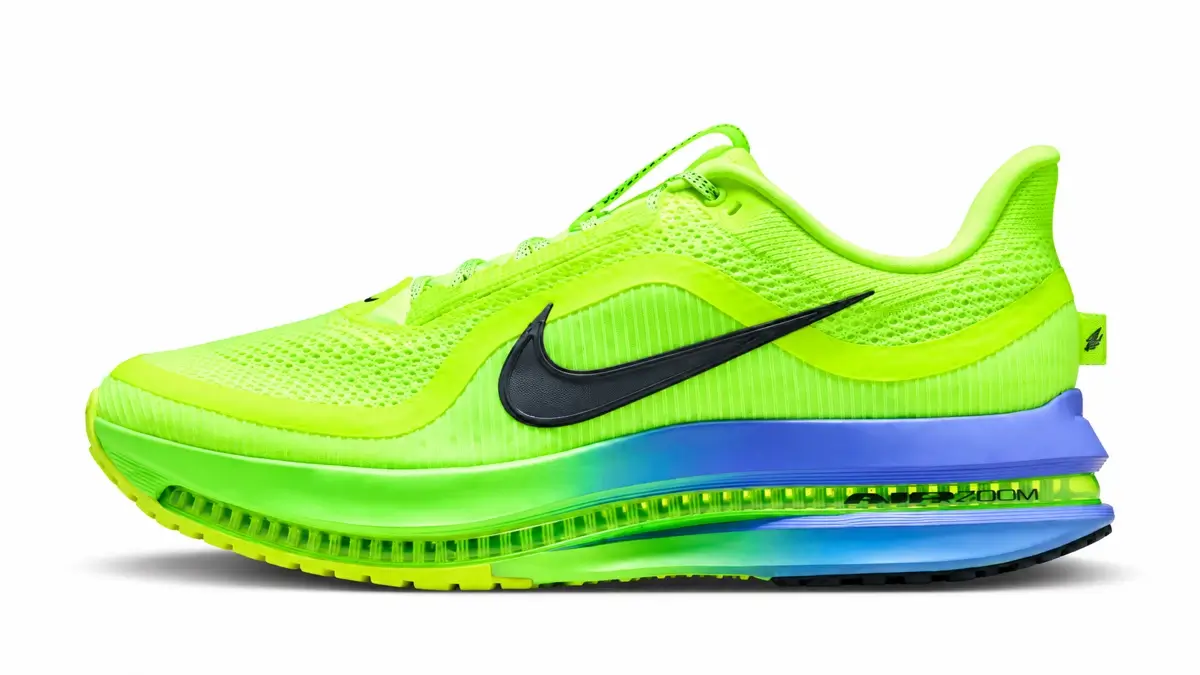
What makes it stand out is what is under your foot. Most shoes like this hide a stiff plate in the sole to give you a push forward. Nike went a different way and built a long air pocket that runs the full length of the shoe, cushioned by soft foam on top and a firmer, hard-wearing foam underneath. It is the first time the company has run an air chamber the whole length of a running shoe, and it works more like a spring than a springboard.
The result is genuinely different to run in, and genuinely flawed. The protection from impact is among the best we have come across, and the shoe gives back a lively, energetic feel most trainers cannot match. But it is heavy, it fits narrow enough to leave a lot of runners out, and it is loud on the pavement. At its price, those are not small quibbles.

Specs
Here are the specifications for the Nike Pegasus Premium, in plain English:
| Best for | Long, easy runs and steady miles for neutral runners with narrow feet |
| Type | Maximum-cushion “super trainer” (an everyday shoe built with race-shoe tech); neutral, no built-in support |
| Cushioning | Very deep and springy: three layers, including a full-length air pocket where most rivals use a stiff plate |
| Support | None to speak of. The firmer base foam adds a little steadiness, nothing more |
| Weight | About 10.9 oz in a men’s 10 (measured): heavy for this kind of shoe |
| Heel-to-toe drop | Roughly 11-12 mm, meaning the heel sits a good bit higher than the toe: easy on heel-strikers |
| Stack height | Very tall, around 43 mm at the heel: a lot of foam between you and the road |
| Upper | Breathable stretch knit with reflective material all the way around |
| Widths | Standard only, and it runs narrow |
| Surface | Road, treadmill, paved paths |
| Price | $210 at launch, May 2025. Check latest price |
Pros
- Outstanding protection from impact, so long runs stay easy on your legs and joints
- A one-of-a-kind springy ride from the full-length air pocket, unlike anything else on the road
- Wonderfully breathable, stretchy knit upper that wraps your foot instead of pinching it
- Reflective material all the way around, a real safety plus for dark mornings and evenings
- Surprisingly comfortable at walking pace for a shoe this high-tech
Cons
- Runs genuinely narrow, with no wide version, so it leaves out a lot of feet
- Heavy for its type, and the weight sits low, so it feels a little clunky when you pick up the pace
- Expensive, especially for a shoe that cannot really race
- The air pocket slaps audibly on hard pavement, which some runners find distracting
- Grip on wet concrete is only okay, behind what some cheaper shoes manage
What is new versus the rest of the Pegasus range
The Pegasus Premium is not an update to an older model, so the useful comparison is against its two siblings. The standard Pegasus is a normal everyday trainer with a modest amount of foam and a firm, connected feel. The Pegasus Plus is the light, quick one. The Premium is the plush, maximum-cushion member of the family, with far more foam underfoot than either.
The technology is what really sets it apart. Neither of the others has the full-length air pocket, and neither stacks three separate layers the way the Premium does. The soft top foam here is a slightly firmer, more hard-wearing version of the foam Nike puts in its racing shoes, tuned to survive daily mileage rather than to squeeze out every last bit of bounce.
It is also the only Pegasus that runs narrow enough to be a real problem, and the only one that costs over $200. The breathable knit upper and the all-around reflectivity are unique to it as well. In short, this is a very different shoe wearing a familiar name.
Who should buy the Nike Pegasus Premium
Buy it if you have narrow feet and you want plush cushioning without a soft, sinking feel. Its snug shape is a headache for most runners but a real gift for anyone who usually slides around inside their shoes.
It also suits heel-strikers especially well. Because the heel sits high and holds a lot of foam, the shock of landing is soaked up before it reaches your legs. Long, steady runs are where this shoe makes the most sense, particularly if you want protection without the mushy feel of a very soft midsole.
Finally, buy it if the ride itself appeals. The full-length air pocket does not feel like ordinary foam and does not feel like a stiff plate: it feels like a spring under your whole foot. That is a perfectly good reason to want this shoe, and not one we would argue with.
Who should probably skip it
Skip it if your feet are average width or broader. This is the shoe’s biggest limitation: it is narrow through the middle and the toe box, it tends to fit slightly small, and there is no wide option to fall back on. If you have any doubt about width, this is a shoe to try on in person rather than order blind.
It is also the wrong pick if you want a do-everything shoe that can run fast, or if you simply want the most cushioning for your money on a wider, steadier base. If that sounds like you, here are three roomier, better-value shoes that suit more feet:
- Brooks Ghost 18: soft, stable everyday cushioning that comes in wide widths and costs far less (check price | read review).
- Hoka Bondi 9: deep, plush maximum cushioning on a wider, more planted base, with wide sizes available (check price | read review).
- Asics Gel-Nimbus 28: a comfortable, well-cushioned daily shoe that also comes in wide fits (check price | read review).
Want a different shoe? Try our running shoe guide or use our free shoe finder to get a custom recommendation
How does the Nike Pegasus Premium fit?
Fit is the single most important thing to get right with this shoe, because it is where most disappointment comes from. It runs narrow and a touch small, but it is tall and roomy over the top of the toes, and the knit gives a little as you wear it. Here is how it feels on the foot.
Fit and sizing
Owner feedback, and there is plenty of it, leans toward the shoe fitting slightly small. Paired with the narrow shape, that means anyone between sizes should take the larger one, and anyone with a broad foot should try it on rather than ordering online and hoping.
The one bit of good news is height: there is generous room over the top of your toes, so the shoe presses on the sides of your foot rather than on your toenails. The stretchy knit also loosens a little over time. None of that will rescue a genuinely wide foot, though, and there is no wide version to help.
Upper and step-in comfort
Step-in comfort is the best part of the shoe. The knit upper is soft, wraps the foot smoothly and is among the most breathable you will find on any current trainer, which is very welcome on a shoe carrying this much foam. The overall build quality feels a clear step above what the Pegasus range usually delivers.
Nike also wrapped reflective material all the way around the shoe, not just a single strip at the heel. For anyone who runs before dawn or after dark, that is a genuinely useful safety feature and a rare one at any price.
How does the Nike Pegasus Premium perform?
On the runs it is built for, this shoe is a treat, and on the ones it is not, its weight quickly makes itself known. The ride is its whole reason to exist, so it is worth understanding what that air pocket actually does underfoot. Here is how it holds up.
Cushioning and ride
The three layers each do a job. The soft foam sits closest to your foot for bounce. The air pocket runs the full length underneath and gives the shoe its signature spring. The firmer foam forms the base, taking the first hit of each step and adding durability. Together they deliver some of the best impact protection we have seen, so the pounding of a long run barely reaches your legs.
The feel is closer to a trampoline than to the sharp, snappy push of a carbon plate, and it is the most distinctive thing about the shoe. Where it works best is long runs and relaxed, steady efforts. Push the pace and the weight asserts itself, and because so much of that weight sits low in the sole, the shoe can feel like it is swinging beneath you. There is no ground feel at all, which some runners love and others do not.
Stability and support
This is a neutral shoe with no support features, and it is one of the less steady options in its class. The reason is simple geometry: a very tall pile of foam on a fairly narrow base gives your foot more room to tip side to side than a wide platform would. Nike offsets some of that with the firmer base foam and the stiffness of the air pocket, which resists twisting.
In practice most neutral runners find it manageable but noticeably less planted than a wide-based rival. Anyone whose foot rolls inward a lot should choose something else, and no one should expect this shoe to control that motion, because nothing in it is built to.
Grip and durability
The bottom of the shoe uses two zones of grippy rubber at the forefoot and heel, with a channel cut through the middle to save weight and show off the air pocket. There is plenty of rubber where it counts, which points to a shoe built to pile up the miles, and the firmer base foam is Nike’s most hard-wearing.
Grip is merely okay. On wet concrete it is a little below average and behind what several rivals manage, which is disappointing on a shoe this expensive. It is fine on wet asphalt and less sure-footed on painted road lines. Overall the Pegasus Premium should outlast most shoes of its type, so the usual 300-to-500-mile guideline is a fair expectation rather than an optimistic one.
Is the Nike Pegasus Premium good for walking?
Better than most shoes of its type, which is faint praise worth explaining. Shoes like this usually walk badly, because a stiff plate refuses to bend at slow speeds and tips you forward. The Pegasus Premium is stiff too, but Nike kept it fairly flat and level rather than aggressively curved, so instead of being pushed forward you stand on a level, heavily cushioned platform. With all that foam and its excellent shock absorption, it is genuinely comfortable for standing and strolling.
Three things hold back the recommendation, though. The narrow fit becomes more of a problem over a long day, because feet swell and there is no room to give. The weight you barely notice standing still becomes tiring over hours of walking. And spending this much on a walking shoe makes little sense when purpose-built walking shoes cost half as much and fit more feet. If you already own a pair and want to wear them all day, they are comfortable. As a shoe to buy specifically for walking, it is not the right choice.
Nike Pegasus Premium vs. Nike Pegasus Plus
Here is how the plush Premium compares with the lighter, quicker Plus in the same family:
| Feature | Pegasus Premium | Pegasus Plus |
| Cushioning | Very tall and plush (around 43 mm at the heel) | Lower and firmer (around 33 mm at the heel) |
| Sole tech | Soft foam, full-length air pocket, firm base | All soft foam, no air pocket |
| Weight | Heavy (about 10.9 oz) | Considerably lighter |
| Best use | Long, easy runs and steady efforts | Faster, everyday running |
| Upper | Knit with all-around reflectivity | Light mesh |
| Launch price | $210, May 2025 | Lower |
Choose the Premium when you want maximum protection on long runs and the air pocket’s spring appeals to you. Choose the Plus when you want a lighter shoe for everyday running and you do not need all that foam, since it does more of what most runners actually want from a Pegasus and costs less doing it.
Nike Pegasus Premium alternatives
If you want cushioning this deep without the weight, start with the Asics Superblast 2 (check price | read review). It gives you a similarly lively ride around two ounces lighter and on a much wider, steadier base, which makes it the more versatile shoe by a clear margin.
If the price is the sticking point but you want to stay with Nike, look at the Vomero 18 (check price | read review). It drops the air pocket and some of the bounce but keeps the deep cushioning and smooth ride, and it fits a wider range of feet.
If you want a properly rockered, roll-you-forward ride, the Hoka Skyward X 2 (check price | read review) is the shoe the Premium’s flatter shape keeps it from being. It rolls you through each step rather than springing you, on a broader, steadier base.
And if you decide you do not need any of this, the standard Nike Pegasus 42 (check price | read review) is firmer, lower and much cheaper. For the everyday miles that make up most training weeks, it is the more sensible shoe.

Price and value
The Pegasus Premium launched at $210 in May 2025. For that you get a genuinely novel ride, outstanding impact protection, a knit upper nicer than anything else in the Pegasus range and reflectivity all the way around. What you do not get is versatility, and that is where the value case wobbles: at this price most buyers expect a shoe that can handle both easy days and faster workouts, and the weight rules out the second half of that. The narrow fit also means a fair share of runners cannot use it at all. If the air pocket’s ride is what you are after, nothing else provides it. If you want the most shoe for your money, several lighter options beat it.

Final verdict
Best for: narrow-footed neutral runners who want deep cushioning for long, steady miles, and anyone drawn to the air pocket’s unique spring.
Avoid if: your feet are average width or wider, you want a shoe that can run fast, or you are shopping for value.
Fit: runs slightly small and clearly narrow, with generous height over the toes and a stretchy knit; standard width only.
Verdict: the full-length air pocket is the most interesting thing Nike has put in a training shoe in years, and the protection is superb. The narrow shape and the weight stop it being a shoe we can recommend to everyone, but for the runners it fits, it offers a ride no rival can copy.
Frequently Asked Questions for the Nike Pegasus Premium
No. Instead of a stiff plate, Nike used a full-length air pocket that runs the length of the shoe. It still gives you a firm, springy push, but the feel is bouncy rather than the sharp snap you get from carbon.
Most owners find it fits slightly small and narrow, so if you are between sizes, take the larger one. Sizing up will not fix a genuinely wide foot, though, because the issue is width rather than length, and there is no wide version.
The air pocket sits right above the outsole, with a cutout that exposes it, so air compressing against hard ground makes an audible slap. It is most noticeable on concrete and in quiet surroundings. Nothing is wrong with the shoe; it is just a side effect of the design.
It is not built for it. At around 10.9 ounces it is far heavier than a racing shoe, and the weight sits low in the sole where it costs the most effort to swing. Use it for long, easy runs and steady efforts, and pick a lighter shoe for race day.
No. It runs narrow through the middle of the foot and the toe box, and there is no wide version. If you have wider feet, a shoe like the Brooks Ghost 18, Hoka Bondi 9 or Asics Gel-Nimbus 28 will be far more comfortable, since all come in wide fits.
Almost completely. The standard Pegasus is a normal everyday trainer with a modest amount of foam, a firm ride and a much lower price. The Premium is a plush, maximum-cushion shoe with three sole layers, a full-length air pocket and far more foam under the heel.