Last Updated on October 10, 2026
Quick Answer: The Nike Pegasus 42 is a dependable neutral daily trainer for runners who want one road shoe for easy runs, steady mileage, walk-run workouts and general fitness. ReactX foam and a new curved, full-length Air Zoom unit make it more responsive than the Pegasus 41, while the updated last gives the forefoot and toe box more room. It is durable and predictable rather than especially light or soft. Choose it for versatility and familiar 10 mm-drop geometry; skip it if you want maximum cushioning, a very light trainer or dedicated stability support.

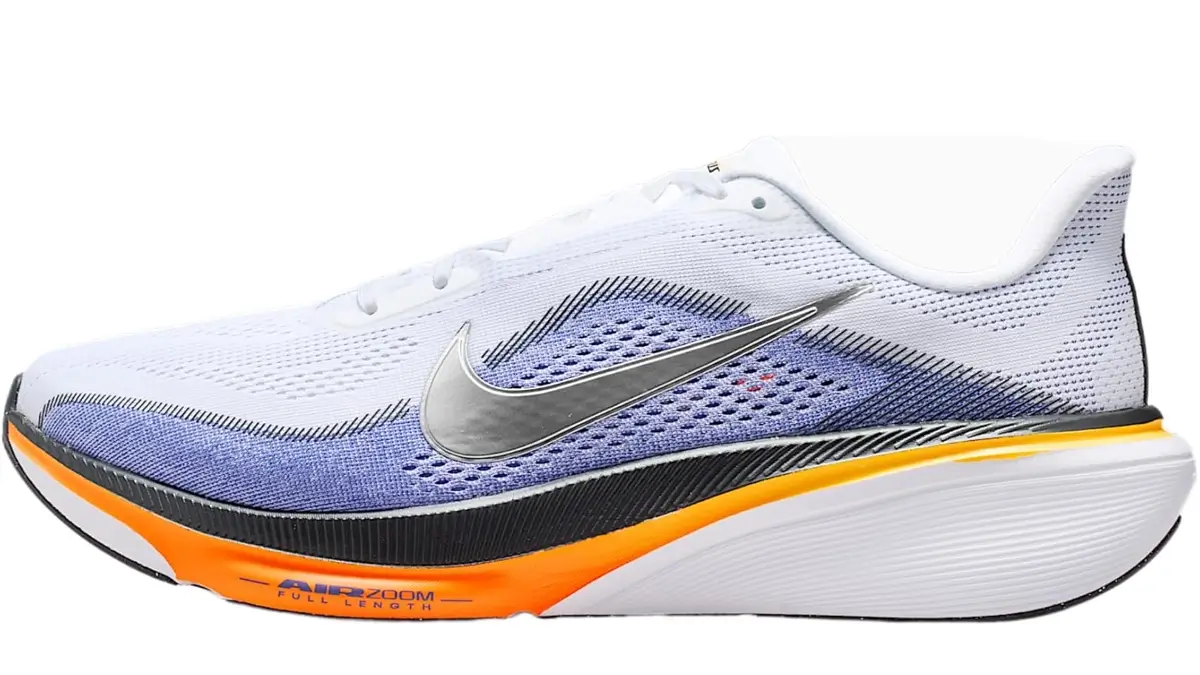
The Nike Pegasus 42 is Nike’s core neutral road trainer. It is designed for everyday mileage rather than max cushioning or race-day speed, and that makes it one of the easiest Nike shoes to understand. If you want one familiar shoe for most normal road runs, this is the starting point in Nike’s 2026 lineup. See our best Nike running shoes guide for the broader lineup.
Nike Pegasus 42 specs
| Type | Neutral road-running daily trainer |
| Best for | Easy runs, daily mileage, walk-run workouts and general fitness |
| Midsole | ReactX foam with curved, full-length Air Zoom unit |
| Heel-to-toe drop | 10 mm |
| Stack height | About 37 mm heel / 27 mm forefoot from independent launch testing |
| Weight | Nike: about 10.6 oz (300 g), men’s US 10; about 8.6 oz (243 g), women’s US 6 |
| Upper | Updated lightweight mesh with more forefoot and toe-box room than Pegasus 41 |
| Outsole | High-abrasion rubber Waffle outsole with flex grooves |
| Widths | Regular and Wide versions are currently sold by Nike in the U.S. |
| Launch date | April 9, 2026 |
| Launch price | $145 | Check latest price |
What changed from the Pegasus 41?
The most important change is underfoot. The Pegasus 41 used separate Air Zoom units in the heel and forefoot. The Pegasus 42 switches to a curved, full-length Air Zoom unit that runs from heel to toe. Nike says the new setup produces greater energy return while keeping the familiar ReactX foam platform.
The last also changed. Nike widened the forefoot and toe box and increased toe spring, which gives the shoe a more accommodating front half than the Pegasus 41. The upper is softer and more breathable, and the Waffle outsole was updated with high-abrasion rubber and flex grooves.
The result is still recognizably a Pegasus. It is not suddenly a super trainer. The update makes the shoe more comfortable and slightly more energetic without changing its role as a dependable everyday road shoe.
How does the Nike Pegasus 42 feel on the run?
The Pegasus 42 feels balanced rather than extreme. The ReactX foam is firmer and more controlled than the softest current daily trainers, while the full-length Air Zoom unit adds a smoother, slightly more propulsive transition than the previous version. Independent testing generally finds the ride more improved than transformed.
That works well for easy runs, steady mileage and normal daily training. Heel strikers should feel especially at home because the 10 mm drop and moderate stack height keep the shoe familiar and easy to load. The Pegasus can also handle moderate pace changes, but runners who want a noticeably faster workout shoe should look at something like the Nike Zoom Fly 6.
The weight is the main limitation. Nike lists the men’s US 10 at about 10.6 ounces, and independent launch testing put a men’s US 9 around 10.2 ounces. That is not unusually heavy for a traditional trainer, but it is heavier than many newer shoes built around lighter foams.
Fit, width and sizing
The fit is more accommodating than the Pegasus 41. Nike specifically widened the forefoot and toe box and moved to its updated MR-10 2.0 last. That is useful for runners who found older Pegasus models too tapered up front.
Nike currently sells both regular and Wide versions in the U.S., so the old advice that width choices are limited is no longer accurate. Most runners should start with their normal running-shoe size, then use the dedicated Wide model if the regular forefoot feels cramped rather than simply buying extra length.
Heel and midfoot hold remain fairly traditional. The upper is padded enough for daily use without feeling like a race shoe, and the revised mesh is more breathable than the previous generation.
Outsole, traction and durability
The Waffle outsole uses high-abrasion rubber in a pattern designed to balance grip, flexibility and long-term road use. Independent testing has been positive on traction, and the amount of outsole rubber makes the Pegasus 42 a practical choice for runners who put a lot of normal pavement mileage on one pair.
Durability still depends on body weight, gait, surface and how quickly you wear down the heel or forefoot. Instead of relying on a fixed mileage number, replace the shoe when cushioning, grip or comfort noticeably deteriorates.
Who should buy the Nike Pegasus 42?
The Pegasus 42 makes the most sense for runners who want a simple, versatile road shoe rather than a specialized rotation. It is especially easy to recommend to newer runners, longtime Pegasus users and people who mix running with walking or general fitness.
- Neutral runners who want one daily trainer for most normal road mileage
- Beginners who prefer a familiar 10 mm drop and predictable ride
- Heel strikers who like a traditional road-shoe geometry
- Walk-run users and fitness walkers who want a firmer, more responsive feel
- Runners who need a Wide option without moving to a stability shoe
Who should skip it?
Skip the Pegasus 42 if you want a very soft max-cushion ride, a particularly light trainer or built-in stability guidance. Nike already has better choices for those jobs. The Vomero 18 is softer and more protective, while the Structure 26 is the better choice if you want more guidance.
Faster runners may also find the Pegasus too ordinary for hard workouts. It can pick up the pace, but it is not designed to replace a plated training shoe or racer. If you are unsure whether a neutral daily trainer fits your gait, width and intended use, try the Free Shoe Finder.
Is the Pegasus 42 good for walking?
Yes. The Pegasus 42 works well for fitness walking, walk-run programs and people who want one athletic shoe for both running and walking. The full-length Air Zoom unit gives it more responsiveness than many soft walking shoes, while the 10 mm drop and Waffle outsole feel familiar on pavement.
It is a better choice for brisk or fitness-oriented walking than for someone who wants the softest possible all-day standing shoe. For broader walking options, see our best walking shoes guide.
Nike Pegasus 42 alternatives
If the Pegasus sounds close but not quite right, these current daily trainers cover the most common alternatives.
| Shoe | Choose it if | Why it differs |
|---|---|---|
| Brooks Ghost 18 | You want a traditional daily trainer with a smooth ride | Similar use case, with a different cushioning feel and fit |
| Hoka Clifton 11 | You want more rocker and cushioning | Smoother rolling geometry and a softer underfoot feel |
| Saucony Ride 19 | You want a lighter-feeling neutral trainer | More flexible daily-training alternative with a lower profile |
| Asics Gel-Cumulus 28 | You want a current cushioned neutral trainer from Asics | More cushioning-focused interpretation of the everyday trainer |
Price and value
The Pegasus 42 launched in the U.S. at $145 on April 9, 2026, and Nike still lists standard and Wide versions at $145. That puts it below many premium daily trainers and well below plated super trainers.
The value case is strongest if you want one durable shoe to cover most normal road training. If you already own a dedicated easy-day shoe, speed shoe and walking shoe, the Pegasus is less compelling because its strength is versatility rather than specialization.
Check latest price and size availability
Final verdict
The Pegasus 42 is not the softest, lightest or fastest daily trainer in 2026. That is also why it remains useful. Nike improved the fit, changed the Air Zoom system to a full-length unit and kept the shoe focused on normal road mileage rather than chasing a narrow performance niche.
If you want a neutral trainer that can handle easy runs, steady mileage, walking and general fitness without demanding much adjustment, the Pegasus 42 is a sensible buy. Runners chasing maximum cushioning or a more exciting ride have better options, but the Pegasus remains one of the simpler all-around choices in Nike’s lineup.
Buy: Men’s Pegasus 42 | Women’s Pegasus 42 | Wide versions
Yes. It is a neutral daily trainer with a familiar 10 mm drop, durable road outsole and predictable ride. Beginners who need dedicated stability guidance should compare the Nike Structure 26 instead.
Yes. Nike currently sells men’s and women’s Wide versions in the U.S. alongside the regular fit. The Pegasus 42 also has more forefoot and toe-box room than the Pegasus 41.
The Pegasus 42 uses a curved, full-length Air Zoom unit. The Pegasus 41 used separate Air Zoom units in the heel and forefoot, so this is one of the model’s biggest mechanical changes.
Yes. It works well for brisk walking, walk-run programs and mixed running/walking use. People who mainly stand all day or want very soft cushioning may prefer a more walking-focused or max-cushion shoe.
No. It is a neutral running shoe. Its base feels reasonably stable for a neutral trainer, but it does not use the dedicated guidance system found in Nike’s Structure line.
Nike lists the men’s US 10 at about 10.6 ounces and the women’s US 6 at about 8.6 ounces. Independent launch testing has reported slightly different weights because sample sizes differ.
The U.S. launch price was $145 when the Pegasus 42 released on April 9, 2026. Current retail or Amazon prices can vary by color, size and inventory.