Last Updated on October 10, 2026
A leaner lighter super shoe
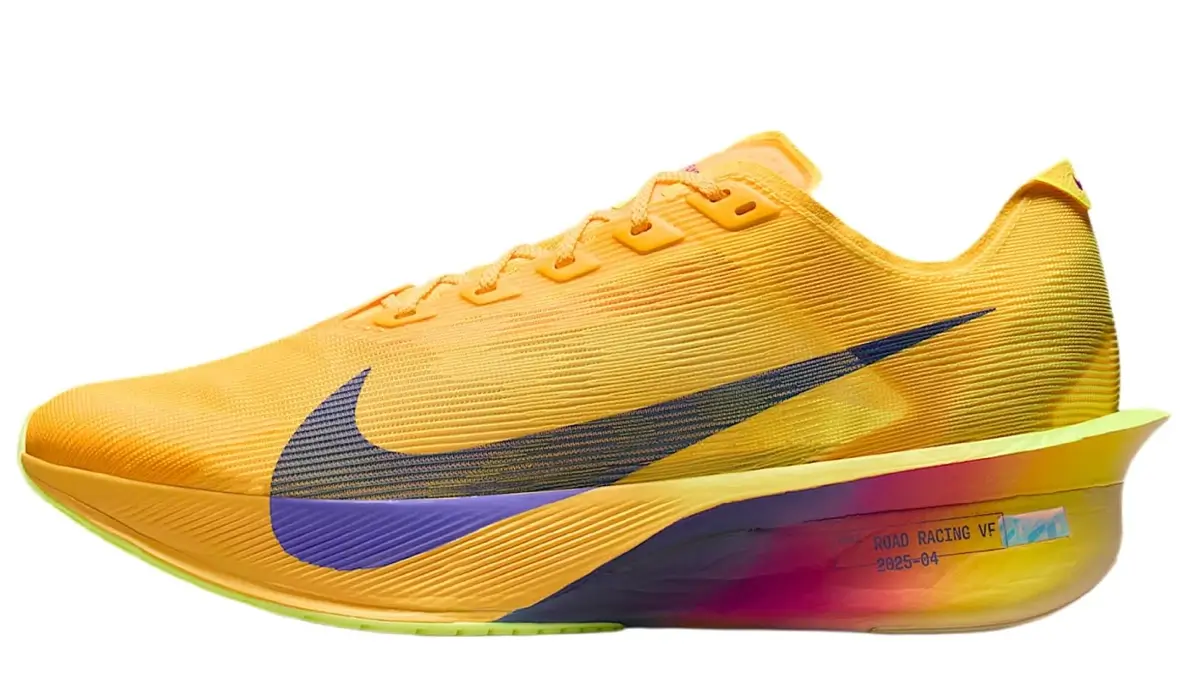
| Quick Answer: Nike Vaporfly 4 Review. The Nike Vaporfly 4 is a carbon-plated racing shoe built for runners chasing faster times from the 5K to the half marathon. At just 5.85 ounces, it is 13% lighter than the Vaporfly 3. Its ZoomX foam also delivers excellent energy return. Nike lowered the shoe instead of adding more foam, giving it a flatter, more natural ride. The trade-off is less cushioning, especially for heavier marathon runners. It is also expensive at its $260 launch price. Check latest price. |
The original Vaporfly helped create the modern super shoe. Its basic formula combined highly responsive foam with a curved carbon plate to help runners move more efficiently. Most major running brands now use a similar design.
With the Vaporfly 4, Nike took a different approach. Instead of making the shoe taller or adding more cushioning, it removed material.
The heel stack measures 34.1 mm, which is lower than the Vaporfly 3 and comfortably below the 40 mm limit for World Athletics road races. Weight also dropped to just 5.85 ounces.
Nike also flattened the rocker, which is the curved shape of the sole that helps roll your foot forward. The result is a racing shoe that feels more natural underfoot than many aggressive super shoes.
Nike appears to have given the Vaporfly a clearer purpose. The Vaporfly 4 is best suited to 5K, 10K and half marathon racing, while the more cushioned Alphafly is better suited to the marathon. Lighter runners may still enjoy the Vaporfly over 26.2 miles, but others may want more cushioning.

Specs
Here are the key specifications for the Nike Vaporfly 4:
| Feature | Nike Vaporfly 4 |
|---|---|
| Type | Carbon-plated road racing shoe |
| Foot and gait type | Neutral; works with different footstrikes |
| Midsole | Full-length ZoomX foam |
| Plate | Full-length carbon-fiber Flyplate |
| Weight, men’s size 9 | 5.9 oz / 167 g listed; 5.85 oz / 166 g independently measured |
| Weight, women’s size 8 | 4.9 oz / 139 g listed |
| Heel-to-toe drop | 6 mm listed; 8.6 mm independently measured |
| Stack height | 35 mm heel / 29 mm forefoot listed; 34.1 mm / 25.5 mm independently measured |
| Upper | Lightweight engineered mesh |
| Outsole | Full rubber coverage in the forefoot with minimal heel rubber |
| Widths | Standard and wide |
| Surface | Road and track racing |
| Price | $260 at launch in March 2025. Check latest price |
Pros
The Vaporfly 4 has several clear strengths for runners who want a fast race-day shoe:
- At 5.85 ounces, it is the lightest Vaporfly yet and one of the lightest racing shoes available.
- Its 78.1% measured energy return is excellent and helps the shoe feel lively at faster speeds.
- The flatter rocker creates a more natural ride than many aggressive super shoes.
- Continuous forefoot rubber should provide better protection and wear than the cutout design on the Vaporfly 3.
- The toe box is surprisingly roomy for such a lightweight racing shoe.
Cons
There are also some important drawbacks to consider before buying it:
- The $260 launch price put it among the more expensive racing shoes.
- Forefoot cushioning is limited compared with many marathon-focused super shoes.
- The standard version fits fairly narrow through the midfoot.
- Independent measurements found a higher heel-to-toe drop than Nike lists.
- Wet-road grip is only average, and heel strikers may wear down the exposed foam quickly.
What is new versus the Nike Vaporfly 3?
The biggest change is weight. The Vaporfly 4 measures just 5.85 ounces, about 13% lighter than the Vaporfly 3. Nike achieved this partly by removing foam and using lighter materials in the upper.
The shoe also sits lower. Independent measurements put the heel at 34.1 mm and the forefoot at 25.5 mm. The measured drop is 8.6 mm, compared with 11.1 mm in the Vaporfly 3. These changes make the Vaporfly 4 feel flatter and closer to the road.
Nike also changed the carbon plate. The Flyplate now sits closer to the heel and has a deeper curve through the middle and front of the shoe. This helps create a sharper push during toe-off.
The outsole has changed too. Nike returned to continuous rubber across the forefoot instead of using the cutouts found on the Vaporfly 3. The heel uses a lighter, more exposed design similar to the Alphafly 3.
Nike also improved the upper, including the tongue and laces. These small changes make the shoe easier to lock down without adding much weight.
Who should buy the Nike Vaporfly 4?
The Vaporfly 4 makes the most sense for runners racing 5K, 10K or half marathon distances. Its low weight and responsive foam become more valuable as the pace increases.
It is also worth considering if you dislike the aggressive feeling of some modern super shoes. Many racing shoes use a strong rocker to push the runner forward. The Vaporfly 4 feels flatter and allows your normal stride to do more of the work.
Lighter runners may also use it successfully for a marathon. However, runners who rely on thick cushioning for protection over 26.2 miles may prefer the Alphafly 3 or another high-stack racer.
Anyone who thought the Vaporfly 3 had become too bulky or marathon-focused should find the Vaporfly 4 noticeably lighter and sharper.
Check the Vaporfly 4 price and availability on Amazon.
Who should avoid the Nike Vaporfly 4?
Heavier runners should think carefully before choosing the Vaporfly 4 for a marathon.
There is only 25.5 mm of measured foam under the forefoot, and forefoot shock absorption is lower than average. That may not feel uncomfortable early in a race, but the reduced cushioning could leave your legs feeling more tired late in a marathon.
Runners with broad feet should also pay attention to the fit. The shoe measures 91.7 mm through the interior midfoot, which is narrower than the Vaporfly 3. The toe box itself is reasonably roomy, but the middle of the shoe can feel snug.
Nike does offer a wide version, which may solve the problem for some runners.
The Vaporfly 4 is also difficult to recommend to runners focused mainly on value. At $260, it carries a premium price even though several competing carbon racers now offer similar performance for less.
How does the Nike Vaporfly 4 fit?
Here is a rundown of fit, comfort and sizing.
Fit and sizing
Most runners should start with their normal running shoe size. Owner feedback generally suggests that the Vaporfly 4 fits true to size.
The main issue is width. The interior measures 91.7 mm through the midfoot compared with 94.3 mm in the Vaporfly 3. That is not a huge difference, but runners who already found the Vaporfly 3 snug may notice it. The front of the shoe is more forgiving. Its 73.2 mm toe box width is close to average, while the 27.3 mm toe box height gives the toes a reasonable amount of vertical space.
Nike also sells the Vaporfly 4 in a wide version.
Upper and step-in comfort
The upper is one of the better changes in the Vaporfly 4. Nike made it lighter while fixing some of the fit issues found in the Vaporfly 3. The tongue sits more comfortably, and the laces hold the foot securely without needing to be pulled extremely tight.
The heel counter is flexible rather than stiff. This saves weight and is common in racing shoes.
Breathability is adequate for racing, and the removable perforated insole can help the shoe drain and dry after wet conditions.
How does the Nike Vaporfly 4 perform?
Here is what to expect performance-wise for the Vaporfly 4.
Midsole and cushioning
The Vaporfly 4 uses Nike’s ZoomX foam throughout the midsole.
ZoomX is made from a material called Pebax. In simple terms, it is a very light foam that compresses under your foot and quickly springs back into shape. This helps return some of the energy created with each stride. Measured energy return reached 78.1%, which is excellent.
The amount of protection depends on where your foot lands. Heel shock absorption is above average, while forefoot shock absorption is below average.
That gives the Vaporfly 4 a firmer and more connected feeling at the front of the shoe. Fast runners may enjoy that sensation, but runners who want a soft and heavily cushioned ride may not.
Ride and running performance
The full-length carbon Flyplate is a major part of how the Vaporfly works. The plate makes the shoe stiff and helps create leverage as your foot moves toward toe-off. Nike placed it closer to the heel and increased its curve through the middle of the shoe.
The Vaporfly 4 is still much stiffer than a normal running shoe, but its flatter rocker changes how that stiffness feels.
Instead of strongly pushing you forward, it lets you create more of the movement yourself. Some runners will love that. Others may find it less exciting than super shoes with a strong rolling sensation.
For 5K, 10K and half marathon racing, the design works very well because it rewards a fast, efficient stride. During a marathon, the reduced amount of foam may make the shoe more demanding on tired legs.
Stability and support
The Vaporfly 4 is a neutral racing shoe. It does not include traditional stability features designed to control pronation. Its narrow midfoot and flexible heel also make it less stable than a normal daily trainer. That is common among lightweight racing shoes. The carbon plate adds some stiffness against twisting, while the lower stack height helps keep the foot closer to the ground.
Runners who need significant stability or motion control should not expect the Vaporfly 4 to provide it. This is a race-day speed shoe, not a support shoe.
Outsole, grip and durability
Nike improved the forefoot outsole by removing the cutouts found on the Vaporfly 3.
The Vaporfly 4 now has continuous rubber across the front of the shoe. This protects the foam and gives forefoot strikers more rubber between their feet and the pavement.
The heel has much less coverage. Heel strikers may therefore wear through the exposed foam faster.
Wet grip is acceptable rather than excellent. Testing produced a wet-concrete grip score of 0.45 compared with a 0.52 average.
That should be enough for normal wet roads, but runners should use extra care on painted road markings, metal covers and other slippery surfaces.
As with most super shoes, durability is not the main goal. The Vaporfly 4 is best saved for races and selected speed workouts rather than everyday mileage.
Is the Nike Vaporfly 4 good for walking?
No. There are much better Nike shoes for walking.
The Vaporfly 4 uses a very stiff carbon plate. At running speed, that stiffness helps with efficiency and toe-off. At walking speed, the plate does not flex naturally with your foot. That can make the shoe feel awkward and tiring during long walks.
The outsole also uses very little rubber at the heel. Walking regularly on pavement could wear through the exposed foam quickly, which makes little sense with a $260 racing shoe. The snug midfoot can also become uncomfortable as your feet swell during a long day.
If walking is your main activity, one of Nike’s cushioned daily trainers will be more comfortable, more durable and much less expensive.
See best shoes for walking.
Nike Vaporfly 4 vs. Nike Vaporfly 3
The Vaporfly 4 is not simply a lighter version of the Vaporfly 3. Nike changed its purpose and ride.
Here are the most important differences:
Feature | Vaporfly 4 | Vaporfly 3 |
|---|---|---|
Measured weight | 5.85 oz / 166 g | About 13% heavier |
Measured heel stack | 34.1 mm | Taller |
Measured drop | 8.6 mm | 11.1 mm |
Measured interior width | 91.7 mm | 94.3 mm |
Forefoot outsole | Continuous rubber | Rubber with cutouts |
Price | $260 at launch (2025) | Check current price | $260 at launch (2024) | Check current price |
Choose the Vaporfly 4 if you race mainly at distances shorter than a marathon, care about keeping shoe weight as low as possible or prefer a flatter and more natural ride. The Vaporfly 3 may still make sense for runners who want more cushioning for a marathon, especially if it is available at a discount.
Nike Vaporfly 4 alternatives
The Vaporfly 4 is excellent for the right runner, but several alternatives may be better depending on your distance, weight and preferred ride.
The Nike Alphafly 3 (check price | read review) is the better choice for many marathon runners. It has more cushioning and provides greater protection over 26.2 miles. The trade-off is extra weight and a bulkier feel.
The Saucony Endorphin Pro 4 (check price) is worth considering if price matters. It offers strong racing performance without requiring you to pay Vaporfly pricing.
The Asics Metaspeed Sky Paris (check price) offers more cushioning under the forefoot. That may make it a better option for heavier runners or anyone racing longer distances.
The Nike Streakfly 2 (check price) goes in the other direction. It is even more stripped down and is aimed at runners who specialize in shorter races such as the 5K and 10K.

Price and value
The Vaporfly 4 launched at $260 in March 2025, putting it firmly in the premium racing shoe category.
You are paying for an extremely light shoe, excellent ZoomX foam and a carbon plate design Nike has refined through several generations. What you are no longer buying is a huge performance advantage over every competitor.
Other brands now make carbon-plated racing shoes with excellent foam and strong energy return. Some cost less. The Vaporfly 4 therefore makes the most sense when its specific strengths match what you want. If low weight, a flatter rocker and a natural-feeling ride are important to you, it offers a combination that is hard to match.
If you simply want a fast carbon shoe for an occasional goal race, you do not necessarily need to spend $260.
Check Size and Color Availability

Final verdict
Best for: 5K to half marathon racing, lighter runners and runners who prefer a natural-feeling super shoe.
Avoid if: you are a heavier runner looking for a marathon shoe, have broad feet or want the best performance for the lowest price.
Fit: True to size for most runners. The midfoot is snug, but the toe box is surprisingly roomy. Standard and wide versions are available.
Verdict: Nike made an unusual choice with the Vaporfly 4. Instead of adding more foam, it lowered the stack and cut 13% of the shoe’s weight.
That gives the Vaporfly a clear purpose again.
It is exceptionally light, fast and responsive, but it is not the most cushioned super shoe and it is no longer far ahead of its competition. At $260, that matters.
For runners who want a light, natural-feeling racing shoe for the 5K through half marathon, though, the Vaporfly 4 remains an excellent choice. Check online prices.
Frequently Asked Questions for Nike Vaporfly 4
Yes. Its measured 34.1 mm heel stack is below the 40 mm World Athletics limit for road racing. It also uses a single carbon plate.
The Alphafly 3 will be the better choice for many marathon runners because it provides more cushioning and protection over 26.2 miles. The Vaporfly 4 makes more sense for lighter runners who value low weight and do not need as much cushioning.
Expect less life than you would get from a normal daily trainer. ZoomX is designed for low weight and high rebound rather than maximum durability, and the Vaporfly 4 has limited rubber around the heel. Many runners save shoes like this for races and a small number of fast workouts instead of using them for daily training.
Yes, through the midfoot. Measured interior width dropped from 94.3 mm in the Vaporfly 3 to 91.7 mm in the Vaporfly 4. The toe box remains reasonably roomy. Runners with wider feet should consider the wide version.
Nike appears to have repositioned the Vaporfly as its lighter racing option for shorter distances, while the Alphafly handles the marathon. Reducing the amount of foam saved weight and gave the Vaporfly 4 a flatter, more natural ride. The trade-off is less cushioning over long distances.
Yes, but it is best reserved for occasional speed sessions. It is not an ideal daily trainer because the foam and outsole are designed for racing rather than high mileage. It also offers limited stability and costs much more than a typical training shoe. Saving it for faster workouts and races should help extend its useful life.