Last Updated on September 26, 2026
Excellent all-day cushioning in a heavy, stiff package
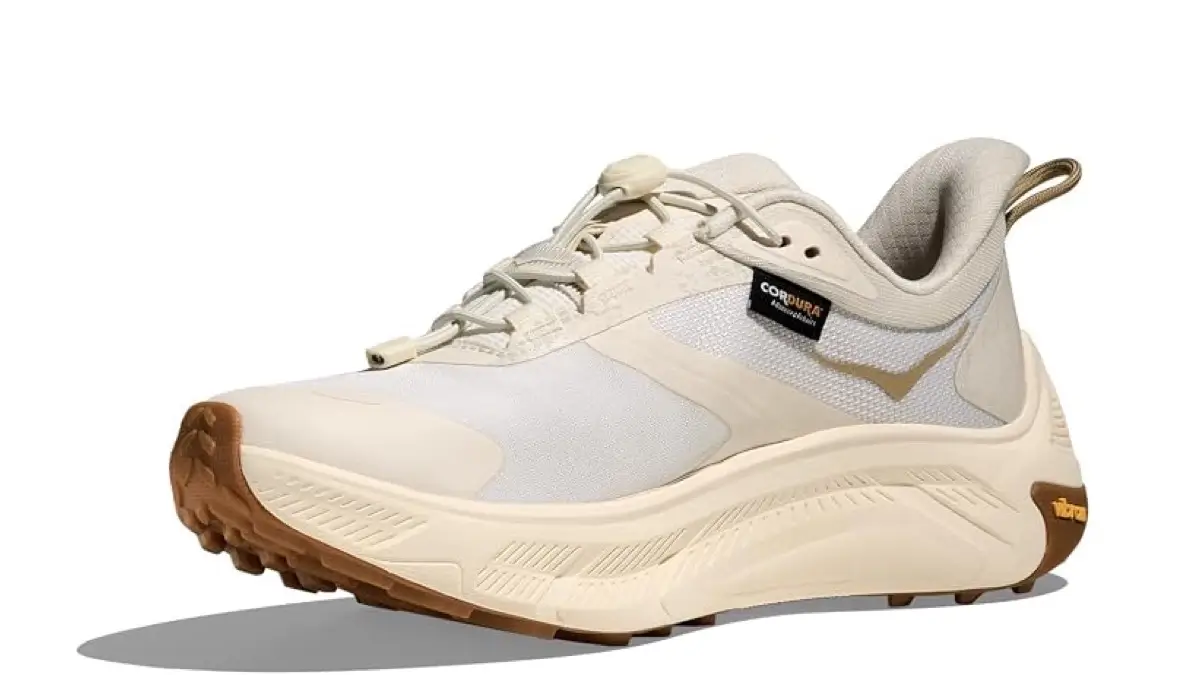
Quick Answer: Hoka Transport 2 Review: The Transport 2 is an everyday walking and commuting shoe for people who want Hoka cushioning in something that does not look like a running shoe. Hoka added stack height, a plusher collar and a softer sockliner, and kept the Vibram EcoStep Recycle outsole that grips wet sidewalks and holds up to city miles. It works for walking, standing and light trail. The drawbacks are weight and a stiff platform that does not flex much underfoot. Check latest price.
The Hoka Transport 2 is the second version of Hoka’s lifestyle and commuting shoe, and it is the one that stops apologizing for what it is. The original Transport was pitched as a city-to-trail hybrid, with a restrained look and a modest amount of foam. The 2 raises the stack, softens the interior and commits to being a comfort shoe you can wear all day.
The midsole is a sugarcane-based EVA, roughly 30 percent of it derived from sugarcane rather than petroleum, and it delivers the deep, protective feel Hoka is known for. Underneath sits a Vibram EcoStep Recycle outsole, a recycled-content rubber that grips wet pavement and tile far better than the foam or thin rubber most lifestyle sneakers use. That combination is why the Transport works for people who spend hours on hard floors rather than just walking to a coffee shop.
Hoka also fitted a plusher collar and a cushier sockliner, and added a small gusset and a webbing loop for practicality. It sits alongside the Clifton and Bondi in Hoka’s range but is aimed at walking, commuting and travel rather than running, and it is styled to pass in an office in a way the running shoes do not.
Specs
Here are the specifications for the Hoka Transport 2:
| Type | Everyday walking, commuting and light trail shoe, neutral |
| Best for | Walking, commuting, travel, standing all day, gravel paths |
| Midsole | EVA with roughly 30 percent sugarcane content |
| Geometry | Hoka rocker profile with a wide, stable base |
| Stack height | About 38 mm heel / 26.8 mm forefoot, independently measured |
| Heel-to-toe drop (?) | 5 mm as listed by Hoka; one independent lab measured about 11.2 mm, so treat the figure as disputed |
| Weight | About 11.3 oz men’s US 9; independent measurements range from about 10.5 oz to 11.9 oz, so treat as approximate |
| Upper | Recycled mesh with a plush collar, a gusseted tongue and a heel pull loop |
| Outsole | Vibram EcoStep Recycle rubber |
| Widths | Standard and wide (2E) on selected colorways |
| Price | Launched at $155 in early 2026. Check latest price |
Pros
These are the reasons it works as an all-day shoe:
- Deep cushioning that takes the sting out of concrete over a full day on your feet
- Vibram rubber grips wet sidewalks, tile and painted crossings better than typical lifestyle soles
- Rocker geometry rolls you through each step, which reduces how hard the calves work at walking speed
- Plush collar and sockliner make it comfortable straight out of the box
- Understated styling that does not read as a running shoe
- Wide fitting available, and the outsole is durable enough for daily city use
Cons
These are the compromises worth weighing:
- Heavy at around 11.3 ounces, which is noticeable when carrying it through an airport or a long day
- Stiff through the forefoot, so it rolls rather than flexes as you walk
- The listed 5 mm drop is disputed by independent measurement, so choose carefully if drop matters to you
- At $155 it costs more than most dedicated walking shoes
- Warm in summer, since the upper prioritizes structure over airflow
What is new versus the original Transport
The first Transport was a restrained shoe. It had a moderate stack, a fairly firm feel and a build that leaned toward hiking rather than comfort. Hoka has moved it decisively toward comfort in the second version.
Stack height went up, with independent measurement putting the heel near 38 mm, which is close to what Hoka’s cushioned running shoes carry. That is the change most people will feel, because it converts the Transport from a shoe you can walk in to a shoe you want to walk in for hours. The forefoot stayed roughly where it was, which keeps some ground contact at the front.
Inside, the collar is plusher and the sockliner softer, so step-in comfort is markedly better. The Vibram EcoStep Recycle outsole carries over, and it remains the shoe’s most practical feature. The overall look was tidied but stays deliberately low key, which is the point of the model.
Who should buy the Hoka Transport 2
Buy the Transport 2 if you are on your feet on hard surfaces and you want cushioning without wearing an obvious running shoe. Commuters, teachers, hospitality workers, travelers and anyone walking several miles a day on concrete are the target, and the depth of foam here does more for tired feet than any lifestyle sneaker will.
It also suits people who want one shoe for city and light trail. The Vibram outsole handles gravel paths, packed dirt and wet stone well enough for a walk in a park or a day of sightseeing that ends off pavement, and the stack protects the feet on uneven ground. It is not a trail running shoe, but it is far more capable than a sneaker.
Anyone who already knows they like Hoka cushioning will find this the most wearable version of it. The wide fitting on some colorways and the removable sockliner also make it a workable option for people using an over-the-counter or custom insole.
Who should avoid the Hoka Transport 2
Avoid it if you want a light shoe. At roughly 11.3 ounces the Transport 2 is heavy, and while weight matters less when walking than running, it is still noticeable on a long travel day or when the shoes are in a bag rather than on your feet.
Avoid it if you prefer a flexible shoe. The platform is stiff and the rocker does the work of moving you forward, which some walkers love and others find clunky at very slow speeds. If you like to feel your foot bending through the step, this is the wrong design.
It is also not a running shoe. Hoka does not market it as one, the weight is against it and the geometry is tuned for walking pace. Anyone wanting to run should buy a Clifton or a Bondi instead. Runners who need support features will find nothing here either, since this is a neutral platform.
How does the Hoka Transport 2 fit?
Here’s how the shoe fit and feels.
Fit and sizing
The Transport 2 fits true to size with a moderately roomy shape, more generous than Hoka’s performance running shoes. The midfoot is secure, the heel is well held and the toe box gives the toes space to spread, which matters on a shoe designed to be worn for eight hours rather than one.
A wide fitting is offered on some colorways. The sockliner lifts out, so an orthotic fits, though the platform is already deep and adding a device will tighten the fit noticeably.
Upper and step-in comfort
Step-in comfort is the shoe’s strongest first impression. The collar is generously padded, the sockliner is soft and the gusseted tongue keeps everything in place without pressure points. The heel pull loop is a small thing that matters when you are putting shoes on and off repeatedly.
Breathability is moderate at best. The upper prioritizes structure and durability over airflow, so the shoe runs warm in summer heat. In cooler weather that same density is an advantage.
How does the Hoka Transport 2 perform?
Here’s a look at performance and ride.
Midsole and cushioning
The sugarcane EVA is a comfort foam rather than a performance one. It compresses readily under body weight and spreads impact over a longer moment, which is exactly what makes concrete tolerable hour after hour. With roughly 38 mm under the heel there is a lot of it, and the difference against a flat-soled sneaker is dramatic.
Energy return, the share of impact energy the foam gives back, is low. That is not a criticism in a walking shoe, since walking generates far less force than running and there is little energy to recycle. What matters here is protection, and the Transport 2 delivers it.
Ride and walking performance
Hoka’s rocker geometry is the defining feature. The sole curves up at the heel and toe so that the shoe tips you from landing into the next step rather than requiring the foot to bend. At walking pace that reduces how hard the calves and the arch have to work, which is why so many people on their feet all day get on with Hoka.
The cost is that it does the moving rather than you. Walkers who prefer to feel the foot articulate through the step find the platform stiff, and at very slow speeds, shuffling around a kitchen for instance, the rocker can feel awkward. It is worth trying before committing if you have never worn a rockered shoe.
Stability and support
The Transport 2 is a neutral shoe. Stability comes from a wide base and a firm heel counter rather than from any feature designed to limit inward roll, and on a platform this tall that base is what keeps the shoe from feeling perched. For walking on flat surfaces it feels planted and predictable.
Walkers who overpronate significantly, meaning the ankle rolls inward and the arch flattens under load, will not find dedicated support here. A stability walking shoe would suit them better, and anyone with persistent foot or ankle pain should seek a professional assessment rather than rely on footwear alone.
Outsole, grip and durability
Vibram EcoStep Recycle is the practical hero of the shoe. Most lifestyle sneakers use thin rubber or exposed foam, both of which slip on wet tile and wear out quickly. This outsole grips wet pavement, painted crossings and smooth indoor floors, and it covers enough of the sole to resist the uneven wear that city walking causes.
Durability is a genuine strength. Expect the outsole to outlast the midsole, and expect the midsole to soften gradually rather than fail. The 300 to 500 mile guideline used for running shoes is not a good fit for walking use, where months of wear are the more useful measure.
Is the Hoka Transport 2 good for walking?
Yes, and walking is what it was built for. Everything about the design points at hard surfaces and long hours: roughly 38 mm of soft foam under the heel to blunt concrete, a wide base that stays steady at slow speeds, a rocker that carries you through the step so the calves and arch work less, and a Vibram outsole that holds on wet sidewalks and tile floors. The plush collar and soft sockliner mean it is comfortable from the first wear, with no break-in period.
Two caveats. It is heavy, which matters on a long travel day, and the platform is stiff, so if you like your shoes to bend at the toes you may find it clunky at very slow speeds. It is also warm. Set against those, the combination of cushioning depth, grip and everyday styling makes it one of the better all-day shoes Hoka offers.
Transport 2 vs. the original Transport
Here is how the two versions compare:
Transport 2 | Transport | |
Heel stack | About 38 mm | Lower |
Feel | Softer and more cushioned | Firmer, more hiking oriented |
Interior | Plusher collar and sockliner | More basic |
Outsole | Vibram EcoStep Recycle | Vibram EcoStep Recycle |
Weight | Heavier | Lighter |
Buy the 2 if all-day comfort is the priority, since that is where the extra foam and the softer interior pay off. Buy the original while it is discounted if you want a lighter, firmer shoe that leans more toward light hiking than standing.
Hoka Transport 2 Alternatives
Walkers who need genuine support rather than just cushioning should look at the Brooks Addiction Walker 2 (check price | read review). It is a leather motion-control shoe built for overpronation and long shifts on hard floors, so it does the one job the neutral Transport cannot.
If the weight is the sticking point, the Hoka Clifton 11 gives similar cushioning and the same rocker in a noticeably lighter shoe. It looks more like a running shoe, which is the trade, but it is easier to wear for a full day of travel (check price | read review).
For people who want a wider, roomier platform for standing, the Brooks Ghost Max 3 is worth comparing. It pairs a broad, stable base with a generous fit and a gentler rocker, which suits walkers who found the Transport too stiff at slow speeds (check price | read review).
Where both cushioning and stability are needed for all-day wear, the Hoka Gaviota 6 combines a max-cushion platform with a support frame. It is a running shoe rather than a lifestyle one, so it looks the part, but for tired, rolling feet it does more (check price | read review).
Price and value
The Transport 2 launched at $155 in early 2026, which is expensive for a walking shoe and roughly in line with Hoka’s cushioned running models. The money buys a full Vibram outsole, a deep sugarcane EVA midsole and a build designed for daily wear rather than occasional use, and on a cost-per-month basis that compares well with cheaper sneakers that flatten out in a season. The value case weakens if all you need is cushioning, since several running-shoe alternatives deliver that for less. What you are really paying for here is grip, durability and styling you can wear to work.
Final verdict
Best for: walking, commuting, travel and standing all day on hard surfaces, plus light trail and gravel paths.
Avoid if: you want a light or flexible shoe, you need stability features for overpronation or you intend to run in it.
Fit: true to size, moderately roomy, wide fitting on some colorways, with a removable sockliner for orthotics.
Verdict: The Transport 2 is the most comfortable walking shoe Hoka makes that does not announce itself as a running shoe, and the Vibram outsole is the detail that justifies the price. Just accept that it is heavy and stiff by design. You can check size availability before ordering.
Frequently Asked Questions for Hoka Transport 2
Yes, and it is roomier than Hoka’s performance running shoes. The toe box gives the toes space to spread over a long day, and a wide fitting is offered on some colorways for feet that need more volume.
It is not designed for running and Hoka does not market it that way. At roughly 11.3 ounces it is heavy, and the geometry is tuned for walking pace. For running, the Clifton or Bondi are the right choices in the same range.
Hoka lists 5 mm, but one independent lab measured it closer to 11.2 mm. That is a large gap, so if you choose shoes carefully by drop, treat the published figure as disputed and try the shoe on if you can.
It is one of the better options, thanks to deep cushioning, a wide stable base and a Vibram outsole that grips wet tile. Whether it suits you depends on the workplace dress code and on whether you get on with a stiff, rockered platform.
On gravel paths, packed dirt and easy trails, yes. The Vibram outsole grips and the stack protects the feet. It is not a trail running shoe, so it lacks the deep lugs and the rock plate you would want on genuinely technical or muddy ground.
The sockliner lifts out, so most devices will fit. The platform is already deep and the fit will tighten once an insole is in, so consider the wide fitting or a half size up if you use a bulky orthotic.