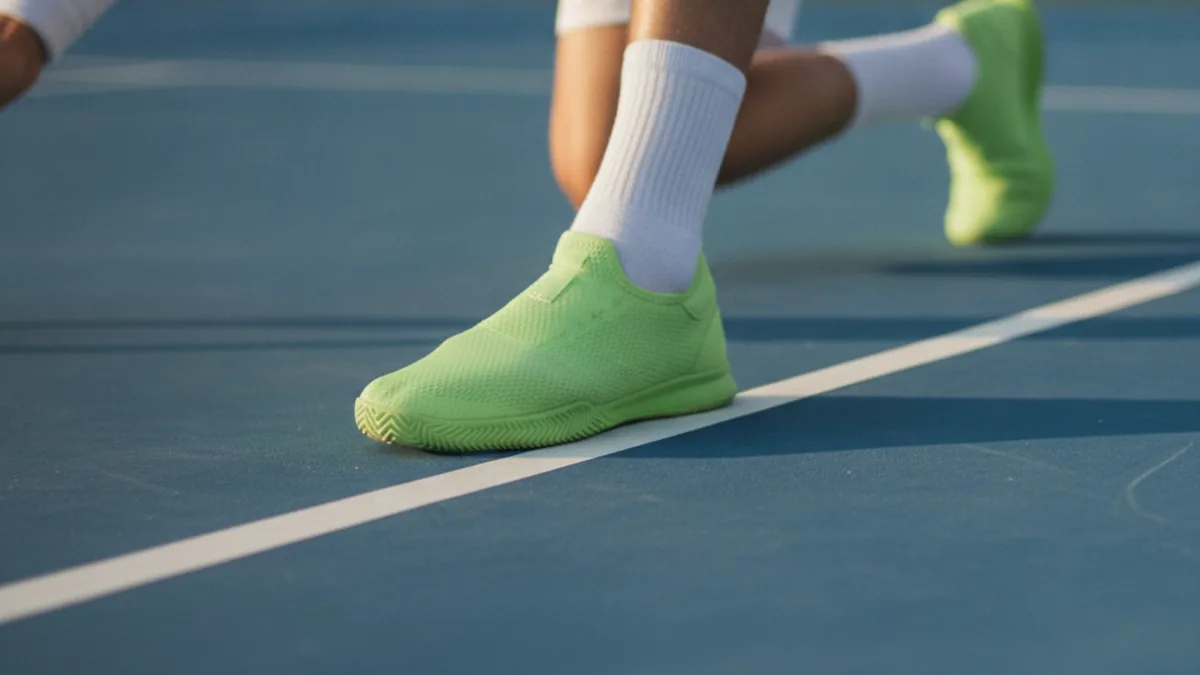
Quick Answer: Nike Zoom Vapor 12 Review: The Nike Zoom Vapor 12 is Nike’s top speed tennis shoe, built for players who cover a lot of court and like to feel close to the ground. A heel Air Zoom unit softens landings, while a firm frame and midfoot plate keep the shoe from twisting when you plant and cut. The herringbone outsole is made for hard courts. The trade-offs are a snug, close fit with no wide option and a thin forefoot that leaves little padding for long matches on concrete. Try it on before you commit. Check latest price.
The Nike Zoom Vapor 12 is the current flagship of Nike’s Vapor tennis line, the family the brand builds around speed rather than protection. Nike lists it simply as the Vapor 12, while tennis shops call it the Zoom Vapor 12, so you will see both names. It arrived in early 2025 alongside the cheaper Vapor Pro 3 and replaced the Vapor 11.
Nike’s pitch is simple: a reworked upper and a new traction pattern make it lighter and more responsive than the 11, and the Air Zoom heel unit returns. An Air Zoom unit is a thin, pressurized air pocket set into the sole. It compresses when you land and springs back, which cushions the heel without a thick slab of foam.
That makes this a shoe for a particular kind of player. If you love to attack, chase drop shots and close on the net, it was built for you. If you play long rallies from the baseline, or you want soft, roomy comfort, keep reading before you buy.

Specs
Here are the specifications for the Nike Zoom Vapor 12:
| Type | Speed-focused performance tennis shoe; hard court and clay versions |
| Best for | Attacking and all-court players on hard courts |
| Cushioning | Air Zoom unit in the heel, plus a layer of midsole foam |
| Stability | Firm midfoot plastic plate wrapped by a heel-to-toe foot frame |
| Stack height | About 22 mm heel and 10 mm forefoot (specialist retailer figures) |
| Heel-to-toe drop | About 12 mm, worked out from those stack figures |
| Weight | About 14.5 oz in a men’s US 10.5 (specialist retailer figure) |
| Upper | Lightweight engineered mesh with toe reinforcement and a full midfoot fit band |
| Outsole | Herringbone tread in Nike’s lighter new rubber compound; no rubber under the midfoot |
| Width | One standard width; no wide version on Nike’s US site |
| Price | Launched at $170 in early 2025. Check latest price |
Pros
- The firm plate and frame stop the shoe twisting when you plant hard and push back toward the middle.
- A low forefoot keeps you close to the court, so balance and footwork feel quick and precise.
- The heel Air Zoom unit takes some sting out of landings after serves and overheads.
- The midfoot fit band lets you pull the laces tight for a locked-in feel on fast cuts.
- Nike’s new rubber compound and the bare midfoot keep weight down without softening the base.
Cons
- The fit is close and there is no wide version, so broad feet are out of luck.
- Very little padding under the forefoot, which you will feel after long matches on concrete.
- At roughly 14.5 oz, it is still a substantial shoe, despite the speed billing.
- The firm, stiff base is useless for walking or everyday wear.
What Nike changed from the Vapor 11
Nike rebuilt three things. The first is traction. The herringbone pattern, a zigzag tread that grips when you stop and releases when you push off, is now made from a new rubber compound that Nike says is lighter than the rubber on past Vapors. Nike’s goal is a shoe that lets you slow down, plant and recover without feeling like you are rounding off your cuts.
The second is the structure underneath. Nike brought back a firm plastic plate under the midfoot, a feature older Vapors had, and wrapped it in a foot frame that runs from heel to toe. That plate is what lets Nike remove the rubber from the middle of the outsole to save weight. Nike also added a layer of midsole foam between the plastic and the rubber, which the Vapor 11 did not have, to keep the shoe feeling light on your feet.
The third is the upper. Nike trimmed the weight of the engineered mesh while keeping it tougher around the toe, where toe-dragging players wear shoes out first. A full midfoot fit band sits under the laces, so tightening them pulls the shoe snugly around your arch.
For the buyer, the result is a slimmer, lower, more minimal shoe than the 11. That is good news if you like a fast, connected feel. It is less welcome if you liked the previous model’s fuller, less minimal build.
Who should buy the Nike Zoom Vapor 12
Buy it if speed is your game. Players who take the ball early, move forward a lot and change direction constantly get the most from a low, firm shoe. You can feel exactly where your feet are, and the stiff frame gives you a stable platform to push off from.
It also suits players with narrow to average feet who want a precise fit. The shoe wraps closely and the fit band holds the midfoot, so your foot does not slide around inside it on a hard stop. If your current shoes feel sloppy when you lunge wide, this is the direction to move in.
Hard court regulars are the main audience. The herringbone tread and split rubber layout are made for concrete and acrylic courts, and Nike sells a separate clay court version with its own outsole if you play on clay.
Who should probably skip it
Skip the Vapor 12 if your feet are wide or you like room to spread your toes. The close wrap is part of the design, and Nike does not offer a wide version. Sizing up only adds length, which leaves your heel loose and the forefoot still tight.
It is also the wrong pick for baseline grinders who play long matches, heavier players who want more protection and anyone who wears through outsoles quickly. A thin forefoot and firm base are great for quick bursts and punishing over two hours of pounding on concrete. If you have ongoing foot or ankle pain, see a professional rather than hoping a shoe will fix it.
These are better starting points for those players:
- Nike GP Challenge Pro: a cushioned Nike option with a wider forefoot base and a padded upper, for feet that the Vapor pinches (check price)
- Nike Air Zoom Vapor Cage 4: Nike’s durability-first tennis shoe, built with extra stability and support for players who slide hard and chew through rubber (check price)
- Asics Gel-Resolution X: a more heavily built, support-focused tennis shoe for long baseline matches (check price)
Still not sure what your feet need? Our Free Shoe Finder can narrow it down in a couple of minutes.
A close, race-car fit that rewards narrow and average feet
The Vapor 12 fits like a speed shoe should: snug through the midfoot, secure at the heel and tapered toward the toes. Specialist retailers describe it as true to size and slightly narrow, which matches what the design tells you. The fit band and lighter mesh are there to hold your foot still, not to give it space.
For sizing, start with your usual tennis shoe size. If your toes already touch the front in the store, a half size up is worth trying, but do not size up to fix width. A longer shoe still has a narrow forefoot, and the extra length makes the heel slip. Try shoes on later in the day, when your feet are a little more swollen, since that is closer to how they feel mid-match.
The mesh does not stretch much, and the plate and frame underneath do not flex sideways at all, so what you feel on day one is roughly what you get. Thin to medium tennis socks will help if the fit is borderline.

Low, quick and stable on court, with little forefoot padding
Stack height is the amount of material between your foot and the court, and at roughly 22 mm at the heel and 10 mm at the forefoot, this is a low shoe. Your heel sits a fair bit higher than your toes, about 12 mm, which tips you slightly forward onto the balls of your feet. That is a ready position most tennis players will find natural, though it can take a session or two if you are coming from a flatter shoe.
The heel Air Zoom unit does most of the cushioning work. It takes the edge off landings when you come down from a serve or backpedal for an overhead. The forefoot is a different story. With so little material up front, you get excellent court feel, meaning you can sense how your weight is loaded, but you also get very little padding under the ball of your foot. Two hours on concrete will leave you aware of it.
Side-to-side stability is where the shoe earns its price. Tennis stability is not the same as running stability. In running, the worry is a foot rolling inward as it lands. In tennis, the worry is the whole shoe twisting or rolling over when you plant your outside foot and push back. The Vapor 12’s firm plate and heel-to-toe frame resist that twisting, so the shoe stays flat under you on a wide ball. It does not guide your arch in the running sense, and the snug fit leaves little room for a bulky orthotic.
The herringbone tread gives a predictable bite: enough to stop, not so much that your foot sticks and your knee takes the strain. Nike designed the traction to help you decelerate, plant and recover, and on a clean hard court that is how it should feel.
Outsole durability: built for hard courts, not for heavy sliders
Durability matters more in tennis than in running, because stopping and sliding on an abrasive court grinds rubber away quickly. The Vapor 12 puts its rubber where the wear happens, at the heel and forefoot, and Nike reinforced the upper around the toe for players who drag their back foot on serves.
What it is not is Nike’s toughest tennis shoe. Nike built the Vapor 12 to be light, and lighter rubber and a bare midfoot are part of that. If you wear out outsoles in a few months, a heavier, durability-focused shoe will usually cost less per hour of play. No tennis shoe has a set lifespan; how long a pair lasts depends on how often you play, how much you slide and how rough your courts are.

Is the Nike Zoom Vapor 12 good for walking?
No. Almost everything that makes the Vapor 12 good on court works against it on a sidewalk. The plate under the midfoot is designed not to bend, so the shoe fights the natural roll of a walking step. The thin forefoot gives little cushioning exactly where walkers need it most, and the close fit with no wide option gets uncomfortable over hours of wear.
Wear it for tennis and for the walk from the parking lot to the court. For errands, travel or a day on your feet, a cushioned walking shoe will feel far better. Our best walking shoes guide is a good place to start.
Nike Zoom Vapor 12 vs. Nike Vapor 11
Here is how the two generations compare, based on Nike’s description of the changes:
Zoom Vapor 12 | Vapor 11 | |
Outsole rubber | New, lighter compound | Previous compound |
Midfoot | Firm plastic plate, no rubber under the midfoot | No plastic midfoot plate |
Midsole foam layer | Yes, between plate and rubber | Not present |
Upper | Lighter engineered mesh, full midfoot fit band | Earlier upper |
Heel cushioning | Air Zoom unit | No Air Zoom unit (Nike brought it back for the 12) |
Buy the Vapor 12 when you want the lighter, more responsive feel and the firmer midfoot, and the fit suits your foot. Consider the Vapor 11 when you liked how it fit and can still find your size, because the Vapor 12’s slimmer, more minimal build is the biggest change.
If the Vapor 12 feels too snug, compare our K-Swiss Hypercourt Express 3 review and Wilson Rush Tour 5 review.
Nike Zoom Vapor 12 Alternatives
If you like the idea of a low, quick Nike but want to spend less, the Nike Vapor Pro 3 is the natural step down. It moves its Air Zoom unit under the forefoot, which puts the cushioning where you push off, and Nike says the smaller unit lets the toe box flex more. Club players who want speed without flagship stiffness should start there (check price | read review).
For more comfort while staying in the Nike family, the Nike GP Challenge 1.5 adds Air Zoom units in both the heel and the forefoot and a softer, bouncier feel. It trades a little of the Vapor’s low-to-the-court quickness for cushioning you will appreciate in the third set (check price).
Women who want a speed-minded shoe with more protection underfoot can look at the New Balance Coco CG2. Its thicker foam and carbon plate are aimed at keeping long matches comfortable, and the different brand last may suit feet that Nike’s shape does not (check price | read review).
Playing pickleball as well? Our best pickleball shoes guide covers court shoes built for that game.
Price and value
Nike launched the Vapor 12 at $170 in early 2025, which puts it at the top of the tennis shoe market. What the money buys is a genuinely stable frame, a light and grippy outsole and the low, connected feel that makes the shoe quick. What works against it is the fit: a premium shoe that pinches your toes is worse value than a cheaper one that does not. If it fits your foot and you play an attacking game, it earns its price. If you mostly play social doubles or long baseline rallies, a cheaper or more cushioned shoe makes more sense.
Final verdict
Best for: attacking and all-court players on hard courts with narrow to average feet who want a low, fast, stable shoe.
Avoid if: you have wide feet, play long baseline matches, want forefoot cushioning or need one shoe for tennis and everyday wear.
Fit: snug and tapered, true to size for most, with no wide version.
Verdict: The Nike Zoom Vapor 12 is a fast, stable speed shoe with a precise fit and a firm, low ride. Whether it is right for you comes down to your foot shape and your game. Check the latest price.
Frequently Asked Questions for Nike Zoom Vapor 12
Yes. Nike lists it as the Vapor 12, while tennis shops often call it the Zoom Vapor 12 because of the Air Zoom heel unit. A Premium version uses the same core design in special colorways.
For most players, yes in length, but the fit is snug and slightly narrow. Start with your usual tennis size and try a half size up only if your toes touch the front. Sizing up will not add width.
The standard Vapor 12 is designed for hard courts. Nike also sells a Vapor 12 clay court version with an outsole made for loose clay, so buy that one if clay is your main surface.
It can work on a hard pickleball court, since the movements are similar and the herringbone tread grips well. Its low, firm build and snug fit suit quick, aggressive players more than casual social play.
The Vapor 12 is the flagship, with a heel Air Zoom unit and a firm plate and frame for stability. The Vapor Pro 3 costs less, puts its Air Zoom unit under the forefoot and has a slightly more flexible toe box.
Nike’s US site does not list a wide version. Players with broad feet should try a shoe built with a wider forefoot rather than sizing up.