Achilles tendinitis — that persistent pain or stiffness at the back of the heel — can make even short walks uncomfortable and exercise feel impossible. Many people expect it to resolve quickly, but tendon injuries heal very differently than muscles. If you’re wondering how long Achilles tendinitis recovery takes, what actually helps healing, and why symptoms sometimes linger for months, this guide breaks it all down.
Below, we’ll walk through realistic recovery timelines, what slows healing, what truly helps, and how footwear, habits, and activity choices can either support or sabotage your progress.
What Is Achilles Tendinitis?
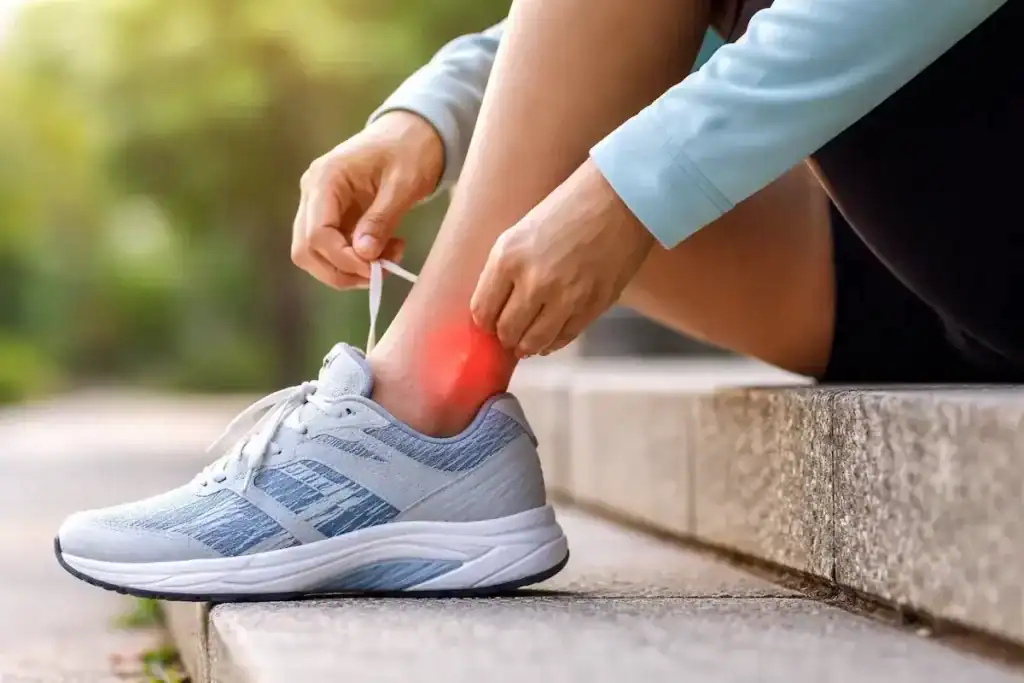
Achilles tendinitis refers to irritation, inflammation, or degeneration of the Achilles tendon — the thick cord of tissue that connects your calf muscles to your heel bone. This tendon absorbs enormous force every time you walk, climb stairs, or push off the ground.
There are two main types:
- Mid-portion (non-insertional) Achilles tendinitis, affecting the tendon itself
- Insertional Achilles tendinitis, where the tendon attaches to the heel bone
While inflammation may be present early on, many cases involve tendinopathy, where the tendon’s structure becomes weakened due to repetitive overload and insufficient recovery.
Achilles Tendinitis Recovery Time: What’s Typical?
Recovery time varies widely, depending on severity, how long symptoms were present before treatment, and how consistently stress on the tendon is managed.
General Healing Timeline
Weeks 1–2: Acute Phase
- Pain, stiffness, and tenderness are often worst
- Walking may be uncomfortable, especially after rest
- Rest and load reduction are critical
Weeks 3–6: Early Improvement
- Pain often decreases with proper care
- Gentle mobility and early strengthening may begin
- Daily activities become more tolerable
Weeks 6–12: Strengthening Phase
- Progressive loading exercises become central
- Tendon stiffness improves gradually
- Setbacks can still occur if activity increases too quickly
3–6 Months: Full Recovery for Many Cases
- Most moderate cases resolve with consistent rehab
- Return to running or impact sports is gradual
- Chronic cases may take longer
It’s important to understand that pain relief happens faster than true tendon healing. Even when symptoms improve, the tendon may still be vulnerable to re-injury if overloaded too soon.
Best Shoes to Support Achilles Tendinitis Recovery
Footwear plays a measurable role in recovery because every step places tensile load through the Achilles tendon. During Achilles tendinitis recovery, the goal isn’t to “cure” the injury with shoes, it is to reduce daily aggravation by choosing models that emphasize cushioning, stability, and smooth transitions. Shoes that soften impact and better manage motion can make walking and standing feel safer while tissues settle.
The following models are commonly recommended for Achilles tendinitis because they combine shock absorption, structural support, and controlled transitions, which help reduce how hard the tendon has to work with each step.
- Brooks Launch GTS 11 (stability trainer with springy cushioning; lighter feel)
- Hoka Mach 6 (responsive cushioning; smooth transitions; ideal for reducing step-by-step strain)
- Brooks Glycerin GTS 22 (plush cushioning; supportive frame; balanced stability)
- Brooks Beast GTS 24 (maximum stability; firm platform; excellent motion control)
- ASICS GT-2000 13 (stability build; supportive yet cushioned ride)
Important note: These are not “cure” shoes. However, they significantly reduce daily stress on the tendon, which is exactly what allows healing to progress instead of stalling.
Click here to learn more: Best Shoes for Achilles Tendonitis in 2025/2026.
Walking Shoes vs Running Shoes for Achilles Tendinitis
During recovery, walking shoes are often the better choice, especially if you’re on your feet a lot. Walking shoes prioritize stability and controlled motion at slower speeds, which reduces repetitive strain through the ankle and Achilles tendon.
Running shoes can still work, but only certain types. Models that are more supportive, well-cushioned, and stable tend to be far more Achilles-friendly than lightweight or flexible trainers.
Shoes that often slow recovery include:
- Minimalist or barefoot-style shoes
- Very flexible casual footwear
- Thin soles with little cushioning
- Low- or zero-drop designs that increase tendon demand
These types of shoes place more stress on the Achilles and are best avoided until pain has fully resolved and strength has returned.
What Healing Actually Looks Like
Achilles healing is slow because tendons have limited blood supply. This means:
- Improvement is gradual, not linear
- You may have good days followed by flare-ups
- Pain reduction doesn’t always mean the tendon is fully healed
Understanding this helps explain why “pushing through” often backfires.
What Actually Helps Achilles Tendinitis Heal
1. Activity Modification
Reducing or temporarily eliminating painful activities (especially running, jumping, and hills) allows the tendon to recover without constant overload.
2. Ice and Early Pain Control
Cold therapy can help manage pain and swelling during early stages, especially after activity.
3. Progressive Strengthening
Targeted Achilles and calf strengthening — particularly eccentric exercises — is one of the most effective ways to restore tendon strength and resilience.
4. Mobility (At the Right Time)
Gentle, pain-free ankle and calf mobility can reduce stiffness, but aggressive stretching too early often worsens symptoms.
5. Supportive Footwear
Wearing supportive shoes consistently — even indoors — prevents repeated irritation that can stall healing.
Several Common Habits Quietly Keep Achilles Tendinitis From Healing
Many cases of Achilles tendinitis linger not because treatment is missing — but because daily habits keep re-aggravating the tendon.
The most common issues include:
- Walking barefoot on hard floors, even for short periods
- Switching between supportive shoes and unsupportive casual footwear
- Pushing through tendon pain because it “loosens up” (a classic Achilles trap)
- Expecting stretching alone to fix the problem
- Returning to long walks, hills, or exercise too quickly
These habits repeatedly overload the tendon just enough to prevent proper healing, even if everything else is done correctly.
What to Expect as You Recover
Early on: Pain decreases, stiffness remains
Mid-recovery: Strength improves, daily walking feels easier
Later stages: Tendon tolerates more load, flare-ups become rare
Patience and consistency matter far more than aggressive treatment.
When to See a Professional
You should seek medical or physical therapy guidance if:
- Pain persists beyond several weeks
- Symptoms worsen instead of improving
- Swelling, weakness, or sharp pain increases
Early intervention often prevents months of chronic issues.
How This Page Fits Into the Bigger Achilles Recovery Picture
If you’re dealing with ongoing heel or lower-leg pain, it’s not always obvious which structure is actually involved. Achilles tendinitis often overlaps in symptoms with other foot and ankle conditions, and recovery timelines can vary depending on the tissue affected. Seeing how Achilles tendon healing compares to other common injuries can help set more realistic expectations and clarify why certain treatments work better for some issues than others.
For a broader view of healing timelines across foot and lower-leg injuries, you can explore our full guide here: Foot injury recovery time and healing timelines
Final Thoughts
Achilles tendinitis recovery time can range from weeks to several months, depending on how early the issue is addressed and how consistently stress on the tendon is managed. Healing isn’t about finding a single “magic fix.” It is about reducing daily aggravation, strengthening the tendon gradually, and avoiding habits that quietly undo your progress.
With the right approach, most people do fully recover — and return stronger than before.