Tall heel in a slim, light package, let down by a narrow toe box
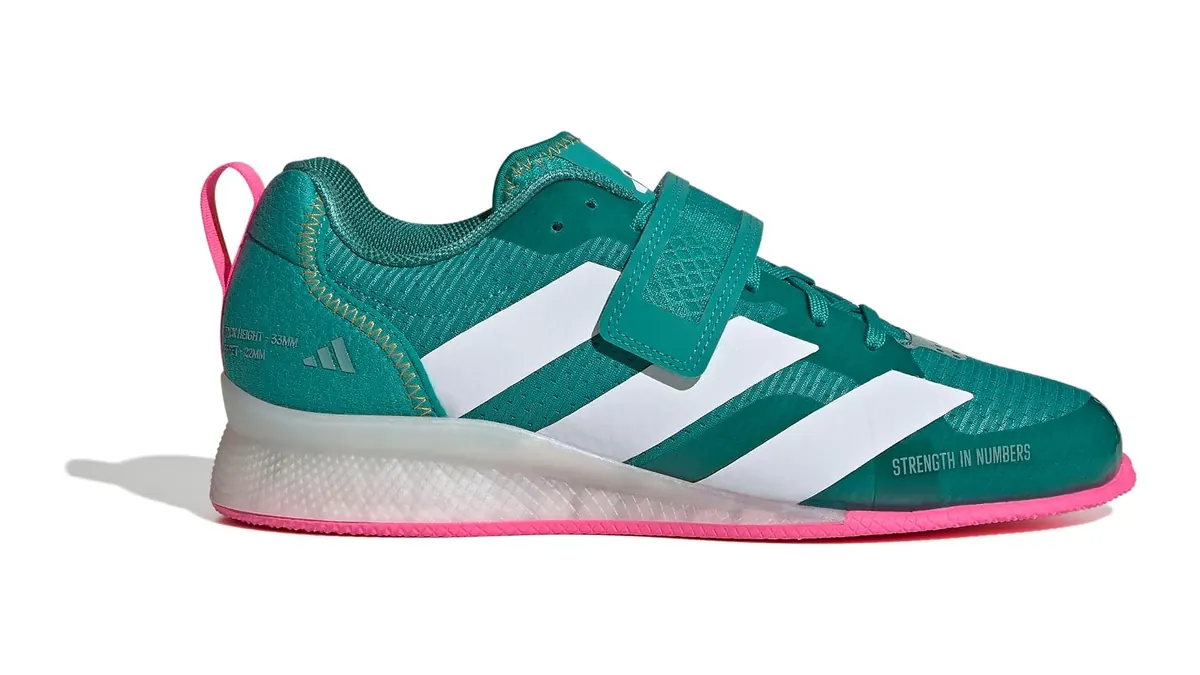
Quick Answer: Adidas Adipower 3 Review: The Adipower 3 is a dedicated weightlifting shoe with a 22 mm heel, which is at the tall end of the market and helps you squat deeper with a more upright chest. A solid plastic heel and a single midfoot strap keep it planted, and it feels lighter and less bulky than the Nike and Reebok flagships. The catch is the fit: the toe box is narrow, so wide feet should look elsewhere. It is also the most expensive of the mainstream lifters. Check latest price.
The Adidas Adipower 3, sold as the Adipower Weightlifting 3, is Adidas’ top lifting shoe. It launched on July 28, 2022 at $220 and it remains the current model. Adidas sells it in unisex sizing.
Adipower is one of the oldest names in this small category, and the recipe has barely changed in a decade because it does not need to. You get a hard plastic wedge under the heel that will not squash, a wide flat sole, a strap across the middle of the foot and an upper stiff enough to hold everything still. What separates one lifting shoe from another is how tall the heel is, how rigid the shoe is and how it fits.
On the first two counts the Adipower 3 does well. Its 22 mm heel is one of the tallest available, and the shoe is noticeably slimmer and lighter on the foot than the Nike Romaleos 4 or the Reebok Legacy Lifter III. On the third count it is divisive, because the front of this shoe is cut narrow and no amount of good design elsewhere fixes a shoe that squeezes your toes. If you need a shoe for mixed WODs rather than dedicated lifting, compare our best CrossFit shoes and best cross-training shoes.

Specs
Here are the specifications for the Adidas Adipower 3:
| Shoe type | Dedicated weightlifting shoe, squats and Olympic lifts |
| Best for | Narrow to medium feet wanting a tall heel without the bulk |
| Heel height | 22 mm, a little over three quarters of an inch |
| Heel material | High-density TPU, a hard plastic that does not compress |
| Straps | One midfoot strap over a standard lace closure |
| Upper | Ripstop textile with synthetic overlays at the forefoot and midfoot, made with at least 50 percent recycled material |
| Forefoot | Flexible, so the shoe bends where your toes bend |
| Weight | Not published by Adidas. Comparisons put it around 450 g per shoe, so treat that as approximate |
| Fit | True to size in length, narrow through the toe box |
| Sizing | Unisex, one width only |
| Released | July 28, 2022 |
| Price | $220 at launch in July 2022. Check latest price |
Pros
- At 22 mm the heel is one of the tallest on the market, so it does the most for lifters with stiff ankles.
- Lighter and slimmer on the foot than the Nike and Reebok flagships, which makes it easier to move quickly in.
- The high-density plastic heel is genuinely non-compressible, so the platform never feels squishy.
- The flexible forefoot lets you push through the ball of your foot naturally instead of fighting a plank.
- The single strap is quick to fasten and holds the midfoot without the fuss of a two-strap system.
Cons
- The toe box is genuinely narrow, and it is the single most common complaint about this shoe.
- At $220 it launched as the most expensive mainstream lifting shoe, and the changes over earlier Adipowers are modest.
- One strap gives slightly less lockdown than the two-strap Nike and Reebok designs.
- Adidas publishes almost no specification detail, so figures like weight have to be taken from independent comparisons.
What is new versus the Adipower 2
This is an evolution rather than a rethink. The core of the shoe, a hard TPU heel wedge, a wide flat base and a single midfoot strap, carries over from the Adipower 2 unchanged, and if you have lifted in the older shoe the new one will feel immediately familiar.
The upper is where the work went. Adidas rebuilt it in ripstop, a woven fabric with a grid of reinforcing threads that stops small tears spreading, and added synthetic overlays across the forefoot and midfoot for extra hold. The upper now uses at least 50 percent recycled material, which matters if that matters to you.
What did not change much is the shape, and that is the frustration. The narrow forefoot has followed the Adipower line for years and it survives here. The price did change: the Adipower 3 arrived at $220, which is a meaningful jump for a shoe whose performance is very close to its predecessor. If you already own an Adipower 2 in good condition, there is no compelling reason to upgrade.
Who should buy the Adidas Adipower 3
Buy it if you have narrow or medium-width feet and you want the tallest heel you can get. That combination is the Adipower’s home ground. The 22 mm elevation is at the top of the market alongside the Reebok Legacy Lifter III, and among the shoes offering that much lift this is by far the least bulky.
It also suits Olympic lifters who dislike feeling weighed down. Snatching and cleaning involve moving your feet quickly, and a lighter, slimmer shoe makes that easier than a heavy tank does. The flexible forefoot helps here too: you can push off through your toes rather than pivoting on a rigid board.
Finally, it suits lifters who want one strap rather than two. Some people find a second strap fussy and never tighten it properly anyway. The Adipower’s single strap over laces is quick, and combined with the stiff overlays it holds the midfoot well enough for most lifting.
Who should probably skip it
Skip it if your feet are wide. This is not a shoe you can size your way out of, because Adidas offers only one width and the narrowness is in the shape of the last rather than the length. Skip it if you want the absolute maximum in lockdown, since two straps do hold better than one. And skip it if you are buying your first lifting shoe: $220 is a lot to find out whether a raised heel suits you, and there are cheaper ways to answer that question.
Three shoes that suit that person better:
- Adidas Powerlift 5: Adidas’ cheaper and more flexible lifting shoe, which is the sensible way to try a raised heel before committing to a flagship (check price)
- Reebok Nano X5: a cross-training shoe for people whose sessions move between the barbell, the rower and short runs, where a rigid lifter gets in the way (check price)
- Vivobarefoot Primus Lite IV: a flat, thin-soled shoe for deadlifts and hinge work, where a raised heel works against you (check price)
How does the Adidas Adipower 3 fit?
The Adipower 3 fits close and lean. Length is true to size for most people, and the heel and midfoot are held securely by the overlays and the strap. Everything about the fit is fine until you get to the toes.
Fit and sizing
Order your usual size. The toe box is narrow, and that is the shoe’s defining fit characteristic. If you normally wear a D width and find most athletic shoes fine, you will probably be at the edge of comfortable here. If you wear a wide, this shoe is not for you and going up half a size will give you a long shoe that is still tight across the ball of your foot. Do bear in mind that under a heavy squat you want your toes to be able to spread a little for balance, so a snug toe box is not just a comfort issue. The insole is removable if you want to free up a fraction of volume.
Upper and step-in comfort
The ripstop upper feels light and slightly technical rather than plush. There is far less internal padding than in the Nike Romaleos 4, which is part of why the Adipower feels slimmer, and it also means less material soaking up sweat over a long session. The heel counter, the stiffened cup at the back of the shoe, holds firmly without pressure points. Step-in comfort is good if the width suits you and unpleasant if it does not. There is no break-in period that will widen this shoe, so judge it on how it feels the first time.
How does the Adidas Adipower 3 perform?
Under a bar this shoe does its job without drama. The heel is tall and completely solid, the base is wide and the shoe stays quiet underneath you. Where it differs from its rivals is in feel: less bulk, more freedom at the front, slightly less absolute lockdown.
Heel height and squat position
22 mm is among the tallest heels in mainstream lifting shoes, higher than the 20 mm Nike Romaleos 4 and level with the Reebok Legacy Lifter III. In everyday terms, more heel lift lets your knees travel further forward before your heels want to peel off the floor, so you can reach depth in a squat with your torso more upright. That helps most if your ankles are stiff, if you are tall or if you squat with a narrow stance. It helps least if your ankles already move freely, in which case this much lift can pitch you onto your toes. Elevation is about position, not strength, and it will not fix a technique problem.
Stability and support
The heel is high-density TPU, a hard plastic that does not squash under load, so the back of the shoe behaves like part of the floor. The base is wide and flat, which keeps you from rocking sideways. The single midfoot strap and the synthetic overlays clamp the middle of the foot down onto that base. It is a secure shoe, and the only honest criticism is comparative: the two-strap Nike and Reebok designs hold marginally better, and the Nike is stiffer through the middle. For all but the heaviest lifting that difference is academic. If you have an existing foot or ankle problem, a shoe is not the answer and a professional assessment is.
Outsole, grip and durability
The outsole is flat rubber with a light tread, and it grips wooden platforms and rubber gym flooring without sliding. The forefoot is deliberately flexible, which is unusual in this category and helpful when you push off to move your feet under a bar. Durability is rarely the issue with lifting shoes, since you are not grinding the sole down by running. Here the parts to watch are the ripstop upper and the strap, and the ripstop weave is specifically chosen to stop a small snag turning into a tear. Expect a well-cared-for pair to last years.
Is the Adidas Adipower 3 good for walking?
It is not, and it is not meant to be. Walking asks a shoe to cushion your heel as it lands and then bend at the ball of your foot as you roll forward. The Adipower 3 has a rigid plastic heel with no cushioning at all, so every step transmits straight up your leg, and it holds you in a permanent forward tilt that your calves have to manage.
The flexible forefoot means it is marginally less awkward to walk in than the stiffest lifters, and moving around the gym floor between sets is no problem. Beyond that, treat it as equipment rather than footwear. Wear normal shoes to the gym, change into these for your working sets and change back afterwards. If you want one pair that can lift and walk, you want a cross-training shoe, not a lifter.
Adipower 3 versus Adipower 2
Feature | Adipower 3 | Adipower 2 |
Heel | High-density TPU, 22 mm | TPU heel wedge |
Upper | Ripstop with synthetic overlays, 50 percent recycled content | Earlier textile upper |
Strap | One midfoot strap | One midfoot strap |
Launch price | $220, July 2022 | Launched below the 3, exact price not verified here |
Buy the 3 when you are starting fresh, when you want the tougher ripstop upper or when you simply want the current model. Buy a discounted Adipower 2 when you find one in your size and you are happy with a shoe that lifts almost identically for less money.
Adidas Adipower 3 Alternatives
The Adipower 3 is the slim, tall-heeled option. Lifters who need something different from it have three strong choices.
TYR L-2 Lifter: the direct answer to the Adipower’s narrow fit, with a deliberately wide toe box that lets your toes spread under load and a 21 mm heel that gives up almost nothing in elevation (check price).
Where absolute rigidity matters more than weight, the Nike Romaleos 4 is the shoe to beat. It runs a slightly lower 20 mm heel but adds a second strap that threads through the sole, and it measured the stiffest of any lifter in lab twist testing. It is heavier and more padded, which some lifters like and others find claustrophobic (check price).
The Reebok Legacy Lifter III matches the Adipower’s 22 mm heel and goes further on hold, adding a Pump inflation system that lets you tighten the upper around your foot. It is the heaviest of the group by some margin, so it suits lifters who never want to think about weight at all (check price).

Price and value
At $220 on launch in July 2022 the Adipower 3 sat at the top of the mainstream lifting-shoe market, above the Nike Romaleos 4 and roughly level with the Reebok Legacy Lifter III. What you get for the money is a tall, solid heel and a light, slim build, which is a genuinely different proposition from its rivals. What you do not get is a wider fit, a second strap or much in the way of published specification. The value verdict depends on your feet: if you are narrow-footed and want elevation without bulk, this is the best shoe for you at any price. If you are not, you are paying a premium for a shape that does not suit you.

Final verdict
Best for: narrow to medium-width lifters who want a 22 mm heel in the lightest, slimmest package available.
Avoid if: you have wide feet, you want the maximum possible lockdown or you are buying your first pair of lifting shoes.
Fit: true to size in length, narrow through the toe box, one width only.
Verdict: The Adidas Adipower 3 gives you the tallest heel in the category without the weight that usually comes with it, and for the right foot that is a compelling combination. The narrow toe box rules it out for a lot of people, and the price is steep for what is a light update. Try before you buy if you possibly can.
Frequently Asked Questions for Adidas Adipower 3
Yes. A narrow toe box is the most common criticism of this shoe. Length is true to size, but Adidas offers only one width, so lifters with wide feet should look at a different model rather than sizing up.
22 mm, which is a little over three quarters of an inch. That is among the tallest heels in mainstream lifting shoes, higher than the Nike Romaleos 4 and level with the Reebok Legacy Lifter III.
Only for the lifting portions. It has a rigid heel and no cushioning, so running, jumping and rope work are uncomfortable. Athletes who want one shoe for a whole class use a cross-training model and keep the lifter for heavy barbell work.
Probably not. The heel, base and strap layout carry over, and the main change is a tougher ripstop upper. If your Adipower 2 is in good condition, save the money.
A little. Two straps hold the midfoot marginally better and suit lifters chasing maximum security under very heavy loads. For most people a single strap over laces is enough, and it is quicker to use.
You can, but the soft foam under your heel compresses unevenly when you are loaded, which makes the floor feel unsteady. A flat shoe is better than a running shoe for squatting, and a lifting shoe with a raised heel is better still if you struggle to reach depth.