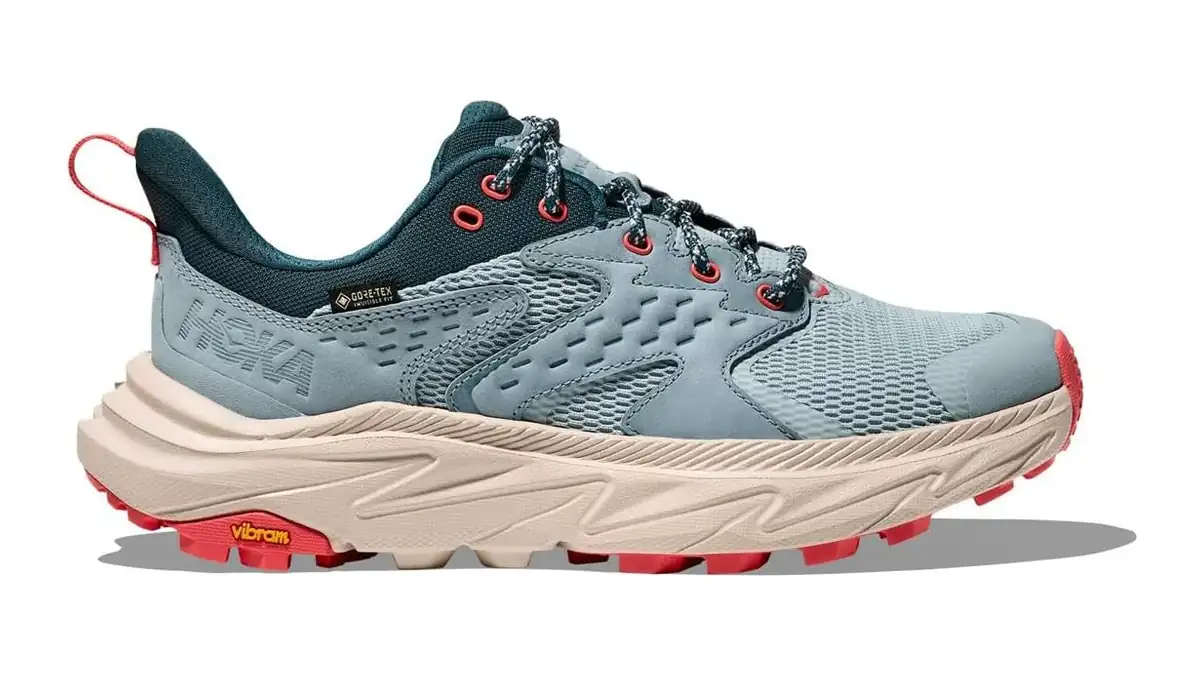
| Quick Answer: Hoka Anacapa 2 GTX Review: The Anacapa 2 GTX comes in Low and Mid versions built around the same cushioned hiking platform. Both combine a sugarcane-based EVA midsole, waterproof nubuck leather and Vibram Megagrip traction. Choose the Low if you want less weight and more freedom around the ankle for established trails and everyday walking. Choose the Mid if you want more coverage from water, mud and trail debris or regularly hike rougher terrain. Both are comfortable and waterproof, but they run warm and are heavier than trail-running shoes. Check latest price: Low | Mid |
Low or Mid? Cushioned Trail Comfort for Wet Conditions
The Hoka Anacapa 2 GTX is what happens when a company known for cushioned running shoes builds serious hiking footwear.
Instead of starting with a stiff leather boot and trying to make it comfortable, Hoka starts with a thick cushioned platform and adds waterproofing, trail traction and a durable nubuck upper.
There are two main versions worth considering: the Anacapa 2 Low GTX hiking shoe and the Anacapa 2 Mid GTX hiking boot.
They have much more in common than their different heights suggest. Both use a sugarcane-based EVA midsole, waterproof nubuck leather, a Vibram Megagrip outsole, protective toe construction and Hoka’s extended SwallowTail heel.
The decision between them comes down mostly to weight, coverage and where you walk.
The Low is the better choice for maintained trails, gravel paths and hikers who want a shoe rather than a boot. The Mid adds coverage around the ankle, uses higher lacing and does a better job of keeping mud, water and trail debris away from your feet.
Neither is particularly light or cool.
What both versions do unusually well is make hiking on firm ground feel less punishing than it does in a traditional hiking shoe.
Hoka Anacapa 2 GTX specs
Here is how the two main versions compare.
Specification | Anacapa 2 Low GTX | Anacapa 2 Mid GTX |
|---|---|---|
Type | Waterproof hiking shoe | Waterproof mid-height hiking boot |
Best for | Established trails, gravel, wet-weather walking | Hiking, wet trails, rougher terrain, added coverage |
Midsole | EVA with about 30% sugarcane content | EVA with about 30% sugarcane content |
Waterproofing | Gore-Tex Invisible Fit | Gore-Tex bootie construction |
Men’s published weight | About 15.3 oz per shoe | About 18 oz per boot |
Upper | Waterproof nubuck leather and recycled mesh | Waterproof nubuck leather and recycled mesh |
Outsole | Vibram Megagrip | Vibram Megagrip |
Insole | Removable soy-based PU sockliner | Removable soy-based PU sockliner |
Toe protection | Abrasion-resistant toe cap | Abrasion-resistant rubber toe cap |
Heel | SwallowTail design | SwallowTail design |
List price | About $180 | About $195 |
Current price |
Published heel-to-toe drop figures vary between current listings, so I would not make the drop a major buying point for either version.
The more important difference is weight and upper height. Moving to the Mid adds roughly a few ounces per foot, but you get substantially more protection around the ankle.
Hoka Anacapa 2 Low vs. Mid: Which should you buy?
For most buyers, this is the most important question in the review.
Choose the Anacapa 2 Low GTX if most of your hiking happens on established trails and you want the freedom of a hiking shoe. It weighs less, leaves the ankle exposed and feels less bulky during long walks. It is also the version I would rather wear for travel, gravel paths and trips that combine hiking with ordinary walking.
Choose the Anacapa 2 Mid GTX if your hiking regularly involves mud, wet grass, shallow puddles, loose debris or rougher trails. The higher upper gives water and dirt a more difficult path into the shoe and provides more physical coverage around the ankle.
The Mid also makes sense if you simply prefer the locked-in feel of a boot.
Do not buy the Mid because you assume the higher collar automatically prevents ankle injuries. Boot height alone does not provide that guarantee. Buy it for coverage, protection and fit.
The Low and Mid otherwise share enough of the same DNA that there is little reason to treat them as completely separate products.
| Choose the Low if… | Choose the Mid if… |
|---|---|
| You mainly hike maintained trails | You regularly hike rougher trails |
| Lower weight matters | More coverage matters |
| You dislike boots around your ankle | You prefer a boot-like fit |
| You combine hiking with everyday walking | You encounter mud, water and debris |
| You hike mostly with a light load | You want more upper structure |
Pros
The strongest reasons to consider either Anacapa 2 GTX are:
- More cushioning than most traditional hiking footwear
- Vibram Megagrip provides dependable traction on wet and dry surfaces
- Waterproof construction for rain, puddles and wet trails
- Broad platform gives the shoes a planted feel
- Nubuck leather provides more protection than a lightweight mesh trail shoe
- Minimal break-in compared with traditional leather boots
- Removable insoles make them easier to use with replacement footbeds
- Low and Mid versions let you choose the amount of coverage you actually need
The Low adds another advantage: it gives you most of the Anacapa platform without committing to a hiking boot.
The Mid adds its own advantage: more coverage without moving all the way to a heavy traditional backpacking boot.
Cons
There are also some clear compromises:
- Both waterproof versions run warm
- Neither is especially light compared with a trail-running shoe
- The Mid adds noticeable weight over the Low
- Thick cushioning provides less precise ground feel on technical terrain
- Waterproof footwear dries slowly if water enters over the collar
- The Low costs about $180 and the Mid about $195 at list price
- Hikers who prioritize maximum ground feedback may find the platform too substantial
The Anacapa is therefore better understood as a comfort-focused hiking platform than a lightweight technical hiker.
What changed with the Anacapa 2?
The second-generation Anacapa focuses heavily on materials.
Hoka uses an EVA midsole containing about 30% sugarcane-derived material along with recycled polyester in several parts of the upper. The nubuck leather comes from a tannery rated Gold by the Leather Working Group.
The fundamental Anacapa idea has not changed.
This remains a cushioned hiking shoe built around a broad underfoot platform, substantial heel cushioning and Hoka’s extended SwallowTail geometry.
The outsole is another important part of the package. Hoka uses Vibram Megagrip rather than relying on a basic proprietary rubber compound. That gives both versions a strong traction story for wet rock, damp wooden surfaces, packed dirt and mixed trails.
There is, however, an important waterproofing difference.
The Low uses Gore-Tex Invisible Fit, where the waterproof construction is integrated closely with the upper to reduce bulk.
The Mid uses a more conventional Gore-Tex bootie construction. It adds physical coverage as well as waterproofing, which makes more sense in a boot designed for wetter and rougher environments.
Who should buy the Hoka Anacapa 2 GTX?
Buy an Anacapa 2 GTX if your priority is walking comfort on trails.
The cushioning is the defining feature. Hard-packed dirt, gravel and rocky paths create thousands of small impacts over the course of a hike. The Anacapa puts considerably more material between your foot and the ground than a traditional hiking shoe.
That can make it particularly appealing to people whose feet feel beaten up after several hours outdoors.
The Anacapa also suits wet-weather hikers. Both versions combine waterproof construction with a durable nubuck upper and Vibram Megagrip outsole.
People who regularly find hiking footwear cramped should consider it as well, although fit should still be checked carefully rather than assuming every Hoka will fit a wide foot.
Choose the Low if you want the hiking equivalent of a cushioned walking shoe.
Choose the Mid if you like that same basic ride but want more protection from mud, shallow water, brush and trail debris.
For someone who already knows the Anacapa shape works, owning a Low for general hiking and a Mid for wetter or rougher conditions is a reasonable combination.
Who should avoid the Hoka Anacapa 2 GTX?
Avoid both versions if your priority is lightweight hiking.
The Low is already heavier than many modern trail shoes. The Mid moves farther into traditional hiking-boot territory at about 18 ounces per men’s boot.
Hikers covering very long distances who count every ounce may be happier in a trail-running shoe.
Technical terrain is another consideration. Thick cushioning gives you comfort, but it also creates distance between your foot and the ground. On steep rocks, scrambling routes and sharply off-camber terrain, a lower and firmer shoe can give you more precise feedback.
Hot and dry conditions are another reason to look elsewhere.
Both versions are waterproof. That is valuable in rain and wet grass but unnecessary in the desert or during dry summer hiking. Waterproof membranes reduce airflow, and the leather upper adds more warmth.
The Low is the better of the two for warmer conditions, but neither would be my first choice for genuinely hot weather.
If you do not need waterproofing, a ventilated hiking shoe will usually be more comfortable.
How does the Hoka Anacapa 2 GTX fit?
Here is the info you need on fit and comfort.
Fit and sizing
The Anacapa 2 has more interior volume than many performance-oriented hiking shoes.
That can be helpful over long distances because feet tend to swell as the hours pass. A shoe that feels perfectly snug at the beginning of a hike can become restrictive later.
The heel and midfoot still need to feel secure.
With the Low, Gore-Tex Invisible Fit helps keep the waterproof construction close to the upper instead of creating the bulky feeling found in some membrane-equipped shoes.
The Mid gives you more control over the upper portion of the fit because the lacing continues above the ankle. Metal speed hooks at the top make it easier to adjust that section separately.
For either version, try the shoe with the socks you actually plan to hike in.
You should have enough room in front of your longest toe to prevent contact during steep descents while still keeping the heel securely in place.
Upper and step-in comfort
Both versions use waterproof nubuck leather combined with textile sections.
Despite the leather construction, the Anacapa does not feel like a traditional heavy leather hiking boot. The padded collar and relatively flexible upper provide good step-in comfort.
There is little reason to plan a lengthy break-in period.
The Mid naturally feels more substantial because there is more material around the ankle, but it remains far removed from the stiff feel associated with classic backpacking boots.
Both use an Achilles-friendly heel construction intended to reduce pressure around the back of the ankle.
How does the Hoka Anacapa 2 GTX perform?
Hee’s how it performs.
Cushioning and walking comfort
Cushioning remains the reason to buy the Anacapa.
The sugarcane-based EVA midsole absorbs the repeated impacts of walking on compact dirt, gravel and other firm trail surfaces.
It is not a highly energetic running foam. The purpose here is protection rather than propulsion.
That distinction matters.
The Anacapa does not make you feel faster. It makes hard ground feel less hard.
The Low benefits most from this combination because the cushioned platform is paired with a shoe-height upper. It therefore feels closer to an everyday walking shoe than the Mid does.
The Mid retains the same comfort-first philosophy but adds the extra material and weight of a boot.
Independent testing of the Mid has found that the current foam is not exceptionally soft despite its substantial stack. That is actually useful for hiking because excessively soft foam can become unstable on uneven surfaces.
The result is substantial cushioning without the uncontrolled sinking sensation that can occur in very soft footwear.
Stability on the trail
Hoka gets much of the Anacapa’s stability from geometry.
The sole is broad, particularly around the forefoot and heel, giving the foot a larger platform to land on. The foot also sits within the midsole structure rather than feeling perched high above it.
That is important because the Anacapa has more cushioning than many hiking shoes.
A tall, narrow platform could feel unstable. A broad one is much easier to control at walking speeds.
The Mid gains some additional secure feeling from the higher upper and lacing system, but this should not be confused with medical gait correction or guaranteed ankle protection.
The benefit is primarily control and coverage.
For maintained trails, both versions feel stable. The Mid becomes more appealing as the terrain gets rougher.
Outsole, grip and durability
Both versions use Vibram Megagrip.
That is one of the strongest reasons to consider the Anacapa because traction matters more on wet surfaces than almost any other hiking-shoe feature.
The outsole handles packed dirt, gravel, rock, wooden steps and moderate mud well.
It is particularly useful on wet stone, where basic outsole compounds can become surprisingly slippery.
The tread is aggressive enough for genuine trail use without making the Anacapa unpleasant when you encounter pavement or hard surfaces.
Durability should also be better than you would expect from a lightweight mesh hiking shoe.
Nubuck leather protects much of the upper, rubber reinforces the toe and the Vibram outsole is designed for repeated outdoor use.
Watch outsole wear, midsole compression and waterproof performance rather than applying running-shoe mileage rules to hiking footwear.
How waterproof are the Anacapa 2 Low and Mid?
Both are genuine waterproof hiking models, but they achieve it somewhat differently.
The Low uses Gore-Tex Invisible Fit. The membrane is integrated closely with the upper, reducing the bulky internal feeling common in some waterproof hiking shoes.
That makes sense in a low-cut shoe where keeping the fit streamlined is important.
The Mid uses Gore-Tex bootie construction and extends the waterproof upper farther up the ankle.
That additional height is arguably more important than the difference in membrane construction.
A waterproof low shoe can keep puddles and rain away from your foot, but water only has to reach the collar before it can get inside.
The Mid raises that entry point.
For wet grass, muddy trails, snow patches, shallow puddles and brush, that extra height can make a meaningful difference.
Neither shoe remains waterproof once water enters over the top.
And once a waterproof shoe becomes soaked internally, drying takes considerably longer than it does with a ventilated trail shoe.
Is the Hoka Anacapa 2 good for walking?
Yes. Walking is one of the Anacapa’s strongest use cases.
Hoka’s running background is obvious in the amount of cushioning underfoot and the smooth transition created by the heel geometry.
For hard-packed trails, gravel paths, park trails and mixed walking routes, the Anacapa can feel considerably more forgiving than a traditional hiking shoe.
The Low is the better pure walking option.
It weighs less, leaves the ankle unrestricted and transitions more easily between trail and ordinary walking. If your trip involves hiking in the morning and exploring a town later in the day, the Low is the version I would rather have on my feet.
The Mid is better when the walking environment itself demands more protection.
Wet trails, mud, loose debris and rougher terrain are where the additional upper earns its weight.
Neither version would be my first choice for walking exclusively on concrete or pavement. A dedicated walking or running shoe will be lighter, cooler and usually more efficient.
Hoka Anacapa 2 Low vs. Mid
The two versions are close enough that fit and conditions should decide the purchase.
Feature | Anacapa 2 Low GTX | Anacapa 2 Mid GTX |
|---|---|---|
Weight | Lighter | Heavier |
Ankle coverage | Low | Mid-height |
Waterproofing | Gore-Tex Invisible Fit | Gore-Tex bootie |
Trail debris protection | Moderate | Better |
Everyday walking | Better | Good |
Wet/rough trails | Good | Better |
Freedom around ankle | Better | More enclosed |
Best overall use | Day hikes and mixed walking | Hiking in wetter, rougher conditions |
Launch price | About $180. Check current price | About $195. Check current price |
For most casual day hikers, I would start with the Low.
You keep the cushioning, waterproofing and Vibram outsole while saving weight and gaining more freedom around the ankle.
The Mid earns its additional cost when you regularly encounter conditions where its extra coverage is useful.
Hoka Anacapa 2 GTX alternatives
There are several good reasons to choose something else.
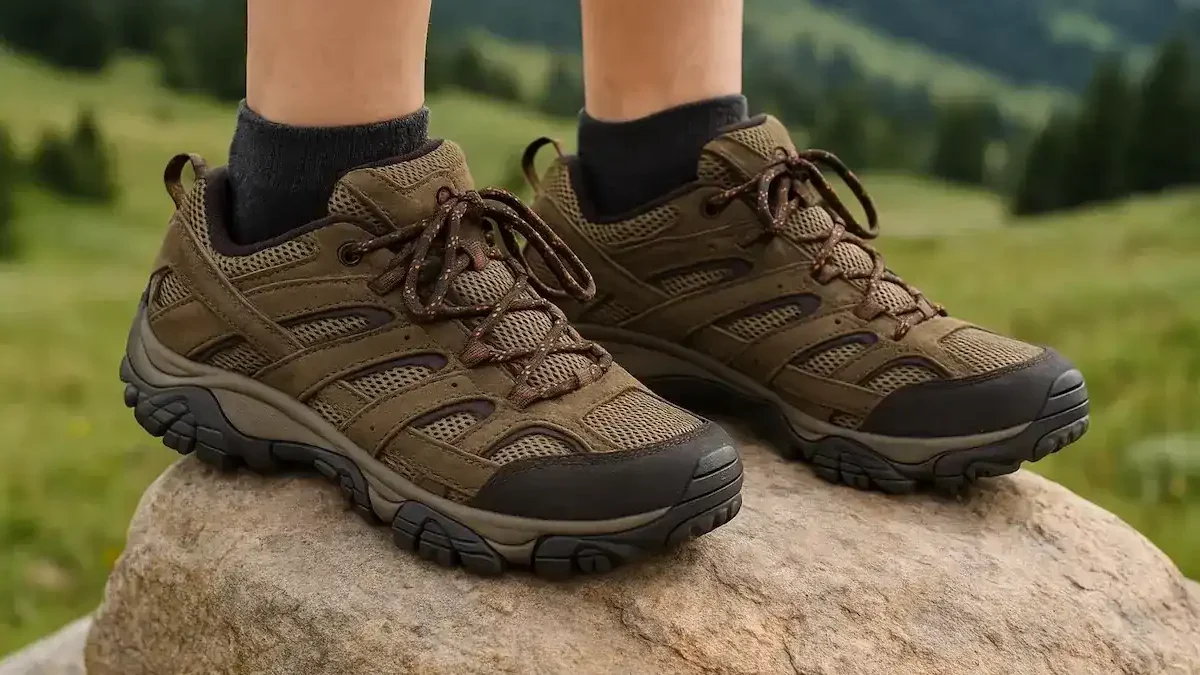
Merrell Moab 3
Choose the Merrell Moab 3 if you want a more traditional hiking feel and strong availability in wide sizes.
It is firmer and less Hoka-like underfoot, but the Moab remains an easy recommendation for hikers who prioritize fit, familiarity and value.
Read our Merrell Moab 3 review.
KEEN Targhee IV
Choose the KEEN Targhee IV if forefoot space is one of your biggest concerns.
Its broad toe area and substantial toe protection make it particularly attractive to hikers whose toes feel cramped in conventional footwear.
Salomon X Ultra 5
Choose the Salomon X Ultra 5 if you want a more precise, performance-oriented hiking shoe or boot.
It gives up some of the Anacapa’s cushioned feel in exchange for stronger ground control and a more athletic fit.
Read our Salomon X Ultra 5 Mid Gore-Tex review.
Hoka Speedgoat 6
Choose the Speedgoat 6 if you want Hoka cushioning and Vibram traction but do not need the structure of a hiking shoe.
It is considerably lighter and better suited to fast movement and dry-weather trails.
Read our Hoka Speedgoat 7 review.

Price and value
The Low costs about $180 at list price, while the Mid is about $195.
That $15 difference is small enough that price should not decide between them.
Choose based on which upper you need.
The Low gives you nearly all of the important Anacapa ingredients: waterproofing, sugarcane EVA cushioning, nubuck leather and Vibram Megagrip.
The Mid adds material, higher lacing and more physical coverage.
That makes the Low the stronger value for general day hiking and trail walking.
The Mid becomes the better value if you regularly walk in wet, muddy or debris-heavy conditions where the additional upper actually does something.
Amazon prices can vary considerably by size and colour, so compare the current price rather than assuming MSRP is what you will pay.

Final verdict
Best for: day hiking, wet-weather trail walking, gravel and established trails, and walkers who want more cushioning than traditional hiking footwear provides.
Choose the Low: for lower weight, everyday walking, maintained trails and more freedom around the ankle.
Choose the Mid: for more protection from mud, water and trail debris, or if you prefer a more enclosed boot fit.
Avoid either version if: you hike mainly in hot, dry conditions, want an ultralight shoe or prioritize precise ground feel over cushioning.
Fit: relatively accommodating for hiking footwear, with enough room for normal foot swelling on longer days.
The Anacapa 2 works because Hoka has not tried to make a traditional hiking shoe. It has taken the cushioning and walking comfort people expect from the brand and built enough protection and traction around it to handle real trails.
For most walkers, the Low is the more versatile choice.
For hikers who regularly deal with wet or rough conditions, the Mid is worth the small increase in price and weight.
Frequently asked questions about the Hoka Anacapa 2 GTX
Should I buy the Hoka Anacapa 2 Low or Mid?
Choose the Low for established trails, lighter weight and general walking. Choose the Mid if you regularly encounter mud, water, loose trail debris or simply prefer the additional coverage of a hiking boot. Both use a similar cushioned platform and Vibram Megagrip outsole.
Is the Hoka Anacapa 2 good for walking?
Yes. Cushioning and a broad platform make both versions comfortable for trail walking. The Low is the better choice for mixed walking and maintained trails, while the Mid makes more sense when conditions require additional protection.
Is the Anacapa 2 Mid more supportive than the Low?
The Mid provides more material and lacing around the ankle, which can create a more secure and enclosed feel. That does not mean it automatically prevents ankle injuries or corrects gait. The primary advantages are coverage, fit and protection.
Are both Anacapa 2 models waterproof?
Yes. The Low uses Gore-Tex Invisible Fit, while the Mid uses Gore-Tex bootie construction. The Mid’s higher collar also raises the point where water can enter from above.
Does the Hoka Anacapa 2 need breaking in?
Not much. Both versions use flexible cushioning and padded uppers that are considerably more forgiving out of the box than traditional stiff leather hiking boots. Short walks before a long hike are still sensible.
Is the Anacapa 2 good for wide feet?
The Anacapa has a relatively accommodating platform, but fit varies by version, gender and available width. People with genuinely wide feet should buy the appropriate wide option when available rather than sizing up just to gain space.
Is the Hoka Anacapa 2 good for technical hiking?
It can handle ordinary rocky and uneven trails, but very technical terrain is not its greatest strength. Its substantial cushioning reduces some of the ground feedback that helps with precise foot placement. A firmer, lower hiking shoe may be preferable for scrambling and highly technical routes.
Is the Anacapa 2 Mid worth paying more for?
Yes, if you need the extra coverage. The difference in list price is only about $15. If you regularly hike through mud, wet vegetation, shallow water or loose debris, the Mid can justify that premium. If you mainly walk established trails, the Low provides most of the same performance with less weight.
Is the Hoka Anacapa 2 good for pavement?
It can handle pavement, and its cushioning makes hard surfaces reasonably comfortable. But both versions are heavier and warmer than a dedicated walking shoe. The Low is the better choice if your route combines pavement with trails.
For SEO, I would also change the primary target from the Low-only phrase to Hoka Anacapa 2 GTX review. That lets the existing page answer both Anacapa 2 Low GTX review and Anacapa 2 Mid GTX review intent instead of creating another URL that competes with it.
Quick Answer: Hoka Anacapa 2 Low GTX Review: The Anacapa 2 Low GTX is a cushioned waterproof hiking shoe for walkers who stick to established trails and want comfort above all. Gore-Tex Invisible Fit keeps water out without the bulk of a laminated liner, a Vibram Megagrip outsole grips wet rock, and J-Frame support plus a wide base steady the foot without a hard medial wedge. The fit is generous. The drawbacks are weight, a warm waterproof upper and a $180 price. Check latest price.
Hoka Anacapa 2 Low GTX: Superb trail comfort with a heavy, warm build
The Hoka Anacapa 2 Low GTX is what happens when a running brand builds a hiking shoe. Instead of starting from a leather boot and making it lighter, Hoka started from its cushioned running platform and made it tough and waterproof, and the result feels quite different from a traditional hiker underfoot.
Waterproofing uses Gore-Tex Invisible Fit, a construction where the membrane is bonded directly to the upper rather than sitting as a separate bootie inside it. That removes a layer of bulk and lets the shoe fit closer to the foot, which is a genuine improvement over conventional waterproof hiking shoes that can feel stiff and sloppy at once.
Support comes from Hoka’s J-Frame, a firmer section of foam shaped like a J that runs along the medial side and around the heel. It is designed to limit excessive inward roll without a hard wedge pressing into the arch, and combined with a wide base and the Active Foot Frame, which seats the foot down into the midsole rather than on top of it, the shoe feels steadier than its cushioning depth suggests.

Specs
Here are the specifications for the Hoka Anacapa 2 Low GTX:
| Type | Waterproof cushioned hiking shoe |
| Best for | Established trails, day hiking, wet conditions, walking on hard-packed ground |
| Midsole | EVA with roughly 30 percent sugarcane content |
| Support system | J-Frame firmer foam along the medial side and heel, wide base, Active Foot Frame |
| Waterproofing | Gore-Tex Invisible Fit, membrane bonded to the upper rather than a separate bootie |
| Weight | About 1 lb 14.6 oz per pair men’s, approximate |
| Heel-to-toe drop | Not confirmed in the sources checked, so treat as unverified |
| Upper | Nubuck leather with a reinforced toe and a padded collar |
| Outsole | Vibram Megagrip |
| Versions | Low GTX shoe and a Mid GTX boot |
| Price | About $180; the exact launch month is not confirmed, so treat pricing and launch date as approximate. Check latest price |
Pros
These are the reasons hikers keep choosing it:
- Considerably more cushioned than a traditional hiking shoe, which suits long days on hard trail
- Vibram Megagrip holds on wet rock and wooden steps as well as anything in hiking
- Gore-Tex Invisible Fit keeps water out without the bulk of a separate bootie
- J-Frame adds support without a hard wedge pressing into the arch
- Generous fit, with more interior room than most hiking shoes
- Nubuck leather upper and a reinforced toe survive scree and rock strikes
Cons
These are the compromises:
- Heavy, at close to two pounds per pair
- The waterproof upper runs warm and dries slowly once water gets over the collar
- A cushioned platform is less precise than a low hiking shoe on technical ground
- Expensive at around $180
- Hoka does not clearly publish a drop figure for this model
What the Anacapa 2 changes
The Anacapa line is Hoka’s answer to the question of what a hiking shoe looks like if comfort is the first priority rather than the last. The 2 refines that rather than reinventing it, with the recent emphasis on more sustainable materials, including a midsole that uses roughly 30 percent sugarcane-derived EVA.
Gore-Tex Invisible Fit remains the notable construction choice. A traditional waterproof hiking shoe uses a separate membrane bootie inside the upper, which adds bulk and often makes the shoe feel loose around the foot and stiff around the ankle. Bonding the membrane to the upper removes that layer, and it is why the Anacapa fits more like a running shoe than a boot.
The Vibram Megagrip outsole is the other component worth paying for. Hoka could have fitted its own rubber and saved money, and choosing Megagrip is the difference between a shoe you trust on a wet slab and one you do not.
Who should buy the Anacapa 2 Low GTX
Buy the Anacapa 2 Low GTX if you hike established trails and comfort is what you want most. Cushioning is the shoe’s defining quality, and on hard-packed paths, gravel and long days out it does more for tired feet than any traditional hiking shoe at this price.
It suits hikers who walk in wet weather. Gore-Tex keeps rain, puddles and wet undergrowth out, the nubuck upper handles being soaked repeatedly, and Vibram Megagrip is genuinely dependable on wet rock, which is where most slips happen.
People who find hiking shoes too tight should also consider it. The Anacapa fits noticeably more generously than most, both wider and with more interior space, which helps anyone whose feet swell over a long day.
Who should avoid the Anacapa 2 Low GTX
Avoid it on technical terrain. A cushioned platform sits the foot further from the ground and blurs the feedback you need to place a step precisely on rock, so scrambling and steep off-camber ground are handled better by a lower, firmer shoe.
Avoid the Gore-Tex version for hot, dry hiking. Waterproof membranes block airflow as well as water, so the shoe runs warm and takes a long time to dry if water gets in over the collar. In summer conditions a ventilated hiking shoe is far more pleasant.
Weight is the other consideration. At close to two pounds a pair this is not a light shoe, and hikers counting grams for long distances should compare it against a trail running shoe. Anyone with persistent foot or ankle pain should also seek a professional assessment rather than relying on footwear alone.
How does the Anacapa 2 Low GTX fit?
Fit and sizing
The Anacapa 2 fits true to size and runs generously, both wider and with more interior volume than most hiking shoes. That is a genuine advantage for feet that swell over a long day, and it is one of the more accommodating options for people who normally find hiking footwear cramped.
Because Gore-Tex Invisible Fit removes the internal bootie, the upper sits closer to the foot than a conventional waterproof shoe, so the roominess does not translate into sloppiness. Hikers with narrow feet may find they need to lace it firmly.
Upper and step-in comfort
Step-in comfort is excellent by hiking shoe standards. The nubuck leather is soft from the start, the collar is well padded and there is no meaningful break-in period, which is unusual for a leather hiking shoe and one of the practical reasons to choose it.
Breathability is the standard membrane compromise: limited, and the shoe runs warm. The reinforced toe handles rock strikes, and the leather stands up to repeated wetting far better than a mesh upper would.
How does the Anacapa 2 Low GTX perform?
Cushioning and comfort
The sugarcane EVA midsole is where the Anacapa separates itself from traditional hiking shoes. There is considerably more foam here than in a conventional hiker, and on hard-packed trail and gravel that absorbs the small repeated impacts that leave feet aching by the end of a day.
Energy return is modest, as it is in most hiking footwear, so the shoe protects rather than propels. What it does is keep feet feeling fresher for longer, which is the single most useful property a day-hiking shoe can have.
Stability and support on the trail
J-Frame is Hoka’s approach to support: a firmer section of foam shaped like a J that runs along the medial side and wraps the heel. It is designed to limit excessive inward roll without a hard post under the arch, so the shoe guides rather than corrects. Support of this kind may suit hikers with mild to moderate overpronation, though it does not correct gait and no shoe should be described as doing so.
The wide base and the Active Foot Frame, which seats the foot down into the midsole rather than perching it on top, both add to the sense of security. On established trails that is more than adequate. On genuinely technical ground the cushioning still costs precision.
Outsole, grip and durability
Vibram Megagrip is the reason to trust the shoe. It stays tacky on wet rock and damp wood, which is where most hiking slips happen, and the lug pattern handles dirt, gravel and mud reasonably while remaining comfortable on hard surfaces.
Durability is good. Megagrip wears slowly, nubuck leather resists abrasion and the toe reinforcement protects the most exposed area. Running mileage guidelines are not a useful measure for a hiking shoe, and for a regular day hiker this is footwear measured in seasons.
Is the Anacapa 2 Low GTX good for walking?
Yes, and it is one of the better walking shoes among hiking footwear precisely because Hoka came at it from the running side. The generous cushioning makes hard-packed trail, gravel paths and even pavement noticeably easier on the feet than a traditional hiking shoe does, the wide base is steady at walking speed and the Vibram Megagrip outsole grips wet stone, wooden steps and tile. The roomy fit accommodates feet that swell over hours, and there is no break-in period.
Two reservations. Close to two pounds a pair is heavy to lift with every step over a long day, and the Gore-Tex membrane makes the shoe warm, which is uncomfortable in summer or for indoor use. For wet-weather walking and hiking it is excellent, and for dry summer walking a ventilated shoe would be more pleasant.
Anacapa 2 Low GTX vs. a traditional hiking shoe
The two approaches suit different hikers:
Hoka Anacapa 2 Low GTX | Traditional hiking shoe | |
Cushioning | Deep, running-derived | Firm and modest |
Ground feel | Isolated | More connected |
Waterproof construction | Gore-Tex bonded to the upper | Usually a separate membrane bootie |
Break-in | None | Often required |
Best terrain | Established trails and hard-packed ground | Rough and technical ground |
Buy the Anacapa if your hiking is on maintained trails and your feet get sore. Choose a traditional hiking shoe if you need precision on rough ground more than comfort underfoot.
Hoka Anacapa 2 Low GTX Alternatives
Hikers who want a similar roomy fit and a Vibram outsole for considerably less money should compare the Merrell Moab 3. It is firmer underfoot and heavier for what it offers, but it costs around $70 less and comes in genuine wide fittings (check price).
Where durability over several seasons matters most, the KEEN Targhee IV uses glue-free construction and a polyurethane midsole that outlasts EVA. It is heavier and firmer, and its toe box is wider still (check price).
Hikers who move quickly and want a much lighter shoe should look at the Salomon X Ultra 5, which uses a Kevlar-reinforced woven upper and sits far lower. It gives up the Anacapa’s cushioning and its generous fit (check price).
Anyone whose priority is cushioning on rock rather than waterproofing should consider the Hoka Speedgoat 6, which is far lighter, breathes properly and shares the Vibram Megagrip outsole (check price | read review).
Price and value
At around $180 the Anacapa 2 Low GTX is expensive for a hiking shoe, sitting well above the Merrell Moab and roughly level with premium options. The money buys three components that genuinely cost money: a Gore-Tex membrane in the more sophisticated Invisible Fit construction, a full Vibram Megagrip outsole and a substantially cushioned midsole. For hikers who walk regularly in wet weather on maintained trails, that combination is hard to fault and the comfort is real. For occasional dry-weather hikers, cheaper shoes cover the same ground.
Final verdict
Best for: day hiking on established trails, wet conditions, and walkers who want maximum cushioning and a roomy fit.
Avoid if: your terrain is technical, you hike in hot dry conditions, you count grams or the price is the deciding factor.
Fit: true to size and generous, wider and roomier than most hiking shoes, with no break-in period.
Verdict: Approaching a hiking shoe from the running side gives the Anacapa 2 a comfort advantage that traditional hikers cannot match, and the Vibram Megagrip outsole means it grips as well as it cushions. It is heavy, warm and expensive, so buy it for wet-weather trail comfort rather than as an all-purpose shoe. You can check size availability before ordering.
Frequently Asked Questions for Hoka Anacapa 2 Low GTX
Yes, and it runs generously. It is both wider and roomier inside than most hiking shoes, which suits feet that swell over a long day. Hikers with narrow feet may need to lace it firmly to get proper lockdown.
It is a construction where the waterproof membrane is bonded directly to the upper rather than sitting inside it as a separate bootie. Removing that internal layer cuts bulk and lets the shoe fit closer to the foot, which is why the Anacapa feels more like a running shoe than a boot.
It is a firmer section of foam shaped like a J, running along the medial side of the midsole and wrapping the heel. It limits excessive inward roll without a hard wedge under the arch, so the shoe guides the foot rather than pressing against it.
No. Despite the nubuck leather upper it is comfortable from the first wear, with a soft collar and no stiff internal bootie. That is one of the practical advantages over traditional leather hiking shoes.
Less so than a low hiking shoe. The cushioned platform sits the foot further from the ground and blurs the feedback you need to place a step precisely on rock. It is at its best on established, maintained trails.
The Low is lighter and cooler and fine for maintained trails. The Mid adds ankle coverage that keeps debris and water out on rougher ground and when carrying a pack. Ankle height alone does not prevent injury, so choose on conditions and comfort.