Last Updated on October 10, 2026
Excellent everyday stability at a heavier weight than its rivals
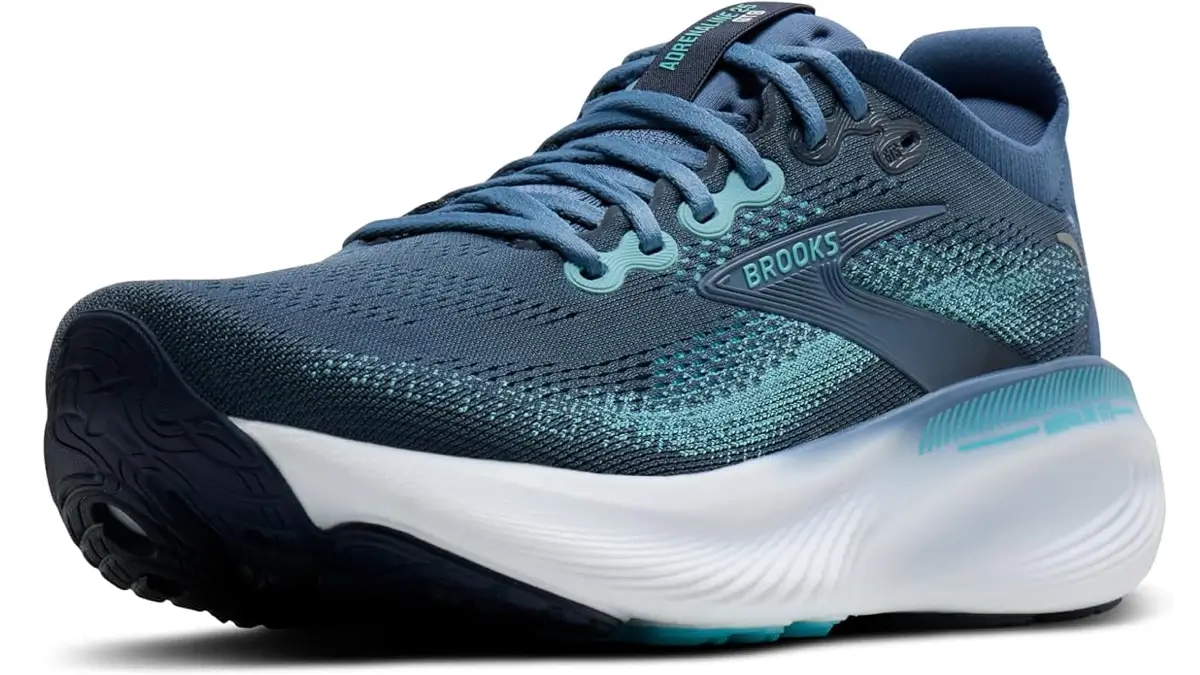
Quick Answer: Brooks Adrenaline GTS 25 Review: The Brooks Adrenaline GTS 25 is a stability daily trainer for runners and walkers who want their foot held on a steady path without a rigid, corrective feel. Its nitrogen-infused DNA Loft v3 midsole is noticeably softer than the previous version, and the GuideRails sidewalls quietly limit side-to-side wobble instead of propping up the arch. The payoff is dependable comfort over long, easy miles. The cost is weight: this is a heavy shoe by current standards and it feels flat when you pick up the pace. Check latest price.
The Brooks Adrenaline GTS 25 is the 25th version of the shoe that most running stores hand to a first-time buyer who overpronates, meaning the foot rolls inward more than is comfortable after it lands. It sits in the middle of the Brooks stability range, above the neutral Ghost and below the maximum-support Beast, and it is built for daily mileage rather than race day.
What separates this version from the ones before it is feel. Brooks has kept the DNA Loft v3 name on the midsole, which is the layer of foam between your foot and the road, but reformulated it. Lab durometer testing puts the GTS 25 foam at roughly 27 percent softer than the GTS 24, and the difference is obvious on the first step in. The drop, which is the height difference between the heel and the forefoot, has also come down from 12 mm to 10 mm, so the shoe no longer tips you as far forward onto your toes.
The trade-off is that nothing about the Adrenaline GTS 25 is quick. At a listed 10.6 ounces in a men’s size 9, it is close to a full ounce heavier than the category average, and the foam gives back less energy than most current trainers. If you want a shoe that helps you turn over faster, this is not it. If you want one that feels the same on mile 1 and mile 400, it is very hard to beat.

Specs
Here are the specifications for the Brooks Adrenaline GTS 25:
| Type | Road stability daily trainer |
| Foot and gait type | Mild to moderate overpronation, also suits neutral runners who like a planted feel |
| Midsole foam | DNA Loft v3, nitrogen-infused, reformulated softer for this version |
| Stability system | GuideRails, raised foam sidewalls on the inner and outer edges of the heel |
| Weight (men’s 9) | 10.6 oz / 300 g listed, 10.4 oz / 295 g independently measured |
| Weight (women’s 8) | 9.5 oz / 269 g listed |
| Heel-to-toe drop (?) | 10 mm listed, 10.2 mm independently measured |
| Stack height | 37 mm heel / 27 mm forefoot listed, 36.1 mm / 25.9 mm independently measured |
| Upper | Engineered air mesh with a gusseted tongue and a stiff moulded heel counter |
| Outsole | Redesigned rubber pods with deeper flex grooves, full forefoot and heel coverage |
| Widths | Narrow, standard, wide and extra wide, depending on colorway |
| Surface | Road, treadmill, packed path |
| Price | $155 at launch, November 2025. Check latest price |
Pros
- The GuideRails sidewalls calm inward roll at the heel without the hard plastic post feel of older stability shoes, so the correction never becomes a pressure point.
- The reformulated DNA Loft v3 lands much softer than the GTS 24, which makes the shoe far more pleasant for anyone who found the old version harsh on concrete.
- Drop switches from 12 mm to 10 mm and opens the shoe up to midfoot strikers who previously found the Adrenaline too heel-heavy.
- Outsole rubber coverage and wet-concrete grip both improved over the previous version, and the rubber is thick enough to outlast the foam.
- Four widths and a well-padded, non-slipping heel collar make this one of the easier trainers to fit awkward feet into.
Cons
- At 10.6 ounces it is heavier than most current daily trainers, and you feel that on any run longer than an hour.
- Independent lab testing puts energy return below average in both heel and forefoot, so the ride is comfortable but dull when you push the pace.
- The $155 launch price is a step up from the GTS 24 and buys no new foam technology.
- Measured toe box width is slightly below average, so runners with splayed forefeet should plan on the wide version rather than the standard.
- Breathability tested below average, which makes it a warm shoe in humid summer conditions.
What is new versus the Brooks Adrenaline GTS 24
This is the largest update the Adrenaline has had in several cycles. The headline change is the foam. Brooks kept the DNA Loft v3 badge, but retuned the compound, and durometer testing shows the result sitting around 27 percent softer than the GTS 24. In practice that turns a firm, businesslike trainer into a soft, cushioned one, and it is the single reason a GTS 24 owner might upgrade early.
Geometry moved with it too. Brooks added roughly 3 mm of foam under the forefoot and 1 mm under the heel, which lowers the drop from 12 mm to 10 mm while raising overall stack. The heel platform also widened to about 100.7 mm, which is unusually broad for this shoe and exists to counter the softer foam: a soft midsole needs a wider base or it starts to feel tippy.
The outsole was redesigned with rounder rubber pods and more flex grooves, and measured wet-concrete friction improved from 0.48 to 0.59, a meaningful gain if you run early mornings on damp sidewalks. The upper is softer through the midfoot with slightly more toe box volume. Weight, unfortunately, went up rather than down.
Who should buy the Brooks Adrenaline GTS 25
You might consider buying this improved shoe if you overpronate mildly or moderately and want that handled quietly. GuideRails work by sitting higher than the foam on both sides of the heel, so they only push back once your ankle starts to collapse inward or outward. Runners who dislike the shoved feeling of a medial post usually get on well with this approach. Learn more about GuideRails.
It also suits heel strikers specifically. The 10 mm drop, the tall heel stack and the stiff heel counter combine into a landing platform that stays predictable when you come down hard on the rear of the shoe. Independent lab shock-absorption numbers sit above average at the heel and merely average at the forefoot, which tells you where the shoe wants to be loaded.
Anyone who tried the GTS 24 and put it back on the shelf because it felt hard should try this one again. And if you are on your feet for work as well as running, the combination of four widths, a durable outsole and a stable base makes the Adrenaline GTS 25 an unusually good dual-purpose buy for those that want comfort and support at work.
Who should avoid the Brooks Adrenaline GTS 25
Skip it if speed matters to you. Nothing in the construction creates forward motion: the rocker, meaning the curved shape that helps the foot roll from heel to toe, is deliberately mild, there is no plate, and the foam returns less energy than average. Tempo work in this shoe feels like effort with no reward.
Weight-sensitive runners should also look elsewhere. Plenty of stability trainers now sit under 9.5 oz (269 g) with similar support, and the difference is noticeable over a long run. Runners with very wide forefeet should be cautious of the standard width, since measured toe box width came in slightly under the category average, and should order the wide or extra wide instead.
Finally, if you already own a GTS 24 that still has life in it, there is no urgent reason to replace it unless the firmness was the problem. The support system is unchanged and the price has gone up.
How does the Brooks Adrenaline GTS 25 fit?
Here’s how the GTS 25 fits and feels.
Fit and sizing
Order your normal size. Owner sizing data is strongly weighted to true to size, and measured internal length sits within a millimetre of the lab average, so there is no reason to adjust. Midfoot volume is slightly more generous than the GTS 24, which helps high insteps but means some runners will need an extra pull on the laces.
The toe box is the one area to think about. Measured width came in at 72.8 mm against a 73.2 mm average, and height at 26.6 mm against 27.1 mm, so it is marginally snugger than typical in both directions. That is fine for narrow and medium feet and tight for anyone who splays. Brooks lists narrow, standard, wide and extra wide, and the right move for a wide foot is to change width rather than size up half a size, since sizing up lengthens the shoe and moves the flex point away from your toes.
Upper and step-in comfort
The engineered air mesh is soft to the touch with no hot spots along the seams, and the tongue is gusseted, meaning it is stitched to the sides of the shoe so it cannot slide off center. The heel collar is generously padded and pairs with a stiff moulded heel counter, rated 4 out of 5 for stiffness in independent testing, which locks the rearfoot in place. That combination is a large part of why this shoe feels secure.
Breathability is the weak spot. Airflow testing returned 66 against an average of 72, and drying potential of 51 percent was likewise slightly below average. The practical effect is that feet run warm in summer heat, which matters more for all-day wear than for a 40-minute run.
How does the Brooks Adrenaline GTS 25 perform?
Here are the performance features you need to know.
Midsole and cushioning
DNA Loft v3 is nitrogen-injected foam, which means gas is blown into the compound during manufacture to make it lighter and softer than plain EVA. In this version the compound measured 34.5 on the Asker C scale, placing it just on the soft side of balanced. Underfoot that reads as a cushioned landing that still lets you feel the ground, rather than the sinking feel of a maximum-cushion trainer.
Shock absorption measured 138 at the heel against an average of 131, and 101 at the forefoot. Energy return, which is how much of the force you put into the foam comes back out, measured 52.1 percent at the heel and 59.2 percent at the forefoot, both below the 58.6 percent average. Comfortable, then, but not lively.
Ride and running performance
The Adrenaline GTS 25 is built for easy and steady running and it makes no pretence otherwise. The rocker is mild, so the shoe does not roll you through the stride the way a Hoka does; instead you get a flat, deliberate transition that rewards a consistent cadence. Measured longitudinal stiffness of 14.3N is a little below average, which keeps the forefoot flexible enough for walking but stops short of feeling floppy.
Push past a comfortable conversational pace and the shoe pushes back. The weight is the main culprit and the modest rebound compounds it. Used for what it is, a shoe for the four or five easy runs a week that make up most training, it is excellent. Asked to double as a workout shoe, it disappoints.
Stability and support
This is a true stability shoe, not a stable-neutral one, but the mechanism is guidance rather than correction. GuideRails are raised foam walls running along the inner and outer edges of the heel. They sit above the level of the footbed and only engage once the heel tilts past a certain point, so a runner with a straight gait barely notices them while a runner whose ankle collapses inward meets a firm limit. Brooks does not claim to fix pronation, and neither do we: the shoe limits excess motion, it does not retrain your stride.
Three measurements support the stable feel. Heel midsole width of 100.7 mm is well above the 91.2 mm average and gives the softened foam a broad base. Torsional rigidity of 14.3 Nm sits mid-pack, so the shoe resists twisting without feeling like a board. And the stiff heel counter stops the rearfoot sliding around inside the shoe, which is often what people mistake for instability.
Outsole, grip and durability
The outsole is the strongest part of the shoe. Rubber coverage is generous across the forefoot and heel, laid out in rounded pods separated by flex grooves, and independent abrasion testing rates its durability as good. Wet-concrete friction measured 0.59 against a 0.52 average, a real improvement on the 0.48 recorded for the GTS 24, which shows up as more confidence on painted crossings and wet leaves.
Upper durability tested about average, with the toe box scoring 3 out of 5 in abrasion testing, a reasonable result given how soft the mesh feels. The usual 300 to 500 mile replacement window is a broad guideline rather than a promise, and with this shoe the foam will almost certainly give up before the rubber does.
Is the Brooks Adrenaline GTS 25 good for walking?
Yes, and it is one of the better running shoes to walk in. Walking loads the heel harder and for longer than running does, and the Adrenaline GTS 25 answers that with a tall, well-cushioned heel, a broad base and a heel counter stiff enough to stop the rearfoot rocking as you stroll. The softer DNA Loft v3 is a clear gain here, because the firmer GTS 24 could feel unforgiving after a few hours on tile or concrete.
The mild rocker also helps. It is gentle enough that it does not hurry your stride the way an aggressive rocker can at walking speed, but the forefoot is flexible enough to bend when you push off. Four widths make it realistic for feet that do not fit standard shoes, and the durable outsole suits people who wear one pair every day. The weight, which is a genuine drawback for running, matters far less when you are walking. Warm feet in summer are the main compromise.
Brooks Adrenaline GTS 25 vs. Brooks Adrenaline GTS 24
Here is how the two versions compare on the points that changed:
Feature | Adrenaline GTS 25 | Adrenaline GTS 24 |
Midsole feel | Softer, measured about 27% softer | Firm and businesslike |
Drop | 10 mm | 12 mm |
Heel platform width | About 100.7 mm | Narrower |
Wet grip (measured) | 0.59 | 0.48 |
Weight (men’s 9) | 10.6 oz listed | Slightly lighter |
Launch price | $155, November 2025 | $140, December 2023 |
Buy the new model when you want more cushioning, when the 12 mm drop of the older shoe bothered your calves or Achilles, or when you run in the wet often enough for the grip improvement to matter. Buy the previous model when you can still find it discounted and you liked the firmer, more connected feel, since the support system is functionally the same and you save real money. Our Brooks Adrenaline GTS 24 review covers the older shoe in full.
Brooks Adrenaline GTS 25 Alternatives
The most obvious alternative is the shoe it replaces. The Brooks Adrenaline GTS 24 (check price | read review) delivers the same GuideRails guidance on firmer foam and a taller drop, and while it is still in circulation it undercuts the GTS 25 by a wide margin. Runners who read “softer” as “less responsive” will prefer it.
If the Adrenaline’s dull rebound is the sticking point, the Saucony Tempus 2 (check price | read review) offers stability from a firm foam frame wrapped around a livelier core, and it weighs noticeably less. It is the better pick for anyone who wants a stability shoe that can also handle a steady effort without feeling like hard work.
Runners who need more support than the Adrenaline provides, rather than a different flavour of the same shoe, should look at the Brooks Beast GTS 24 (check price | read review). It is heavier still, but the wider platform and firmer structure suit heavier runners and severe overpronators who push the Adrenaline too hard.
For a plusher take on the same job, the Asics Gel-Kayano 33 (check price | read review) pairs a softer, higher-stack midsole with a lower 8 mm drop and a support system built into the foam itself rather than added at the edges. It costs more and runs warmer, but forefoot cushioning is deeper, which matters on long walks and runs.

Price and value
The Adrenaline GTS 25 launched at $155 in November 2025, up from the $140 the GTS 24 launched at in December 2023. That increase buys a reformulated foam, a lower drop, a wider heel and a better outsole, which is more than the Adrenaline usually changes in a cycle.
What it does not buy is a modern lightweight midsole, and rivals at the same price are two-thirds of an ounce lighter with more rebound. The value case rests on longevity instead: outsole durability is genuinely strong, the shoe works for running and all-day wear, and the four widths reduce the odds of an expensive mistake. Discounts appear once the next version lands.

Final verdict
Best for: mild to moderate overpronators and heel strikers who want cushioned, guided daily miles, and anyone who needs one shoe for running and standing.
Avoid if: you care about weight, you want a shoe that can handle tempo work, or you need a genuinely roomy standard-width toe box.
Fit: true to size, medium volume with a slightly snug toe box, available in narrow, standard, wide and extra wide.
Verdict: the softening of DNA Loft v3 and the move to a 10 mm drop turn the Adrenaline from a shoe you tolerate into one you enjoy, and the GuideRails system remains the least intrusive way to add stability to a daily trainer. The weight keeps it out of the top tier, but for steady miles and long days it is as dependable as this category gets.
Frequently Asked Questions for Brooks Adrenaline GTS 25
Commpo questions and their answers about the Adrenaline GTS 25.
It is a stability shoe. The GuideRails system adds raised foam walls on both sides of the heel that limit excessive inward or outward roll, but they only engage once your ankle tilts past a normal range, so neutral runners can wear it comfortably too.
Yes. Brooks lists narrow, standard, wide and extra wide, though availability varies by colorway. Because the measured toe box is slightly narrower than average, choosing a wider width is a better fix for a broad forefoot than sizing up.
The sockliner is removable, which frees up the depth most custom orthotics need. Because the shoe already provides guidance at the heel, some wearers find the combination firmer than expected, so it is worth trying the pairing on a short walk or run first.
The common 300 to 500 mile guideline applies, though it is a rough range rather than a guarantee. Outsole rubber on this version tests as highly durable, so the midsole foam flattening is what usually signals replacement rather than worn tread.
It suits treadmills well. The mild rocker and flat transition match the steady cadence most treadmill running encourages, and the deep cushioning is more than enough for a belt that already absorbs impact. The warm upper is the one thing to plan around indoors.
The GTS 26 has been previewed but is not yet on sale in the United States as of August 2026, so the GTS 25 is the current model. If you need shoes now there is no reason to wait, and buyers who are not in a hurry usually find the outgoing version discounted once the replacement arrives.