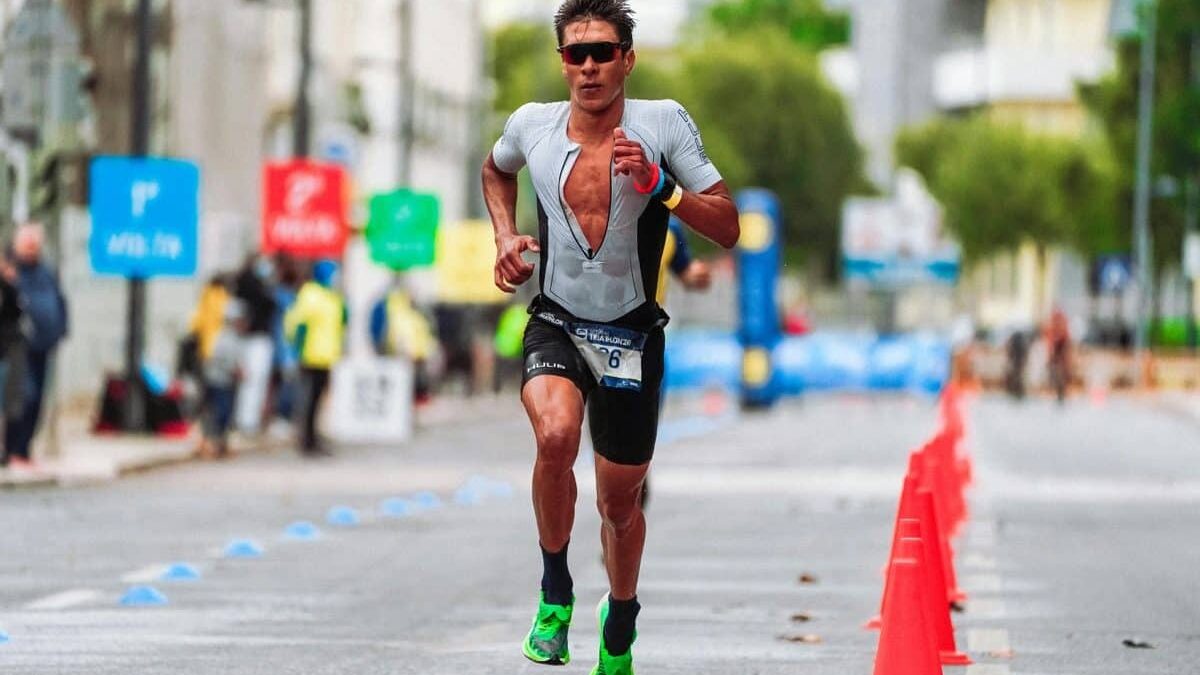
Running a marathon backward sounds improbable until you meet the people who do it. Retro runners cover conventional race distances while facing away from their direction of travel. Competitive backward running has a documented history stretching well beyond today’s social-media clips. The records are also surprisingly complicated: historical lists, event results and Guinness certifications can refer to different categories and verification standards.
This guide focuses on notable backward marathon and 100-kilometer performances, with clear dates and attribution. For the sport’s history and technique, read What Is Retro Running?. For footwear considerations, see Best Shoes for Retro Running in 2026.
Backward Running Marathon and 100K Records
Retro running, also known as backwards running, has a growing history of competitive distance records. The performances below are drawn from the World Records for Backwards Running historical database. Treat the table as an attributed record listing rather than proof of current certification by a particular governing organization. The first three historical entries are drawn from that database; the women’s 100K result comes from the Oct. 17, 2026, Race Roster event leaderboard supplied to BWF. Guinness certification for the latter has not yet been confirmed.
| Event | Athlete | Time | Date and location |
|---|---|---|---|
| Men’s backward marathon | Markus Jürgens (Germany) | 3:38:27 | April 9, 2017; Hannover, Germany |
| Women’s backward marathon | Kathryn Clewley (Canada) | 4:26:06 | Nov. 5, 2017; Hamilton, Ontario |
| Men’s backward 100K | Markus Jürgens (Germany) | 12:20:37 | May 4, 2019; WHEW Ultramarathon, Germany |
| Women’s backward 100K (event result; Guinness status unconfirmed) | Kat (Kathryn) Clewley (Canada) | 15:29:01 | Oct. 17, 2026; Hamilton, Ontario; 250 laps |
The historical database does not provide an equivalent women’s 100K entry in its women’s section. However, Race Roster’s published results for the Oct. 17, 2026, Hamilton event report that Kat (Kathryn) Clewley completed 100 kilometers backward in 15:29:01 across 250 laps, averaging 9:18 per kilometer. This is a documented event result; confirmation of a Guinness World Records title remains separate and has not been established by the race leaderboard alone. The database also flags an older 2009 men’s 100K claim attributed to Ching-Kuang Hsueh as lacking documentation.
For the wider historical context behind these results, see our history of backwards running.
How the Backward Marathon Record Developed
The records list starts with Ernest C. Conner Jr., who completed a backward marathon in 5:18 in New York in 1980. Anthony Weiland followed with 4:07:54 in Detroit in 1982. Albert Freese, one of the sport’s early public advocates, is listed at 3:59:07 in Seal Beach in February 1985. Later entries include Yves Pol’s 3:57:26 in Budapest in 1990 and Bud Badyna’s 3:53:17 in Toledo in 1994.
The list records Xu Zhenjun at 3:43:39 in Beijing in 2004, Achim Aretz at 3:42:41 in Frankfurt in 2010, and Markus Jürgens at 3:38:27 in Hannover in 2017. These successive historical benchmarks show how competitive retro running evolved from an unusual endurance feat into a repeatable racing discipline. Race conditions, measurement and record rules still matter when comparing times from different decades.
Kathryn Clewley’s Backward Marathon
The historical database lists Kathryn Clewley of Canada at 4:26:06 for a backward marathon in Hamilton on Nov. 5, 2017. It also lists earlier women’s marathon performances by Paula Mairer, including a 6:05:42 track performance in 2004, and Kerstin Metzler-Mennenga at 4:42:39 in Rome in 2008.
On Oct. 17, 2026, Clewley completed a 100-kilometer backward-running event at the Ray Lewis Track & Field Centre in Hamilton. The Race Roster leaderboard supplied for the event lists Kat Clewley at 15:29:01, with 250 laps and an average pace of 9:18 per kilometer. Her fastest reported four-kilometer stretch took 30:49 between kilometers 24 and 28, equivalent to approximately 7:42 per kilometer. The supplied leaderboard does not reveal her fastest individual kilometer. The leaderboard was last updated Oct. 17 at 9:29 p.m. EDT. Although the event was titled ‘Guinness World Record Fastest Female Retro Running 100km,’ the event name is not evidence that Guinness World Records has formally certified the performance. BWF will update this article if Clewley provides additional firsthand details about training, pacing, footwear or the certification process.
What Counts as an Official Retro Running Record?
There is no reason to assume that every performance called a “world record” follows one set of rules. A sport-specific database can preserve a history of performances while a Guinness World Records title may have a separately defined category, application process and evidence standard. Track and road courses, aid, timing, direction of travel and proof of the full distance can change which achievement qualifies.
When checking a claim, look for the athlete’s full name, distance, official time, date, venue, course or track details, race results, and the authority that recognizes the attempt. The source used for this guide invites corrections and new submissions, so the entries should be regarded as a documented historical snapshot rather than an automatically updated universal registry.
Why 100 Kilometers Is a Different Challenge
A 100K race covers more than twice the distance of a marathon. Running backward for that long creates challenges beyond pace: fatigue, route awareness, consistent foot placement, refueling and maintaining concentration. Athletes must manage a direction of travel they cannot continuously see, making course design and support especially important.
The database lists Hassan Kurt’s 16:53:13 effort in Germany in 2018 before Jürgens’ 12:20:37 in 2019. It also mentions an undocumented claim from 2009, which should not be compared as a verified result. For beginners, none of these distances is a sensible starting goal. See our beginner retro-running guide for safer first steps.
Frequently Asked Questions About Retro Running Records
The historical database lists Markus Jürgens at 3:38:27 in 2017 for men. Whether a separate organization recognizes the same performance as a current certified world record requires checking its own rules and records.
Kathryn Clewley is listed at 4:26:06 from Hamilton, Ontario, in 2017.
Markus Jürgens is listed at 12:20:37 from a German ultramarathon in May 2019.
No. It is a separate source. An entry there should not be described as Guinness-certified without direct confirmation.
Race Roster’s event leaderboard reports she completed the backward 100K on Oct. 17, 2026, in 15:29:01. Guinness certification, if granted, must be confirmed separately.
No. A marathon is still 42.195 kilometers. “Backward” describes the direction and technique of the runner, not a shorter course.
Start with the backward-running records database, then corroborate any particular claim with an original race result or relevant certifying authority.
Sources and Updates
Primary compilation: World Records for Backwards Running. This article is a working historical guide. Athlete interviews, original race timing records and certification documents should be added as they become available. Race Roster’s published Oct. 17, 2026, 100K backward race leaderboard (event titled ‘Guinness World Record Fastest Female Retro Running 100km’) was supplied to BWF and used for Clewley’s time and lap count. Guinness certification has not been independently verified. Last reviewed: Oct. 18, 2026.