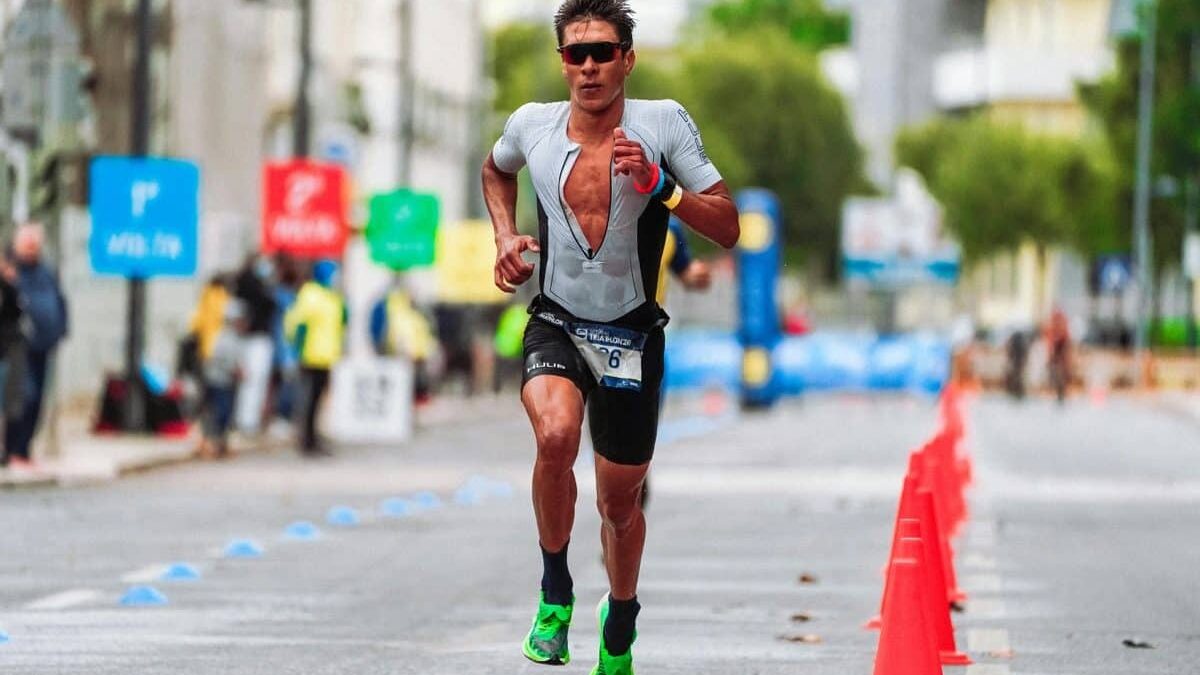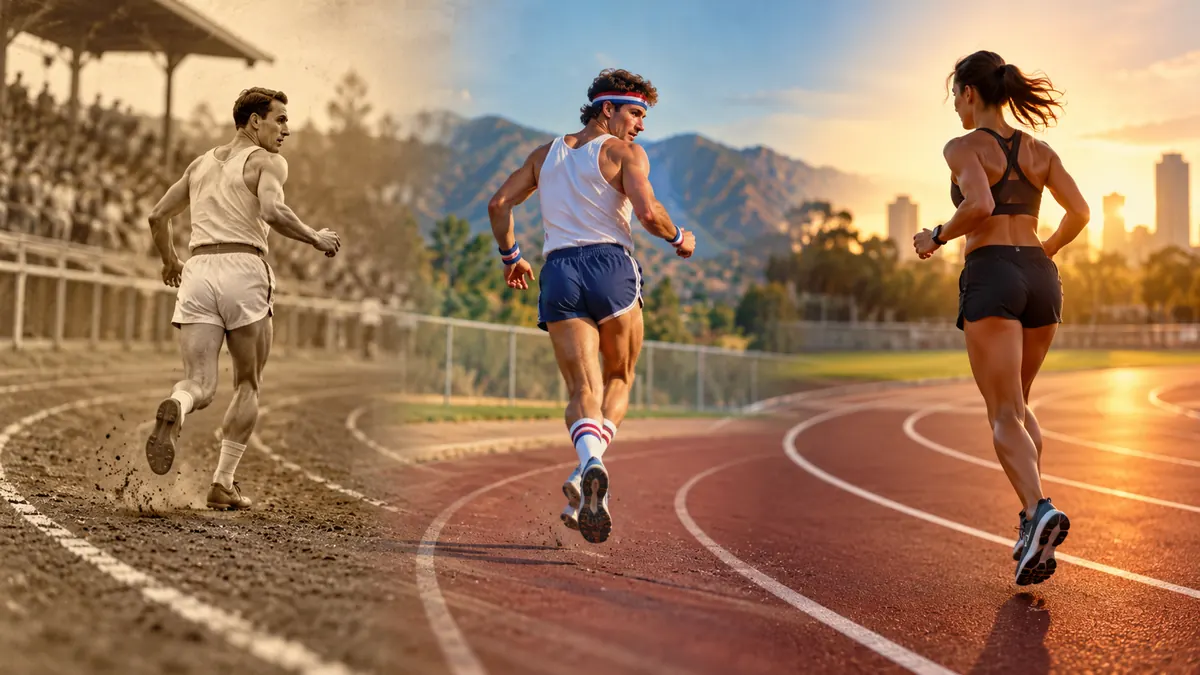
Kat Clewley’s 100-kilometer backward run in Hamilton on Oct. 17, 2026, is part of a much longer story. Backward running began appearing in public records well before it became an organized endurance sport.
Also called retro running, backwards running, reverse running or retrorunning, the activity means running while facing away from the direction of travel. The movement itself has no identifiable inventor. What we can trace is when particular performances entered public records and when advocates began promoting it as an organized activity.
Backwards Running History: A Timeline
The following timeline distinguishes documented performances and contemporary reporting from claims about who supposedly invented the sport.
| Year | Milestone | Source |
|---|---|---|
| 1980 | Ernest C. Conner Jr. is listed completing a backwards marathon in New York in approximately 5 hours, 18 minutes. | Historical records database |
| 1982 | Anthony Weiland is listed at 4:07:54 for a backwards marathon in Detroit. | Historical records database |
| 1985 | Albert Freese’s backwards marathon efforts attract newspaper attention, while Ron Austin promotes his Retro Training program. | Los Angeles Times, February; Los Angeles Times, June |
| 2004 | Xu Zhenjun is listed completing a backwards marathon in 3:43:39 in Beijing. | Historical records database |
| 2017 | Markus Jürgens is listed at 3:38:27 for a backwards marathon in Hannover; Kathryn Clewley is listed at 4:26:06 for a women’s backwards marathon in Hamilton. | Historical records database |
| 2019 | Jürgens is listed at 12:20:37 for a backwards 100K in Germany. | Historical records database |
| 2026 | Kat Clewley completes 250 backwards laps, covering 100 kilometers in 15:29:01 at a Hamilton event promoted as a Guinness record attempt. | Oct. 17 Race Roster event leaderboard, supplied to BWF |
Historical lists are not the same as current Guinness World Records certifications. Dates and performances should be attributed to their specific sources.
Did Anyone Invent Backwards Running?
No one can reliably claim to have invented backwards running. People have moved backward in games, sports and training for generations.
When someone is called the inventor of retro running, the claim often refers to a particular exercise program or competition. It does not mean that person invented running backward.
That distinction matters for SEO and for history. Searchers asking “who invented backwards running?” deserve a direct answer: no verified inventor is known. Those asking who popularized retro running can be pointed to the 1980s advocates who left a clearer documentary trail.
Albert Freese and the 1980s Backwards-Running Boom
In February 1985, the Los Angeles Times reported on Albert Freese and his backwards marathon training. That contemporaneous account is important because it places a named athlete, a date and the unusual discipline together, rather than relying on a later retelling.
Freese was not the first person ever to run backward. The historical records list earlier marathon performances. But his visibility helps explain why backwards running drew attention as something beyond a brief track drill.
Running a marathon in reverse changes the task completely. Rather than simply turning around for a short interval, an athlete must navigate the course, conserve effort and handle an unfamiliar stride for hours. The novelty attracted interest, but completing the distance remained an endurance achievement.
Ron Austin and Retro Training
Ron Austin appears in a June 1985 Los Angeles Times report describing a fitness approach called Retro Training. This is one of the clearer historical links between backwards locomotion and deliberate exercise instruction.
It would overstate the evidence to call Austin the inventor of retro running. A better description is that he helped promote backwards movement as a training method during a period when recreational fitness was expanding.
From Novelty to Competitive Backwards Marathons
The recorded marathon progression shows how athletes began taking the discipline seriously as a timed sport. The historical performance list includes Ernest C. Conner Jr., Anthony Weiland, Albert Freese and later runners who brought times below four hours.
The same source lists Markus Jürgens reaching 3:38:27 in the 2017 Hannover Marathon. It also lists women’s performances, including Kathryn Clewley’s 4:26:06 backwards marathon in Hamilton on Nov. 5, 2017. Clewley told BWF she also ran the Road2Hope Marathon backward in 2015, finishing in approximately 4:48. She says she attempted Guinness certification for both performances, but her GoPro cameras ran out of battery power, leaving her without the continuous video evidence she needed. Her 2017 time appears in the independent backward-running records database; that listing is not a Guinness certification.
These entries are useful history, not a substitute for checking each event’s course, timing and certifying rules. Record databases can preserve milestones even when their categories differ from those used by Guinness.
How Kat Clewley’s 2026 100K Fits Into the Story
On Oct. 17, 2026, Hamilton athlete Kat Clewley completed 100 kilometers backward in 15:29:01, according to the event’s Race Roster leaderboard. She ran 250 laps at an average pace of 9:18 per kilometer.
At 96 kilometers, her elapsed time was 14:54:07. She covered the final 10 laps in another 34:54. Her fastest reported four-kilometer stretch was 30:49, between 24 and 28 kilometers. That is about 7:42 per kilometer for the segment. Individual one-kilometer splits were not available.
The event was promoted as a Guinness World Records attempt for the fastest female 100K retro run. Clewley’s finish is being reported as an unofficial record while Guinness certification is pending.
Read our full report on Clewley’s 100K backwards run and the separate backwards marathon and 100K records guide for performance details.
Why Backwards Running Is Different From Forward Running
Backwards running involves a different stride, foot-contact pattern and set of muscular demands. A 2018 research review discusses these differences, though the available studies are too limited to support broad claims that retro running automatically prevents injuries or cures knee pain.
The most obvious challenge is visibility. A runner cannot constantly see the direction of travel. Beginners should use a flat, clear space, start with backward walking and build up gradually rather than copy the distances set by experienced endurance athletes.
Our What Is Retro Running? guide covers beginner technique and safety. For footwear, see Best Shoes for Backwards Running and our running-shoe hub.
Frequently Asked Questions About Backwards Running History
No single inventor has been established. Backwards running predates the modern retro-running movement.
Yes. Both terms describe running while facing away from the direction of travel.
Several notable backwards marathon performances were documented in the 1980s, when athletes such as Albert Freese drew newspaper coverage.
He promoted a program called Retro Training in the 1980s, but is not established as the inventor of backwards running.
Kat Clewley completed 250 laps in 15:29:01 on Oct. 17, 2026, according to the event leaderboard. Guinness certification has not been independently confirmed.
There are competitive races and historical performance records. Whether a particular result earns a Guinness title is a separate certification question.
The BWF backwards-running records guide cites the historical database and distinguishes listed times from certification claims.