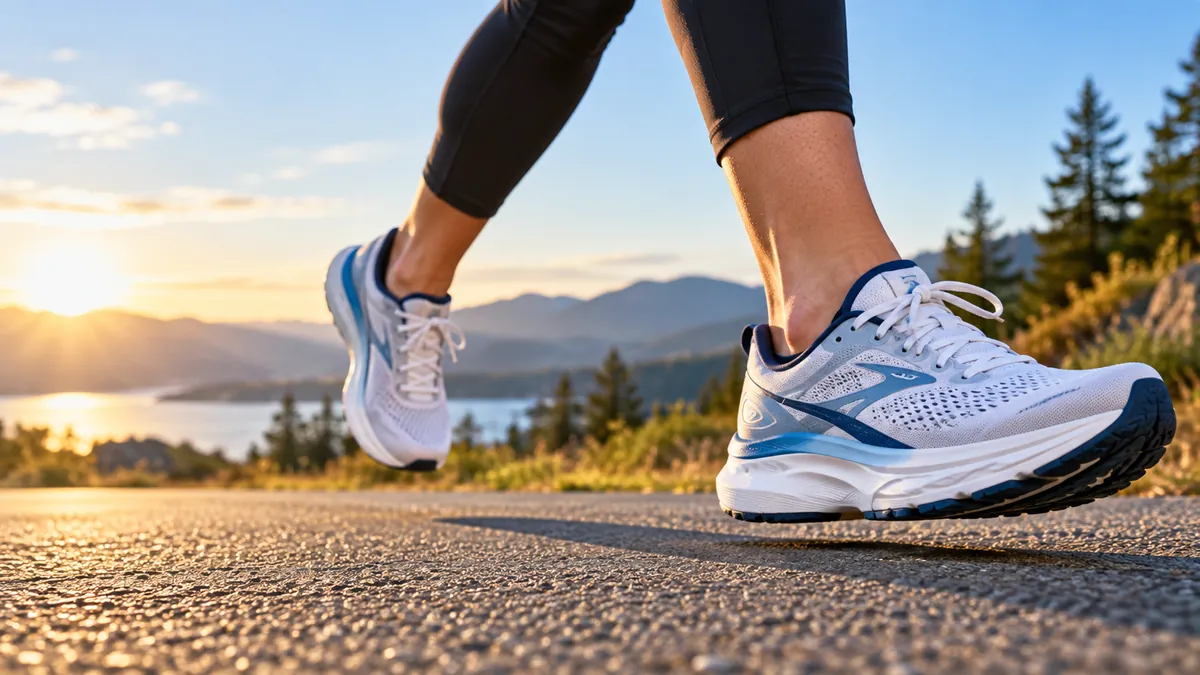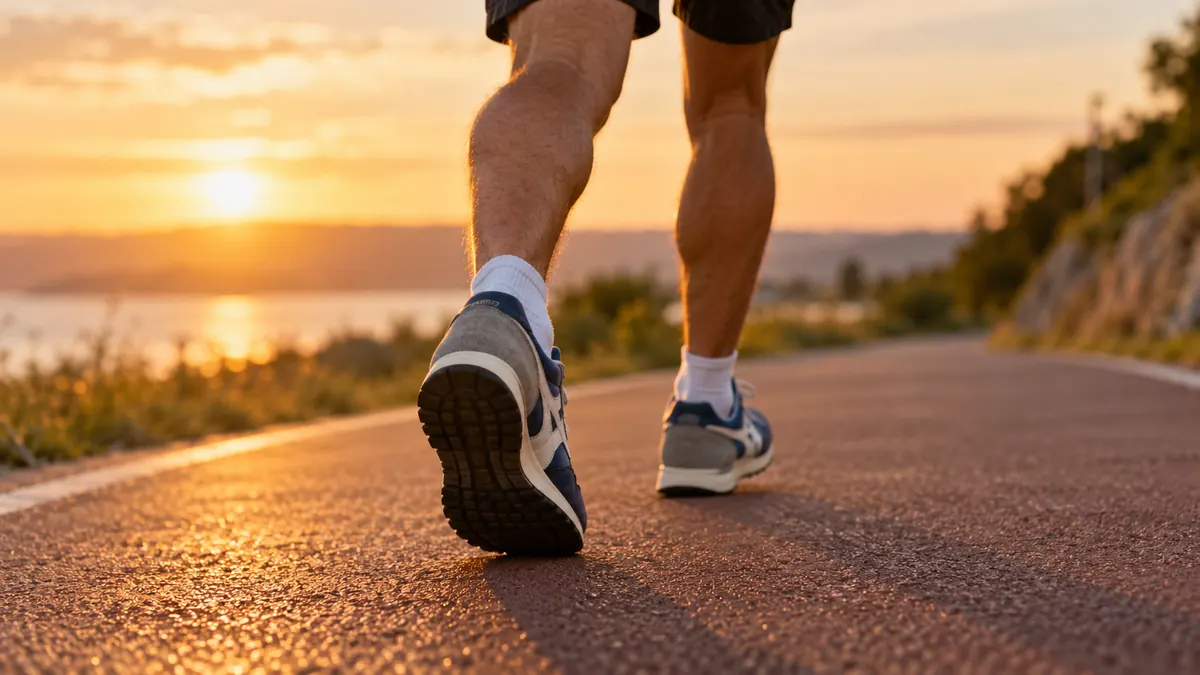
Running backward changes how your feet meet the ground. That makes shoe choice interesting, but it also makes exaggerated product claims easy. Most running shoes are designed and tested for forward movement, and we have not found comparative trials ranking current commercial shoes specifically for retro running.
New to the sport? Start with our introduction to retro running, its history and beginner technique. For wider running-shoe choices, see our Best Running Shoes guide. If you are unsure where to start with shoe fit, try the Free Shoe Finder.
This guide looks at four recognizable road-running shoes through the lens of the available biomechanics research. Rather than rewarding the largest foam stack or most aggressive race-day rocker, we prioritize a secure fit, predictable grip, comfort under the front of the foot and an underfoot feel you can control. Your best shoe will also depend on your surface, experience and injury history.
Best Shoes for Retro Running in 2026: Quick Comparison
| Shoe (jump to review below) | Why consider it? | Trade-off | MSRP (unverified) |
|---|---|---|---|
| Altra Escalante 5 | Flexible, lower-stack design and spacious toe area | Zero drop requires an adjustment for some runners | MSRP not verified | Check latest price |
| Topo Athletic Phantom 4 | Roomy toe box and more cushioning for longer sessions | Higher stack may feel less connected to the ground | MSRP not verified | Check latest price |
| Brooks Ghost 18 | Conventional, cushioned daily trainer | May feel less nimble than a low-profile shoe | MSRP not verified | Check latest price |
| Saucony Ride 19 | Versatile road trainer for runners who already like its fit | Not developed specifically for backward foot strikes | MSRP not verified | Check latest price |
How we selected these shoes: We compared manufacturer-stated geometry, toe space, intended use and independently tested shoe characteristics against published backward-running biomechanics. These are construction-based shortlist choices, not hands-on retro-running tests or a controlled ranking. No model is proven to prevent injuries or improve backward-running speed. Existing shoes that pass your fit and grip checks may be preferable to buying a new pair.
Altra Escalante 5: Best Flexible Option to Consider

Altra Escalante 5 (Image: Amazon)
Best for: experienced runners who prefer low-profile shoes
The Altra Escalante 5, released in July 2026, is the freshest low-profile candidate in this roundup. It is not retro-running-specific. Its 24 mm stack, zero-drop platform and flexible design make it worth trying if you want more ground feel. The updated outsole, collar and tongue aim to improve durability and fit, though none of these changes has been evaluated in a retro-running shoe trial. Altra also gives the shoe an Original FootShape toe area, leaving space for toes to spread without assuming that every runner wants a loose heel.
Those features might suit runners who prefer controlled, short retro-running steps. However, zero drop is not a prerequisite for backward running. The Escalante 5 also changes loading compared with a conventional higher-drop trainer, especially for someone transitioning from thick, elevated heels. Make the change gradually rather than choosing zero drop solely because backward running emphasizes the forefoot.
Specifications: Zero-millimeter heel-to-toe drop; 24 mm stack; neutral support; rubber outsole; manufacturer-listed men’s weight 9.7 ounces (275 g); July 2026 launch; U.S. launch price $130. Manufacturer specifications.
Best for: Experienced runners who already tolerate flexible or zero-drop footwear. Check latest price on Amazon. Who should skip it: Anyone who experiences calf or Achilles discomfort when switching to lower-drop shoes.
Topo Athletic Phantom 4: Best Roomy, Cushioned Option

Topo Athletic Phantom 4 (Image: Amazon)
Best for: runners who need extra toe room
The Topo Athletic Phantom 4 combines a roomy anatomical toe box with a secure midfoot and heel, a useful pairing when you’re moving in an unfamiliar direction. The 35 mm heel and 30 mm forefoot stack provide more cushioning than the Escalante 5, while the 5 mm drop is a moderate alternative to either zero drop or a sharply elevated heel.
The limitation is that a taller platform can feel different when landing toward the front of the foot. It is not inherently unsafe, but shoe responsiveness and balance matter more than a cushioning figure on paper. If you’re considering this model, try small backward steps on level ground and judge whether the outsole feels planted and the foot stays contained.
Specifications: 5 mm drop; 35 mm heel and 30 mm forefoot stack; neutral support; manufacturer-listed men’s weight 9.3 ounces. Manufacturer information.
Best for: Runners who need toe room but do not want a very low-profile shoe. Check latest price on Amazon. Who should skip it: Those who strongly prefer a minimal, close-to-ground feel.
Brooks Ghost 18: Best Familiar Daily-Trainer Option

Brooks Ghost 18 (Image: Amazon)
Best for: runners who prefer familiar daily trainers
The Brooks Ghost 18 is an example of why you probably do not need to buy a separate pair of shoes just to begin retro running. If your existing everyday running shoes fit securely, have intact rubber tread and feel stable under slow backward movement, they may be a better starting point than unfamiliar specialist-looking footwear.
The Ghost’s conventional cushioned construction can be helpful to runners who already know its fit. But backward running does not use the same heel-to-toe transition as forward running, so you should not assume that a shoe’s familiar forward-running feel will transfer exactly. Confirm that your heel does not slip and that the forefoot does not feel cramped when you land.
Best for: Beginning retro runners who already wear a well-fitting Ghost. Check latest price on Amazon. Who should skip it: Runners who feel unstable or restricted through the front of the shoe.
Verified manufacturer details: The Brooks Ghost 18 is a neutral road-running daily trainer with a 10 mm heel-to-toe drop. Brooks lists the men’s weight as 10.2 ounces (289.2 g) and describes an updated upper intended to help keep the foot secure. These specifications do not establish how the shoe performs during backward running. Brooks Ghost 18 product specifications.
Saucony Ride 19: Best Versatile Alternative

Saucony Ride 19 (Image: Amazon)
Best for: runners who already use a versatile road trainer
The Saucony Ride 19 is another sensible, conventional road-running candidate. It belongs on this shortlist not because Saucony advertises it for backward running, but because many runners may already own a neutral daily trainer like it. Starting with an established fit allows you to focus on safe technique and the new movement pattern rather than adapting to both an unfamiliar shoe and an unfamiliar activity.
As with the Ghost, inspect outsole wear carefully. A shoe that grips adequately when moving forward might feel different under a reversed stride, especially on dusty tracks, painted surfaces or damp pavement. If the shoe pushes your foot forward in the upper or allows heel lift, compare it with a more secure-fitting pair rather than pushing through discomfort.
Best for: Runners who want to use a comfortable road trainer they already own. Check latest price on Amazon. Who should skip it: Anyone seeking pronounced ground feel and easy forefoot flexion who finds the Ride too structured.
Verified manufacturer details: Saucony lists the Ride 19 as a road-running and walking shoe with an 8 mm heel-to-toe drop, offered in men’s and women’s versions, including wide options. A wide width is not necessarily the same as an anatomical toe box. Check the fit of the exact version before using it for backward running. Saucony Ride 19 product information.
What Matters Most in a Retro Running Shoe?
A 2016 study comparing forward and backward treadmill running in 19 participants found increased loading under the first and second metatarsal heads and medial midfoot during backward running. Because participants ran backward at 70% of their forward-running speed and testing lasted one minute per condition, results should not be treated as a long-distance shoe ranking. That finding suggests forefoot comfort deserves attention, but it does not establish a winning shoe, foam type or heel-to-toe drop. Read the study.
Start with fit. A snug, comfortable heel and midfoot help prevent your shoe from sliding around on each backward step, while adequate toe space reduces rubbing. Then consider the sole. Look for reliable traction suited to the ground where you actually train, plus cushioning that feels comfortable under the front of the foot. Finally, try different levels of flexibility and stack height before making an expensive commitment. Taller shoes and curved rocker soles are not automatically disqualified; they simply need to feel predictable to the individual runner.
Keep track of how the shoe behaves, not just its specifications: Does your heel lift? Do your toes hit the front of the shoe? Is the platform stable during short backward steps? Another study reported reduced patellofemoral joint compression forces during backward running in healthy participants, but that is not proof that backward running treats knee pain or that any listed shoe does so. Read the knee biomechanics research. The American Academy of Podiatric Sports Medicine also stresses that running-shoe selection depends on the individual, surface, experience and injury history—not one universal shoe prescription. See its shoe-selection guidance.
How to Test Shoes Safely for Backward Running
Use a level, obstacle-free area such as a marked track section, ideally with a spotter who can watch the direction of travel. Begin by walking backward before adding brief jogging intervals. Keep the steps controlled, stop frequently to check the route, and avoid traffic, uneven trails and crowded public paths. Do not use a treadmill backward unless the equipment and environment are expressly appropriate and you have qualified supervision.
Pay attention to discomfort in the forefoot, Achilles tendon or calf, especially if trying a zero-drop shoe for the first time. For historical marathon and ultramarathon performances, consult our backward-running records guide. For the latest news, Kat Clewley’s unofficial women’s backwards-running 100K record was timed at 15:29:01 on Oct. 17, 2026, with Guinness certification pending. Her fastest reported four-kilometer split was 30:49. Explore the history of backwards running for the sport’s early pioneers. For a deeper introduction to technique and the sport’s history, read What Is Retro Running?. You can also explore our Best Running Shoes guide and Free Shoe Finder to narrow down conventional running-shoe options.
Frequently Asked Questions About Retro Running Shoes
No. There is no universally required retro-running shoe. A well-fitting running shoe with secure traction is a practical starting point.
Not necessarily. Zero drop may appeal to runners seeking a lower-profile feel, but research does not establish it as superior for backward running.
It may matter to your comfort. A small study found greater loading in particular forefoot and midfoot areas during backward treadmill running, but did not test which shoe cushion works best.
Often, yes. Check their fit, outsole condition and control during slow backward steps before increasing pace or distance.
There is insufficient direct evidence to recommend them for retro running. Their stiff, highly shaped construction may feel different under backward motion.
Use shoes designed for the surface. Trail traction can be useful off-road, but backward running on uneven trails adds visibility and trip hazards, so a flat, predictable surface is preferable for beginners.
No single shoe has been established as best. For long distances, prioritize a fit and sole you have tested extensively during backward training and avoid changing models on race day.