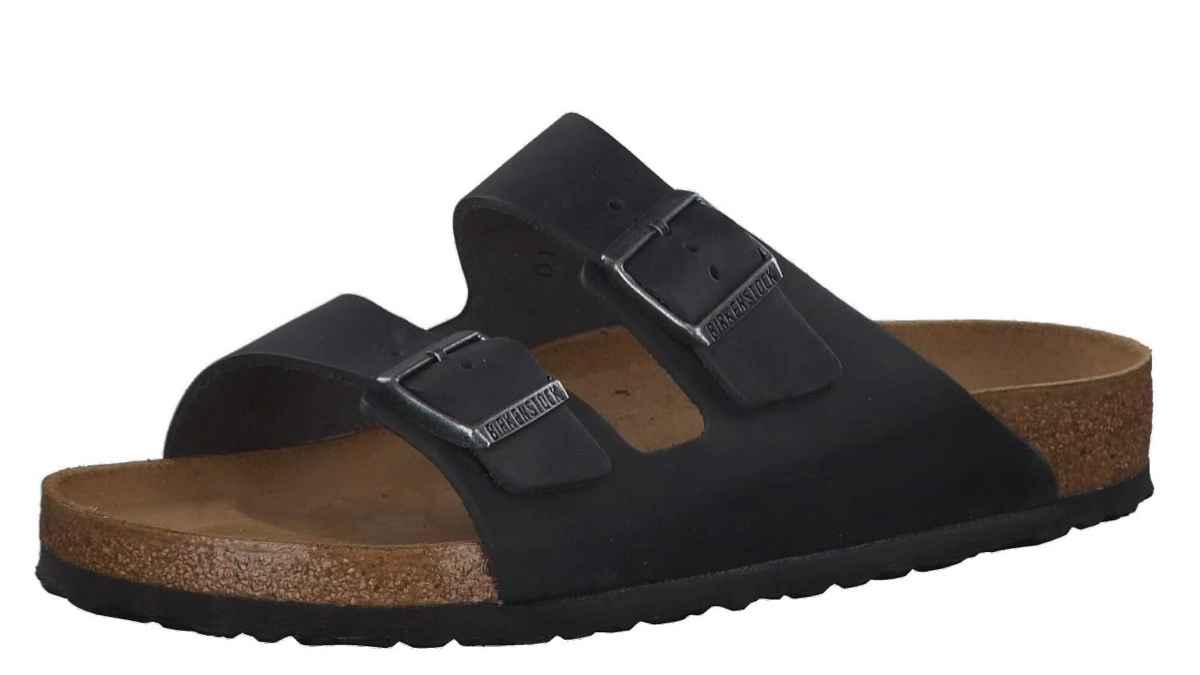
Outstanding longevity and support with a firm, demanding start
Quick Answer: Birkenstock Arizona Review: The Arizona is a two-strap sandal for people who want structured arch support rather than soft foam, and it is the most durable option in comfort footwear. A cork and latex footbed with a contoured arch, a deep heel cup and a raised toe bar gradually moulds to the shape of your foot, and adjustable buckles mean the fit can be tuned. A Soft Footbed version adds a foam layer for those who find the standard too firm. The catch is a genuine break-in period. Check latest price.
The Birkenstock Arizona has been made in essentially the same form for decades, and it takes the opposite approach to every modern recovery sandal. Instead of very soft foam that feels wonderful immediately and flattens within a year, it uses a firm cork footbed that feels unforgiving at first and then gradually becomes a mould of your own foot.
The footbed is the product. Cork combined with latex is contoured with a raised arch, a deep heel cup that cradles the heel rather than letting it spread, and a toe bar, which is a ridge under the toes that encourages them to grip slightly. Cork is firm but slowly compressible, so body heat and pressure reshape it over weeks of wear into something specific to you.
Because the two straps buckle, the fit is adjustable in a way moulded slides and clogs are not. That matters for feet that swell during the day or change over time, and it is part of why the Arizona suits such a broad range of people once they get through the break-in.
Specs
Here are the specifications for the Birkenstock Arizona:
| Type | Two-strap adjustable sandal, unisex |
| Best for | All-day wear, standing, walking short to moderate distances, people who want arch support |
| Footbed | Cork and latex, contoured with a raised arch, a deep heel cup and a toe bar, over a suede lining |
| Soft Footbed option | Adds a layer of soft foam between the cork midsole and the suede liner for extra cushioning |
| Adjustment | Two buckled straps |
| Outsole | EVA |
| Upper materials | Offered in suede leather, oiled natural leather, Birko-Flor and other materials depending on version |
| Widths | Regular and narrow, with the narrow fitting covering traditional narrow and medium feet |
| Sizes | Around 4 to 12.5 in the Soft Footbed version, using European sizing |
| Repairability | Footbeds and soles can be resoled or replaced by an authorised repairer |
| Price | A long-running model with no single launch date; Birkenstock lists the Arizona Soft Footbed in suede leather at about $154.95, with other materials priced differently, approximate. Check latest price |
Pros
These are the reasons the Arizona has lasted this long:
- The cork footbed gradually moulds to your foot, so it becomes more comfortable with time rather than less
- A contoured arch, deep heel cup and toe bar give genuine structure rather than flat foam
- Two buckled straps mean the fit is adjustable as feet swell or change
- Regular and narrow widths cover a broad range of feet
- Footbeds and soles can be replaced, so a pair can last many years
- A Soft Footbed version exists for anyone who finds the standard too firm
Cons
These are the reasons people bounce off it:
- A real break-in period, and the standard footbed feels hard until the cork adapts
- Nothing holds the heel, so it is not suitable for walking long distances
- Expensive, with the Soft Footbed suede version at around $155
- The EVA outsole grips less than rubber, particularly on wet surfaces
- Suede lining and cork do not like being soaked, so it is not a poolside sandal
Standard footbed vs soft footbed
Birkenstock does not update the Arizona annually, so the useful decision is which footbed to buy. The standard version is cork and latex with a suede liner, and it is firm. That firmness is deliberate, because a firm surface holds its contours and reshapes slowly to your foot rather than simply flattening.
The Soft Footbed inserts a layer of foam between the cork midsole and the suede liner. It is considerably more comfortable from the first wear, which shortens the break-in and makes the sandal accessible to people who tried a standard pair and gave up. The trade is that the extra foam softens the definition of the contours slightly and compresses over time in a way cork does not.
Upper materials are the third choice. Suede and oiled leather feel better against the foot and cost more, while Birko-Flor, Birkenstock’s synthetic, is cheaper and easier to wipe clean. None of them change how the footbed behaves.
Who should buy the Birkenstock Arizona
Buy the Arizona if you want structure rather than softness. People who find flat sandals uncomfortable, or who feel their arches ache after a day in unsupportive shoes, are the natural audience, and a contoured cork footbed does something no amount of soft foam achieves.
It suits anyone whose fit changes. Two buckled straps let you loosen the sandal as feet swell through the day and tighten it again the next morning, which moulded slides and clogs simply cannot do.
It is also the choice if you want footwear to last. Cork does not flatten the way EVA does, and footbeds and soles can be replaced by an authorised repairer, so a well-kept pair can serve for many years rather than a season or two.
Who should avoid the Birkenstock Arizona
Avoid it if you want comfort immediately. The standard footbed is firm and needs weeks of gradual wear before the cork adapts to your foot, and people who expect the softness of a recovery slide are consistently disappointed. If that is what you want, buy the Soft Footbed version or a foam sandal.
Avoid it as walking footwear for distance. There is no heel strap on the Arizona, so nothing holds the back of the foot, and over a few miles the toes grip to keep the sandal on and your gait changes. Birkenstock makes back-strap models for that reason.
It is also not a wet-weather or poolside sandal. Cork and suede do not do well if they are soaked, and the EVA outsole grips less than rubber on wet tile. And while a contoured footbed may feel comfortable, it is not a treatment, so persistent foot pain deserves a professional assessment rather than a sandal purchase.
How does the Birkenstock Arizona fit?
Here’s how the Arizona fits and feels.
Fit and sizing
Birkenstock uses European sizing (see our size converter), so converting carefully matters more than with most brands. The right size is one where your foot sits inside the footbed contours, with the arch under your arch and the heel settled into the cup, and with roughly a finger’s width of footbed visible in front of your toes.
Two widths are offered. Regular suits broader feet, and the narrow fitting covers both traditional narrow and medium feet, which is a wider range than the name suggests. Because the straps buckle, minor fit adjustments are possible after purchase, but the footbed length and width are not.
Straps and break-in
Two buckled straps across the forefoot and instep hold the foot down onto the footbed. Leather straps soften with wear and mould to the shape of the foot, which is part of the same gradual adaptation the cork goes through.
The break-in is real and worth planning for. Expect a few weeks of wearing the sandal for short periods before the cork adapts and the arch stops feeling pronounced. People who wear a new pair all day on day one almost always dislike them, which is the most common reason the Arizona gets returned.
How does the Birkenstock Arizona perform?
Is the Arizona comfortable? Here’s what you need to know.
Footbed and comfort
Cork behaves differently from foam. It is firm and slowly compressible, so under body heat and pressure it gradually takes an impression of your foot and then holds that shape. The result after a few weeks is a footbed contoured to you rather than to an average, which is why long-term owners describe them as the most comfortable footwear they own.
The Soft Footbed version adds foam above the cork for immediate cushioning. It is the sensible choice for anyone who has tried a standard pair and found it too hard, and the trade is slightly less defined contours and foam that compresses over time.
Support and stability
Three features do the work. The raised arch means the middle of the foot rests on something rather than spanning a gap, the deep heel cup cradles the heel and stops it spreading sideways, and the toe bar is a ridge under the toes that encourages a slight grip. Together they give far more structure than any flat sandal.
None of that controls foot motion in the way a stability shoe does, and there is no heel strap on this model, so security while moving is limited. A contoured footbed may feel comfortable and may suit people who dislike flat footwear, though comfort depends on fit, foot shape and arch height, and persistent pain warrants a professional opinion.
Outsole, grip and durability
The outsole is EVA, which keeps the sandal light and grips adequately on dry surfaces and less well on wet tile. It is the least sophisticated part of the sandal, and it is also the part designed to be replaced.
Durability is the Arizona’s defining advantage. Cork does not flatten the way EVA does, leather straps last for years, and both the footbed and the sole can be replaced by an authorised repairer when they eventually wear. Judged over a decade rather than a season, very little in comfort footwear competes.
Is the Birkenstock Arizona good for walking?
For everyday walking and standing, yes, and better than almost any foam sandal. The contoured cork footbed supports the arch rather than leaving it unsupported, the deep heel cup keeps the heel centred, and once broken in the sandal is comfortable for a full day on your feet. Around a house, a workplace, a market or a town it works very well, and the adjustable straps let you loosen it as feet swell.
For longer walks it is limited by the missing heel strap, since nothing holds the back of the foot and your toes end up gripping to keep the sandal on. The EVA outsole also offers modest grip on wet ground. Birkenstock makes back-strap models such as the Milano for exactly this, and for real distance a cushioned walking shoe remains the better choice.
Arizona vs. a foam recovery sandal
These two approaches to comfort footwear are almost opposites:
Birkenstock Arizona | Foam recovery sandal | |
Feel at first | Firm, needs breaking in | Soft immediately |
Feel over time | Moulds to your foot and improves | Compresses and flattens |
Adjustment | Two buckled straps | None |
Lifespan | Years, and repairable | A year or two |
Wet use | Poor, cork and suede dislike soaking | Washable and water resistant |
Buy the Arizona if you want support and longevity and you are willing to break it in. Buy a foam recovery sandal if you want immediate softness, something washable and something for wet environments.
Birkenstock Arizona Alternatives
Runners who want immediate softness rather than structure should look at the Oofos OOriginal, which is far softer underfoot and washable, though its foam compresses within a year or two and it offers no adjustment (check price).
People who want a soft recovery sandal that is easier to move in should compare the Hoka Ora Recovery Slide 3, whose rocker geometry helps at walking pace and whose airflow channels keep feet cooler than cork and suede will (check price).
Anyone who wants an enclosed recovery shoe they can genuinely walk around in should consider the Kane Revive, which covers the toes and grips better on wet ground, at the cost of the Arizona’s structured arch and long life (check price).
Where the real need is walking comfort over distance, a cushioned walking shoe does far more than any sandal. The Hoka Transport 2 pairs deep foam with a grippy Vibram outsole and a secure fit that holds the heel properly (check price).
Price and value
Birkenstock lists the Arizona Soft Footbed in suede leather at about $155, with other materials priced differently (often lower) and synthetic versions costing considerably less. That is expensive for a sandal, and the value case rests entirely on time. Cork does not flatten the way foam does, leather straps last for years and both the footbed and the sole can be replaced by an authorised repairer, so a well-kept pair can serve for a decade. Measured against a $60 foam sandal replaced every two years, the math favours the Arizona comfortably. Measured on how it feels in week one, it doesn’t.
Final verdict
Best for: all-day wear and standing, people who want structured arch support, and anyone who wants footwear that lasts years rather than seasons.
Avoid if: you want softness immediately, you need to walk long distances, or you want something for wet and poolside use.
Fit: European sizing, so convert carefully; your foot should sit inside the contours with the arch under your arch, and regular and narrow widths are offered.
Verdict: The Arizona asks something of you at the start and then repays it for years, which is the opposite of how foam sandals work. Choose the Soft Footbed if firmness has put you off before, and give the break-in the time it needs. You can check size availability before ordering.
Frequently Asked Questions for Birkenstock Arizona
Birkenstock uses European sizing, so convert carefully. The right size is one where your foot sits inside the footbed contours, with the arch under your arch and the heel settled into the cup, and roughly a finger’s width of footbed showing in front of your toes.
Expect a few weeks of wearing it for short periods before the cork adapts and the arch stops feeling pronounced. Wearing a new pair all day on day one is the most common reason people dislike them and return them.
The standard cork and latex footbed is firm and moulds to your foot over weeks. The Soft Footbed adds a layer of foam between the cork and the liner, which is far more comfortable immediately and shortens the break-in, at the cost of slightly less defined contours and foam that compresses over time.
Yes, and it is a large part of the value. Both the footbed and the sole can be replaced by an authorised repairer, so a well-kept pair can last many years rather than being thrown away when the sole wears through.
Not ideally. Cork and the suede lining do not like being soaked, and repeated wetting shortens the footbed’s life. Birkenstock makes all-EVA versions that are fully washable and suited to poolside and wet use, which are the better choice for that.
It is a raised ridge under the toes, moulded into the footbed. It encourages the toes to grip slightly rather than lying flat, which is part of how the footbed engages the whole foot instead of simply supporting the arch.