Last Updated on October 10, 2026
Outstanding comfort and stability with a dead-feeling midsole
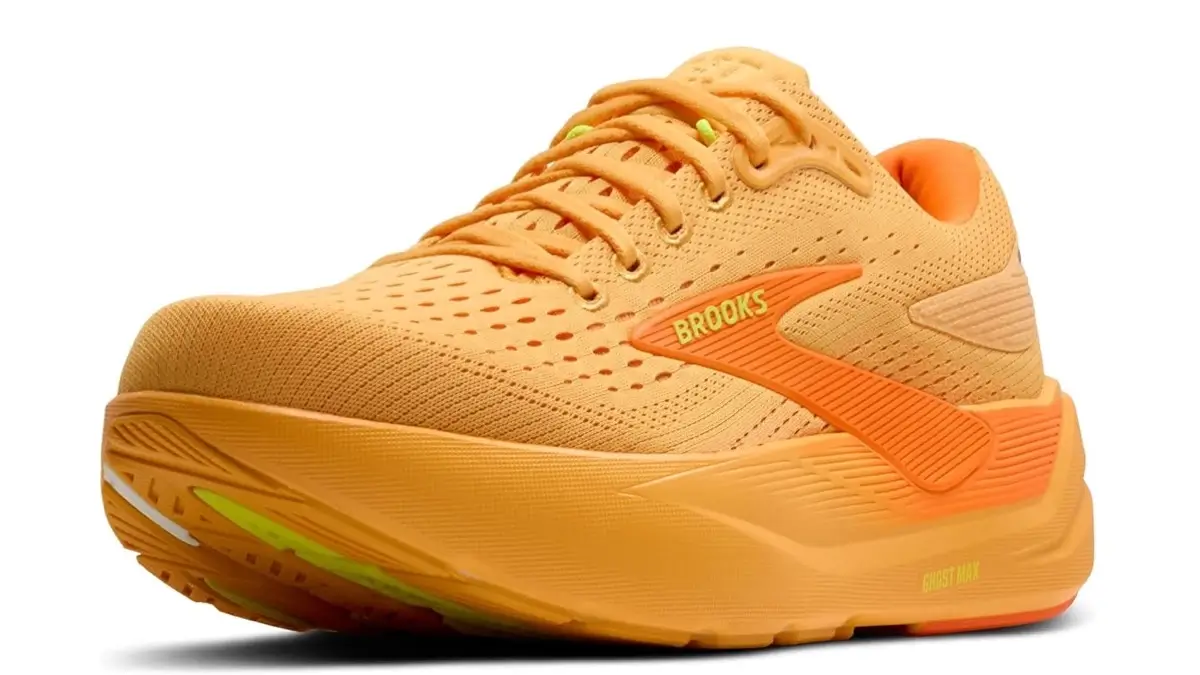
Quick Answer: Brooks Ghost Max 3 Review: The Brooks Ghost Max 3 is a cushioned neutral trainer for midfoot and forefoot strikers who want a wide, protective base for easy runs and long days on their feet. The nitrogen-infused DNA Loft v3 midsole is softer than before, the platform is broad enough to feel unusually steady, and the upper is one of the plushest at this price. Three widths and an orthotic-friendly build widen its appeal. The limits are weight and rebound: it is heavy and the foam gives almost nothing back. Check latest price.
The Ghost Max sits alongside the standard Brooks Ghost rather than above it, and version 3 makes that clearer than ever. Most people assume the Max is simply a taller Ghost. Independent measurement shows it is a different shoe: the heel is only a few millimetres higher than the Ghost 17 at 38.5 mm, but the forefoot climbs to 31.2 mm, which drops the effective heel-to-toe difference to a measured 7.3 mm.
That geometry decides who the shoe is for. A high heel and a thin forefoot suit heel strikers; the Ghost Max 3 does the opposite, putting the extra foam where a midfoot or forefoot lander actually loads the shoe. If you come down hard on your heel, the cheaper standard Ghost is the better buy.
Where it excels is comfort and steadiness. The upper feels like a padded slipper, the platform is broad enough to make a max-stack shoe feel planted, and it comes in three widths with a removable sockliner for orthotics. What it will not do is respond. Energy return measured 51.3 percent at the heel against a 58.6 percent average, and at a measured 10.7 ounces the shoe is heavy. This is a comfort tool, not a training weapon. Check latest price.
See also newer version: Brooks Ghost Max 4 Review

Specs
Here are the specifications for the Brooks Ghost Max 3:
| Type | Road max-stack neutral trainer, also sold as a walking shoe |
| Foot and gait type | Neutral, best for midfoot and forefoot strikers, suits flat feet and wide feet |
| Midsole foam | DNA Loft v3, nitrogen-infused, reformulated softer at 33.8 on the Asker C durometer |
| Stability system | None. A broad midsole and a deep central outsole groove control lateral movement |
| Weight (men’s 9) | 10.8 oz / 306 g listed, 10.7 oz / 303 g independently measured |
| Weight (women’s 8) | 9.7 oz / 275 g listed |
| Heel-to-toe drop | 6 mm listed, 7.3 mm independently measured |
| Stack height | 39 mm heel / 33 mm forefoot listed, 38.5 mm / 31.2 mm independently measured |
| Upper | Dual-layer engineered mesh with a heavily padded tongue and heel collar, stiff heel counter |
| Outsole | Deep-grooved rubber with less exposed foam than the standard Ghost, plus a central midfoot groove |
| Widths | Standard, wide and extra wide, availability varies by market |
| Surface | Road, treadmill, packed path |
| Price | $160 at launch, August 2025. Check latest price |
Pros
- The upper is exceptionally comfortable, with a heavily padded tongue and collar that hold the foot without any pressure points.
- A broad midsole and a deep central outsole groove make it measurably steadier than the standard Ghost, which is why it works so well for flat feet.
- Toe box width grew to 73.4 mm from 69.6 mm on the Ghost 17, and height to 28.1 mm, so there is real room for toes to spread.
- Forefoot stack of 31.2 mm gives midfoot and forefoot strikers protection that most cushioned trainers put under the heel instead.
- At $160 in three widths, with a removable sockliner for orthotics, it undercuts most max-stack rivals on both price and fit options.
Cons
- Energy return of 51.3 percent at the heel and 50.5 percent at the forefoot is well below average, so the ride feels dead when you push.
- A measured 10.7 ounces is heavy, and rivals build taller shoes that weigh over an ounce less.
- Heel shock absorption of 134 is modest for a shoe carrying the Max name, which undercuts the case for heel strikers.
- Measured stiffness of 18.7N makes it a firm-flexing shoe, and the rocker is milder than most max-stack designs, so there is little help rolling forward.
- Breathability rated 3 out of 5 because an inner layer blocks the visible vent holes, so it runs warm.
What is new versus the Brooks Ghost Max 2
The foam is the change you feel first. Brooks kept the DNA Loft v3 name but retuned the compound, and it now measures 33.8 on the Asker C durometer, distinctly softer than the version in the Ghost Max 2. That was overdue, since a shoe marketed on cushioning should not feel firm underfoot.
Geometry was refined rather than rebuilt. The heel bevel, meaning the angled cut at the back of the sole, is deeper than the Ghost Max 2’s, and the forefoot curve runs longer, both of which smooth the transition. Independent measurement still finds the overall curvature mild compared with other shoes carrying a 30 mm-plus forefoot, so treat Brooks’ GlideRoll branding as a gentle roll rather than an aggressive one.
The outsole exposes less midsole foam than before and uses a deeper groove pattern, which improves both wear resistance and wet grip. The upper was restyled with a more modern look and the same generous padding. Weight came down slightly to a measured 10.7 ounces, and the price rose $10 to $160.
Who should buy the Brooks Ghost Max 3
Buy this shoe if you land on your midfoot or forefoot and want more cushioning than the standard Ghost provides. The 31.2 mm forefoot and the low measured drop of 7.3 mm are specifically aimed at that stride, and forefoot shock absorption of 116 backs it up.
It is also one of the better max-stack choices for awkward feet. Three widths, a toe box measurably roomier than the regular Ghost and a removable sockliner make it workable for wide feet, flat feet and anyone using orthotics. Runners with lower arches in particular tend to get on well with it, because the platform is broad and the shoe does not encourage the foot to tip.
Beginners get a sensible case too. This is a max-stack trainer at $160 rather than $200, it is durable, and it is comfortable enough to double as everyday footwear. For someone building a running habit and wanting one pair to do everything at walking and easy-jogging speeds, it makes a lot of sense.
Who should avoid the Brooks Ghost Max 3
Avoid it if you are a pronounced heel striker. Heel shock absorption of 134 is only just above the 131 average, which is underwhelming for a shoe sold on maximum cushioning, and the low drop means less heel foam than the name implies. The standard Ghost 17 costs less and suits that stride better.
Skip it if you want any versatility. Energy return in the low fifties means effort disappears into the foam, and the combination of that with 10.7 ounces makes anything above easy pace feel laboured. Several cheaper shoes are both lighter and livelier.
Runners who like a strongly rockered ride should also look elsewhere. This is one of the least curved shoes in its stack-height class, and at 18.7N it is stiff, so you neither roll over the front nor flex through it easily. Anyone running in serious heat should factor in the below-average airflow.
How does the Brooks Ghost Max 3 fit?
Here’s how the Ghost Max 3 fits and feels.
Fit and sizing
Order your normal size. Owner sizing feedback is substantial and points clearly to true to size, and the shoe fits close to the standard Ghost through the midfoot, so anyone moving across from that model can buy with confidence.
Interior width measured 95.3 mm, effectively identical to the 95.2 mm lab average, which makes the midfoot conventional. The forefoot is the real difference: toe box width of 73.4 mm against 69.6 mm on the Ghost 17, and height of 28.1 mm against a 27.1 mm average. Both sit above average, so toes have room to splay on long efforts. Brooks lists standard, wide and extra wide, and changing width is the right fix for a broad foot rather than sizing up, which only adds length.
Upper and step-in comfort
Step-in comfort is the best thing about this shoe. The tongue and heel collar are luxuriously padded, the mesh wraps closely without pinching, and a stiff heel counter locks the rearfoot down. Nothing needs breaking in, and it is comfortable enough that plenty of buyers will wear it as a sneaker.
The trade-off is ventilation. The upper looks airy because of visible perforations, but an inner comfort layer sits behind them and blocks most of the airflow, which is why breathability rated 3 out of 5 against a 3.6 average. That inner layer is doing useful work for comfort and durability, so the warmth is a deliberate choice rather than an oversight, but summer runs are noticeably hot.
How does the Brooks Ghost Max 3 perform?
Here’s how the Ghost Max 3 performs.
Midsole and cushioning
DNA Loft v3 is nitrogen-injected EVA, meaning gas is blown into the compound so it comes out lighter and softer than plain foam. The formulation here measures 33.8 on the Asker C scale, softer than before but still short of the sink-in feel some rivals offer. That middle ground is deliberate: it cushions without letting the foot wallow, which suits slow running and walking.
The measurements are mixed. Forefoot shock absorption of 116 is good and matches what the geometry promises. Heel shock absorption of 134 is only marginally above the 131 average, which is modest for a max-stack shoe. Energy return is the weak point: 51.3 percent at the heel and 50.5 percent at the forefoot, both well under the 58.6 percent average, because EVA-based foam absorbs impact efficiently and returns very little of it.
Ride and running performance
The ride is calm and traditional. Brooks brands the sole shape GlideRoll and did deepen the heel bevel and lengthen the forefoot curve for this version, but measured against other shoes with a 30 mm-plus forefoot this is among the least rockered available. Combined with 18.7N of stiffness, that means the shoe neither rolls you forward nor bends much underfoot, so transitions depend on your own cadence rather than on the sole doing the work.
At easy pace that feels reassuringly normal, which is exactly what a lot of runners want from a big cushioned shoe. Push harder and the flat rebound and the weight combine into something slow and effortful. Treat it as an easy-day and long-slow-run shoe and it is very good value. Ask it to double as a workout shoe and it will not cooperate.
Stability and support
This is a neutral shoe that rides as stable-neutral, and it is measurably steadier than the standard Ghost. The mechanism is unusual. Rather than raising foam sidewalls around the foot, Brooks uses a broad midsole plus an outsole layout with a deep central groove and a large logo panel that resists lateral movement through the midfoot. Torsional rigidity measured 17.3 Nm against 12.6 Nm for the Ghost 17, so the shoe twists far less along its length.
The practical result is a shoe that stays under the foot at slow speeds, which is why it is a common recommendation for flat feet. It still adds no guidance system and will not limit pronation the way a stability shoe does, and it makes no claim to change how you run.
Outsole, grip and durability
The outsole covers more of the midsole than the standard Ghost does and uses a deep-grooved pattern intended to add flexibility without giving up wear resistance. Durability rates as solid across the shoe, and the whole design reads as built for longevity rather than for performance, which is the right call given how many of these will be worn every day.
Wet-concrete grip measured 0.49 against a 0.52 average, dependable in rain without matching the best compounds available. The usual 300 to 500 mile replacement window is a broad guideline rather than a promise, and on this shoe the rubber should outlast the foam comfortably.
Is the Brooks Ghost Max 3 good for walking?
Yes, and walking is arguably its strongest use case. The traits that hold it back for running barely matter on foot. Low energy return is irrelevant when you are not trying to run fast. The 10.7-ounce weight is far less noticeable at walking speed. And the two things it genuinely excels at, upper comfort and lateral steadiness, are exactly what long hours on hard floors demand.
The fit matters as much as the ride here. Three widths, an above-average toe box in both directions and a removable sockliner cover the feet that usually struggle to find a comfortable cushioned shoe, including wide feet, flat feet and orthotic users. The 31.2 mm forefoot protects the part of the foot that aches after a day standing. Two caveats: the mild rocker means you do the work of rolling forward yourself, which some walkers prefer and others do not, and the warm upper is a real consideration in summer.
Brooks Ghost Max 3 vs. Brooks Ghost Max 2
Here is how the two versions compare on the points that changed:
Feature | Ghost Max 3 | Ghost Max 2 |
Midsole feel | Softer DNA Loft v3, 33.8 durometer | Firmer DNA Loft v3 |
Heel bevel and forefoot curve | Deeper bevel, longer forefoot roll | Shallower, less smooth |
Outsole | More rubber coverage, deeper grooves | More exposed foam |
Weight (men’s 9) | 10.8 oz / 306 g listed | 10.9 oz / 309 g listed |
Upper styling | Restyled, same heavy padding | Previous design |
Launch price | $160, August 2025 | Check current price |
Brooks Ghost Max 3 Alternatives
Heel strikers looking at this shoe should try the Brooks Ghost 18 (check price | read review) first. It uses a higher heel-to-toe difference that matches a rearfoot landing, weighs less and costs less, and for that stride it is simply the better shoe.
A softer Brooks with the same familiar fit is the Brooks Glycerin 22 (check price | read review). It trades the Ghost Max’s broad, planted platform for a plusher underfoot feel, which suits runners who found this shoe firmer than the cushioning claims led them to expect.
Anyone whose main objection is the weight and the flat rebound is better served by the Hoka Clifton 11 (check price | read review). It is well over an ounce lighter with a much stronger rocker, so it rolls you forward where the Ghost Max asks you to do that work yourself.
For deeper heel cushioning, which is where this shoe measures weakest, the Asics Gel-Nimbus 28 (check price | read review) puts considerably more foam under the rear of the foot. It costs more and offers fewer width options, so it is the choice for runners whose priority is impact protection rather than fit.

Price and value
The Ghost Max 3 launched at $160 in August 2025, a $10 increase on the Ghost Max 2. Check current price. In a category where max-stack shoes routinely ask $190 to $210, that is a genuinely reasonable figure, and the three widths and orthotic-friendly build add value that specification sheets do not capture. Durability is strong, and the shoe works as everyday footwear as well as running gear, which spreads the cost. The catch is what the money does not buy: DNA Loft v3 is now one of the least energetic foams at any price, so runners judging on performance will find more responsive shoes for less. Bought as a comfort and walking shoe that also runs easy miles, it is good value.

Final verdict
Best for: midfoot and forefoot strikers on easy runs, walkers and people on their feet all day, wide or flat feet, and orthotic users.
Avoid if: you are a pronounced heel striker, you want one versatile shoe, you like a strong rocker, or you run in serious heat.
Fit: true to size with a standard midfoot and an above-average toe box, available in standard, wide and extra wide.
Verdict: the Ghost Max 3 is the most comfortable and most stable version of this shoe so far, and the roomier forefoot plus three widths make it one of the easiest max-stack trainers to fit. The dated foam keeps it out of the top tier for running, so buy it for comfort, fit and time on your feet rather than for what it does to your pace.
Frequently Asked Questions for Brooks Ghost Max 3
They are different shoes rather than two sizes of the same one. The Ghost Max carries far more foam under the forefoot and runs a much lower heel-to-toe difference, which suits midfoot and forefoot strikers. The standard Ghost has a higher drop and suits heel strikers, and it is lighter and cheaper.
It is a common recommendation for flat feet, and the reason is the platform rather than any support system. The midsole is broad and the outsole uses a deep central groove that resists lateral movement, so the shoe stays under the foot. It adds no guidance and does not limit pronation.
Yes, in standard, wide and extra wide, though availability varies by market and colorway. The standard width already measures above average across the toes and above average for height, so many runners who need extra room elsewhere are comfortable in the regular version.
Yes. The sockliner lifts out, which frees the depth most custom or over-the-counter orthotics need, and three widths make finding room easier. Because the shoe’s steadiness comes from the shape of the platform rather than from the insole, swapping it does not undermine how the shoe works.
It is one of the better running shoes for that job. The forefoot cushioning protects the part of the foot that aches after hours upright, the platform is stable at slow speeds, and the padded upper stays comfortable. The warm, dual-layer mesh is the main compromise in summer.
Two measurements explain it. Energy return sits near 51 percent against a 58.6 percent average, so the foam absorbs your effort without handing it back, and the shoe weighs a measured 10.7 ounces. Add a mild rocker and a stiff build and there is nothing helping you turn your legs over faster.