Quick Answer: Crocs Classic Clog Review: The Classic Clog is a simple choice for casual wear, gardening, errands, travel and feet that like plenty of room. Its molded Croslite construction is water-friendly, easy to wash and light on the foot, while the pivoting heel strap adds a little security when you walk. The trade-offs are modest arch support, a loose fit on narrow feet and ordinary grip on smooth wet floors. It is not a slip-resistant work shoe. See the key specs.
Immediate comfort on a footbed that offers little support
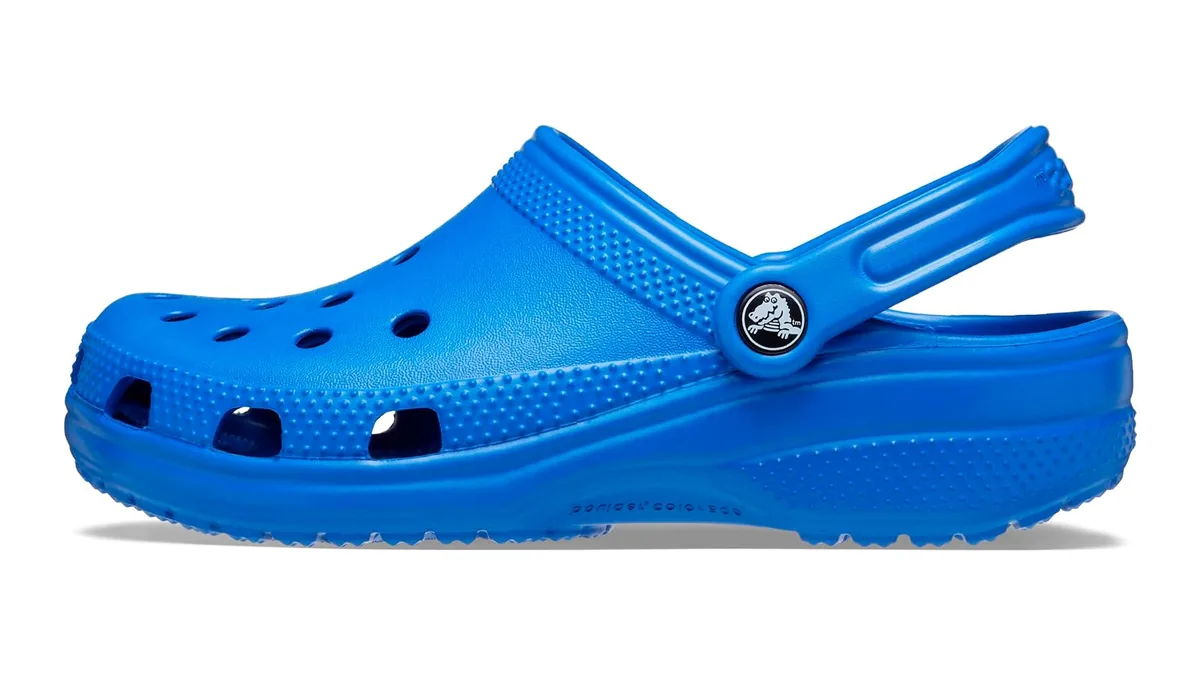
The Crocs Classic Clog needs almost no introduction. It is a molded foam clog with ventilation holes and a heel strap that swings forward or back. Crocs uses its Croslite material throughout the shoe, which is why the Classic is light, water-friendly and easy to rinse clean.
Crocs now sells dozens of clogs, and it is worth knowing where this one sits. The Classic is the roomiest and most open shape in the range. The LiteRide line uses a softer foam footbed and a slimmer fit. The work range, including the Neria and Bistro models, adds enclosed toes and slip-resistant soles. The Classic is the cheapest and the most forgiving. For a broader comparison, see our best Crocs shoes guide.
The buyer this suits is not really shopping for a shoe. They want something to garden in, to walk the dog at seven in the morning in, to wear on a boat, to put on after a run or to stand in at the kitchen sink. For all of that, and for feet that swell or are difficult to fit, the Classic is genuinely hard to beat.

Specs
Here are the specifications for the Classic Clog:
| Type | Molded foam clog |
| Material | One-piece Croslite foam, upper and sole in a single unit |
| Fit profile | Roomy, the widest and most open shape Crocs makes |
| Heel strap | Pivoting, forward for slip-on wear or back for a secured heel |
| Ventilation | Ports in the upper for airflow and for shedding water and debris |
| Sizing | Unisex whole sizes, no half sizes |
| Water performance | Fully waterproof, does not absorb water, washable |
| Arch support | Moderate contour only, no structured arch |
| Original launch price | Crocs does not publish a reliable original launch price for the current Classic Clog. Check latest price |
Pros
These are the reasons the Classic has outlasted every attempt to kill it off:
- Comfort is immediate. There is no break-in, no lacing and nothing to adjust, and the foam takes the edge off a hard floor from the first step.
- The roomy shape is a genuine benefit if your feet swell, if you have bunions, or if you simply cannot find shoes wide enough.
- It is waterproof and washable. Soap, water, thirty seconds, done, which no fabric or leather shoe can claim.
- Croslite holds up remarkably well. It is common for the color and the shape to survive several years of regular wear.
- The pivoting strap gives you two shoes. Forward it is a slip-on, back it holds the heel well enough to walk properly.
Cons
And these are the honest limits:
- Arch support is moderate at best. If your arches collapse inward or you have plantar fascia pain, the footbed here gives you very little to work with.
- No half sizes, which is a real problem for anyone who sits between two whole sizes.
- The roomy volume means a narrow foot slides around, and with the strap forward the shoe can come off unexpectedly.
- The ventilation ports let water out and also let water, grit and anything else straight in.
- Grip on smooth wet floors is ordinary. The Classic is not a slip-resistant work shoe and should not be treated as one.
What is new in the current Classic Clog
Crocs does not number the Classic, and the honest answer is that almost nothing has changed. The shape, the material and the strap are the same ones the shoe launched with more than two decades ago, which is unusual in footwear and is exactly why people keep buying it. If you owned a pair in 2008 and buy one today, it will feel the same.
What has changed is the range around it. Crocs now separates its clogs into three fit profiles, and knowing them saves a lot of confusion when you shop. Roomy is the Classic: the widest and most open. Relaxed is slightly more contoured. Standard is closest to an ordinary shoe fit. A listing that says Classic Clog is always the roomy one.
The other development worth knowing is the arrival of the LiteRide and InMotion lines, which use a softer foam footbed dropped into a similar shell. Those are Crocs’ answer to the complaint that the Classic is comfortable but firm, and they cost more. The Classic remains the cheapest and the most durable of the three.
Who should buy the Classic Clog
Buy it if you want a shoe for jobs rather than for going out. Gardening, dog walking, taking the bins out, pottering in a workshop, showering at a campsite, anything on or near a boat: the Classic handles all of it, and nothing you do to it is permanent because it washes clean.
It is also one of the best answers for difficult feet. Swelling from standing all day, bunions, hammertoes, bandaging, post-operative dressings and the general problem of not being able to find anything wide enough are all easier in a shoe with this much room and no seams pressing anywhere.
It can also work well as a casual recovery shoe after a long run or a full shift because the soft foam and generous toe room do not squeeze tired feet. Just remember that recovery comfort and structured support are different things.
Who should probably skip it
Skip it if you need arch support. The Classic gives you a mild contour and nothing more, and people with flat feet or plantar fascia pain routinely find it insufficient over a long day. Skip it if you work on wet smooth floors, because this is not a slip-resistant shoe and there are Crocs models that are. And if you have narrow feet, be aware that the roomy volume that helps other people will let your foot slide about.
- Crocs Neria Pro II: the same easy-clean idea built properly for work, with an enclosed toe and a slip-resistant sole for shifts on wet floors (check price | read review)
- Hoka Ora Luxe: a purpose-built recovery slide with far deeper cushioning and an adjustable strap, for feet that are tired rather than just needing room (check price)
- Teva Hurricane XLT2: a proper strap sandal that stays attached to your foot, for anyone who wants to actually walk or get into water rather than potter (check price)
How does the Classic Clog fit?
The Classic is true to size in length and deliberately generous in width and volume. That combination confuses people, who often report that it runs large when what they are noticing is the width. Understanding that it is meant to be roomy is most of what you need to size it properly.
Fit and sizing
Crocs sells the Classic in unisex whole sizes with no half sizes, so anyone who normally wears a half size has a decision to make. The general rule is to round down if your foot is average or narrow, because the width is already generous, and round up if your feet are broad or swell during the day. Judge it standing up: there should be a small amount of space at the toe and the sides, and your heel should sit on the footbed rather than hanging past it. If you are between sizes and unsure, remember that the strap flipped back takes up a surprising amount of slack.
Upper and step-in comfort
There is no upper in the usual sense, just the top half of the same molded shell. Step-in comfort is immediate and unusually forgiving, because there are no seams, no stitching and no pressure points anywhere. For a foot with a bunion or a sore spot, that absence of anything pressing is the whole appeal. The trade is that nothing holds your foot either. With the strap forward the clog stays on by friction and the shape of the instep alone, which is fine for shuffling about and not fine for stairs or a brisk walk.
How does the Classic Clog perform?
The Classic performs exactly as well as a single piece of foam can, which turns out to be further than you would expect. It cushions, it cleans, it lasts and it fits feet nothing else fits. What it cannot do is support, grip on wet tile or stay on your foot when you speed up.
Cushioning and ride
Croslite is a closed-cell foam, denser and springier than the light EVA used in running-shoe midsoles, and it feels accordingly. Underfoot the Classic is cushioned but firm, with a little rebound rather than a sink-in softness. On a hard kitchen or garage floor that firmness is welcome, because a softer foam would bottom out under a standing foot. It does soften over the first weeks as the foam takes a light impression of your foot, which is why an old pair feels more comfortable than a new one. Anyone wanting genuine plushness should look at the LiteRide footbed instead.
Water, cleaning and hygiene
This is the Classic’s quiet superpower. Croslite does not absorb water at all, so the clog cannot become waterlogged, cannot rot and cannot hold a smell in the way a fabric lining does. The ventilation ports drain and dry it. Soap and warm water clean it completely, including whatever was in the garden. For anything involving mud, water, paint, animals or a campsite shower block, this matters more than any performance feature.
Stability and support
Support is the Classic’s weakest area and there is no way around it. The footbed has small raised contours under the arch, but nothing that would count as a structured arch, and the shell is too soft to resist a foot rolling inward. For someone with flat feet or plantar fascia pain, a long day in these will usually be less comfortable than a supportive shoe, not more. The base is wide and flat, which gives reasonable side-to-side steadiness, and the strap flipped back adds useful heel control. Nothing here is designed to influence how your foot moves, and the clog treats no condition.
Outsole, grip and durability
The sole is the same Croslite as everything else, textured rather than lugged. On dry ground, grass and carpet it is fine. On wet tile, polished concrete or a boat deck it is average, and it is worth repeating that the Classic carries no slip-resistance rating and is a poor choice for a commercial kitchen. Durability is excellent. There are no seams to split, no fabric to fray and no glue to fail, and the usual end of life is the tread wearing smooth or the foam finally taking a permanent set. Three years of regular wear with the shape and color intact is a common outcome.
Is the Classic Clog good for walking?
For short distances with the strap flipped back, it is better than its reputation suggests. The foam takes the sting out of hard surfaces, the toe room means nothing rubs and the wide base is stable, so a walk around a garden center or a supermarket is comfortable. The strap is the key: forward, the clog will eventually shuffle off your heel, and you end up gripping with your toes to keep it on. Flipped back, your heel is held and you can walk normally. Past a mile or so the lack of arch support becomes the limiting factor rather than the cushioning, and feet that need structure will ache. For standing rather than walking, especially on a hard floor for an hour or two at a time, it does well.
Classic Clog versus LiteRide Clog
Since Crocs sells both, this is the comparison most buyers actually make:
Feature | Classic Clog | LiteRide Clog |
Footbed | Croslite, firm with a little rebound | LiteRide foam, noticeably softer |
Upper | One-piece Croslite shell | Matlite upper on a Croslite outsole |
Fit | Roomy, the widest Crocs makes | Slimmer and more shoe-like |
Cleaning | Rinses completely clean | Less straightforward, the footbed absorbs more |
Best reason to choose it | Roomier, simpler and easier to rinse clean | Softer feel underfoot |
Buy the Classic when mess, water and durability are the point, or when you need the extra room. It is the cheaper, tougher and more forgiving of the two.
Buy the LiteRide when comfort underfoot is the priority and you will mostly be indoors or on pavement. Its softer footbed is the upgrade people are usually reaching for when they say a Classic is too firm.
Crocs Classic Clog alternatives
Three options cover the usual reasons the Classic is not enough.
The Crocs LiteRide Clog is the natural upgrade within the brand. It keeps the slip-on convenience and adds a distinctly softer footbed, which is what most people actually want when they say they find the Classic firm. You lose some of the roominess and some of the hose-it-down simplicity (check price).
Where support is the missing piece, the Birkenstock Arizona is the answer. Its cork footbed has a deep, sculpted arch and gradually molds to your own foot, so it gives structure the Classic never will, and two adjustable straps let you set the fit. It costs considerably more and cork does not like being soaked (check price | read review).
If the objection is simply how it looks, the OluKai ‘Ohana solves that. It is a thong sandal with a shaped footbed and a rubber outsole, water friendly in the same way but more conventional in appearance (check price).
If you are choosing between roomy casual shoes, supportive sandals and more structured walking shoes, use our Free Shoe Finder to narrow the options by fit and support needs.
Value
The Classic Clog earns its value through simplicity. It is easy to clean, hard to damage in normal casual use and versatile enough for chores, travel, water and around-the-house wear. The current selling price changes by color, size and retailer, so the better question is whether you need the things the Classic does well.
You are not paying for structured arch support, certified workplace traction or a secure athletic fit. If those are priorities, another shoe is a better use of your money. If you want roomy, washable casual footwear that asks very little of you, the Classic remains easy to justify.

Final verdict
Best for: gardening, chores, water, recovery after exercise, and feet that swell or are hard to fit.
Avoid if: you need arch support, you work on wet smooth floors, or you have narrow feet.
Fit: true to size in length and deliberately roomy in width, in whole sizes only. Round down for average feet, round up if yours are broad or swell.
Verdict: the Classic Clog has survived two decades of ridicule because it does a handful of things better than anything else at the price. It is comfortable without asking anything of you, it is impervious to water and mess, and it gives difficult feet somewhere to go. Understand that it is a roomy comfort shoe rather than a supportive one, and it is one of the easiest recommendations in footwear.
Frequently Asked Questions for Crocs Classic Clog
They are true to size in length but deliberately roomy in width and volume, which is what people usually mean when they say they run big. If your feet are average or narrow, round down; if they are broad or swell during the day, round up.
The Classic has only a mild arch contour, so it is not a supportive shoe and many people with plantar fascia pain find it insufficient for a long day. A sandal or shoe with a sculpted arch is usually a better starting point, and persistent heel pain is worth discussing with a podiatrist.
No. The Classic Clog is sold in unisex whole sizes only. If you are between sizes, remember that flipping the heel strap back takes up a noticeable amount of slack, which makes rounding up more workable than it sounds.
Not in the work sense. The Classic has a textured Croslite sole with no slip-resistance rating, and it is only average on wet smooth floors. If you need grip for a shift, choose one of the Crocs work models built for it.
It is Crocs’ own closed-cell foam, related to the EVA used in shoe midsoles but denser and more resilient. Because it is closed cell it absorbs no water, which is why the clog floats, rinses clean and does not hold a smell.
Mild soap, cool water and a cloth or soft brush, then air dry away from direct heat. Avoid hot water and leaving them in a hot car, because heat is the one thing that will warp the foam permanently.